Showing posts with label Fitness. Show all posts

Sunday, October 20, 2024

Sheepdog Response "Protector 1" Review

Last month, I attended the Sheepdog Response “Protector 1” class taught at the Government Training Institute (GTI) in Barnwell, South Carolina. The Protector 1 curriculum was delivered over three days, Friday evening through Sunday afternoon.

Friday
The initial briefing on Friday night covered a lot of the course administration, but also set expectations for the weekend of training. Concepts like situational awareness, the OODA Loop, a methodology for categorizing situational awareness zones, even Colonel Cooper's color code was covered.

Saturday
Saturday morning, on the mats at a martial arts gym in Aiken (45 minutes from GTI), we covered the basic positions of mount, side control, back mount, and guard. This all culminated in running through “Drill One,” which is escaping the mount by “arm trap and roll” into the guard, passing the guard to side control, and transitioning from side control to the mount, at which point the drill starts again. The final exercise on the mats was full resistance rolling from various positions, such as back to back, lying side by side, or even starting in the mount.

Saturday afternoon was at the shooting range. We started off with slow fire, then progressed to drawing from the holster and other basic pistol drills. There were two of us on the line with DA/SA pistols, and I identified that I was dropping the first double action shot. The instructors helped me achieve a better grip, which fixed that problem over the course of the weekend.

Sunday
Sunday morning we were back on the mats, this time working up through parts of “Drill Two” and taking the back to a rear naked choke, along with kimura from guard, guillotine from guard, and the hip bump sweep. Weapons control was introduced, and rubber pistols and knives were included in the sparring. 

Sunday afternoon we were back on the range, this time with more advanced drills including dummy round induced failure to fire drills (tap & rack drills), turning to shoot, alternate positions (squatting, kneeling, seated, urban prone), barricade shooting, vehicular barricade tactics, and the final “run, pummel, barricade shoot” stress shoot.

https://sheepdogresponse.com/collections/protector-1


Review
That is a lot to pack into the time, and it left me with a conundrum for how to review Protector 1 for Blue Collar Prepping. First, at $950 it is not a cheap course. Second, I think it is best if I explain that Protector 1 is designed as a "baselining" course to ensure that everyone who wants to continue with Sheepdog Response has a solid set of skills to build on in more advanced classes. 

My personal “gun school” resume includes various US Army Infantry school courses, Army Marksmanship Unit CQB and SDM Train the Trainer courses, Shivworks' Extreme Close Quarters Combat, and my competition history is a lot of service rifle with some two-gun mixed in. My grappling is experience is getting close to four years of Brazilian Jiu Jitsu at 2 to 5 hours of training per week, and a US Army Combatives instructor (level 2).

That being said, I learned things in Protector 1. They were little tricks that improved my pistol performance, a different way to set up a guillotine from guard,  and an alternate head placement for an arm trap and roll. You know the instructors truly know their craft when a student, for whom all of the curriculum is review, still learns something new to improve his skills. That makes it a solid course taught by good instructors.

So in the “Good/Fast/Cheap, Pick Any Two” definition, Protector 1 is “Good and Fast” but not cheap. It is quality, however, so you have to balance the monetary cost with the residual value:
  • If you attend a class like Protector 1 and then go immediately back to your previous lifestyle without incorporating new priorities into your schedule like exercise, range time, and grappling time, you wasted your money and time. 
  • If you go to a class like Protector 1 and then go, “Huh, I was completely out of breath three minutes into a live roll, I need to join a BJJ or MMA gym and train regularly, and I need to do fifteen minutes of dedicated dry fire every other day” then Protector 1 was well worth the cost. 
  • However, if more modestly priced “fundamentals” courses in your weak areas are offered, it might make more financial sense to invest in a basic pistols fundamental class, or a concealed carry class, and then just join a BJJ or MMA gym and start training. Protector 1 represented over four months of tuition for me at my BJJ school, so it was definitely a luxury purchase in my budget.

Side note: once you complete the course, you are eligible to join the Sheepdog Response forums to connect with other alumni and start finding answers to your questions as they pop up. This is an additional residual value that needs to be mentioned.

So who do I recommend go to Protector 1? People who can afford it and have nearly zero formal training on grappling or pistol shooting. Attending Shivworks' Extreme Close Quarters Concepts convinced me that I needed to develop my grappling skills more seriously, because testing myself against one or two full on attackers was an eye opener. I believe that Protector 1 provides that same “eye opener” experience of where your skills are lacking. 

https://agile-mercurial.com/2019/07/12/the-dunning-kruger-effect/

Getting off the "Peak of Mount Ignorance" on the Dunning-Kruger scale is the most important part of building real expertise. However,
if I had to choose between Protector 1 and Extreme Close Quarters Concepts, I would recommend ECQC to anyone who already has a passing familiarity with grappling (years of wrestling or BJJ) and pistol shooting (has attended at least one CCW course before).

What if Protector 1 and/or ECQC is out of your price range? Join a martial arts school that does full resistance training (BJJ, MMA, wrestling, krav maga, etc), and find training opportunities for defensive pistol training. As much as I give the NRA grief, they do offer some affordable 8 hour classes for pistol training, including intro to conceal carry and defensive pistol. 

(Erin adds: If you can at all afford it, I recommend the MAG40 class for both pistol instruction and class time on "Armed Citizens’ Rules of Engagement". See my review here for more information.)

Final Thoughts
You always pay for an education; always with time,  and often with money as well. You have to live in the body you have, so you have to train in the body you have. Don't wait to "get in shape" to start training. Start training now, and "getting in shape" will happen. 

Friday, July 19, 2024

Physical Fitness, Firearms, and Prepping

The old joke “What do you call a fat, out of shape prepper? A resupply point!” hits home for a lot of us. The rebuttal of “Don’t mess with old people; they're too tired to fight and too broke to run. They’ll just shoot you!” also hits home. A firearm can make up for a lack of physical prowess as long as the operator is capable, but the truth remains that having stuff isn’t the same as being prepared. We must also have situational competence to get through the interruption of normalcy in order to be prepared, which means both physical fitness and firearms skills are important to maximizing your chances for a successful return to normal.

So how fit is fit enough? How well-trained is well-trained enough? These are serious questions without hard answers. I hope that this article can frame this situation as one of risk management, allowing readers to apply some context to their prepping goals to come up with a personal answer. What follows is purely my opinion, based on the assumption that you won't need to "escape and evade" through fifty miles of enemy infested territory, but might need to deliver some food or medicine to some people just on the far edge of handheld radio range. 

Fitness
There are two ways to be athletic: the first is to move objects, the second is to move your body. I believe that the second type is the most applicable type of athleticism to a prepping lifestyle. You should be able to:
  • run two miles without stopping to walk;
  • do 20 push-ups without going to your knees;
  • do 40 sit-ups with your hands crossed over your chest. 
If you can’t run for medical reasons, an eight mile bicycle ride without stopping is about the same level of endurance fitness, as is a three mile brisk walk. Even if you go the “power lifter” fitness route, a brisk three mile walk is a good thing to do on the regular.

There are no time limits for any of these, but this level of fitness means that should you need to “get out, on foot, right now” you have the endurance to go several miles, and the upper body strength to negotiate moderate obstacles. Anything beyond this level of fitness is absolutely great. 

One benefit for running as exercise is that other than shoe costs, it is very, very cheap. Running shoes can get expensive, so learn what type of runner you are and what type of shoes work best for you. There are a lot of online articles on how to do a wet footprint test, or how to analyze your running stride, but to get started just head to a shoe store that you can afford and purchase a dedicated set of running shoes that give you enough room to wiggle your toes and feel good throughout the entire range of motion. Once you wear out those shoes, you should have a better idea of what you want in the replacement pair.

An additional benefit of fitness is that eventually you don’t look like a victim. In the victim selection process, human predators look for the ones very unlikely to offer resistance, and physically fit people, whether they be skinny endurance runners or big fit power lifters, don’t look like easy prey. Ironically, being fit means you are less likely to encounter one of the scenarios where being fit is a benefit to your survival outcome! However, even if you cannot achieve that outward appearance of fitness, a level of confidence and awareness can make up for that in dissuading predators from selecting you as prey.

Firearms
I believe that for most people, “well-trained enough” is when you can draw your pistol from concealment and engage three different six-inch round targets at three, five, and seven yards with first shot hits in under five seconds. Once you can do that, it is less about attending “gun school” and more about dry fire practice and live range repetitions to hone the skills you have (tighter groups, faster split times, etc.). This is definitely a minimum, but it is a challenging minimum for many, many gun owners. I won’t go into rifle and shotgun skills here, but I do encourage every rifle owner to attend a Project Appleseed class if they haven’t.

The obvious benefit for firearm training is that you are confident in your ability to accurately place fire under stress. This doesn’t necessarily mean you are emotionally ready to deal with the aftermath of using a firearm, no matter how justified; it just means that you have an increased probability of survival. Even if you’re completely out of shape, I believe it’s worth it to find a firearms instructor who can help you hone your skills under relevant scenarios (such as drawing and firing from concealment). Don’t “wait to get in shape” to get to training; participate to the maximum extent you can, because the body you have is the one you have to operate.

Final Thoughts
I practice what I preach, and since 2015 I’ve lost 20 lbs, started running half marathons (one or two a year), and joined a Brazilian Jiu Jitsu school where I train two to five times a week. I’m objectively in better physical shape now, and am likely a better shot with a pistol (probably about the same with a rifle).

I hope this article give you food for thought and inspiration to action. Remember: we don’t rise to the occasion, we sink to our lowest level of competence. Raising that baseline of competence for fitness and firearms training is well worth the time and energy.

Tuesday, February 5, 2019

Throwing Motions: Precise and Accurate

This week we have a video demonstrating the short, precise motions involved in using small tools accurately.


Lokidude

Tuesday, January 22, 2019

Going Through the (Throwing) Motions

2019 looks to be a year of "Loki goes into the woods and throws things." Erin got me an atlatl kit for Christmas, and I've been dying to play with slings as well. Most of us learn to throw things at a very young age, but some people don't, and others don't progress past a rudimentary level.

Why Learn to Throw?
I view the ability to accurately throw an object to be an essential life skill. Not only is it used by the weapons mentioned above, but it is also vital in many social activities; for example, the ability to play catch or darts or baseball opens opportunities to expand your acquaintances and network with people.

The hidden benefit of learning the throwing motion is that those body mechanics are used for a plethora of other things: the same arm movement that allows an accurate dart throw also makes for a sure hammer strike, and the weight transfer that gives power to a baseball throw drives an axe efficiently into a log. You can of course drive nails, split wood, and perform other tasks without knowing these techniques, but doing so will burn a lot more energy and time with far less satisfactory results. Learning good throwing mechanics adds competency to all these skills.

Accurate vs. Powerful
Accurate throws and powerful throws employ different throwing motions.

Powerful throws are large and explosive and use the whole body.
MLB pitcher Randy Johnson is a great example of a big, powerful throw.
From www.baseballhall.org


Accurate throws are more compact, relying on only some regions of the body to get work done.

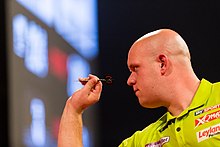
Champion darts players are incredibly precise, with a small, controlled throwing motion.
From Wikipedia

In the coming weeks I'll show detailed breakdown videos of both types of throwing motions, as well as how they relate to more traditional preparedness tasks. I'll also work on video of "throwing things in the woods," but a lot of that will have to wait until there's not a foot of snow on the ground.

Limber up and learn to throw.

Lokidude

Sunday, January 1, 2017

Gun Blog Variety Podcast #124 - Happy New Year!


It's pronounced TWENTY SEVENTEEN. Are you really telling me that when it hits 2020 you're going to call it "two thousand and twenty"?

NO, YOU'RE NOT.
  • How can piano lessons make you a better shooter? Beth tells us why it's not actually that far-fetched.
  • In a crime that strikes close to home, Sean tells us about three suspects arrested in connection with the murder of a clerk in the convenience store closest to his house.
  • Barron is on assignment and will return soon.
  • In the Main Topic, Sean and Erin discuss Charles C.W. Cooke's article "Phantoms of Gun Control" as published in the NRA's magazine "America's First Freedom".
  • Tiffany saw two videos of women using Brazilian Jiu Jitsu to fight off attackers. She wanted a second opinion, so she contacted Craig Douglas of ShivWorks for his thoughts.
  • Do you have prepping resolutions? Erin does. What does she plan to do in 2017? She'll tell you.
  • The Brady Campaign had a live Facebook Chat talking about their “Runaway Hit” Miss Sloane. Weer’d was listening in...
  • And our plug of the week is for the Surefire CombatLight.
Thank you for downloading, listening, and subscribing. You are subscribed, right? We are available on iTunes, Stitcher Radio, and now on Google Play Music!

Listen to the podcast here.
Read the show notes here.

Thanks to LuckyGunner and Remington for their sponsorship, and a special thanks to Firearms Policy Coalition for their support.

Blue Collar Prepping Transcript:
Erin's Prepping Resolutions
By the time you’ve heard this podcast it’s already 2017 -- yes, that’s TWENTY SEVENTEEN, not two thousand and seventeen, ugh! -- and so I thought I’d talk about what resolutions I intend to make prepping-wise.

First, I acknowledge that I am out of shape. I still can’t perform a single pull-up, and that’s something I absolutely need to work on this year. To that end, I have bought an exercise bar from Amazon that installs in any doorframe without screws or other hardware.

Then I’m going to follow the advice of YouTuber Scooby1961 in his video “How to do your first pull-up.”  The entire video is only 11 minutes long, and I encourage everyone to watch it, but the basis of his routine is this:
  1. Place a chair between yourself and the pull-up bar. 
  2. Climb up onto the chair and grab the bar. 
  3. Walk off the chair -- Scooby calls this “Walking the Plank” --
  4. -- then lower yourself to the ground as slowly as possible. 
  5. Do that 8 times, then rest for a minute, then do it again until you’ve completed 5 sets. 
By doing this, you will gradually build up your strength until you are able to actually start doing pull-ups.

My next resolution is to “Cut the Clutter”. A week ago, my co-blogger Chaplain Tim wrote an article called “Hoarding or Stockpiling?” that talked about the differences between being prepared by having supplies and being a hoarder. It’s a subtle difference, to be sure, it reminded me of a post I wrote in 2014 called The Slippery Slope of Prepping.

If you don’t have the time to read both posts, it really all comes down to this:
  • If the preps serve you, then you are a prepper. 
  • If you end up serving the preps, then you’re a hoarder. 
There’s a great line from the movie Fight Club, where Brad Pitt’s character says “The things you own end up owning you.” And there’s truth to this, because we so often define ourselves by what we have -- our possessions, our car, our house.

And I’ve come to the conclusion that not only do both of my parents have mild hoarding tendencies -- see the photos in my post of the literal PILES of stuff my dad was keeping in his room -- but that I’m falling victim to it as well.

For me, it’s a combination of not wanting to waste anything -- because if something has value, then throwing it out instead of using it is wasteful -- and also a feeling of “As sure as I throw this away, I’m going to need it.”

However, what I failed to recognize until I read Chaplain Tim’s post is that holding onto these items is still costing me something:
  1. First, they take up volume within my room, where space is at a premium. 
  2. Second, they cause me emotional distress because I have difficulty finding things, or getting to things, in a cluttered room. 
So what I need to do is find a way to get rid of these things without the associated mental trauma of “being wasteful”. I’m trying to get around this by giving away still-useful items to a good home -- for example, past a certain point I don’t need any more knives, so if I can give them away to a prepper who needs knives, or to someone who collects knives, that’s not “wasting” a “perfectly good thing”.

So if you’re someone I know who ends up with, say, a box full of prepping supplies and you don’t know why -- well, this is why.

My final prepping resolution is to learn more. Too many preppers fall into the “magical talisman” trap that gun owners do by thinking that merely having supplies is enough.

This is of course completely false. It’s not enough to have a gun or survival gear; you have to know how to use it, and that involves training with it so that you know how to use it effectively.

Do a pull-up, learn and train more, and collect less: those are my prepper resolutions for 2017. What are yours?

Tuesday, February 3, 2015

Prepper Fitness

Fitness is important for a healthy lifestyle. It is even more important for someone who believes in preparedness and self-reliance. Erin talked about fitness a while back on the Gunblog Varietycast, and Sean and Adam touch on it each week. (You don't listen? You need to. Everyone on there is sharp, folks.) I'd like to expand on the thoughts they've shared.

Fitness, in a prepper sense, doesn't mean becoming Mr. Universe. Fitness instead leans toward the ability to pick up a pack and walk a couple miles without being entirely spent, or help move an injured person, or in general be able to readily and successfully employ the skills we teach here. A major part of my motivation for this is because I can feel my own fitness lagging, so I wanted to share that area of my prepping with you.

The benefits of improved fitness are numerous. In addition to being able to shoulder and haul more gear, you'll live longer and better. Fit folks are less susceptible to injury and heal faster, and improved fitness can mitigate other health concerns. As your fitness improves, you will become more of an asset and less of a liability and resource consumer to your tribe.

If looking like the cover of Men's Health isn't the metric of fitness, what is? Pulse, blood pressure, and weight are all good places to start and simple to measure and track. If your health is questionable, a visit to your doctor is the best place to start. If you're like me, you can start by being more active as well as paying attention to what you eat.

You don't have to be a gym rat, either. Take the dog for a walk, or take your significant other or kids for a bike ride. Set goals so that you have something to work for. Have a partner, so that on the days that you lack motivation, someone else can keep you honest and get you moving. Track your progress. Make a bulletin board and regularly note how far you've come, and take pride in your successes.

Me? My goal is my first 5K in June, with a partner who will definitely keep me moving.

Prep your body to keep up with your mind!


Lokidude

Sunday, December 28, 2014

Gun Blog Variety Podcast #19

Not actually Erin.
Picture by KJ Photography
& is used with permission.
This week, in the final Gun Blog Variety Cast of 2014:

Thanks for downloading, listening, and subscribing. And don't forget to share this with a friend!

You can listen to the podcast here, and the show notes may be found here.

The Fine Print


This work is licensed under a Creative Commons Attribution- Noncommercial- No Derivative Works 3.0 License.

Creative Commons License


Erin Palette is a participant in the Amazon Services LLC Associates Program, an affiliate advertising program designed to provide a means for sites to earn advertising fees by advertising and linking to amazon.com.