Showing posts with label Foraging. Show all posts

Friday, February 5, 2021

Bread, the Staff of Life

Bread is referred to as the “staff of life” in European cultures (most of the rest of the world relies on rice or root crops as a primary source of carbohydrates). Carbohydrates are the primary source of calories in most diets, with animal fats being a close second. We need calories to function -- they are the fuel for our bodies -- and carbohydrates are an easy source.

Carbohydrates are basically chains of chemically-bonded sugars; the longer the chain, the more “complex” the carbohydrate. Simple sugars contain one or two sugar molecules, but complex carbs like starches will have hundreds, and cellulose has thousands. Starches can be broken down by various digestive methods into sugars that our bodies can actually use, but we're not set up to handle cellulose and have to run that through animals with longer digestive tracts to get any use out of them, which is where the animal fats come from.

One of our retired authors wrote an article on simple bread years ago, and that information is still valid. Bread is one of the earliest things humans started to make as a way to store and transport food when we began the long crawl towards civilization. A few years ago, archaeologists found a chunk of fossilized bread that set the beginning of baking back several thousand years: for centuries it was thought that we'd been making bread in some fashion for about 10,000 years, but this new find was over 14,000 years old. 

Grinding up seeds and roots makes them easier to eat and digest, so people had been making gruel or porridge (think oatmeal, but made with other grains) for a long time. Wild grains that made good-tasting bread like wheat and barley were the first to be domesticated and grown intentionally, so bread actually predates agriculture. Cooking ground grains breaks down some of the complex carbohydrates and makes them easier to digest, while also killing any pests or microbes that can cause spoilage. It also softens the grain for the older family members who may be missing some teeth and can't chew whole seeds any more, or the really young members who haven't grown any teeth yet. Baking that gruel into something you could put into a bag or pocket wouldn't have taken much thought or effort.

Bread is also a handy way to contain other foods like meats and vegetables. Just look at the variety of pitas, sandwiches, meat pies, and tortillas found around the world.

Bread is simple. All it takes is water, ground grain or powdered roots, and an oven or griddle. The very simplest breads will be flat breads like tortillas or naan, cooked on a flat rock or piece of metal placed over a fire. Roughly three parts flour and one part water, you mix it into a workable dough, shape it into patties about a half-inch thick, and place it on a greased, hot surface to cook it into bread. Everything else to be added only affects the taste, texture, and shelf-life. Baking bread has turned into an art form; even the various pastries and cakes available today are nothing more than fancy breads with frosting on top, but any edible grain that you can find can be ground into flour and baked into bread. 

Since really basic bread is nothing more than baked mush, it will be dense and chewy. Leavening agents have been developed to make it “rise” by the introduction of pockets of gasses into the dough. This added porosity makes the bread easier to chew and swallow, but doesn't add anything to the nutritional value and yeasts will actually eat some of the sugars to produce those gasses.

 Most of our common grains are grasses, so planting a patch of rye or crabgrass isn't any harder than tending a yard. A quick list of common grains can be found here, but I know of a few more that aren't on that list, and one on that list that will anger local farmers since it's an invasive species that is hard to kill. Hard to kill is a good thing for a prepper, as it means a more reliable food supply, but planting something that can take over the neighbor's fields won't be appreciated and may be illegal in some states.

Things other than grains can also make usable flour. Edible roots like cattails, yams, and arrowroot grow all over the US and can be turned into good flour. Nuts like acorns and hazelnuts (filberts) are easily ground into flour, and provide more protein than most grains. Wild plants that can be used to make bread are something to watch for as you forage, since that bread will be easier to transport, store, trade, and eat than the raw materials.


Bread in its many forms has been around for a long time, and knowing how to make it should be on every prepper's list of skills. It doesn't have to be a loaf of sliced white bread in a plastic bag to be bread; just look at the recent introduction of tortilla wraps on a lot of menus. For those of us with food allergies, changing to something other than wheat might make sense and there are lots of other options.


Tuesday, August 15, 2017

Guest Post: Edible Insects

by Almo Gregor


Almo Gregor is a firearm enthusiast and avid hunter. Outdoors activities like hunting and shooting were a big part of his childhood, and he continues with these traditions in his personal and professional life, passing the knowledge to others. Almo is also an editor for Outdoor Empire.


You may notice when watching survival shows or reading survival articles that there is a huge focus on food. Some are for entertainment purposes; it is more engaging to watch a person hunt a wild pig with a spear than to watch them find a clean water source. However, some of that focus is legitimate because when your body goes too long without food, it starts to eat itself as an energy supply.

This starts with the fat reserves and moves on to muscle mass. Within a few days, you start feeling weak and clumsy. Then the body starts attacking organ tissue, including brain matter. Your body starts to hurt all over, you become confused, and memory loss is quite common. All of these side effects of hunger can greatly diminish your ability to survive. When you cannot remember how to find your way back to camp, or you decide to take your chances on eating a poisonous plant, the results can mean death.

So what's the most efficient way of getting food?
  • Hunting burns a lot of calories, can be dangerous, and has very low rates of success. 
  • Trapping allows you to set a trap line and just spend a few minutes each day checking that line. The odds of success are not huge, but at least you are not spending all day tromping through the woods.
  • Fishing is often a good option for collecting protein, but it can mean getting into the water and that is not a risk I will take in many environments. 
  • That leaves gathering, which has always been primitive man's preferred method of finding food. 
The toughest part about gathering food is finding the nutrients that your body needs the most. With some basic knowledge of plants in your area, you can find plenty of leafy greens, root veggies, nuts, and berries to fill your belly. The problem is finding the proteins and fats that your body needs to survive. Most plants found in the wild have very small amounts of calories, protein, and fats. Foods like fruit, berries, and nuts can help offset this, but most people need a larger source of protein.

Insects can be the answer.

Introduction to Eating Insects
While this idea takes a period of adjustment for some people, keep in mind that most of the earth’s population eats insects. Insects are seen on every continent including Antarctica. It is estimated that there are three billion insects for every one person on our planet, so they are a food source that cannot be ignored. There are roughly thirty million species of insects that have been classified, and roughly 1900 of those can be eaten by humans.

During my last survival challenge, I brought two of my nephews (Jay and Dre) with me. They are 10 and 11 years old, and are a bit more open minded than most of the adults that I know. I wanted to give them exposure to different food sources while in the wilderness, so I brought along pemmican and hard tack so they could try some preserved survival foods. We caught a small bass in our gill net and we found a small turtle, so we already had some protein.

But I wanted them to become open to gathering as well. I found a few large black ants and popped them in my mouth. The boys seemed disgusted, but I explained that this variety of ant tasted a bit like Sweet Tarts candy. Jay was eager to try them out and agreed with me, on the taste but Dre was more hesitant. I finally got them both eating insects and felt like we were making progress.

General Rules
When you decide to start trying out some insects, be aware that there are general rules for which ones are safe. You should always know the specific insects found in your area, as the species found can vary greatly from one area to another. However, following these rules in any environment can help keep you from getting sick.

Avoid Bright Colors
Bright colors on an insect such as red, orange, yellow, and blue are a warning. These colors are there to stand out in nature and warn animals that they are off limits. Eating insects with these colors is a good way to ingest toxins that can make you sick. Stick to insects that blend in with brown and green colors.

Avoid Fuzzy Insects
When you see lots of hairs or spines on an insect, they are often there to distribute toxins. They are also an obvious warning to other animals to stay away.

Avoid Foul Smells
You may not realize it, but your sense of smell is designed to keep you from getting sick. As with most cases in nature, it is a good idea to avoid anything that has a foul smell, as this usually indicates bacteria or toxins of some kind. Do not eat any insect that has a foul smell.

Avoid Flies and Mosquitoes
Any insects that spend time around stagnant water or feces should be avoided. Insects like flies and mosquitoes carry diseases that can kill a human, so avoid them at all costs.

Avoid Slow-moving Insects in the Open
If an insect is hiding or flies away as soon as you come close, they are probably safe to eat.
However, insects that are poisonous know that they are poisonous and do not have to flee. They can walk slowly wherever they want to go and know that most animals will stay away.

Remove Stingers
Bees, wasps, and even scorpions are okay to eat, but only after the stinger is removed.

Cook Your Insects
Cooking insects kills any bacteria or parasites that could make you sick, so if you have the ability, do so. Certain insects like grasshoppers can give you parasites if not gutted and cooked.

Soak Worms Before Eating
You can consume underground creatures such as grub worms and earth worms, but their digestive systems are full of dirt. Soak them in water overnight to purge their system before eating.

Specific Critters
There are certain edible insects and other critters that can be found in most of the world. Here are some that you are likely to find anywhere.

Ants
There are numerous species of ants, and all are edible. You can break open an ant hill, or shove a stick into the hill and eat the ants off the stick.  

Bees and Wasps
These are both edible if the stinger is removed. Many cultures roast adult bees, and their larvae are delicious.

Butterflies and Moths
They can be eaten as adults or as caterpillars - but avoid caterpillars that are red, yellow, or orange!

Centipedes
They have a nasty bite when alive, so cooked is better. They can get to be very large and are eaten as street food in China. Remove the head before eating.

Make sure you know the difference between centipedes and millipedes, because millipedes are poisonous.

Cicadas
They are not around every year, but on the years they hatch, they are best when still young and soft.

Roaches
Contrary to popular belief, most roaches in nature are clean insects and are fine to eat... but avoid any found in urban settings.

Crickets
There are companies which cook crickets, grinds them into flour, and makes energy bars out of them. Crickets are eaten all around the world, and are one of the most popular edible bugs.

Earthworms and Grubs
These are high in protein and iron.

June Bugs 
These have some size to them, and both the adults and larvae can be eaten.

Mealworms 
I have seen these sold in roadside stands on the west coast. They are roasted and then tossed in spices to flavor them. I tried the BBQ ones; they were pretty good.

Pill Bugs 
These are also known as "Roly Polys" and are closely related to shrimp.

Grasshoppers
These can contain parasites, so pull off the head and the guts that come with it, as well as the wings and legs. Once cooked, they are a good source of protein and calcium.

Scorpions 
Be careful catching these guys - some are deadly - but they are edible once you remove the stinger. 

Slugs
It is common to find slugs in gardens. They carry parasites and also sometimes eat plants that are poisonous to humans, so they must be gutted and cooked.

Snails
Considered a delicacy in French cooking, they always seem to be cooked in white wine and butter.  I have eaten escargot on a few occasions, first trying them in Zurich, Switzerland, and have since ordered them whenever they are on the menu. They need to be gutted as well. 

Tarantula
Most people just eat the legs, but the whole spider is edible. They get to be very large so they can make a good meal. Be careful of their urticating hairs, so cook them before eating.

Termites
These are typically eaten raw. Like ants, you can break into a hill or you can put a stick in there and fish them out. Very high in protein.

In Conclusion
When you are literally starving and need calories and protein to keep going, do not forget about insects. However, I suggest you get over any apprehension before your life depends on it.

The next time you go hiking or camping, find some edible insects and cook them with your meal. Try to get your family involved, too! It will make life so much easier if you are ever in a situation when these critters become a primary food source.

Tuesday, July 28, 2015

Edible plants

Last week, Erin talked about plants you should definitely stay away from, and last year Evie talked about a couple plants with interesting uses. Today, we're going to take a look at other plants you should be seeking out, specifically because they're nutritious (and potentially delicious). There are also plants growing wild with various medicinal uses, but I'll leave those to folks who are far better versed in their use.


Asparagus
Wild asparagus grows over a huge portion of the United States, thriving in pretty much any place with sunlight and water. It is prepared exactly like store-bought asparagus; steamed, boiled, roasted, or any other method you like.
http://wholefedhomestead.com/how-to-hunt-and-forage-for-wild-asparagus/
I'll admit to being a gross novice at actually harvesting wild asparagus beyond a bit of blind luck. However, there is a very in-depth article here that covers the topic in wonderful detail.

Prickly Pear Cactus
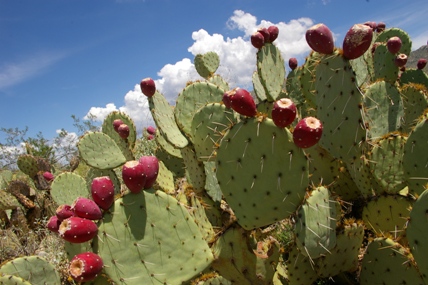
Many species of cacti are edible in some way or another. One of the best, and better-known varieties in the western and southwestern deserts I call home, is the prickly pear. While the stem of the cactus is quite edible when boiled, the real jewel is the red or purple fruit.
http://www.nps.gov/sagu/getinvolved/supportyourpark/images/prickly_pear.JPG
Be sure to skin the fruit before you try to eat it, because being a cactus, it has all of the traditional defensive measures.  Once skinned, the pulpy flesh inside is delightful.  Eat around the seeds, as they are tough and inedible.

Cattails
If the area you're foraging in includes wetlands, cattails are a very real potential food source. Nearly all of the plant is edible, with boiling required on many parts to make it edible. Dig up the roots and boil them. Boil the leaves and stalks. The head of the plant can even be cooked and eaten like corn on the cob.
http://www.fcps.edu/islandcreekes/ecology/Plants/common%20cattail/132s29.jpg

These three common, widespread edibles are high in nutritional content, simple to prepare, and can taste quite good.  While restricted in range, prickly pear fruit are a wonderful source of nutrition, water, and wonderful flavor.  The other two plant species are so widespread as to border on being universal, and can help save your life no matter where you're trying to survive.

Lokidude

Monday, July 14, 2014

Dandelions, Stinging Nettles and Clover, Oh My!

Three weeds of annoying persistence, with secrets hidden within their simple (and in one case painful!) leaves.

Clover

Clover is an incredibly tasty wild green that people in almost every part of the North American continent walk past without much notice. With over 300 species in an incredibly broad range across the world, this simple little plant is most commonly recognized here in the United States as White Clover and Red Clover (named for the color of their blooms). When most people think of clover, they think of hay and food for animals.  The two species of clover I just mentioned above are the most common and are edible!

"Livada" by Snezana Trifunovic - User:Tsnena.
Licensed under Public domain via Wikimedia Commons.
"Trifolium repens" by Forest & Kim Starr. Licensed under Creative Commons Attribution 3.0
via Wikimedia Commons.
Yes, I said the humble clover is downright tasty. Once upon a time, when I still had a cabin in an area that I enjoyed, I used pick fresh clover and young dandelion leaves to help supplement my salad preps. Clover has a slightly sweet taste and the blossoms are edible as well.

Something to note about red clover: it's a source of many valuable nutrients including calcium, chromium, magnesium, niacin, phosphorus, potassium, thiamine, and vitamin C. There is also a slowly growing body of evidence that suggests that red clover can help lower blood pressure (something to note for those of you who may take medicine for such a thing).

Preparation

  • Seeds and dried flowers from clover can be mixed into flour supplies for breads and other grain stocks to add a boost of nutrients as well as extend the amount of food available for use. 
  • Young clover and flowers are eaten raw. 
  • Steamed clover makes a great substitute for spinach, too. Steam until just welted, season to taste, and dig in!

"Brennnessel 1". Licensed under
Creative Commons Attribution-Share Alike
3.0 via Wikimedia Commons.

Stinging Nettle

My apologies for the itch that may have erupted from your memory. If you were anything like me growing up, stinging nettle was your nemesis when adventuring. However, until a few months ago I was not aware that this bastard plant... was edible. Yes, edible.


Preparation

  • Bring the water to a boil and drop them in.  They are tender almost immediately and ready to take your favorite seasonings.  It's a top wild source for Vitamin A and C. HOWEVER, only use plants a foot tall or less.
  • Older Nettle plant stems can be used for fiber making. 
  • Nettles can also be a source of vegetable rennet. Yes, rennet as in cheese-making rennet.  You boil the plant until there starts to be a oily extraction on top of the water.  I've heard numbers from 2/3 a cup to a cup and a half of chopped nettles for roughly a tablespoon and a half.  The amount of cheese that much will render, the numbers are scattered from 1 lb to 8 lbs of cheese.


Dandelions

"DandelionFlower" by Greg Hume.
Licensed under Creative Commons
Attribution-Share Alike 3.0
via Wikimedia Commons.
Now, dandelions are once again being recognized as food and have been cropping up in articles everywhere. So I'm not going to delve into them here; instead, I'll just give you several links to the articles as those folks have broken down the plant better than I could.


All three of these plants will often be found in the same meadows and fields.  Once you brush up on what they look like, they will be a welcome treat in the spring and early summer after a long winter of dried and canned goods.

The Fine Print


This work is licensed under a Creative Commons Attribution- Noncommercial- No Derivative Works 3.0 License.

Creative Commons License


Erin Palette is a participant in the Amazon Services LLC Associates Program, an affiliate advertising program designed to provide a means for sites to earn advertising fees by advertising and linking to amazon.com.