Showing posts with label I am a geardo. Show all posts

Saturday, May 11, 2024

Product Review: Hiearcool Waterproof Phone Pouch

Not actually Erin.
& is used with permission.
I like to listen to audiobooks while I shower. Like most people, I use my smartphone to play my audiobooks, which of course must be kept dry in order to function. Normally this wouldn't be a problem and I'd just keep my phone on the hamper, but I'm slightly hard of hearing and therefore often have to back up 10 to 30 seconds because I didn't quite understand what was being said, and it was awkward to stick my head out of the curtain and try to find the rewind button without my glasses, and then successfully press it with wet, soapy hands. 

Enter the Hiearcool Waterproof Phone Pouch, with a 4.6 star rating and 96,717 reviews. For $8.50 you get two transparent pouches that will accommodate nearly every smart phone currently being sold. These pouches are made of thermoplastic polyurethane that allow you to use your phone's touchscreen (but not fingerprint sensor) while it's sealed inside, and that seal is made strong by dual locking clamps that are secure yet easy to use. Each pouch also comes with an adjustable nylon lanyard which clips onto a loop on the pouch. 

https://amzn.to/3WEig6a

The prepping uses for this waterproof pouch ought to be obvious: not only will it protect electronics from water and other forms of moisture, but it will also protect against other damaging environmental factors such as sand, dirt, and dust, all while retaining full smartphone functionality. Since smart phones are used to navigate and call for help, they must be protected at all times in an emergency situation and this is an inexpensive yet very effective solution to that problem. I have one in my bug out bag and two in my get home bag (the other is reserved for a dedicated GPS unit, which is more energy efficient than a smart phone). 

https://amzn.to/3WEig6a

I have been using this product daily since January and it has performed flawlessly every time. My phone is in a protective case and I have no problems slipping it into or out of the pouch, I can access the touchscreen with ease and accuracy no matter how wet or soapy my fingers are, and not a drop of moisture has crept inside in all that time. In fact, before writing this review I sealed some pieces of toilet paper inside the pouch and left it submerged at the bottom of my bathroom sink for an hour. When I recovered it and opened the pouch, the toilet paper was bone dry. The worst I can say about it is that the lanyard isn't great, but given that it's easily replaced with whatever fits through the loops that's hardly a criticism at all. 

In fact, I've been using a 16" MODL Infinity Loop to hang my Hiearcool pouch from the shower towel rack. I haven't fully explored all of the uses of this tool, but it functions like a cross between a carabiner and a bungee cord and seems highly configurable. I regret that they can't be bought individually (I was given one) and only come in a pack of four (two eight inch, two sixteen inch) for $35. I will definitely be keeping my eye out to see if they go on sale for the holidays, because if so these will make ideal presents for my prepper friends. 

https://amzn.to/4bRpU1t

For completeness' sake, and because I know some people are wondering, I'm using this water-resistant Bluetooth speaker to hear my audiobooks while showering. It is unfortunately not available at the moment, but given its nonsense company name ("Maoifaec") I suspect it's made in China and will be released under a different name. While I am dubious of Chinese products, I have been using mine for over a year now and I am very satisfied with its sound quality, durability, battery life, and water resistance. If you're in the market for a Bluetooth speaker and you find of these these, go ahead and pick it up; I don't think you'll be disappointed. 

https://amzn.to/4beMWPR


Finally, I'm trying out a closing line. It seems like all the cool kids have one, and I want to be considered cool too. Please tell me what you think of it:

Stay prepped or get wrecked. 

Cool? Edgy? A bit too try-hard? Let me know!

Sunday, November 5, 2023

Nordic Poles Revisited

Not actually Erin.
& is used with permission.
Now that it's no longer summer, the weather is cooling off in Florida -- by which I mean nighttime temperatures are in the low 70s, maybe even high 60s. This is perfect weather for nighttime walks, and therefore this is the best time for me to get back into the night walking habit I let slip during the summer. 

The last time I talked about Nordic walking poles, I mentioned that while I liked the Attrac poles which I had, I really wished that I had a rapid lock-unlock system for the wrist straps that I could toggle with the thumb of that same hand. As it turns out, Attrac makes a pole with that feature, so I went ahead and bought it. 

Now, I'm going to ask you to follow that link to look at the title. Please note that it says "with Anti-Shock Cushioning" and "Telescopic Adjustment". 

https://amzn.to/47kWuGI

It has nothing of the kind. It is a fixed-position one-piece pole, meaning that there is no possible way to adjust its height and there is nowhere to put an anti-shock system without making it a two-piece pole. Needless to say, I was quite disappointed. 

On the other hand, it did have the "Click and Go" system that I really wanted, and I had some spare rubber tips lying around, so I decided to give it a try before I returned it... and I'm so glad that I did. 

Despite being non-adjustable, I got lucky; these poles are almost perfectly sized for me (the ideal size for my height would be 42.25 inches, but I'm not going to complain about a 2.75 inch difference), and despite not having any kind of detectable anti-shock system I couldn't notice a difference between them and my other set of Attrac poles which has one. 

I also dearly love the Click & Go system. Not only does it make it easier to do things like manipulate a phone while walking, but I can also use my pistol with the hand strap still attached. Yes, the plastic anchor does get in the way more than a little bit, but despite that I am still able to quickly detach the wrap from the pole, grip my pistol, draw it and dry-fire it. I haven't taken the wraps to the actual shooting range, and I suspect that the Range Safety Officers might have a problem with me shooting a gun while wearing them, so recoil and the plastic anchors might not mix well. But the fact remains that I can comfortably grip, aim, and dry fire my regular carry pistol (a Colt Mustang Pocketlite) while wearing these and that's the important thing, because in a self-defense scenario it's better to be able to operate a gun than have comfortable recoil.

The wraps on the new poles. 


After using these poles for a few days, I went back to my older Attrac poles to see if I could feel a difference. In terms of shock absorption, I could not; but I definitely felt a difference in comfort between the "Click & Go" system and whatever system the older poles had. The older poles also had a tendency to pinch me in the skin between thumb and forefinger, which is something that they didn't used to do. I'm not sure why this happened, unless it's because my grip angle changed. As you can see from the pictures above and below, the two pole styles have subtly different grip positions. 

https://amzn.to/4486bX7


So if you're between 5'4" and 5'6" in height and are interested in Nordic walking, then these are the poles for you. If you're taller or shorter than that, I'm sorry; there don't appear to be any other Attrac poles in this style for you, and you'll either have to get an adjustable type of pole (which I have already reviewed) or take a chance on a different brand. 

Whichever you choose, I wish you the best of luck, and I hope to see you out walking!

Friday, September 22, 2023

The Pacific Bay Portable Water Pump

Not actually Erin.
& is used with permission.

Back in 2020 I wrote a post titled Hydration Tube Inline Hijinks wherein I demonstrated my system for refilling your water bladder without having to dig out of your backpack. While I don't claim to be the inventor of this concept, to the best of my knowledge I haven't seen it used anywhere else; all of the quick-detach mounts I've seen are shown being used where the hose meets the bladder. 

Regardless of who invented the concept, I have been very happy with my setup as it makes it a lot easier to refill my bladder in the wild. However, an oddity of the English language is that easier is actually harder than easy, and it isn't easy using a manual pump (in my case, a Katadyn Hiker) to push water up a tube and into a bladder. When I timed myself, it took 2 minutes to pump 2 liters of water, and by the end of it I was tired and my arms were beginning to ache. Yes, it was something I could do, but when you're hiking do you really need something as necessary and basic as hydration to further tire you out? I don't, that's for sure. 

You won't be surprised, then, when I tell you that when I discovered the Pacific Bay Portable Water Pump on Amazon for $10, I bought it immediately to try it out. What follows is not specifically a practical review, as I have not put the pump "through its paces" over a weekend of camping, but rather my initial impressions and how it performs at home. 

https://amzn.to/3t7pOla


Performance
The hoses support standard quick-detach mounts used by Sawyer, Katadyn, etc. so I was able to easily adapt this to work with my inline system. 

The power button is big and clicks easily, making for "easy on, easy off" operation. It automatically shuts off after a minute of operation, but if you press and hold the power button it will pump for as long as you continue to hold. 

The pump filled a 2L Camelbak bladder from two 1L Nalgene bottles quickly and easily, taking about 45 seconds per bottle. (Yes, I paused the stopwatch while switching bottles.) Based on this information:
  • a 2L bladder fills in 1:30;
  • a 2.5L bladder should fill in 1:53;
  • a 3L bladder should fill in 2:15.
I'm not just being pedantic here; there is no pressure sensor in the pump, so there is the risk of overfilling a bladder to bursting if you can't see its fullness. 

I didn't detect any issues with performance when it ran out of water and started pumping air, although the sound changed pitch and there was gurgling in the hose.

Finally, the pump itself is slightly smaller than a standard 500 mL / 17 oz water bottle and weighs have as much, so it's quite convenient to pack. 


Problems
The biggest problem I had was making sure the hoses didn't kink, as they are a  softer and/or thinner gauge material than typical water bladder hoses. That wasn't even a true problem, but rather just a case of "Whoops, the hose is kinked, I need to straighten that out." I will need more experimentation to determine if I want to shorten the hoses or not. 

There's no battery charge indicator on the pump, so there's no way of knowing how much battery is left. However, the Amazon page states that "Performance tests show up to 78 liters can be pumped with a single charge of the battery. Lifetime expectancy of over 100,000 liters", so a charged-up pump will easily last for a weekend of hiking/camping unless you're pumping for a lot of people.

Given it's light weight I would not consider this a durable piece of equipment. I think it will likely break if dropped a few feet onto a hard object. 

This last point isn't a problem, but rather a question: should I put my Sawyer filter upstream of the pump or downstream? I'm not sure if unfiltered water would gum up the pump channel or not (although I do recommend using a prefilter, even if it's just an old t-shirt wrapped around it, just on general principles), but if so do I want to have a $30 filter protecting a $10 pump? 


The video on Amazon suggests having the Sawyer upstream of it, but then the video also shows someone just throwing the Sawyer filter into the stream. This bothers me greatly, not only because that's a great way to lose a filter if the hose isn't properly seated, but also because I'd worry that immersion in water could introduce contaminants into the clean water supply from seepage around the hose-filter junction. No, I'm definitely keeping my Sawyer out of the water, thanks. 


Verdict
This is a fun, inexpensive bit of kit that should make your life easier as long at it works. Since I have no firsthand experience with its reliability or durability, I won't suggest you put it into your BOB or GHB, but its lightweight convenience makes it a top candidate to bring along on pleasure hikes and campouts. Besides, at $10, it's cheaper and more entertaining than some movies I've attended.


Obligatory FTC Disclaimer: I bought this product with my own money. Go away. 

Tuesday, June 20, 2023

Nordic Walking Poles

Not actually Erin.
& is used with permission.

Last month I talked about using trekking poles for my nightly neighborhood walks and I stated that "my results are inconclusive because I feel like I haven't yet gotten the hang of Nordic walking." In the time since I wrote that post, I have learned the following:
  1. Trekking poles actually did help relieve the strain on my lower back while walking. 
  2. While walking with trekking poles eventually became more fluid, it never really felt natural and left hand was always numb halfway through a mile walk. 
  3. All of this is because I was using the wrong pole for the task. While trekking poles can be used in Nordic walking, they are far from efficient at it. A suitable analogy would be "Yes, you could use a soup ladle to paddle a canoe, because they're both tools for moving water, but there's a difference between scooping and pushing."
The short version of how I came to this realization goes basically like this: I didn't like my hand going numb, so I looked for poles that had shock absorbers. I found some poles which had such a thing, and they weren't that expensive, so I bought them. These poles were actual Nordic walking poles and not trekking poles, and the performance difference is profound, like going from a fixed-gear bicycle to a ten-speed. 

I should perhaps feel dumb about this, but I don't. As an example, the new poles I bought are literally listed as "ATTRAC Trekking Poles Classic 27-53 in Sticks for Hiking with Anti-Shock Cushioning - Lightweight Nordic Walking Poles Telescopic Adjustment Aluminium with Cork Grip". Notice that "trekking poles" comes before "Nordic walking poles"; I just assumed that they were more or less the same thing, with perhaps minor cosmetic differences. Poles is poles, yeah?

Yeah, no. Not at all. So let's talk about the differences between these Nordic walking poles and my Cascade trekking poles


Non-Slip Cork Handle
In my previous post I said that "No one can seem to agree if cork or foam grips are better" and I honestly can't find any performance or comfort difference between the two. Advantage: neither. 

Adjustable Wrist Strap
Perhaps one reason I can't tell the difference is because I don't have to grip the pole at all due to the fact that my hand is connected to it through a wrist strap. This definitely has its benefits; my left hand no longer goes numb because I don't need to grip the handle. Instead, I can relax my hands  and still get the benefit of a walking pole. On the other hand, having a pole lashed to my hands makes it very difficult to do anything else with the hand, such as tie a shoe, use my phone, or draw and use a pistol for self defense.  I can't even unhook myself quickly, because the strap threads through a plastic loop and folds back on itself, and I have to pull the strap nearly out of the loop to extricate my very small hand.  

https://amzn.to/4486bX7

Advantage: the ease of use and elimination of numbness would make the Attrac a clear winner, except that the inability to hold anything else while tethered to it eliminates that benefit. It's a wash for me, but if you don't have issues with gripping a pole for extended periods then this would definitely put the Cascade trekking poles in the lead.

Anti-Shock System
I thought that a shock absorber on a walking stick was a luxury I could do without. I was wrong. The anti-shock system redeems the Attrac's issue with the tether, and it makes walking a much less jarring and therefore much more comfortable experience. Every pole I buy from now on, be it trekking or Nordic, will have one of these. 

Advantage: the Attrac by a huge margin. 

Safety Reflector
If you're walking at night and you don't have a light or a reflector already on you, these are unlikely to help you. 

Advantage: the Cascade doesn't have this, but this is irrelevant. Wear a headlamp and/or safety reflectors like a responsible adult. 

Telescopic Function
Both the Cascade trekking poles and the Attrac Nordic walking poles telescope. However, the Cascade's lever-lock system is superior, both in speed of use and reliability of locking, to the Attrac's system of twisting left to unlock and twisting right to lock. I can adjust the Cascade mid-walk quickly and without issue, but if I need to adjust the Attrac, I have to stop and give it my full attention... and there's a better than average chance that I won't fully engage the twist lock, resulting in a suddenly collapsing pole at an inconvenient moment. 

Advantage: the Cascade, by a huge margin. 

Tips
Both poles came with mud baskets, snow baskets, boot tips, and small tips. Only the Attrac came with asphalt tips, however. 

Cascade Tips:

https://amzn.to/3HZvFxf


Attrac Tips:

https://amzn.to/4486bX7

After a month of walking one to two miles a night, the asphalt tips are worn down such that they have no visible tread, but I don't need the tip for traction; I need it to protect the carbide pole tip, and it does that adequately. I'll let you know when I need to replace the tips. I haven't needed to use the baskets so I have no opinion on those as of yet. 

Advantage: technically the Attrac, but I could just as easily use the "forest" or "boot" tips on them as that's what I used with the Cascade. 

In Conclusion
I like walking with my Attrac poles, but they're far from perfect. I don't regret buying them, because they make my walking so much easier; I can now easily do two miles per night, whereas with the Cascades, or without poles at all, I could only do one. As exercise equipment, they're great, but speaking as a prepper and concealed pistol carrier, the loss of manual dexterity is a price I really hate paying. 

In my ideal world, I would have Nordic poles with the following qualities:
  1. A rapid lock-unlock system for the wrist straps that I could toggle with the thumb of that same hand. 
  2. A built-in shock absorber. 
  3. Lever locks on the extensions. 
While I'm certain poles like this exist, I haven't yet been able to find them. My concern is that when I do, they will be expensive ($50 or more). 

I've been enjoying my nightly walks, though. Walking is a low-impact exercise, and I'm able to listen to audiobooks while I walk, so I have been able to effectively "trick" my body into thinking this isn't actually exercise and is, in fact, fun. I'm willing to spend more money on making my walks a better experience, so I'm committed to finding a pole that does everything I need and want it to do. 

When I do, I will let you all know. 


Thursday, May 11, 2023

Trekking Poles

Not actually Erin.
& is used with permission.

I recently bought a pair of trekking poles for my nightly mile walks around the neighborhood. The arthritis in my lower back has been a limiting factor when it comes to the amount of distance I can comfortably walk, and while researching solutions to this I discovered the concept of Nordic walking -- essentially, cross-country skiing without the skis. Between the increased cardiovascular benefits of Nordic walking and subsequent discovery that trekking poles help with load distribution while walking with a rucksack, I decided to investigate the benefits for myself. 

Since  didn't know if they would work for me, I bought a set of aluminum trekking poles from Cascade Mountain Tech ($21.50 on Amazon) because they had a high rating and because if I ended up not liking them I wouldn't be out a lot of money.

https://amzn.to/3HZvFxf

 Here's what I discovered:

1) No one can seem to agree if cork or foam grips are better. 
Both sides have their supporters, and the only thing they can agree upon is that cork grips are slightly ($10-$20) more expensive than EVA foam. After that, here's what I've been able to make out to the best of my ability:
  • Cork is less durable than foam, but is more comfortable because it wicks away your sweat and conforms to your grip. 
  • Foam is more durable, but this also means it will chafe more. It also absorbs moisture so sweat and/or rain will reduce your grip. 
  • Both foam and cork offer the same amount of cushion/shock absorption, so it's a matter of long-term comfort vs long-term durability. 
I went with foam mainly because I wasn't sure I would like the poles to begin with. At this time I haven't found myself wishing my EVA foam grips were more comfortable or less sweaty, but that may be because my walks only last between 30 and 60 minutes and I'm walking on level asphalt roads. 

2) It takes time to learn how to walk with trekking poles. 
When I first started, I thought I knew how to use them, but within the first few feet I knew something was wrong because I felt no additional stability or speed. I was taking two steps for every use of the pole, and that didn't feel right, but I wasn't sure what I was doing wrong. Even YouTube videos didn't tell me what to do; while they may exist, I couldn't find a "This is how you walk with trekking poles, you dummy" video. 

What I eventually realized was that I needed to search for "How to Nordic Walk" videos instead, and that was tremendously helpful to me. These videos showed me where my pole tips should be striking the ground -- roughly where my heel would be if I were standing still -- and not in front of me at all. This has helped a great deal. 


I'm still getting the hang of it, but I think I'll soon have a natural stride. 

3) My left hand goes numb about halfway through the walk.
To be clear, I'm not blaming this on the poles. My left hand gets pins and needles basically any time I need to hold it at a a 90° angle or higher for more than a few minutes or when I need to grip something tightly for longer than a minute. I lack health insurance so I haven't had this diagnosed by a doctor; the last time I had it looked at (2019) I believe I was told it was tendonitis and not a big deal, although I'm not ruling out carpal tunnel syndrome. 

Either way, this numbness is quite uncomfortable and it's hard for me to concentrate on anything when it happens, especially the position of my trekking poles. The only way to fix this is to shake my hand, or otherwise let it hang down, which is difficult to do when carrying a pole and makes using a pole pretty much impossible. 

Perhaps I'm gripping the pole too tightly, or my pole technique is otherwise improper, and correct form would prevent hand numbness. I will continue to refine my technique and let you know how that goes. 

Do I recommend trekking poles?
Right now I have to say that my results are inconclusive because I feel like I haven't yet gotten the hang of Nordic walking. If I can't seem to get the hang of it after a suitable amount of time, or if I do and see no benefit, then I would say no. 

However, I can see the appeal and the benefits seem logical, and the multitude of Nordic walking enthusiasts can't all be wrong. Perhaps tonight everything will fall into place and I will become a zealous Nordic convert. 

Only time and experience will tell, and I will keep you all posted. 

Thursday, February 2, 2023

Guest Post: MSR Dragonfly Review

by Stephen

Hello intrepid readers! My name is Stephen, and I am a recovering gearhead. My first camping trip was at age six when my family drove 12 hours to the Upper Peninsula and spent a week at various campgrounds there. Between family and Boy Scouts, my memories have only gotten more numerous and there are too many trips of all sorts to count.   

In a 72-hour bug-out scenario, you can survive on cold rations or starve, but what if that situation goes longer? What if you are bugging in without power? Hot food provides morale as well as sustenance.  

Four basic fuel types exist: wood, solid, liquid, and gas. 
  • Wood can be scavenged so you do not have to carry it, but takes longer to get lit, gives inconsistent heat, and requires more effort to collect fuel.  
  • Solid fuel tabs are easy to use, but lack temperature control since they are all-or-nothing. 
  • Liquid fuels work in a wider variety of temperatures and are scavengeable, but lack the quick plug-and-play of a butane or propane canister.  
  • Gas, for all its ease of use, suffers in performance when temperatures are below freezing and may even stop working when it's cold enough. 
So which one did I pick? 

Let me introduce you to the MSR Dragonfly, a multi-liquid fuel backpacking stove.

https://amzn.to/3jowwPg


My dad bought this stove in the 90s as part of his preps for Y2K, and in the early 2000s we dug it out to use on a 50 mile backpacking trip with my best friend and his dad. As an illustration of the usefulness of having a liquid fuel system: we forgot to fill the fuel bottle, but since this will burn anything from gasoline to jet fuel, we were not out of luck, and a gas station sufficed to get us topped off.  

As with any liquid fuel stove, pressurizing the fuel tank -- in this case steel bottles that, other than the red color and warnings all over them, could be mistaken for a water bottle -- takes some elbow grease. Also, as the fuel runs low, you'll have to pump more to get the same pressure. Since you don't want to carry or store the bottle pressurized, this means you will get a workout with each meal.  

The stove folds up fairly compactly, and will store in a pot as MSR advertises. Its three legs provide much more stability than a pocket-rocket style stove (which Erin reviewed back in April 2022) since the footprint is wider than your typical fuel canister.  

One other difference in usage is the pre-heating step where you let out a little fuel, then ignite it with the fuel turned off. This takes some getting used to; I remember the little fireballs we created at first, learning to control how much fuel was released. Once the flame dies, open up the fuel again, ignite, and proceed to cook.

Although it definitely had some adjustability, my dad’s version didn't simmer as the website claims. We burned some pancakes in our 70’s Boy Scout mess kits, though it was probably just as much of a cookware and/or batter technique issue as stove functionality. It served us well on that trip, and when I moved out on my own I purchased one. They've definitely changed the model over the 20 years since then, because my much more recent purchase looks drastically different.  

The MSR Dragonfly is not the lightest stove, weighing 1 lb 3 oz without the fuel bottle, but I want it for it size. As an apartment dweller for the time being, I am at risk of losing cooking capabilities with a loss of electricity, so having a backup is comforting. What's more, it will hold my two liter stove-top pressure cooker, which I bought for the exact purpose of cooking beans and rice in a more fuel-efficient manner. No, I won't carry that pot in a bug-out situation, but bugging in whenever possible is always preferable.

Fuel flexibility is also a huge consideration for my prepping lifestyle. I can burn five different liquid fuels (gasoline, diesel, jet fuel, kerosene, and white gas) with just the change of a nozzle, using only a screwdriver. Even at current prices, gasoline will provide way more burn time than a small cannister of isobutene at the same price: Amazon has butane canisters for $2.14 per oz, versus $0.04 per oz of gasoline (presuming $3.99/gallon). If you stock up diesel or kerosene you also get more than twice the energy efficiency per MSR specs, though kerosene does burn dirtier; I lack experience with diesel to comment.  

https://amzn.to/3wSxLsU


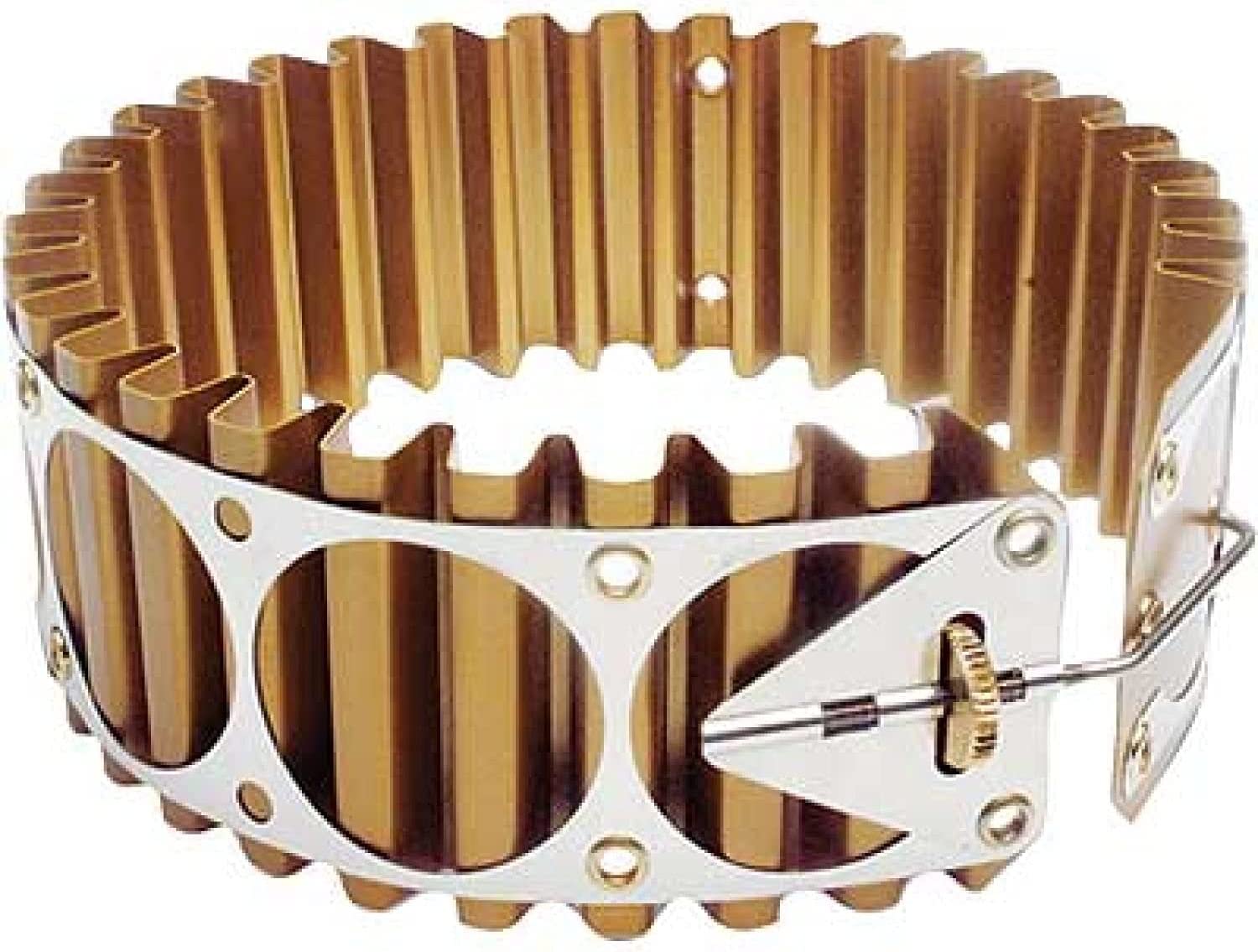
If money and weight are no issue, another way to increase performance is to get the heat exchanger which clamps onto the bottom of a pot. This prevents the heat escape around the edges of the pot that Erin saw in using the pocket rocket at full blast. My dad owned the heat exchanger, and it needed a little monkeying around, but we definitely noticed a difference in performance. 

In theory, the Dragonfly stove will need more maintenance than many stoves, such as the replacement of o-rings. MSR recommends this be done on a yearly basis regardless of use, but my dad’s stove sat at least a decade without use and worked perfectly fine.  

I know of backpackers who only use the MSR Pocket Rocket, and its price, weight, and ease of use are definitely appealing; it's for those reasons that I want to add it to my fiancée’s bag when I have the funds. In my opinion, though, the Dragonfly’s capabilities make it worth its extra weight and complexity. 

Friday, December 30, 2022

Why I Have a Motorcycle Lift Table

Not actually Erin.
& is used with permission.
Traditionally, this blog goes on vacation between Christmas and New Year's Day. For that reason I let David off the hook this week, but I wanted to write something because I've made an effort to write more often since November, and also because we just haven't had many posts this year due to Real Life problems with our other writers. 

Anyway, this Christmas I bought a Lift Table using gift cards. 

https://amzn.to/3Ccr3RH


Now, you're probably wondering why I bought a table capable of pneumatically lifting a 300 pound motorcycle, especially since you know I don't own a motorcycle in the first place. This is a fair question, and the short answer is "I need to lift heavy things and I have arthritis in my lower back." Because I'm going to be "over the hill" next year, I thought it would be prudent to have a piece of equipment that can hoist most anything I would need to lift, because I'm only going to get older and my arthritis will never get better. My mother is in her 80s now, and while she can currently move without assistance, in the future she may need help getting up like my father did a few years ago. She weighs much less than 300 lbs, but I like to say that there's no such thing as overkill, just increasingly greater chances of success. 

The longer answer, and I can practically hear the record needle scratch as I say this, is I bought it to lift my Bug Out and Get Home Bags. "But Erin," you are saying right now, "if you need a lift table for your BOB and GHB then they're too heavy!"


They're actually not too heavy for me to lift, and they're definitely not too heavy for me to carry because I'm already regularly walking a mile while wearing them. My goal is to work up to walking two miles, and the reason I need to work up to that is because I'm overweight and out of shape. I stop because I'm tired and out of breath, not because the pack is too heavy. When I get it cinched down, my hips carry most of the weight. 

No, the problem is that the arthritis in my lower back is a stone-cold bastard, and sometimes just picking up a heavier-than-usual grocery bag makes me hurt, and I don't see the point in hurting myself if it's not necessary. Furthermore, this lift table actually makes it more convenient for me to put my bag on and off, meaning that I'm more likely to put it on for exercise. 

So now I have a lift table that will easily raise my bag to waist level so I can easily put on it for walks, and then when I'm done smoothly lower it for storage or bag access/maintenance. 

https://amzn.to/3Ccr3RH


I haven't used it long enough to give a long-term evaluation of it, but here's what I've noticed so far:
  • The wheels easily move on residential carpet. 
  • ... which is good, because it weighs 70.5 lbs. I'm not picking that sucker up unless I absolutely have to. 
  • The table is wide enough for my needs without getting in the way, although the hole in the surface is a bit annoying. 
  • Weights up to 150 lbs rise with no extra effort. I just push the foot pedal down. (I haven't seen a need to put on more weight than that.)
  • The lift pedal seems to raise it about one inch per pedal pump, so I have to pump it about 30-some times. 
  • The lift pedal swings a bit from side to side. This is awkward but doesn't interfere with its function. 
  • The table lowers smoothly and swiftly. 
  • I can easily fit all of my packs onto it. 

So, I have a lift table now. It was expensive, but I'm glad to have it. I'm certain I will find other uses for it; if you read the Amazon reviews you'll see stories of people using it for other purposes, such as installing window sill air conditioners or raising generators to truck bed level. If you find your back constantly hurting from having to lift heavy things, then perhaps the Extreme Max Hydraulic Motorcycle Lift Table is right for you, too. 

https://amzn.to/3Ccr3RH


Saturday, December 3, 2022

Follow-Up Reports

Not actually Erin.
& is used with permission.
Herein is an assortment of further information on topics I've discussed earlier. 

I am pleased to report that using this as an uninterruptible power supply for my CPAP works perfectly. Last month our neighborhood lost power from early morning until about 1 pm, and I didn't experience a change in performance as the Freeman 600 switched from pass-through charging to onboard battery. I am very happy with how this system operates, so unless there are hidden issues with the unit which only crop up after months or years, I consider this experiment a resounding success and recommend the Freeman 600 for all my CPAP-using brethren. 

I haven't yet tested the recharging speed/capabilities of the solar panels. That's on my list of "Things I want to do but first need to find the time to do them."

The Caretras Bunion Splint is doing its job of pulling my toe back into alignment while I work at my desk or watch television. However, the velcro doesn't hold as tightly as it once used to do, despite having been laundered and the hooks free of any lint. However, I have achieved a workaround with something I ordered for a different problem. 

https://amzn.to/3Uqecl3

This 20-piece set of velcro ties for cable management works a treat for keeping the splint on my foot. The smallest (8" long) wraps around my big toe, and the next smallest (12" long) secures the brace around my instep. I have plenty of each, so if these start to fail I can just use the others, and I still have straps left over to secure the cables I wanted gathered up.

On a related note, I have discovered that wearing these gel toe separators while going for walks or running errands is a useful preventative measure. While they don't prevent my toe from cramping, they reduce the intensity of the discomfort and the time required in the splint to correct it. 

https://amzn.to/3unxnRT


Back in 2018 I mentioned using Hickies-brand no-tie shoelaces for my daily shoe and boot usage. As it turns out, while version 2.0 is more durable than version 1.0, they do still experience material fatigue and failure from repeated use. 

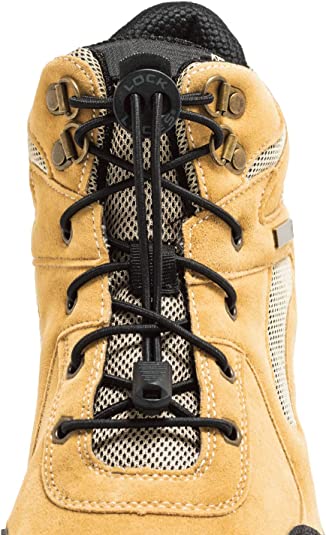
However, I have found something better! Lock Laces are a single strand of elastic cord with a spring-loaded lock to gather them tightly into place. This keeps them securely attached to my feet, but with enough "give" that I am able to quickly slip them on and off as needed. 

https://amzn.to/3VsINzZ


There is even a heavy-duty boot version

https://amzn.to/3FppIck


I have been using Lock Laces for almost a year now and they continue to stretch and return to form. While I am certain the elastic will eventually fail, they have stood up to daily wear & tear and I am impressed with their durability and performance. I recommend them to anyone who wants to be able to save time putting on or taking off their footwear. 

That's all for now, but I will update you on any changes. 

Monday, July 4, 2022

MOLLE Attachments

Not actually Erin.
& is used with permission.
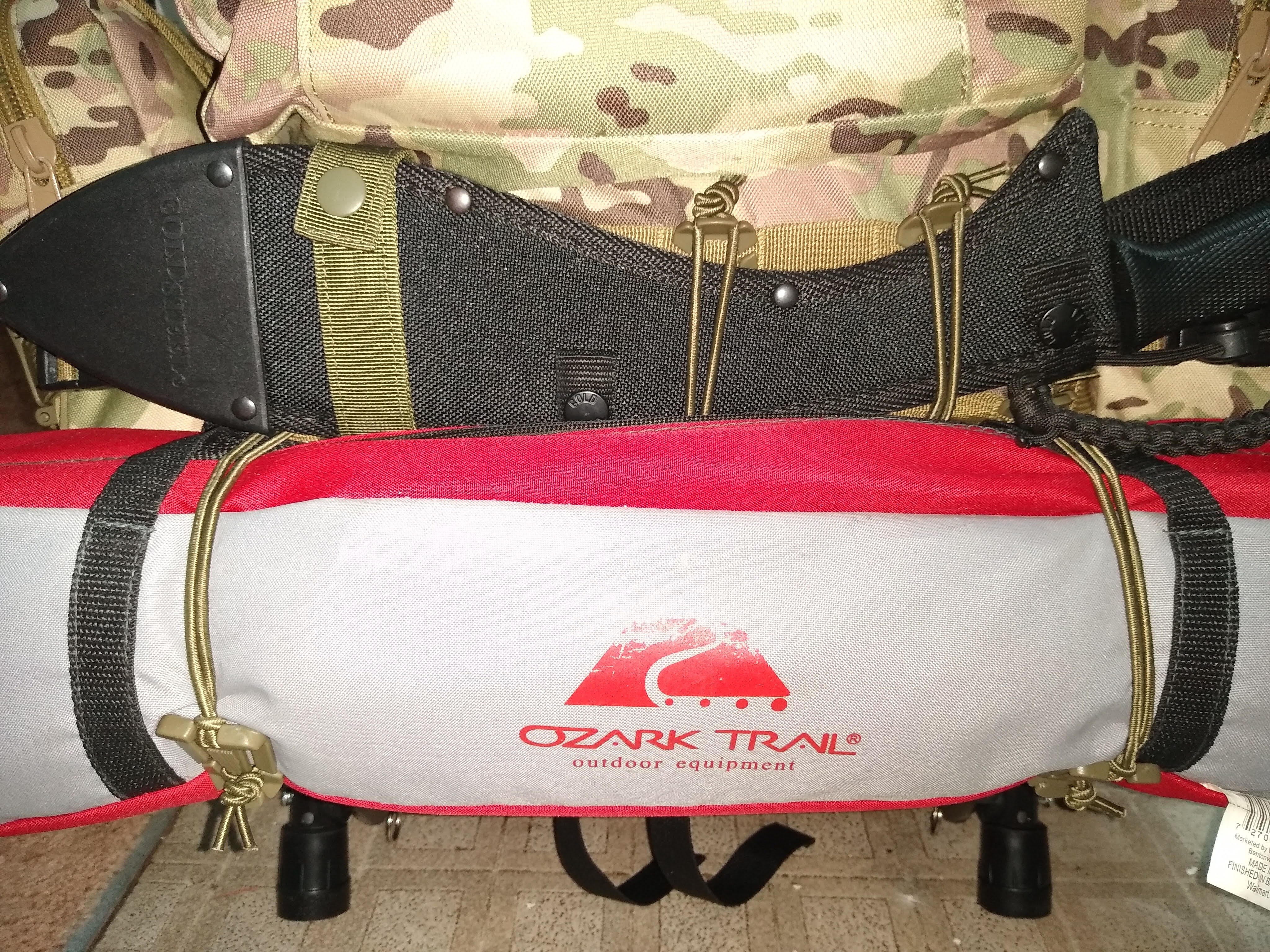
Buddhism says that attachment is the root of all suffering. Be that as it may, sometimes attachment is good, especially when you want to secure loose gear to MOLLE straps. I certainly fall into that category, and this 30-pack of attachment hardware -- 10 each of Strap Management Tool Buckles, D-Ring Grimloc Locking Gear Clips, and Web Dominator Elastic Strings -- is very useful for making my Get Home Bag more accessible and less rattle-y. Each has its own purpose, and each has found its way onto my gear. 


To my great surprise, these have been the most useful and versatile of the three types. Not only can they used to police the loose ends of straps as their name suggests, but they also hold the straps with enough friction that if you have a cinch buckle which is not doing its job and is allowing a strap to work loose, a single application of one of these will lock it into place. 

https://amzn.to/3R9zS4I

Moreover, these buckles can also be used to fasten two sets of MOLLE loops together in a manner that is both secure and quick to unlock. 

I ended up buying a second package just because I had used all of these and wanted more. 


D-Ring Locking Clips

https://amzn.to/3R9zS4I

Strangely enough, I found these the least useful of the three and I'm not entirely sure why. As you can see they have big D-shaped loops which will attach to a variety of objects, and you can either thread them onto a MOLLE strap or just daisy-chain them together. 


I think the fact that they are so large is what turns me off, because whatever you hook onto them can still shift and twist, and that gives the illusion of insecurity. That said, I still use them, and if nothing else they make marvelous (if large) pull tabs for zippers. 


Web Dominator  


The Web Dominator shines at attaching odd or awkwardly-shaped objects to MOLLE straps. It's a glorified bungee cord, so it doesn't hold things with any particular strength and there's always the possibility the object could wiggle out the ends. However, there are times when nothing else will do the job. 


I couldn't fit this Israeli Bandage into my first aid bag, so since it's vacuum-sealed into a thick plastic package I decided to let it ride outside. This also allows me to get to it quickly, which is a definite bonus. 


I had to link two pairs of them to reach around the tent, but they hold it well enough, and the tent itself is long enough that I think it's unlikely to work its way out. 

The kukri machete is a very odd shape that, due to its weight, needed to be secured in multiple places. I have a MOLLE strap on one end and a Grimloc securing the belt loop on the other; the Web Dominators are there mainly to keep it snug against the pack so it doesn't swing while moving. 


I am a big fan of all three of these connectors, and if you have MOLLE gear I am certain you will find them useful. You can buy them on Amazon for $13 with Prime shipping and they come in black, foliage green, olive drab, brown, coyote tan, and gray. 

https://amzn.to/3R9zS4I


The Fine Print


This work is licensed under a Creative Commons Attribution- Noncommercial- No Derivative Works 3.0 License.

Creative Commons License


Erin Palette is a participant in the Amazon Services LLC Associates Program, an affiliate advertising program designed to provide a means for sites to earn advertising fees by advertising and linking to amazon.com.