Showing posts with label Camping. Show all posts

Wednesday, February 5, 2025

Portable Propane Heaters

Winter camping can be miserable, and I’ve winter camped in Washington State in the snow and the wet and the cold as a Boy Scout. Now I’m camping in Georgia year-round with my son’s Trail Life Troop, and “below freezing in Georgia” is just as miserable as “below freezing in Washington.”

There are two schools of thought among the adults who provide some level of safety for our troop. One is “I need to be able to carry all my kit long distance,” and the other is “What the heck, I own a truck, and I’ll carry my gear from the truck to the campsite.” The first group doesn’t use any artificial heat sources, and the second group does. At the last campout, the second group was more comfortable than the first group because they had bigger, roomier tents. In two of those tents were Mr. Heater Portable Buddy Heaters, and I got to enjoy them simply by being there.

https://amzn.to/4hJdxY7

In Use
First observation: even the smallest Mr. Heater product is plenty for a tent that a single person can pack. The advertisement says “up to 225 square feet” which I think is a bit generous for most tents, but in a well-insulated room or small cabin it would make sense.

Second: plan to use one 1lb bottle of propane per night, or six hours of burn time. You can get an adapter to use any size of propane bottle you want if you need more than six hours of heat production. 

Note: while commercial locations won’t refill most 1lb propane bottles, you can buy adapters to refill them yourself.  This is obviously discouraged by single-use propane vendors, but there are  refillable bottles on the market.

Pros and Cons
A Mr. Heater is a bit of a luxury item for camping in Georgia or Washington, even in the winter time. But as a survival/resiliency prep it has a few things going for it. 
  1. If you have a gas grill and adapter hose, or a few 1lb propane bottles on hand, you have a safe indoor heating in a pinch. 
  2. A heat source can be used to heat food. One YouTuber I watch routinely opens canned food and gently heats it using his Mr. Heater in the depth of Canadian winter, and toasting frankfurters or marshmallows is very similar to using a campfire.
Is it perfect? No, not really.
  1. It takes up space when not in use. Not much, but some.
  2. Unlike a rocket stove or Solo Stove or Kelly Kettle, it uses a fossil fuel that may or may not be easy to get in an emergency. If you live in an apartment where wood or twigs aren’t plentiful, that might be a positive rather than a negative.
  3. It’s big enough that I wouldn’t bother keeping one in a full size van unless the van had been converted into a small camper. In a large camper, a Mr. Heater makes quite a bit of sense.
Should You Get One?
I’m not in a hurry to go out and buy a Mr. Heater of my own, but if I see a good sale I’ll probably snag one. They run very quietly, and in an elevated deer stand in the winter where I sit still for hours on end, it might be really nice to not feel the cold so deep in my bones.

Also, don’t underestimate the value of the “nice to haves” in a situation where you have to rely on your preps and not public infrastructure. The little luxuries can make all the difference between a miserable experience and a merely inconvenient experience.

Tuesday, January 28, 2025

Hammock Camping

I’m not getting any younger, and the ground isn’t getting any softer. Several of the fellow Dads in my son’s Trail Life Troop are avid backpackers, and they all recommend hammock camping. Some camping hammocks are mini-shelter solutions in themselves, some even with snuggly sleeping bags built in for cold weather... but not the ones I bought at Harbor Freight. I purchased two of these hammocks, one at the full price of $19.99 for my son, and one for myself when it was on sale for $14.99.

https://www.harborfreight.com/parachute-hammock-with-adjustable-tree-straps-57399.html


Bottom Line: It Works
It is a hammock. It is actually a very well-designed hammock for what it is: two nylon straps to wrap around trees, two steel carabiners, and a hammock with its own storage bag sewn in.

What It Lacks
Any sort of built-in coverage or bug screening, or any sort of thermal insulation. This means that when I slept in it for the last few nights of sub-freezing weather (I woke up with frost inside my bivy cover on my outer sleeping bag), I had to adapt my sleeping system a little bit.

To keep from freezing in the freezing weather, I put my close-cell foam sleeping pad inside an Army surplus bivy cover, and used both the winter and summer bags for the modular sleep system and a woobie to fill in the air gaps and Hot Hands brand hand and toe warmers to make me toasty. The Hot Hands warmers weren’t strictly necessary, but they definitely helped me get comfortable faster when the temperature was below freezing.

My Plan to Hammock Camp in the Rain
  1. Bring 550 cord, bungie cords, ground stakes, and a tarp. 
  2. String the 550 Cord over my hammock using the same trees I attached the hammock to, and make a rain cover. 
  3. I wouldn’t recommend any tarp smaller than 8x10 feet, although the “Amazon’s Choice” recommendation for a hammock rain fly looks really tempting.
How to Overcome Bugs 
Other than chemical repellents, there aren’t many options. But for only a few dollars more, why not just buy a hammock with a bug screen built in?

https://amzn.to/4haOtJN


Complete Side Note and War Story
I once served with a bit of a character who had done some bounty hunting prior to his life in the Army. His team used a full-size van as part of their stakeout platform, and had modified the interior with hard points in the front and back to attach a hammock so one member of the team could get some sleep while the others observed, and the hammock could get stuffed away into nearly no space quickly (something an inflatable mattress couldn’t do). Having slept in a Ford Econoline van before, I’m positive the hammock provided an upgrade to the floor. If your preps include a van-sized vehicle, that might be an option for you.

I'm a Hammock Camping Convert
I still have to pack a sleeping pad in the winter time, but between the weight of the hammock and a rain fly, I’m saving weight and space over a tent. 

Is this something you absolutely need in your preps? Probably not, but it did provide me much better sleep than any other option I’ve tried, including some very expensive inflatable sleeping pads.

Wednesday, March 20, 2024

Guest Post: Tidewe 5500cu External Frame Backpack

by George Groot


George is a member of our Facebook Group and has written for us before.


I’ve written before that military issue rucksacks generally suck for actually hauling lots of stuff long ways. The Infantryman on patrol needs a rucksack that doesn’t increase his overall profile from the front, so military rucks get bigger away from the body rather than packing gear higher and closer. This leads to “rucksack lean,” where you put your shoulders forward to get the weight closer to where your natural center of gravity normally is. Civilian backpacks don’t have that design consideration, so they are generally more “up” than “out” when packing in your kit, which leaves the weight closer to your center, and minimizes the “rucksack lean” quite a bit.

I mentioned in a previous post that for the past few years I've participated in the Mammoth Sniper Challenge, a three-day event in January where there’s a lot of ruck marching, no resupply of anything except water, and you sleep outside. I needed a rucksack that would hold a winter level sleep system, all my food, ammo, shelter, and clothing for three full days. I’ve lived out of a large ALICE pack for long enough to know that it can be done, but it’s not exactly comfortable, so I went looking for an affordable, large capacity, civilian hunting pack. 

A “merely good” external frame rucksack/backpack can cost several hundred dollars, and all of the more affordable options are made overseas, mostly in China. While I ultimately ended up choosing an American-made (and more expensive) ALPS OutdoorZ Commander freighter frame and pack bag, the Tidewe 5500cu (90L) hunting backpack may be a decent option for you given the volume that it can carry and the features that it has. 

https://amzn.to/3TqbU7c


The Good
  • Two main compartments, two zippered side “sustainment pouches”, and two small convenience pouches on the waist belt. 
  • A built-in pack cover for rain, a convenient top flap cover for items you may need to grab quickly, and a center flap pocket (ideal for storing magazines). 
  • A rifle buttstock pocket to strap a full-size rifle to the side of the rucksack. 
  • Cinch straps across the body so you can pull the load tight against the frame, or use the straps to attach items externally.

The Bad
  • The nylon straps are a bit “floppy” and not milspec stiff, which means you will likely need to adjust them more often as they slip, or you’ll need to modify the straps to stay in place. 
    • If you are handy with needle and thread, then modification isn’t a bad thing. 
    • If you are fine with tightening down attachment points when you do a rest stop, there's no need to modify them. 
    • If you aren't fine with either, then this isn't the pack for you. 
https://amzn.to/3TqbU7c


Testing
My initial test with the pack was about a 30 pound load: two tarps, 100 rounds of 9x19, 100 rounds of 7.62x51, a complete Army modular sleep system, a sleeping pad, two days of MREs, a one pound cylinder of propane and burner, wool hat, neck gaiter, a few rifle magazines, and a half gallon of water. I took it on a one hour hike (about 4 miles) and at that weight level it is much more comfortable than either an ALICE or MOLLE military rucksack.

I started off with a light weight because I was in the “condition my feet” level of ruck marching, and needed to get a good set of callouses built up between now and January. Over a span of weeks I increased pack weight and distance until I was able to knock out a 12 miler.

I used this pack for Mammoth Challenge 2023, but for this year I replaced it with the Alps. 

Final Verdict
The Tidewe 5500cu is a decent hunting pack, but not a great rucking/hiking pack. I recommend it for hunters, or for a short  “into the woods” weekend camping trip. If used for long hauls, you'll have to keep tightening the straps that connect the pack to the frame or the whole thing will shift and/or rock on your back and suck the energy out of you.

I do however recommend the Tidewe over a large green ALICE pack, because you can pack the weight closer and higher than the ALICE, making things much less painful on your back and shoulders. 

The Tidewe pack can be removed from the frame so the frame can be used purely as a cargo carrier, for deer/elk or even firewood, that's pretty useful. (My Alps pack has the same feature.) If you just need an external frame backpack for hauling things around short distances, a used one off of eBay or secondhand store is probably going to be more affordable. 

All in all, if you don't have a good hunting pack or hauling frame pack, the Tidewe 5500cu isn't bad for what it is, but honestly I would look for a used Alps or Eberlestock, or another better brand on the used market, over a new Tidewe 5500.

Sunday, February 25, 2024

Guest Post: Titanium at the Mammoth Sniper Challenge

by George Groot


George is a member of our Facebook Group and has written for us before.


In January of 2023 I participated in the Mammoth Sniper Challenge, a three day endurance event where you have to pack everything except water and live out of your pack. This year I used an ALPS OutdoorZ Commander freighter frame and pack bag, stowing an AR-15 in the rifle retention system on the pack and carrying 150 rounds of 5.56x45 and 100 rounds of 9x19 on the opposite side pouch to balance the load. Magazines went in the outer utility pockets. My food, clothes, cooking kit, and pistol went in the upper compartment, my sleeping system went in the bottom compartment, and my sleeping pad was rolled up and strapped to the bottom. 

https://amzn.to/49HtERS

All told, my pack weighed in at 59 lbs at the beginning. I had 2.2 lbs of food per day, with around 3,000-3,500 calories per day. At the end, with most ammunition expended and two days of food gone, my pack was around 45 lbs.

Cooking
I’ve served in the US Army for 25 years, and I have plenty of experience long distance rucking, but I always had the opportunity to make a small cooking fire or to re-supply with MREs at logistics points. Since fires aren't allowed during Mammoth by Fort Eisenhower Range Control, I had to purchase a packable cooking solution. I went to Walmart and picked up this Coleman Peak One butane-propane stove for my cooking needs.

https://amzn.to/3T8kFDH

The good: It works, it’s small, and it is easy to use. It was available at my local Walmart for about $14 when I bought it in 2022.

The bad: It’s 6.7 ounces, or nearly 200 grams. 6.7 ounces feels light in the hand, but I learned the hard way, again, that ounces make pounds, and pounds make pain.

For Mammoth 2024, I used a titanium stove that weighs only 26 grams:

https://amzn.to/3uMZMEW

The good: It works, it’s small and it's light. At $24, its price is competitive with the Peak One whose 2024 price has risen to $22 at Amazon. 

The bad: It’s slightly less efficient at turning fuel into heat than the Coleman, adding about 20 seconds of time to boil one liter of water. My partner for Mammoth picked up the same stove, and neither of us had any issues actually using it throughout the event.

Fuel
Another thing I learned is that I should pack the absolute smallest isobutane canister possible. Since Mammoth only lasts three days, I only really need to cook about seven meals, and even the smallest fuel container can cover boiling water to re-hydrate nine freeze dried camping meals. 

In 2023 I bought the “econo-size”450g canister at Walmart, and I’m still using it multiple campouts later. While it was good value for my money, it was also weight that I didn’t need to carry for three days. This time I bought the absolute smallest canister I could, and it lasted the entire event just fine, and because the location hardly ever drops below 25° F, I chose a pure isobutane fuel instead of an isobutane/propane mix. If you live in an area where it does get colder than the boiling temperature of isobutane, you’ll want an alternate cooking method.

Mess Kit
The second upgrade to my kit was going from two stainless steel cups to a titanium cup and a titanium pot. The 450 ml cup was 20 dollars and comes with a lid...

https://amzn.to/3uNrTnn


... and the 750 ml pot with lid was 18 dollars.  

https://amzn.to/3USdnoT

As you’ll see later, the real upgrade is going to vessels with lids, which makes it easier to cook over a fire without cinders or ash falling back into your food. 

Weight Savings
Between the burner and the two vessels, I’m shaving six ounces off my load.  

Old Stainless Kit: 14.9 ounces (no lids). This “heavy” loadout cost me about $23 because I got the burner on sale and one of the stainless cups from the Goodwill thrift shop for 99 cents. 

Stainless Steel


Pure Titanium Kit: 8.9 ounces, including lids. This new loadout cost about twice as much, for just over half the weight. My partner at Mammoth 2024 used a stainless steel Stanley cup with a plastic nesting cup, and he’s already decided to replicate my Titanium loadout if he competes in Mammoth 2025. 

I also  have two teenagers, one of whom needs his own backpacking setup, so he can get the “heavy” option until something better comes his way.  
 
Pure Titanium

If you're curious, my old stainless kit with a new titanium lightweight burner weighs in at 9.2 ounces, but don't get any lids for the cups, and I have no idea where you can get my bigger cup that I got from Goodwill. 

For me, the weight savings are worth the cost. For those of you who might need a “get home bag” that isn’t carrying a long gun with 150 rounds of ammunition and a  pistol with 75 rounds of ammunition, your weight budget might easily handle a stainless steel cup or pot, or even a 1.7 lb Kelly Kettle. If you plan on “bugging in”, then having a stainless Kelly Kettle at your location is very good at rapidly boiling water.

https://amzn.to/3SUotY8


Recommendations for Blue Collar Preppers
If your “get home bag” doesn’t need to include food prep items, this entire article doesn’t apply.

I am a big fan of stainless steel, as it is affordable and durable, but it's also heavier than aluminum or titanium. I am against cooking in aluminum, as over the long term it can negatively impact health, but if you just need to get from Point A to Point B over a few days rather than a long term thing, I’d have no issue with boiling water in aluminum vessels (the human body routinely cleans out aluminum ions, but too much can overwhelm the system). 
  • If you are really pinching pennies and just need it for insurance in your go bag, or are really trying to cut weight for a short term survival kit such as on an aircraft, aluminum is the best value and weight option. 
  • If you need something to cook with long term, and are pinching pennies, stainless steel is your best choice. 
  • The cost premium is titanium, which is a good long term cooking option that is lighter than stainless steel (but not lighter than aluminum), but the weight savings only really matter if you're going to be walking a lot.
My recommendation is that you get a titanium burner since the cost difference is minimal at best, and stainless steel cups with at least one lid since they cost half that of the titanium equivalent.

https://amzn.to/3UNzWv9

Whichever setup you choose, I highly recommend keeping some black teabags in your kit in a ziplock bag. They weigh just a few grams, and heating up the 750 ml cup in the morning with two Tetley brand tea bags gave me and my partner a hot, caffeinated drink that tasted pretty good. In Mammoth 2023 I used Starbucks Cafe Vita instant coffee packets, but those are expensive, and I honestly think the hot tea was easier on our bodies this year, especially on Saturday when it rained from 0100 until 0900. There's nothing like ruck marching in the rain, soaked to the bone, and when your life really sucks a hot beverage is great, and tea just brews easier than instant coffee (and cleans up easier too).

Additionally, if you search Amazon for “long handled titanium camping spoon” you’ll see quite a few options. I didn’t use one the last two years, but it is now on my purchase plan because when you're rehydrating freeze dried meals, the long handle allows you to stir the food without sticking your hand deep into the bag. 

One final thought: a three day endurance event isn’t a disaster “get home” rehearsal, but it is pretty close to the same level of physical exertion and “outdoor surviving” required to go from point A to point B. I never had to worry about getting clean water (it was provided to us, and I never needed to carry more water than I planned to drink on the ruck march), but you probably will, so bring at least a Sawyer Mini filter or iodine tablets

Thursday, February 2, 2023

Guest Post: MSR Dragonfly Review

by Stephen

Hello intrepid readers! My name is Stephen, and I am a recovering gearhead. My first camping trip was at age six when my family drove 12 hours to the Upper Peninsula and spent a week at various campgrounds there. Between family and Boy Scouts, my memories have only gotten more numerous and there are too many trips of all sorts to count.   

In a 72-hour bug-out scenario, you can survive on cold rations or starve, but what if that situation goes longer? What if you are bugging in without power? Hot food provides morale as well as sustenance.  

Four basic fuel types exist: wood, solid, liquid, and gas. 
  • Wood can be scavenged so you do not have to carry it, but takes longer to get lit, gives inconsistent heat, and requires more effort to collect fuel.  
  • Solid fuel tabs are easy to use, but lack temperature control since they are all-or-nothing. 
  • Liquid fuels work in a wider variety of temperatures and are scavengeable, but lack the quick plug-and-play of a butane or propane canister.  
  • Gas, for all its ease of use, suffers in performance when temperatures are below freezing and may even stop working when it's cold enough. 
So which one did I pick? 

Let me introduce you to the MSR Dragonfly, a multi-liquid fuel backpacking stove.

https://amzn.to/3jowwPg


My dad bought this stove in the 90s as part of his preps for Y2K, and in the early 2000s we dug it out to use on a 50 mile backpacking trip with my best friend and his dad. As an illustration of the usefulness of having a liquid fuel system: we forgot to fill the fuel bottle, but since this will burn anything from gasoline to jet fuel, we were not out of luck, and a gas station sufficed to get us topped off.  

As with any liquid fuel stove, pressurizing the fuel tank -- in this case steel bottles that, other than the red color and warnings all over them, could be mistaken for a water bottle -- takes some elbow grease. Also, as the fuel runs low, you'll have to pump more to get the same pressure. Since you don't want to carry or store the bottle pressurized, this means you will get a workout with each meal.  

The stove folds up fairly compactly, and will store in a pot as MSR advertises. Its three legs provide much more stability than a pocket-rocket style stove (which Erin reviewed back in April 2022) since the footprint is wider than your typical fuel canister.  

One other difference in usage is the pre-heating step where you let out a little fuel, then ignite it with the fuel turned off. This takes some getting used to; I remember the little fireballs we created at first, learning to control how much fuel was released. Once the flame dies, open up the fuel again, ignite, and proceed to cook.

Although it definitely had some adjustability, my dad’s version didn't simmer as the website claims. We burned some pancakes in our 70’s Boy Scout mess kits, though it was probably just as much of a cookware and/or batter technique issue as stove functionality. It served us well on that trip, and when I moved out on my own I purchased one. They've definitely changed the model over the 20 years since then, because my much more recent purchase looks drastically different.  

The MSR Dragonfly is not the lightest stove, weighing 1 lb 3 oz without the fuel bottle, but I want it for it size. As an apartment dweller for the time being, I am at risk of losing cooking capabilities with a loss of electricity, so having a backup is comforting. What's more, it will hold my two liter stove-top pressure cooker, which I bought for the exact purpose of cooking beans and rice in a more fuel-efficient manner. No, I won't carry that pot in a bug-out situation, but bugging in whenever possible is always preferable.

Fuel flexibility is also a huge consideration for my prepping lifestyle. I can burn five different liquid fuels (gasoline, diesel, jet fuel, kerosene, and white gas) with just the change of a nozzle, using only a screwdriver. Even at current prices, gasoline will provide way more burn time than a small cannister of isobutene at the same price: Amazon has butane canisters for $2.14 per oz, versus $0.04 per oz of gasoline (presuming $3.99/gallon). If you stock up diesel or kerosene you also get more than twice the energy efficiency per MSR specs, though kerosene does burn dirtier; I lack experience with diesel to comment.  

https://amzn.to/3wSxLsU


If money and weight are no issue, another way to increase performance is to get the heat exchanger which clamps onto the bottom of a pot. This prevents the heat escape around the edges of the pot that Erin saw in using the pocket rocket at full blast. My dad owned the heat exchanger, and it needed a little monkeying around, but we definitely noticed a difference in performance. 

In theory, the Dragonfly stove will need more maintenance than many stoves, such as the replacement of o-rings. MSR recommends this be done on a yearly basis regardless of use, but my dad’s stove sat at least a decade without use and worked perfectly fine.  

I know of backpackers who only use the MSR Pocket Rocket, and its price, weight, and ease of use are definitely appealing; it's for those reasons that I want to add it to my fiancée’s bag when I have the funds. In my opinion, though, the Dragonfly’s capabilities make it worth its extra weight and complexity. 

Tuesday, November 30, 2021

The Cheap Dome Tent

Not actually Erin.
& is used with permission.

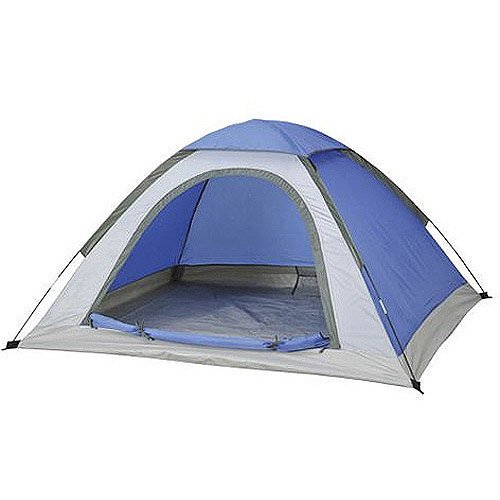
You know what I'm talking about: Small dome tents, usually marketed as "for kids", found in the sporting goods section of Walmart and Target and retailing for around $20. Yeah, those.

You should get one. 

I promise you I'm being completely serious here. I know they're not rugged, I know they're small. But you know what else they are? They're lightweight and will fit most adults, even if you have to sleep diagonally. 

Buy one and put it in your car. 


If your car ever gets stranded, you'll have a place where you can stretch out. You'll have a shelter that will keep the sun and bugs off you, and has better airflow than a car. You'll have somewhere dry to put your gear if you need to stay in the car for warmth, and if the car becomes an oven you won't worry about your preps going bad in the heat. 

If you need to walk home, it weighs something like 3.5 pounds. Compared to the food and water in my GHB, that's nothing. The shock-corded poles means it sets up quickly, which gives me more time to do other things. 

https://www.walmart.com/ip/Ozark-Trail-2-Person-Jr-Dome-Tent-6-x-5-Blue-NEW/197340435

Sure, the stakes are awful. Carry better ones

Sure, the fabric might tear or the poles might break. You have duct tape, don't you?

Sure, it won't withstand a tropical storm or keep you warm in a blizzard. It's a lightweight tent that you paid $20 for, and if it holds together long enough to get you home, then it's done its job and you've gotten your money's worth. You can always buy a new one if need be. 

https://www.target.com/p/wakeman-happy-camper-two-person-tent-green/-/A-54521249

Think of it like an umbrella you can lie down in. You've lost umbrellas before, or they've broken in rain storms, and you end up buying another to keep you dry "just in case you need it". 

Buy one, put it in your car, and don't worry about it until you need it. 

Wednesday, June 16, 2021

Planning A Plan

The dust has settled and the First 72 Hours have passed. Follow along as I build a long term plan via Prudent Prepping. 
It appears that a short camping trip has been tentatively added to the calendar. Furthermore, the balance of my camping gear not lost has been uncovered and is going into different totes. 

If anyone has been following the Continuing Saga of What's On Fire Now In California and my failure to go fishing or camping for years, I'd like to tell you what while I'm still not expecting to go, I will be packed and ready. (I actually bought a Fishing License this year, that's how serious I am.) The things that are getting packed first are the bulkier camping gear, like the Klymit LWD I was given for my birthday in 2019 that has not yet been used.

Klymit Light Water Dinghy
https://amzn.to/3iQzk4S
From the Amazon ad:
  • Inspired by the pros: designed with kayakers and pack rafters, the LWD is an advanced pack raft tracks well, is stable, and allows use of canoe or kayak paddle - Arrow shape design increases maneuverability - ideal for canyoneering and backcountry Wade
  • Easy to inflate: pump is efficient and easy to use, converts to a dry sack for gear storage and protection
  • Two valves for quick inflation & deflation, includes dry sack pump, and 6 tie-off Zones for lashing gear or securing the dinghy on shore
  • Ultra lightweight: weighs only 44 ounces making it one of the lightest rafts of its kind;
  • Ergonomic padded seating: built-in inflatable seat is comfortable and provides insulation from cold water
  • sport type: Camping & HikingOutdoor Lifestyle
Editor's Note: all of the above is [Sic]
Please read the 2019 post for how I received this wonderful item.

Fishing Gear
While cleaning I found my fishing reels, which need to be refilled with line after sitting in a garage for years. In the past, I've bought spools and filled reels myself, but that just means the balance of the spool goes to waste these days. A sporting goods store fairly close offers to fill reels and charges by the yard, so I'm heading there soon.

I also found my tackle boxes and other than 2-3 rubber worms or wiggle bait melted into a tray, everything looks good with no rust or crud. 

What I can't find (so far) is my worm box. It looks similar to this one found on Amazon and may actually the same brand, but there are no labels left on mine.  
https://amzn.to/3cP4ghU
  • Built-in carrying handles make transporting bait easy
  • High insulation value
  • Ideal small portable bait container
  • Opens from the top or the bottom
  • Contains Magic Worm bedding and instructions
Pretty self-explanatory, other than the "opens from bottom" bit. The box has two lids that allow you to always get to your worms or crawlers just by turning the box over. 

Cooking
Last week's post was about ordering a replacement pan set for one that I lost, and there was a question as to why I ordered the more expensive option over the exact item as before. I didn't make it clear that the reason was to get the non-stick cooking pot over the unlined version. Yes, I know how the lining will potentially wear, but the ease of cleaning in the short term is a big benefit.
 
Sleeping
I have a summer weight sleeping bag and an inflatable pad mentioned here that I've taken on trips, just not camping. Unfortunately, that pad has been discontinued. 
 
Change Of Status
With the way my family situation has changed, my Prepping Plan has blended I'm Not Going Anywhere with just a tiny bit Get Out Of Dodge. The place where I kept over half of my prepping gear will soon be unavailable, and I need to do some serious pruning and trimming of supplies to fit into the storage spot I have left. While I'm not getting rid of equipment, I am going to get rid of as much of my short-term food as possible, replacing it with longer-term items. 

Water jugs, food-grade buckets and totes take up a surprising amount of room. I would have an even bigger problem if I hadn't given away so many jugs (and a couple of five gallon buckets) over the years! Several of those people gifted are not close friends any longer, but I feel better about sharing gear and knowledge, whether or not karma may make a visit.

Depending how soon my family status changes will determine how soon (and how much) Get Out Of Dodge is the majority of my plans. I don't want a change, but it is certainly coming. Wish me luck.
 
Recap And Takeaway
  • I need a plan, but I don't yet have one. I have options, though, and I'm thinking about how to turn them into plans A, B, C, and so forth. 
  • Nothing was purchased this week, but as the trip gets closer and I get all my gear uncovered, inspected and cleaned, there likely will be some things purchased.
* * *

Just a reminder: if you plan on buying anything through Amazon, please consider using our referral link. When you do, a portion of the sale comes back here to help keep this site running!
If you have comments, suggestions or corrections, please post them so we all can learn. And remember, Some Is Always Better Than None!

NOTE: All items tested were purchased by me. No products have been loaned in exchange for a favorable review. Any items sent to me for T&E will be listed as such. Suck it Feds.

Wednesday, June 9, 2021

Restock and Realign

The dust has settled and the First 72 Hours have passed. Follow along as I build a long term plan via Prudent Prepping. 

Plans are moving, slowly but surely, towards an actual camping trip this year. I think. Glaciers move, correct?

Gear For Two
Sometime during the last five years I lost some gear in one of my moves. From what I've uncovered and gone through in the totes I have with me and those stored elsewhere, I believe I'm down one complete 27 gallon tote of equipment. Unless it's buried in a corner where I didn't put it and under other stuff I didn't move, it's gone. 

It had a tarp, okay quality knives, utensils and cups and mugs, new(er) pots and pans, cooking gear and camp kitchen supplies. Of course, all of this is off the top of my head; I haven't been camping in almost four years, and since these items were the type I don't pack in a GHB, I never looked at or for them between trips.

Note to Self: After the family stuff calms down, dig everything out and make an inventory, with pictures and a list stored away from the boxes. 

From searching BCP blog posts, I found where I recommended this set to a friend in 2017. Since I can't find it, I needed to replace it, and I ended up getting a better (and more expensive) model. 

https://amzn.to/2TWLRJF


I want to have a cookware set that can be used on a liquid fuel stove  as well as a wood and fuel tab stove, and this fits my shopping list. I have used Sea to Summit metal bottom pans on wood burning and tab stoves (against the directions) and while it worked, I certainly did see where the silicone sides could melt if extra care wasn't taken, and this particular set will not have that problem. 

From the Amazon ad:
  • Two-person backpacking cookset is lightweight (1 pound 12 ounces), compact (packed size 7.75 x 5 inches), and efficient for backcountry trips
  • Includes 1.5L hard-anodized non-stick aluminum pot, 2.5L hard-anodized aluminum pot, strainer lid, 2 deep dish plates, 2 insulated mugs, pot handle
  • Camp cookware features a smaller non-stick coated pot for sauces and simmers, and a larger uncoated pot for boiling water and meal prep
  • Polypropylene deep-dish plates can accommodate any meal, and 12.5-ounce mugs are insulated with sip-thru lids; plates and mugs are color-coded
  • All cook set components nest within the 2.5L pot for easy packing; set can be adapted to size of group and length of trip

I plan on replacing the most important things, like several non-stick compatible utensils and cleaning supplies, very soon. I'll keep everyone posted.

Recap And Takeaway
  • Keep track of gear, even that equipment isn't used regularly. Make a list of what you have, where it is, and keep a copy where you can't lose it.
  • I purchased one MSR Quick 2 System Cook Set from Amazon: $99.95 with Prime. 

* * *

Just a reminder: if you plan on buying anything through Amazon, please consider using our referral link. When you do, a portion of the sale comes back here to help keep this site running!

If you have comments, suggestions or corrections, please post them so we all can learn. And remember, Some Is Always Better Than None!

NOTE: All items tested were purchased by me. No products have been loaned in exchange for a favorable review. Any items sent to me for T&E will be listed as such. Suck it Feds.

Thursday, September 10, 2020

Canned Heat

While helping a friend with some camping gear, I was asked to explain the difference between the various “canned” gasses used in camp lanterns and stoves. This friend didn't want to deal with a liquid fuel like diesel fuel, kerosene, or gasoline (which is my first choice) and was looking at the butane and propane options on the market. 

Pressurized cans of fuel gas are fairly easy to find and store well in a cool, dry location for decades, so they make a good choice for emergency supplies. I've used several types of propane canisters for heating over the years and have seen the butane models, so I did some digging and here are the results.

Propane
Often called LP gas, sometimes defined as Liquid Propane and other times Low Pressure or Liquefied Petroleum gas, propane has been in use for a little over a hundred years and is commonly found just about anywhere in the world. A popular cooking fuel, it is cheap and easy to transport in steel cylinders that vary in size from less than a pound to several hundred gallons. You'll find a Propane cylinder attached to every gas grill in almost every garage in the US, so it is very common.

Propane has a chemical structure of C3H8, with a boiling point of -42° F. It produces around 2.22 MJ/mol (don't sweat the units, just make sure to use the same ones when comparing) of heat when it burns. Explosive limits are between 2.3 and 9.5% in air. Above or below that range, the mixture is either too lean or too rich to ignite.

Butane
Commonly used as a cooking fuel in Asia and in disposable lighters around the world, Butane is another liquefied gas that is easy to store. There are several brands of camping stoves and lighters that use Butane cylinders for fuel and the cylinders are fairly easy to find.

Butane has a chemical structure of C4H10 and a boiling point of 30° F. It has the capacity to produce about 2.88 MJ/mol of heat. Explosive limits are 1.8 to 8.4% in air.

Compare and Contrast
Both Propane and Butane are naturally odorless, colorless gasses that will have a chemical added to make it easy to detect leaks. Methyl Mercaptan is the most common odorant, and it's the same chemical that they add to natural gas to identify leaks. I'd bet that everyone has smelled either a propane or natural gas stove before the flame is lit, as it's a very distinct odor. Both are also a gas at normal room temperature and pressure, and are easily compressed into a liquid and stored under pressure.

Comparing the two, they produce about the same amount of heat and have similar (narrow) explosive limits, so either one will work well as a fuel source for back-up heat or light. The major deciding factor is the temperature that you will be expecting to use it at. 
  • Propane will continue to “boil” inside the cylinder and, in my experience, produce usable amounts of gas down to about -5° F. Below that, you have to warm the cylinder to get it to work. 
  • Butane shuts down at about 40° F, as anyone who has tried to use a disposable lighter in the winter will attest. 
If you live where the temperature drops below freezing, Propane is the better option for large containers. Butane in small containers like a lighter can be kept close to your body to keep it warm, but as soon as you remove it and start to use it in cold weather it will shut down.
Butane cylinders for a camp stove are selling for about $2.00/8 oz ($4.00/pound) can right now, and Propane in small canisters is selling for around $8.00/16 oz. By buying an adapter and a larger, refillable Propane tank you can cut the price drastically, but your local supplier prices are not something I can check; around here a 17 pound refillable canister costs about $35.00 empty and takes another $2.00/ pound to fill.

My Recommendation
My choice is Propane, due to the climate I live in and the ease of storing large quantities of it. I have a grill-sized cylinder that I had filled over 20 years ago which is still full (it came out of a camper when it got scrapped).

However, if you're looking for something to put into a pack or GHB and you live in a more temperate climate, then either one will work.

Friday, November 22, 2019

Product Review: the Klymit Cush

Not actually Erin.
& is used with permission.
I'm a big fan of Klymit products. They make excellent air mattresses that are both sturdy and affordable; their Static V has earned a place in my bug out bag.

The Klymit Cush ($9 with Prime shipping from Amazon) is an interesting product in that it's a pillow, but not traditionally shaped like one. You can use it for your head -- in fact, the circular indentations are for your ears so that the pillow can be placed inside a mummy sleeping bad, although based on my own (not small) head measurements it's about 8 inches too long for that -- but what I've found is that it's perfect for a seat cushion.

https://amzn.to/2KMCSDs

Please allow me my vanity in not telling you how much I weigh; suffice it to say that I weigh more than 150 lbs and not once have I worried that the Cush will burst under my weight. Mind you, I sit down on it gently; flopping onto it might be too much for the poor thing! But I have been using the Cush for over a month now, and not once have I feared that it would rupture under me. When I fold it double the "ear holes" are perfectly aligned for my ischium, which are the bones of the pelvis that are covered by the buttocks -- the "sit bones", if you will.

It makes an idea portable seat cushion for long plane trip. It inflates quickly with only a few breaths, deflates just as quickly, and rolls up into a package 9.5" L x 2" W x 0.5" H. It actually arrived in a rectangular stuff sack measuring 6.5" L x 4.5" W x I don't recall how thick but less than an inch, so if you needed it smaller and had the patience to fold it up you could get it to where it's just slightly larger than your cellphone. Because it's mostly air, when deflated it weighs less than 3 ounces.

My Rating: 4.5 Stars
I didn't give it 5 stars because it's too big to do what it's meant to do, which is be a pillow inside a mummy bag. That said, it's great at doing everything else, and its longer size means you can fold it up for extra thickness, or wrap the ends up to cradle your hips.

It's inexpensive, it's sturdy, it's comfortable, and it deploys and stows quickly. It definitely has a place in your preps, either in your car, your camping gear, or your get home back. If you travel a lot, you definitely need one.


Dear FTC: I paid for this item with my own money. Go away. 

Also, call your mother. 

Thursday, May 30, 2019

Cheap Car FAK

Since school is out for the year around here, a couple of my younger friends decided to go camping for a week. They're 17 and 18 years old, and asked for my help getting things together for a week in the woods. I found them a place to stay that has shelter available in case their tent wasn't enough for the rain we've been getting (the hail storm on the first night made them move to the shelter), and got them settled in.

One of them has camped before, the other has never slept outside of a city. We went over the basics like food, water, clothes, and bug spray but neither one of them brought a first aid kit (FAK). Since they're stationary and don't have to carry everything around, I grabbed a spare FAK out of my truck bag, it's slightly smaller than the FAK that stays in the truck and stays in the get home bag (GHB) that rides behind the seat. I can fall back on the truck FAK until I get the smaller one back in a week, and I don't want them playing in the woods without at least a basic FAK.

The FAK I keep in my GHB is a military surplus vehicle FAK. I got mine from a supply sergeant that was cleaning out his supply room; the hard plastic case had gotten cracked and it was no longer fit for duty. These are expendable items, so replacing it was simple for him and it would have gone into the trash if I hadn't taken it.

Amazon doesn't sell this particular kit, but I have found them at a few surplus stores and online at Duluth Trading for between $30 and $40. 

https://tinyurl.com/y3vn3yok

The hard plastic case is roughly 3” tall making it easy to slide under a car seat, and 5.5” x 7.5” wide and long. It has a hinged lid and a waterproof rubber seal to keep the contents safe (mine had a crack in the bottom that I sealed up with epoxy) and some versions have a carrying handle with mounting holes on the back. Inside you'll find:

  • 1 small roll of 1” surgical tape
  • 1 small bottle of iodine solution (disinfectant) or 10 iodine swabs in the newer kits
  • 1 small pair of bandage scissors, the type with a rounded tip on one jaw to slide under bandages
  • 1 surgical blade, basically a sterile X-acto blade for making incisions
  • 1 eye dressing, basically a sterile eye patch for covering a wound to the eye
  • 1 2” x 12' elastic bandage
  • 1 field compress, a compression bandage with ties attached
  • 1 triangular bandage, probably the most versatile part of the kit
  • 3 field dressings, compressed gauze pads for stopping bleeding
  • 2 3” x 18' gauze wraps
  • 18 3/4” band-aids for minor injuries
  • 3 3” x 36” petrolatum-soaked gauze bandages for burns. *
  • 4 latex gloves
* The petrolatum-soaked gauze is a questionable burn treatment. If advanced care is close, most places teach covering burns with a clean, dry cloth to keep debris and infection out. The military uses petrolatum (Vaseline) coated gauze to create a more waterproof seal around a burn, which makes sense if your hospital is quite a distance away. The Vaseline will add a step or two to the treatment once a doctor is available and will keep the burnt skin more pliable until you get to the hospital.

I've modified the contents of my kit a bit, adding more band-aids, changing the latex gloves out for vinyl to prevent latex allergic reactions, and stuffing a few other things into the corners. I don't have the kit with me right now or I'd have a better list. Everything fits, but the case is packed quite full and I usually have to take most of the contents out to get to what I want.

For a general purpose FAK, it lives up to its name and serves its purpose quite well. You should find one like it in every military vehicle (they're supposed to be issued to everything that moves) and they're common at surplus shops and gun shows. I like my regular vehicle kits that I have assembled over the years, but it's nice to have something like this that I can hand off if I need to.


I've checked in on my young friends a few times. I don't want to bother them, but I do need to make sure they're all right. Other than having to go up and show them how to start a campfire after the first night (they're city kids), they seem to be enjoying the fresh air and lack of distractions. They have plenty of food and water, and have learned that it gets cold at night out in the woods. They also weren't ready for the birds waking them up before sunrise. I'm hoping the rain lets up enough for at least one cloudless night so they can experience a true night sky, as it will be the first for one of them.

The Fine Print


This work is licensed under a Creative Commons Attribution- Noncommercial- No Derivative Works 3.0 License.

Creative Commons License


Erin Palette is a participant in the Amazon Services LLC Associates Program, an affiliate advertising program designed to provide a means for sites to earn advertising fees by advertising and linking to amazon.com.