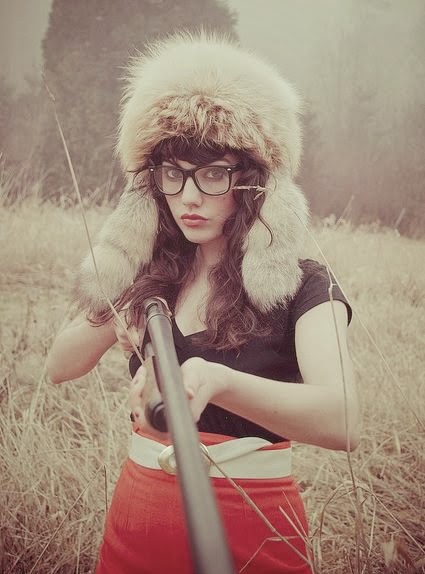
That title isn't my opinion; it's literally called the "Men's Superior Hat" over at Duluth Trading Co., but I do have to say that it is pretty nice.
Ladies, don't let the name put you off from this hat. Despite the name, you'll look good in it too, and since the reviews state "It runs small, so order a size up" I'm certain that a medium or large size will fit you.
I bought mine so long ago that I can't recall when it was; it was after I moved back to Florida in 2005, but before I started this blog in 2014. It was available in other colors back then, including forest green (the color I have), camouflage, khaki, and I think red. These days it only comes it black, which is a shame, but it likely keeps the cost down and black does go with everything.
I haven't used it often, as this is a cold-weather hat and Florida doesn't get very cold very often, but I'm always happy to have this hat when it does.
Here's what the Superior Hat has:
The exterior is hard-working and hard-wearing firehose cotton. Considering I've had mine for 15-20 years and it still looks new, that's a testament to its toughness.
The fabric is treated to be water-repellant, and I've never had it leak on me.
There's a fold-down flap that can cover my ears.
The 150-gram Thinsulate insulation keeps my head and ears toasty warm in even the coldest of Florida weather (which is, let's face it, only about 30° F).
In case I get too toasty and start to sweat, there's a moisture-wicking sweatband built into the buttery-soft polyester fleece liner.
All this for only $30 (today's prices; I think I paid $20-$25 for mine.)
Since I don't live anywhere it snows, I don't know how well it would keep you warm in truly wintery conditions. However, the first page of reviews shows four star ratings from Michigan and Oregon, and the only reason they didn't give it a full five stars is because they ordered their regular size, found it to be too tight, and had to exchange it for the next size up. I figure if it's good enough for them, then it ought to be good enough for anyone not living in Alaska.
It does everything it says it will do, and has done so for over a decade without showing signs of slowing down. I recommend this for all preppers.
Even if you have a winter hat you already love, or need something more robust where you live, at $30 this is something you can keep in your car for emergencies or let friends and family borrow if they're caught in the cold.
You'll get your money's worth out of it, and more, for a good long time.
Winter camping can
be miserable, and I’ve winter camped in Washington State in the
snow and the wet and the cold as a Boy Scout. Now I’m
camping in Georgia year-round with my son’s Trail Life Troop, and “below freezing in Georgia” is just as miserable as “below freezing in
Washington.”
There are two
schools of thought among the adults who provide some level of safety
for our troop. One is “I need to be able to carry all
my kit long distance,” and the other is “What the heck, I own a
truck, and I’ll carry my gear from the truck to the campsite.”
The first group doesn’t use any artificial heat sources, and the
second group does. At the last campout, the second group was more
comfortable than the first group because they had bigger,
roomier tents. In two of those tents were Mr. Heater Portable Buddy Heaters, and I got to enjoy them simply by being there.
First observation: even the smallest Mr. Heater product is plenty for a tent that a
single person can pack. The advertisement says “up to 225 square
feet” which I think is a bit generous for most tents, but in a well-insulated room or small cabin it would make sense.
Note: while
commercial locations won’t refill most 1lb propane bottles, you can
buy adapters to refill them yourself. This is obviously discouraged by single-use propane vendors, but
there are refillable bottles on the market.
Pros and Cons
A Mr. Heater is a bit of a luxury item for
camping in Georgia or Washington, even in the winter time. But as a
survival/resiliency prep it has a few things going for it.
If you have a gas grill and adapter hose, or a few 1lb
propane bottles on hand, you have a safe indoor heating in a pinch.
A heat source can be used to heat food. One YouTuber I watch routinely opens canned food and gently heats it
using his Mr. Heater in the depth of Canadian winter, and toasting
frankfurters or marshmallows is very similar to using a campfire.
Is it perfect?
No, not really.
It takes up space when not in use. Not much, but some.
Unlike a rocket stove or Solo Stove or Kelly Kettle, it uses a fossil fuel that may or may not be easy to get in an emergency. If you live in an apartment where wood or twigs aren’t plentiful, that might be a positive rather than a negative.
It’s big enough that I wouldn’t bother keeping one in a full size van unless the van had been converted into a small camper. In a large camper, a Mr. Heater makes quite a bit of sense.
Should You Get One?
I’m not in a hurry to go out and buy a Mr. Heater of my own, but if I see a good sale I’ll probably snag one. They run very quietly, and in an elevated deer stand in the winter where I sit still for hours on end, it might be really nice to not feel the cold so deep in my bones.
Also, don’t
underestimate the value of the “nice to haves” in a situation
where you have to rely on your preps and not public infrastructure.
The little luxuries can make all the difference between a miserable
experience and a merely inconvenient experience.
The dust has settled and the First 72 Hours have passed. Follow along as I build a long term plan viaPrudent Prepping.
Well, more like "Daughter of GHB", as this was a request for a kit to go with a young woman who lives and works in serious snow territory. I certainly can offer a shopping list of the basics, but specific suggestions for Snow Country are a bit out of my experience. What do I do? I ask the other bloggers here who do live in snowy areas, or have in the past, for help.
The Basics
Since the Purple Pack Lady likes her assortment of basic items, I'm going to use those as my starting point. All of these suggestions have been written in many, many posts, with the tags GHB and/or Purple Pack Lady that can be searched through the BCP blog. Detailed descriptions can be found there. Most links are to Amazon.
First Aid Kit. I think this goes to Personal Choice, as some people want more than others. As a starting point, something like this kit is a good pick.
Shelter and Accessories. I have this emergency blanket, a 6x9 blue tarp (check your local hardware store), and duct tape in my gear.
Tools. At the bare minimum, a multi-tool is a requirement. How fancy it should be is your choice, and after that, please look at all the BCP authors' GHBs for additional suggestions.
Flashlight. Buy the brightest light you can afford and pack extra batteries!
Food. This is another item that needs to be tailored to your situation. Do you need a couple energy bars to get you home in 4-5 hours, or are you looking for several days worth of rations?
Clothing. Another topic where your situation is key. I recommend at least one change of clothes in your vehicle, depending on weather. A hat is also a good idea.
Personal Care Items. Just like it says, the things you may need on a daily basis, but not necessarily in an emergency. For example, sunscreen, bug repellent and feminine care products could be at the top of the list, while things like toothpaste, toothbrush, floss and chapstick might seem excessive to some. Build your gear for your needs.
These are just my suggestions, and the other authors here have very similar lists, tweaked to their personal needs. Please take the time to search their posts for suggestions!
The Experts Suggest...
I asked for cold weather specific suggestions from the gang, and here they are.
From The Other David and Erin, slip-on cleatsto gain traction on snow and ice.
From Erin and Stephanie, long underwear for cold protection and the ability to be stored in minimal space. Either silk or a set like this.
The Other David also recommends glove liners and silk socks. I like Smartwool brand for my dress socks, and I think these will work well too.
Lokidude says to get waterproof boots for the wet snow and rain. I personally like to try on boots and shoes before buying, but if you have good luck with online ordering, carry on!
Several wool blankets or a sleeping bag in the car. A sleeping bag can be had with different minimum and maximum temperatures, so choose one for your particular area.
Outer Wear or Rain Gear. Here is another place where budget is important. Do you have $300-$800 to get a set of GoreTex (or similar) jacket and pants or is the traditional yellow rain jacket and pants what you can afford? A wool 'watch cap' to keep your head warm. Keeping your head covered and warm will also keep the rest of your body warm. A wide brim, waterproof hat similar to this for rain and sun protection should be on your list.
I've turned this listing over to my friend and if any of our readers can suggest something we missed, please post it up!
Recap And Takeaway
Ask your friends for help with things when you don't have any personal experience. I'm always pleasantly surprised with the knowledge floating around!
Nothing was purchased this week, and I've nothing planned for the next either.
* * *
Just a reminder: if you plan on buying anything through Amazon, please consider using our referral link. When you do, a portion of the sale comes back here to help keep this site running!
If you have comments, suggestions or corrections, please post them so we all can learn. And remember, Some Is Always Better Than None!
NOTE:
All items tested were purchased by me. No products have been
loaned in exchange for a favorable review. Any items sent to
me for T&E will be listed as such. Suck it Feds.
Living as I do in the frozen wastelands of the
northern US, I've seen a lot of bitterly cold winters. We're not
Arctic cold, but we experience seasonal temperature swings that require some preparation and forethought. If you're just visiting, you'll
probably spend most of your time inside a comfortable building, but
getting stuck outside can be dangerous.
Winter travel preparations have been
covered here before; check the archives by using the search box in
the upper left corner. This post, however, is about a small thing that can make
a big difference in your comfort and health. The best part is that
you probably already have the equipment, or you can get it for free.
Humans have built-in systems to help preheat and moisturize cold, dry air in our nasal passages, but they can get overwhelmed in extreme weather. The beard and mustache you see in my picture are helpful insulation for my face and neck, but only provide minor help with breathing cold air.
Those of us who live in areas with cold winters get acclimated over a few weeks of dealing with it, but if you're dropped into it without that time to adjust it can be painful. The human body is mostly water (roughly
70%) so when the really cold air settles in and the humidity follows
the temperature to the bottom of the bulb, we lose heat and moisture, aka water, just by
breathing. If it's cold enough that you can see your breath, you're
losing water.*
Winter air hitting your lungs can
dry out the lining and cause poor oxygen transfer, often causing
panting, coughing, or wheezing. Cold air will also cause your airways
to tighten or “constrict”, reducing airflow. Lungs don't like
cold air; it's not what they were made to handle. Strenuous activity
in winter air will tax your airways and can lead to bronchitis, or
make you really miserable if you have asthma or COPD.
The simplest thing you can do to take
the edge off of the cold air entering your body is to wear a scarf or
mask over your mouth and nose. I have family that have COPD and limited lung function as a result of lung cancer, so I have seen what has worked for them and what hasn't.
The cloth masks that everyone has
hanging from their rear-view mirror or stuffed in the glovebox for
when they have to wear one to gain entrance to a store will trap some
of the heat and moisture of your exhaled breath and transfer it to
the next inhalation.
The flat paper surgical masks aren't as
effective as a close-fitting cloth or N95 dust mask, but are better
than nothing.
Thin, woven scarfs are better at keeping your face and neck warm but will freeze over faster.
A thick, knitted scarf will work longer than any mask
because it has more surface area for frost to build up on.
The old-fashioned ski masks and balaclava are
time-tested and efficient, but make you look like a bank robber.
I work outside in all weather and have a few wool scarves that I keep
handy this time of year. The old Army-issue wool scarves are harder
to find now, but they are medium-thick and loosely woven so they are
a good middle ground option that works for many situations (even if
they are ugly as sin, according to my wife). If you have a crafty
friend, or even knit yourself, wool is the best option since it will
insulate even when wet.
We've had a fairly mild winter so far
this year, but it's not over yet and there's always next year to
think of. I may be transferring to a different job which will mean
more outside work and travel in the crappiest weather, so my winter
preps are getting extra attention.
* Staying hydrated in the winter is another subject that we've covered, so I won't repeat the details. The simplest hydration check is to observe your urine color: the clearer it is, the better. Drink water until you have to pee and keep drinking even if you're not thirsty.
The dust has settled and the First 72 Hours have passed. Follow along as I build a long term plan viaPrudent Prepping.
Winter is definitely here, even in California. While my part of the state is not cold, the Sierra mountains have quite a bit of snow for this time of year, but even at just a bit over 17ft, this is still short of what is needed to get drought worries put to rest. We haven't had travel problems like those in Virginia, but there certainly have been road closures. Over the holidays, a friend was leery of being stranded and so drove south from the Bay Area, east towards Las Vegas and then north to Reno! I don't know if I would have gone to that extreme to avoid being stuck, but planning ahead is sometimes better than scrambling to find a solution.
Winter Prepping
I said I don't get snow, but this year we are getting rain, and being wet at 50° will get you in trouble almost as fast as being dry inside a 10° car. Being adequately prepared for the areas you will travel through is as important as your normal, day-to-day preps. If you are living in areas that freeze regularly, many of the suggestions from the AAA will be things that are second nature to you, but not so much for us. Some excerpts from the linked page:
Cold Weather Driving Tips
Keep a bundle of
cold-weather gear in your car, such as extra food and water, warm
clothing, a flashlight, a glass scraper, blankets, medications, and
more.
Make certain your tires are properly inflated and have plenty of tread.
Keep at least half a tank of fuel in your vehicle at all times.
Never warm up a vehicle in an enclosed area, such as a garage.
Do not use cruise control when driving on any slippery surface, such as on ice and snow.
Stay home.
Only go out if necessary. Even if you can drive well in bad weather,
it’s better to avoid taking unnecessary risks by venturing out.
One of the things I learned the hard way was not to leave my extra water in the trunk when traveling to Reno. While I didn't need any on that trip, it would have been... inconvenient... to need to defrost it before drinking. Another was to get antifreeze windshield washer fluid, since the standard Rain-x Bug Remover I use will freeze solid, which is enough to damage the little pump.
If You Get Stranded
Since you planned ahead (right?), being stuck will only be an inconvenience and hopefully not life-threatening. More tips from AAA for what to do if you get stuck in the snow:
Stay with your vehicle:
Your vehicle provides temporary shelter and makes it easier for
rescuers to locate you. Do not try to walk in a severe storm. It is easy
to lose sight of your vehicle in blowing snow and become lost.
Don’t over exert yourself: When digging out your vehicle, listen to your body and stop if you become tired.
Be Visible: Tie
a brightly colored cloth to the antenna of your vehicle or place a
cloth at the top of a rolled up window to signal distress. At night,
keep the dome light on if possible. It only uses a small amount of
electricity and will make it easier for rescuers to find you.
Clear the Exhaust Pipe: Make
sure the exhaust pipe is not clogged with snow, ice or mud. A blocked
exhaust pipe can cause deadly carbon monoxide gas to leak into the
passenger compartment of the vehicle while the engine is running.
Stay Warm: Use
whatever is available to insulate your body from the cold. This could
include floor mats, newspapers or paper maps. Pre-pack blankets and
heavy clothing to use in case of an emergency.
Conserve Fuel: If possible, only run the engine and heater long enough to remove the chill. This will help to conserve fuel.
Nature Calls
Yes, there's the potential for needing to use the toilet when there's no place to go. Believe it or not, there are several different guides on how to deal with this not unexpected situation, and the one I have passed on to several friends is this one from wikiHow. It addresses both men and women's needs, with more details given from a woman's point of view. After several road trips with women of varying degrees of squeamishness, I can tell you that wikiHow covered all the important parts.
For the budget-minded, mayonnaise jars will also work for a disposable container and from a very small sample group of one, the female 'directing device' works better than expected. The important points recapped:
If you’re a male (and aren’t driving), you can try peeing out
of an open car window. Take note that you’re risking getting caught by
authorities, possibly paying a hefty fine.
If you don’t want to stop the car and pull over, an adult diaper is an alternative option.
Females squatting by the car should pay attention not to pee onto their pants or shoes.
For males urinating behind the passenger door: Pointing the
stream directly at the ground rather than having it arch out, will avoid
the stream sparkling in oncoming headlights, thus drawing less
attention.
If you are female, make sure to open both passenger doors so no passersby see you.
Make sure you alert the driver before the urge is unbearable,
because stopping may not be possible and you could end up peeing your
pants.
You may want to cover up with a blanket when in a car urinating; just make sure you can see what you are doing.
If you are really desperate, you can use something else with a wide mouth, like a shopping bag.
Recap And Takeaway
Add to your normal preps with weather-specific gear when traveling. I put in extra socks, pants and rain coat or poncho.
Don't forget high calorie, low-bulk and easy to eat snacks. If you're in a cold winter/snow area, a small stove with pots and easily cooked food would be a good addition. Keep your water from freezing, if possible.
STAY HOME. If you have to travel, be ready for the worst.
Prep your vehicle as thoroughly as you plan for you and your passengers.
* * *
Just a reminder: if you plan on buying anything through Amazon, please consider using our referral link. When you do, a portion of the sale comes back here to help keep this site running!
If you have comments, suggestions or corrections, please post them so we all can learn. And remember, Some Is Always Better Than None!
NOTE:
All items tested were purchased by me. No products have been
loaned in exchange for a favorable review. Any items sent to
me for T&E will be listed as such. Suck it Feds.
Everyone who is caught in the Texas snowstorm is in my prayers. Here are some cold weather survival tips, by me and by others in our Facebook group, that I hope help you out. Since many of you are checking on phones which may be low on batteries, please be advised that the following information is mirrored as a PDF which you can download once and use later even if you lose connection.
Cold House Survival
If you run out of power and your home gets cold during the night, do the following:
Gather in the smallest room you can stand to be in.
Close the door and stuff the crack with blankets.
Seal the windows with plastic wrap and duct tape.
If you need to be in a large room due to having a large number people and pets, wall off as much unused space as possible with hanging blankets. Use rope if needed. Blanket forts are your friend, so embrace your inner child!
Get as many people/pets onto a bed as possible (if no bed, then make make a ground cloth with thick rugs and pull a blanket over you) and snuggle up. Your body heat, and the heat of any family and pets you have, ought to get you through the night.
Those people who are naturally the warmest should plan on being on the outer edges of the group.
Layer up, and cover your head and feet for maximum insulation.
If you feel yourself starting to overheat, take off layers until you are comfortable. The last think you want to do is start sweating, because dampness next to your skin will greatly accelerate heat loss.
Avoid cotton, as it hangs onto moisture. Use wool or synthetics instead, and change out of anything which is wet or damp.
If you have a gas water heater, that means you have hot water. Take a hot bath or shower to warm yourself. Be a human hot water bottle!
Cold Weather Car Survival
If you plan to sleep in a running vehicle, make sure you do the following:
Make absolutely sure your exhaust pipe is completely clear if your car is outside. A snow drift too close to your pipe (or worse, a pipe full of snow after backing into a snow drift) can result in the carbon monoxide filling up the interior and suffocating you.
If your car is in a garage, then your best bet is to move your car outside to prevent the door from falling while you are asleep.
If you have a powered garage door, look for a red pull handle close to the motor; this will release it from the track and allow you to open it by hand.
Prevent Frozen Water Lines
Disconnect any hose attached to exterior faucets.
If there is an indoor shut-off valve for exterior faucets, turn it off, then open the exterior spigot to drain the line.
If there isn't a shut-off valve, open the spigot slightly so that a trickle of water comes out.
Wrap up your exterior faucets in blankets.
If your house is plumbed in series, then open the furthest faucets on each line to a trickle. If your house is plumbed in parallel, or if you don't know how it's plumbed, set all faucets trickling.
Toilet Flushing Without Water Pressure
If you've lost the ability to flush due to a frozen water line, you can always force a manual flush by pouring a bucket of water into the toilet bowl. Most toilets just need a bucket containing a gallon or two of water; older toilets may need 3-5 gallons of water to start the flushing cycle.
With advance warning, you can fill buckets, plastic totes, and other containers and store them in your bath tub. (Most tub drains have some degree of slow leakage.) Alternately, you can line trash receptacles with heavy-duty trash bags and store water there.
If you don't have warning, but have a gas stove, you can melt snow to make water for flushing. If not, you may have to bring a bucket in and let it melt on its own. Keep that bucket away from your sleeping area, though, as it will make your bedroom colder!
To manually flush your toilet:
Fill a bucket with at least one gallon of water.
Begin by pouring the water into the bowl, from as high as you can comfortably pour (and control). Pour slowly at the beginning while gradually speeding up, and dump the remainder of the water into the bowl.
If done correctly, the water should push the waste in the toilet through the pipes, and your toilet will flush.
Rule of thumb: If it's yellow, let it mellow (a capful of bleach can help neutralize the odor); if it's brown, flush it down.
Cooking Without Power
If you do not have a natural gas stove, it may be possible to cook food indoors, but you must be careful of two things: Carbon monoxide (CO) exhaust and fire safety.
CO exhaust is mitigated by having fresh air available. Open a window a small amount to ensure good airflow; the little bit of cold air that comes in is offset by the heat from burning fuel.
If you have an alcohol burner, propane stove, or sterno (or other form of "canned heat") stove, then you should be safe from CO as they are very clean-burning, and your main concern should be fire safety. Cook on a level, fireproof surface with no nearby flammables in a well-ventilated area.
If you have a camp stove which runs on charcoal or biofuel like wood, leaves etc, then CO exhaust is a real risk. Do not use this unless you have a chimney of some sort! If you have a functional fireplace, use this for heat and for cooking instead. However, some homes have small, decorative fireplaces which nevertheless have a flue; if that's the case, you may be able to cook with the stove inside the fireplace. However, be especially careful that embers do not escape and set your carpet on fire!
Finally, if you have an outdoor grill and have sufficiently warm clothes, you can always have a cookout. Just make sure you have nothing overhanging your grill! The last thing you want is to weaken snow or ice overhead and have it come crashing down on you and your grill.
As you probably heard, a large part of Oklahoma (and a couple of other states) had an ice storm two weeks ago, which led to all kinds of fun with limbs/trees breaking and power lines down. Here are some things that stood out for me:
Heat
Unless you have some kind of heater that doesn’t need a blower, no power means no heat. Several years ago I bought an indoor-safe kerosene heater; after assembling, fueling, testing, then draining and prepping it it’s been in storage ever since. If it’s seriously cold outside it won’t make the whole house toasty, but it will take the edge off, and if you can close off other rooms it’ll keep two to three (depending on size) of them a lot more comfortable. Mine is similar to this model.
Two notes on the heater:
Use only K1 kerosene; it burns cleaner and has less smell to it.
There is a fuel stabilizer available for kerosene that both prevents it from picking up moisture in storage, and kills even more of the scent. It worked pretty well here.
Light Being a fan of flashlights I’ve got several, and I have a nice LED battery-powered lamp (I now have two). I also have two of these Aladdin kerosene lamps. They put out a lot of light and some heat, which is always a good thing in cold weather. They’ll light up a room pretty well, and if you have something shiny to put behind them as a reflector*, you can direct the light better.
You have to watch these, as if you try to turn them up too high too soon you can wind up with the flame touching the mantle** inside and it’ll start smoking and smelling. And you really should fuel them outside. Same notes for lamp fuel as for the heater.
Whether oil lamp or candles, you need either matches or lighters. I have at least half a dozen butane lighters, but I could only find two of the damn things. I need to buy another pack of them, and paint them orange or something. Also, the new ‘green’ version of ‘strike anywhere’ matches suck compared to the old ones.
On battery lights: have spare batteries. Buy good ones, as they have a longer shelf life, and my personal desire is to have more than I think I might need.
* I’ve got a roll of 10” wide, 10 feet long aluminum roof flashing. It’s good for lots of things, and it makes great reflectors.
** The mantle is a chemically-treated gauze cone that sits above the circular wick inside the chimney. It's a good idea to have a spare one, just in case.
Cooking and Fuel If you have an electric stove, a propane camping range is really nice to have when the power goes out. I wouldn’t want to try to cook a fancy meal on one (partly because I’m lazy), but it’s handy for heating water, soup and such. Also, make sure you have stuff that’s easy to heat for it: soup, stew (canned or dried), hot chocolate, tea, coffee, things like that.
Make sure you have kerosene and propane before you need it! This was an unseasonable storm, and while I had enough of both fuels to get through, it would’ve been better if the kerosene can had been full and a couple more propane cylinders would’ve been nice.
If you go the kerosene route, check farm & garden stores as you can often get K1 there for a lot less than buying it by the gallon at a store, or buying lamp oil (which is just a somewhat more-purified kerosene). Have a fuel can that’s NOT red, so it’s obvious which one contains what.
Other Thoughts When you go outside, make damn sure you’re dressed for it and be careful about walking. In this case (other than overpasses and some bridges) the roads and walks never iced, but you don’t want to just stroll out and land on your ass- or head- because your porch did ice up.
Have some cash on hand. A debit or credit card isn’t much use if the network is down.
Finally, know in advance where to get dry ice. I lost the stuff in the refrigerator, but was able to get enough to keep the big stuff in the freezer safe. It wasn’t easy to find, either I knew where to look, but the demand was high.
It's December, and while for most of the country that means freezing temperatures, for those of us in Central Florida it means that it's sufficiently cool in the mornings and evenings to need a jacket -- in other words, fall weather. Unfortunately, I've yet to find a store which sells a proper "fall coat" which protects against wind and rain without also being so insulated that I start sweating after a while.
However, there's a solution to this dilemma and it's form an unlikely source. My fall coat is actually a military surplus German army field jacket which, despite being called a parka, is simply a water resistant shell. By itself it keeps me warm and dry down to the mid-60s, and past that I layer up with a sweatshirt or other thermal fleece underneath it. These layers keep me warm until the temperatures hit the 40s, at which point I break out my true winter coat.
While anyone can make a fall coat by pairing a waterproof windbreaker with a fleece, I am particularly enamored of my flecktarn (that's German for "mottled camouflage") jacket because of the other options it has:
zippered vents under the armpits to allow for ventilation and reduce sweating;
drawstrings at the hood, midline, and hem;
and most importantly, a double zipper which allows me to zip my jacket closed up to my neck, then unzip it from the bottom to my hips. This allows me to quickly and easily access my concealed pistol if I need to defend myself, while at the same time keeping me warm.
If you're looking for a lightweight coat to keep you warm and dry during the fall, I highly recommend a field jacket like this. You'll get many years of use out of it and won't regret the investment.
Up here in the northern plains we have a weather condition that most of the country doesn't have to deal with: blizzards. The definition of a blizzard is “a severe snowstorm characterized by strong sustained winds of at least 56 km/h (35 mph) and lasting for a prolonged period of time” and I've seen more than a few.
1977 was a nasty one, with no school for a week and the Interstate highways were closed for three days; secondary roads didn't get cleared for a week and some of the country roads were buried for three weeks.
1986 was a sudden blast that surprised a lot people. I was visiting my parents and couldn't make it to the highway for two days. Power lines went down in both of those storms, adding to the experience.
2010 gave us a 12 hour storm that shut down all travel for a day and slowed everything for another three days. If you have a spare hour to watch a documentary, here's one about a blizzard that hit shortly before my time (1949).
We don't normally see the huge snowfalls that occur in the mountains, measuring our normal accumulations in inches rather than feet. We do however see at least one good blizzard up here every year, with the bad years giving us one or two a month from December to March. The natives are used to it and tend to be prepared, but the transplants from the warmer states need to experience one or two blizzards to get the hint.
Snow
We're not talking about the Christmas
card type of snow! Blizzards tend to hit hard and fast. Wet air from the Gulf of Mexico meeting cold air from the
North Pole is a recipe for snow, and fly-over country is where the
two like to dance. Thunder and lightning during a snowstorm is usually a bad sign, since they're indications that there is a lot of energy built up in the storm clouds, so thundersnow is a warning that you need to check your supplies.
A typical blizzard for my area will have 12-20
inches of snow over a day or two, which is enough to cause
“white-out” conditions, which is when you look out the window
and don't see anything but snow. Falling and blowing snow can cut
visibility to less than 10 feet, so travel is not an option.
Wind
The dangerous part of a blizzard is the
wind. Once the snow stops falling, the wind pushes it around into
drifts that reform as soon as they are cleared. The winds coming down
out of Canada have few natural barriers, so anything that sticks up
more than a couple of feet will create a drift.
For those of you who
have never seen much snow, think of sand dunes and how they shift and
form; snow drifts form from the same action of wind, but being made
of smaller particles they form faster and have a higher angle
of repose which allows them to build to higher, steeper, piles.
Sustained winds will reform drifts over roads almost as fast as a
plow can clear them, and I've seen this happen many times.
Preparation
How do we prepare for weather like
this? The basics don't change: food, water, shelter, and heat are the
priorities. There are plenty of articles in our archives that cover
these areas, so use the search box in the upper left corner if you want
to see them.
Blizzards are a good reason for "bugging in" because "bugging out" is no longer an option. I keep a stocked pantry and more warm clothes/blankets
than I really need on hand to stay fed and warm. Water isn't much of
an issue as long as it's snowing and my house has a steep roof to
shed snow. I also have a good library to keep me entertained, and I can
read by oil lamps if the power goes out.
The one abnormal thing that we have to
deal with is other people. I live near an Interstate highway,
and the DOT installed gates on it a few years ago. When the weather
gets too bad, they close the highway and force all of the traffic
into small towns. We have limited motel rooms available, so the local
community center and high school get turned into emergency shelters
for stranded travelers. Society has evolved past the point of people
taking strangers into their homes, but if there is any shared
relationship or good common friends, it can still happen.
Here's to hoping we have a quiet
winter, but preparing for whatever comes our way.
This week: Keeping my chickens dry and warm and happy.
I just bought a new coop. It’s awesome, complete, and should outlast my desire to need it. However, winter is here, the girls are crowded, and I have to make some adjustments.
In the military, a woobie is a standard issue poncho liner, designed to work with a standard poncho to make something like a survival sleeping bag by putting the two together.* By itself it's a quilted camouflage square made from ripstop nylon with a small bit of insulation between the two sides. The edge is reinforced with slightly thicker nylon webbing, and there are sewn-in laces that allow you to tie the woobie to the poncho.
The woobie is beloved by soldiers as it is the most cost-effective item in terms of weight that you can carry to keep from freezing. The old saying “Travel light and freeze at night” is true in the infantry, and the woobie, much like the “snookie cap” (aka watch cap), is something lightweight to keep you from freezing at night.
Just how much do Soldier’s love their woobies? This much:
The woobie is viewed as an essential piece of kit for field exercises by most infantrymen, although it is viewed as a “comfort item” by some leaders who view a two pound woobie as additional weight that would be better spent on water, food, batteries, or ammunition. Having served in Iraq, Afghanistan, and Germany where the winter weather can kill you just as dead as any enemy, I firmly believe that a woobie helps a soldier get better rest in the field. and a soldier who has better rest makes better decisions, is more alert on patrol, and a better teammate to have around. If you have a mission set of unknown duration, you’ll want to pack your woobie, and want your guys to pack theirs.
Getting a Woobie of your Own
Shipping weight for one is two pounds, but they are actually lighter, usually around 22 ounces when dry. Woobies come in a standard milspec size of 62x82 inches, but commercial offerings can be larger or smaller (my personal woobie has an extra 10” of length), so when ordering online make sure you get a woobie that is a size appropriate to you -- although if you don’t know where to begin, the standard milspec dimensions work fine for almost everyone except the super tall (and even for the super tall, a milspec woobie will work for most uses).
If you are looking for the most possible “utility” from woobie camouflage, get the USMC version with MARPAT camouflage on one side and coyote brown on the other. If you're looking for the most absolute value for the money, faded ACU pattern woobies are usually half the price of new ones, and the mottled digital gray actually does okay in winter, sagebrush deserts, alder forests, and against gravel and concrete. OCP, also known as multicam, works well in most natural environments, and the woodland pattern is usually fine for anywhere that has greens and browns to blend into. However, I recommend you purchase clothing that is specific to the area you are in, and not rely on a woobie for concealment.
The Many Uses of a Woobie
Much like the towel of The Hitchhiker’s Guide to the Galaxy, the lightweight woobie is an infinitely useful item to have on hand. Here are some of the things you can do with a woobie:
Comfort while resting. You can use your woobie as a blanket. You can use your woobie as a pillow. You can use your woobie as a hammock (not recommended, but you can if you have to). You can share woobies so that one person in three can get really good sleep while two provide security.
Overhead shelter and concealment. By spraying your woobie with Scotch Guard or other water repelling treatment for camping gear, you can use your woobie as a rain cover. Since they come in camouflage patterns, you can use your woobie to conceal you (if you've picked a pattern that makes sense for your area).
Gathering and carrying tool. You can lay your woobie out and shake fruits or nuts from trees to gather. You can use your woobie as a carrying implement by rolling stuff in it and tying the ends together and slinging it over your shoulder and across your body.
First aid. You can use your woobie and two long sticks to make an impromptu field litter to transport a casualty. You can cut a woobie into strips for splinting a broken limb. You can fold a woobie into a sling to support and immobilize an injured arm.
Cold weather garment (see pictures at end of article). By tying the loop ties together you can make an impromptu uniform liner that covers your arms and torso down into your groin and upper thigh area. (When wearing standard Army fatigues you’ll look “puffy” with your woobie stuffed in your uniform jacket and pants, but you’ll be warmer than the guys who are hanging about in a wet uniform.) Simply slide your fingers through the tied string, and put your uniform jacket on, then stuff the extra poncho liner into your pants, adjusting the poncho liner so that it covers your arms, armpits, torso, groin, and upper thighs. This will help you not die of exposure when halted for a long time.
An aid to fire starting. Since the woobie is synthetic, if you absolutely need some highly flammable tinder, you can pull the polyester stuffing from your woobie (not recommended, but it’s an option).
Youtube has many videos on how to modify a woobie to make it even more suited to various tasks, and if you are handy with a sewing machine you might want to look into whether or not any of those projects would be value added to you in the circumstances you think you are most likely to encounter.
What a Woobie Is Not
It is not the same as a sleeping bag, thermal mat, and a tent. In terms of heat retention it's way better than nothing, but on its own isn’t going to give you the good rest you need except in very mild conditions in places where it doesn’t get too cold at night.** You’ll need at least season-appropriate clothes to truly make the woobie into a valuable addition to your total system, and I recommend wool watch caps in every bug out bag regardless of season, as it can always get cold at night.
Packing your Woobie
A standard bug out bag can easily accomodate a woobie. A woobie is at least five pounds lighter than an M65 field jacket, and much lighter than a full sleeping bag set; it's even lighter than a spare uniform set. It crams down into a much smaller stuff sack or ruck pocket too. So if you need a lightweight bugout bag I highly recommend you put a woobie in it.
In a standard ALICE or MOLLE rucksack, an external pouch is perfect for rapidly stuffing a woobie into when you need to strip down to minimal uniform or so you don’t overheat. Stored that way, the woobie is nice and handy for when you need to add a layer. On a civilian backpack, I would recommend a small nylon “stuff sack” be used to hold the woobie so that it is easy to find by feel in the dark.
Your other kit should also be in stuff sacks, so that you don’t have a “rucksack explosion” digging around for a specific item. There's nothing more frustrating than having to empty your entire pack to look for one item, and then needing to repack in a rush because your position was compromised and you need to move immediately!
If you are cheap and don’t mind not having cool factory gear, a gallon ziplock style freezer bag reinforced at the seams and sides with duct tape can make a great waterproof storage bag for your woobie. (Note: if you have a larger than milspec woobie like mine, you’ll need to duct tape two bags to make a waterproof bag for your woobie). When I was in Ranger school this was the preferred way to store spare socks, t-shirts, woobie, pens, paper, etc, that could get soaked in the rain or a river crossing. I’ve used both the slide lock and the standard press lock, and for storing clothes, the press lock is probably the better option; for storing maps, paper, etc, the slide lock is really convenient because you’ll get in and out of those bags a lot more often even if it isn’t as totally waterproof. For what it's worth, I still have some of the duct taped ziplock bags from over ten years ago protecting some of my gear.
Waterproof sacks from ziplock gallon freezer bags and duct tape.
Waterproof gear bags ensure your BOB will float, and be much lighter on the other side of a water obstacle.
The bag holding my woobie is halfway finished to illustrate process.
Appendix: Woobie as Cold Weather Gear
1). Tie Figure 8 knot in center ties on each side of woobie.
2) Put fingers through tie loops created by figure 8 knot, holding folded woobie over shoulders.
3) Put on your jacket or uniform top over woobie, using ties to pull woobie into arms. Wrap loose parts around your torso.
4) Tuck excess woobie into your pants top. If you are a little tight, just unbutton the fly and stuff, using belt to keep pants up.
5) Zip up your top. Now you have extra insulation around your torso, arms, and upper legs. It won't make you perfectly toasty warm, but it's a lot better than nothing. To remove, just take the loops off your hands and pull the woobie out the jacket front.
Footnotes
* I’ve been in the US Army for a while now and this is one thing I haven't done with a woobie, so I might have to try it someday as simply knowing how to do it isn’t the same as having experienced doing it.
** However, if you are “escaping and evading” you should be moving at night and resting during the day anyway.
A story from Army Reserve summer camp, told to me by a guy I know. The camp was in late July, in Kansas. Not exactly a time and place known for “I wish I’d brought a sweater”.
Toward the end a front came through, bringing rain and about twenty degrees cooler temperatures, so that night it was in the 60s instead of 80s, and the next day was 80 instead of 100. This doesn’t sound bad, unless you’re wet and tired, at which time even fairly mild temperatures can become dangerous.
This guy is the cautious sort, so he’d taken some cool/mild cold weather gear along, just in case, so he was able to change into it. Nobody else in the unit had brought that gear. In the morning, people felt downright chilly, and the ones who had gotten wet and decided “Screw it, it’s summer and I’m tired” and went to sleep woke up shivering, because in those conditions wind chill is a thing even in summer.
Worse, that chill can lead to hypothermia. Here there were medics to take care of them, but for a small group or lone person, in a situation where things are already difficult to bad, it's potentially life-threatening.
So remember: even in summer, depending on where you are or going, having something a bit warmer to change into is a good idea because Murphy is a bastard.
Here's a handy little modification for old school gas cans along with some thoughts on my current preps, future demands, and what I’m going to do about it.
In the Infantry there is a phrase: "Travel light and freeze at night." It’s true that there isn’t a lot of room or weight left over for creature comforts when you have to carry lots of military gear, but that doesn’t mean that you can’t add in a few pieces of "snivel gear". After graduating Ranger school, I decided that I would never again be cold, wet, hungry, and tired all at the same time if I could possibly avoid it. I can’t always avoid the hungry or wet or tired, but there are some things I keep on hand that help in the cold.
A sleeping bag is unfortunately a big, bulky, and relatively heavy thing to carry around, so if you have to travel light and freeze at night, the sleeping bag is usually the first thing to get left behind. After all, as your Platoon Sergeant will remind you, the rucksack you carry is for supporting the Platoon, not yourself. Fortunately, you don’t have a platoon sergeant deciding that you need to carry an extra 800 rounds of linked 7.62mm instead of a sleeping bag, but you still have the same problem: a sleeping bag is a hell of a luxury item to carry around.
Here are a few tricks to get some sleep at night,without carrying around the full weight or bulk of a sleeping bag or having to spend hundreds of dollars on a high-tech lightweight hiking bag that you only have as an insurance policy in a bug out bag.
Beanie or Watch Cap
"If your feet are cold, put on a hat" is actually pretty decent advice. Fleece beanies are lighter weight and more compact than knit watch caps, but once synthetic fleece gets wet with sweat, it’s not as good and insulator as wool. But if ounces make pounds and pounds make pain, a less than six dollar fleece beanie is a good investment for your go bag, especially if you really only need it for when you go to sleep.
Wool costs more and weighs more than fleece, but not much more. If you're in a climate where you’ll need to retain heat throughout a day of strenuous activity, then I recommend you spend the extra money on this wool cap.
Neck Gaiter
You lose a lot of your heat from your neck, which is why scarves are a thing. A neck gaiter has all the warmth of a scarf without all the bulk and weight. You can find them at most surplus stores, but Amazon has a polyester military style that works well and folds very flat.
I've been using a shemagh in cold and dry conditions for a few years, as wrapping it around the neck and tucking into your coat or sweatshirt retains heat well enough. But in reality it’s just a cotton scarf, and a cotton scarf is inferior to a polyester neck gaiter for heat retained versus weight and bulk. If you happen to live someplace where having a cotton scarf makes more sense to you than a poly neck gaiter, ten bucks isn’t a bad price for something that can keep you warmer at night and show off your keen fashion sense during the day.
Base Layer
A silkweight base layer of thermal underwear is great for staying warm while sleeping in, hanging around camp, or light activity outdoors. If you don’t want a military surplus color, you can even save a little and buy a top/bottom set for a little less. Believe me, the military doesn’t buy the best, so I have no reservations recommending people purchase civilian products for enjoying the great outdoors.
The military surplus base layer has thumb holes on the sleeves to help keep heat in at the wrists, but if yours doesn’t, then a 6 dollar set of wrist gaiters will help a lot.
Sleeping Gear
When bugging out and carrying gear you’ll really want something to sleep in, just maybe just not a whole sleep system or full winter sleeping bag. During the summer I’ve used just a Gore-Tex bivy cover to stay dry at night, as the best way to stay warm is to stay dry.* There are alternatives that are lighter and smaller, and if you only plan on getting to a cache point/bug out site, then an emergency bivy might be a better choice for you.
No matter what you carry to sleep in, I recommend some sort of ground pad for thermal insulation. I’ve used closed cell foam and inflatable, and I think the closed cell foam is more durable, but the inflatable is definitely lighter and more compact for being on the move.
* Hence the reason that when stopping for the night I change out of my sweat soaked uniform and put on the dry spare to sleep in. The next morning it always sucks to put on that wet uniform before you move out, but really that’s the only way to have a dry uniform to sleep in the next time you stop.
Tallying the Weight
If you purchase a beanie, neck gaiter, silkweight base layer, bivy cover, and inflatable sleeping pad, your grand total will be less than 8 pounds in your pack and you can fit it all inside of a backpack that wouldn’t look out of place in a suburban or urban setting. If you're in an area that consistently gets below freezing at night, you’ll want more than this; probably a 30 degree sleeping bag to put inside the bivy cover.
So there you are. You’ve been on the move all day wearing some clothes soaked with sweat and you've decided to get way off the beaten path for the night. You find a nice spot where you're unlikely to be noticed, so you strip off the wet layers and put on dry clothes, inflate your thermal pad, put it inside your bivy so you don’t roll off it in the night, and then get snuggled up inside for some shuteye with a neck gaiter and wool cap helping you stay warm. It won’t be a stay at the Hilton, and you may wake up cold and shivering after a few hours when your sleeping metabolism slows down, but you’ll be a lot better off than the folks who just threw a six pound sleeping back in a hiking pack and let the ground suck out their body heat because they didn’t have a thermal pad, and who couldn’t pack enough food because the bulk of the sleeping bag took up so much space in their ruck.
Erin Palette is a participant in the Amazon Services LLC Associates Program, an affiliate advertising program designed to provide a means for sites to earn advertising fees by advertising and linking to amazon.com.