Showing posts with label Hunting. Show all posts

Friday, May 17, 2024

Guest Post: .350 Legend Follow-Up

by George Groot


George is a member of our Facebook Group and has written for us before.


A few years back I made the case for the .350 Legend cartridge, and this follow-up will address what I’ve learned in the field. This review should have been done two years ago, but life happened, and last year was my first hunting season not interrupted by my job. 

Bottom line, all the advantages I listed back in 2019 are still true. It's a light, handy, low recoil cartridge and it kills deer cleanly. One interesting point that I didn’t bring up then, but I know now, is that there is almost a negligible difference in velocity between a 16” and 20” barrel for the .350 Legend.

As far as accuracy and reliability are concerned, the Bear Creek Arsenal upper I purchased has been completely acceptable, with only a few magazine-related failures to feed from the bench (something I’ve experienced many times with military issue M4s).

However, there are some disadvantages to my particular setup, a 16” AR pattern rifle, when used for hunting whitetail deer. The first is noise: an AR-15 bolt slamming home is a noisy thing, and to compensate I would load my rifle at my truck and move to the deer stand with the rifle on safe. A bolt action rifle like a Ruger American Ranch doesn’t have this problem. 

The second disadvantage is cheek weld. I have a standard M4 style buttstock on that particular rifle, and so getting a good repeatable cheek weld requires consistent training. This is a skill I can transfer over from running an M4 for decades, but not everyone has that advantage so I feel it needs to be addressed.

The third disadvantage I encountered was with Herter’s brand .350 Legend ammunition, a 180 grain traditional cup and core bullet with advertised velocity of 2,100 fps (manufactured for Cabela’s by Winchester). Velocity was not  2,100 from my 16” barrel; it was instead a bit more than that. This additional velocity caused me to miss a shot, which prompted a trip back to the zero range and confirming that my rifle was in fact still sighted in at 50 yards, but was 6” high at 100. I watched a number of videos from other .350 Legend users who experienced the same “additional velocity” phenomena, and while there isn’t excess pressure or any safety concerns, it does mean you need to verify velocity rather than trust the box.  

Things I’ve learned completely unrelated to the rifle and the ammo? Scopes matter, and while bigger isn’t necessarily better, I think the “compact tactical” size actually limited the hunting potential of my setup more than anything else. Last year I used a Bushnell Banner Dusk & Dawn 1.5-4.5x32 optic, but this year I used a Swift 4x32 compact scope. Next fall I’ll transition to something in the classic 3-9x40 variety for better light transmission at dawn and dusk, and I’m debating between a Sig Sauer and a Vortex

Final Thoughts
  • The .350 Legend is great for southern whitetails. 
  • It is the ballistic twin of the old .35 Remington, and that’s a good thing. 
  • It has very low recoil out of lightweight rifles and should be no problem for anyone on the hunt. 
  • It is not a long range hunting cartridge, so if you plan on taking shots beyond 150 yards, you’ll want to look to a cartridge like the 6.5 Creedmoor, .243 Winchester, or a .260 or 7-08 Remington if you are stuck with commercial ammunition purchases and need a moderate recoil option capable of accuracy at multiple football fields away.  
  • However, if your hunting ranges are modest, and you are comfortable hunting with an AR platform rifle, you can keep a dedicated upper with two mags around for a very low cost-of-entry modern rifle during deer season.

Thursday, September 24, 2020

Feral Food?

For the last several decades, feral hogs have been spreading in the USA. Originally farm animals, they have gone feral and started breeding with the wild boars imported years ago as game animals. This interbreeding has created a potentially dangerous animal that is slowly spreading northward from the southern tier of states. We haven't seen them in the upper Midwest yet, but they've made it to Missouri and Kansas. Reports out of Canada have small herds wandering around in British Columbia and Manitoba, and both Texas and Oklahoma have serious problems with them.

A few points to ponder:
  • Feral pigs will destroy crops overnight and they're known to attack small or sick livestock and pets. They're voracious omnivores and will compete with humans for food, so if you're relying on growing your own you will want to keep an eye open for them.
  • Being close to the size and construction of humans, pigs are very good at spreading diseases. They are a common vector for our annual flu and several other diseases, and this is one of the reasons we have to cook pork thoroughly to avoid illness. Pigs also carry a variety of parasites that are quite happy to transfer to humans.
  • Pig reproduce like rabbits. Starting at 3-6 months of age a female pig will drop at least two litters of 5-10 piglets every year until she dies. With very few predators able to take on a herd of hogs, they spread quickly. Unless you can harvest them at least as fast as they reproduce, a herd of wild pigs will quickly strip an area of food and move on to greener fields.
  • Pigs are smart and adaptable, and will lose their "normal" coloring and start to grow fur soon after they get out of captivity. Those born in the wild will start to look more like their wild boar ancestors with razor-sharp tusks and hooves. They also become more aggressive and have little fear of  anything smaller than themselves.
  • Many states have declared feral pigs a "non-game" animal and there are no seasons or limits, but others have regulations, so check your local laws if you decide to go looking for them. Most hog hunters use dogs to track and catch wild hogs, and it's not unusual for the hog to kill a dog or two before its killed. Sows with piglets and boars are very dangerous to be around, so find a way to kill them from a distance. 
  • Pigs have one weakness: electricity. It doesn't take much current to kill a pig; a lot less than it takes to kill a human, in fact. Something that we'd feel as a tingle of electricity will stop a pig's heart. I've known farmers to lose dozens of pigs due to a faulty light switch in a shed. 
  • Hunting pigs with a firearm or bow isn't much different than any other game, but being able to hit them in a vital area can be a bit of a challenge because they're closer to the ground than a deer. They have a fairly thick skull, so I'd avoid head shots with smaller calibers. Just like most other game, hearts and lungs are the main target areas.
  • I won't bother listing recipes for pork; we've been eating them for a long time, and regional tastes vary. Younger pigs will be more tender and less "gamey", while older boars will be almost inedible due to the rank odor of the meat. If you get hungry enough, though, you'll find a way to eat it.

Whether you're protecting your crops and critters or actively hunting them, wild pigs are a food source to consider in the southern half of the USA. Give them a few years and they'll be up in the grain belt, and that's when things are going to get really interesting.

Tuesday, August 18, 2020

Sling For the Fences

This week we take a look at one of the oldest weapons in existence: the sling!

Lokidude

Tuesday, August 13, 2019

What the Hell is an Atlatl?

In the beginning, humans were subsistence hunters. At some point, an enterprising caveman figured out that a pointy stick was good for killing animals. That caveman also soon learned that some animals are big enough, tough enough, or mean enough that even with a pointy stick in them, you're still at risk of severe injury.

The biggest and strongest cavemen could throw the pointy stick, hitting their prey from a safer distance. But what about the smaller cavemen who couldn't throw hard enough to kill a mammoth? While history shows us a plethora of innovations used to enhance the lethality of humanity, today I'd like to focus on something called an atlatl.

Photo by Richard Keatinge

The atlatl, sometimes called the dart thrower or spear thrower, is a lever-type device used to launch a pointy stick faster than the user could possibly throw it with just their arm. It works on the same principle as the catapult, sling, and various other devices that extend the length of a throwing arm to achieve greater speeds.

"But in a world where bows exist," I hear you ask, "why would someone ever choose to use the atlatl?" While bows are much more powerful, more intuitive, and far simpler to master, building a bow with any kind of power is very difficult to do from scratch, especially with primitive tools. It is also a very time-consuming process and requires particular materials. However, an atlatl only requires a stick about the length of your forearm, a knife, and maybe some kind of cordage. In addition, it can also throw larger and less refined projectiles than a bow. They're also a whole lot of fun to play with.

I'm hoping to spend some time on an actual atlatl range this weekend, so I can show how they actually function and how they can enhance your ability to throw arrows.

Lokidude

Friday, March 29, 2019

A Few Thoughts

Not actually Erin.
& is used with permission.
My mother had knee replacement surgery 2 weeks ago, and so I've been helping take care of her and also doing a lot of her chores around the house while she recovers. Therefore, this post will not have a single topic; instead, it's what David calls a "buffet post".


Save Your Post-Surgery Medication
This advice does not apply to antibiotics; if you are prescribed an antibiotic then you must finish your entire course of medication unless your doctor says otherwise.

However, for everything else that is prescribed on an as-needed basis -- anti-nausea, anti-inflammatory, pain killers, etc -- keep them in your preps to have on hand for an emergency. For example, I am prone to kidney stones, and in 99% of all such cases the best treatment is to wait for the stone to pass into the bladder. However, the act of passage hurts immensely; my mother, who has had three children and one kidney stone, said that her stone hurt worse than any of her deliveries. The next time I have another kidney stone, instead of going to the ER I'll just take one of the oxycodones I was prescribed in 2017 after the dog attack and then try to sleep through the pain until it passes.

Don't throw your medication away once it's past its expiration date, either! That date simply means "After this point the medicine is no longer 100% effective." I don't know about you, but I'm just fine taking medicine with a 99% effectiveness. See this post for more details, but the short version is that you can easily get four or more years worth of storage out of medications.


Cultivate Additional Food Sources
Our back yard butts up against a forest, and my mother enjoys feeding the squirrels, raccoons and deer which live there. Not only are we encouraging the growth of an animal population which could feed us in an emergency, but we are also conditioning them to not fear humans.


Have a Plan to Move Disabled Family Members
If we had to evacuate right now, it would be a lot more complicated than normal. Not only is mom moving much more slowly, but she needs a walker. That factors into my bug out plans, because it means that any evacuation will take longer and will require space for her walker (thankfully, it's collapsible) in the car.

If we have to walk?  Well, I have a deer cart and a chaise lounge cushion. It won't be fun for either of us, but if it'll cart a 500 lb deer out of the forest, it will easily carry a 120 pound woman and her BOB.


That's all for now. Hopefully I've have a more coherent post next week!

Monday, June 4, 2018

Small Game and Survival

Many preppers talk about hunting after SHTF. I have heard countless discussions about caliber, availability of ammunition, capability of weapons, and so on. These discussions almost inevitably center around the taking of large game, as an elk or a deer can provide a lot of meat for someone.

I go the opposite direction and make an argument for taking small game instead. This approach has several advantages:
  • Small game is very common. In fact, most small game animals are considered pests. In Utah, there are a number of small game animals that do not require a permit of any sort to hunt or trap. You are almost guaranteed to find small game animals within city limits, even in big cities.
  • Small game is likely to disappear last in a long term emergency. Everyone else will be busy hunting large game, leaving the small things for you.
  • Small game makes a single meal, and if you don’t have refrigeration that makes a big difference. You may have to kill two or three animals to get a meal, but you don't have to spend time processing the rest of the meat so that it's preserved without refrigeration. 
  • You can hunt small game with smaller, cheaper weapons. A slingshot is much easier to acquire and keep in your preps than a full size hunting rifle, and the ammunition is cheaper and much easier to improvise. I don’t recommend a slingshot for hunting deer (even if it has been done), but it's fine for hunting quail. Airguns and bows that are sufficient to the task are much cheaper than ones up to hunting large game, and blowguns are a traditional method to hunt small game.
  • Small game traps are much easier to keep. They are lighter, smaller, less expensive, and easier to improvise with wire or rope. 
  • Small game hunting is inexpensive. In Utah, the permit for small game is much less expensive than that for a deer tag. A combined small game/fishing licence along with an air rifle, ammunition and so on costs less than a single elk tag. This means that you can afford to practice.

You aren't limited in variety when it comes to small game, either:
  • Pheasant is originally from Asia, but it now ranges over much of the world specifically from people introducing it as a game animal. Its taste is excellent, and it has provided food for centuries. It has lovely feathers that can also (and often have been) used for decoration.
  • Potguts (also known as Uinta ground squirrels) and similar squirrels are a popular source of protein for small game hunters.
  • Rabbits have no bag limit where I live and everywhere I have looked at the hunting laws for. They are also commonly considered a pest animal, and may not even require a permit to hunt.
  • Pigeons (a domesticated form of doves) are possibly the most common animal in any major city, and they were originally bred as poultry. They are a common food in the middle east and there are countless recipes for them online. 
  • Raccoons are a pest across much of the US, and a staple of southern cooking in days gone by. My grandmother told stories of hunting and eating raccoons during the great depression, and how tasty they really are.
You may want to be careful with any animals living in a city. Since they are surviving on garbage, the taste may be poor, and any of the mammals may have rabies, so look up the symptoms and signs of it to prevent infection.

Be sure to look up your local laws and regulations before you start hunting small game -- you don’t want to violate the law!

Good luck, be safe, and don’t forget to practice.

Tuesday, April 24, 2018

Slingshots: Not Just Child's Play

Erin mentioned yesterday that she has added a slingshot to her prep gear, but I've had one in my gear for years. They're very handy for small game, birds, and varmint control, especially in areas where a gun cannot be fired.

Types
While the old Dennis the Menace-style slingshot still exists and functions well, I am a fan of the "wrist rocket" style of slingshot because the integrated wrist brace stabilizes the slingshot, allowing for a full-power pull with less difficulty in the same way that a  compound bow is easier to draw than a longbow. I can hold my Marksman Laserhawk at full draw long enough to acquire a sure aim and wait for an ideal shot, bu doing the same with Dennis the Menace is far more difficult to do.

"Dennis" and his cohorts do have one huge advantage, though: while the wrist rocket requires specialized surgical tubing bands, the traditional slingshot can be run on a wide variety of band types, including some you can create at home. I'll address the hows and whys of that in a future article.

Why a Slingshot?
The two huge benefits of a slingshot are its silent nature and the ability to use and reuse virtually anything as ammunition. Being silent means you can practice in your basement, garage, or backyard with minimal setup and virtually no concern about crossing the neighbors or Johnny Law. This is good, because slingshots require a fair bit of practice to achieve and maintain a high level of accuracy.

The wide variety of ammunition a slingshot can eat means that they can run indefinitely; you only need to pick up small stones from the ground to have a pocket full of ammunition. However, stones are usually the worst choice for ammunition, useful mainly for plinking and not serious work; better ammo flies straighter, more consistently, and hits harder.
  • Erin's chalk marking ammo is a great practice tool, and well worth the investment. 
  • For hunting work, I like either 1/4" steel balls, or common 1/8 oz split shot fishing weights. Larger steel balls are available for very powerful slingshots, but I prefer the increased velocity of the smaller ammunition. 
  • For chasing off pests, 3/8" clay balls impart a sting with reduced penetration and without leaving a mess behind.
In short, slingshots are wonderful, handy tools that are easily worth the space they take in your kit.

Next week I'll demonstrate the physical act of shooting a slingshot.

Lokidude

Monday, April 23, 2018

Product Review: Champion Traps and Targets .22 Bullet Trap

& is used with permission.
I was recently given a SimpleShot Torque slingshot as a survival tool. I was intrigued by the notion of having a compact, low-tech means of gathering food for a bug-out bag, so I picked up a Marksman Laserhawk at my local Walmart so I could compare the two.

Before I could test them, though, I needed a proper backstop. As a responsible gun owner I know that I am responsible for every bullet that I fire, and that applies to shot launched from a sling as well. Ideally, I wanted a backstop that would not only stop launched stop, but also hold a target.

Enter the .22 Bullet Trap by Champion. I bought this last year when I was given a .177 air gun and needed a backstop for it, as well. Due to the exceptionally high pressures that my air gun produced, it would end up shooting through all of the air gun traps I could find, so I ended up buying a trap that was robust enough for a .22LR bullet. My thinking was "If it will stop a .22 caliber propelled by gunpowder, it will definitely stop a .177 caliber pellet propelled by air."

It did, and quite handily at that; the .177 projectiles hit the trap and disintegrated, the pieces falling into a catch-basin at the bottom. I haven't yet shot it with a .22LR (the neighbors would object to the noise and it would violate local ordinances, and the local range won't let me shoot at anything other than paper), but as you can imagine, it is both well-suited and ridiculously overbuilt for catching slung shot.

I'm still learning how to use my slingshots*, so a review of them will have to wait, but I am very pleased with my Champion trap.

https://amzn.to/2HWoW7l
Pros
  • It's solidly built, as you would expect from a steel trap meant to catch bullets. 
  • It comes with a clip to hold paper targets.
  • The catch-basin makes cleanup a breeze and prevents lead pollution. 
  • The angle of the trap deflects any ricochets downward. All airgun pellets disintegrated, but the steel shot I was using would sometimes bounce off the back plate and come to rest an inch or two in front of the trap. 

Cons
  • It's a hefty 22 pounds, as you would expect from a steel trap meant to catch bullets. 
  • It's welded steel, so it can't fold up for storage. Once you buy it, you're stuck with a roughly cubic foot of steel trap. 
  • Although it comes with a protective coating, even .177 pellets at 30 feet removed the paint where they hit. Be wary of rust in the target area if you leave it outside!
  • It's not cheap. Retail is $90ish; Amazon has it for $70 and free shipping for Prime members. 

My Rating: A+
Yes, it's hefty. Yes, it's large. Yes, it's expensive. But despite all that, I feel that this product is a tremendous value for your money, because if you treat it right it will last a very long time, and you can use it for air rifle and slingshot practice as well as .22 shooting.


*One Last Thing...
If you do decide to get a slingshot, it can often be difficult to find the point of impact if you miss the target completely. If you find this is the case, pick up a container of Powder Balls. For $10 you get a bottle of 50 balls that explode in a cloud of chalk-like dust when you hit. These are a great way of learning your slingshot's elevation and windage (especially if you are new to the hobby and worried about hitting your expensive slingshot in the fork with a steel ball), or as a way for children to learn marksmanship without worrying if they will injure themselves or others. Plus, they're biodegradable!

https://amzn.to/2K8xR69

If you find yourself using a lot of these, then buy a 430-count container for $29.


https://amzn.to/2FbM0vB

Happy slinging!

Thursday, March 8, 2018

Rabbit Fever

Rabbits are one of my favorite game animals to hunt. They're tasty and plentiful, the season is long, and the license is cheap. They're so very easy to raise that many people keep them as domestic livestock, especially in suburban areas.

While rabbits are in fact a wonderful source of lean protein, there are a couple issues to be aware of before you incorporate them into your diet.

Rabbit Fever
Tularemia, or "rabbit fever", is a bacterial infection that wild rabbits are particularly susceptible and can readily transmit to humans. (It can also be transmitted by ticks, biting flies, and other vectors.)

Tularemia presents with a very high fever, as well as ulcers or lesions. While it can be treated with antibiotics, it can also be life-threatening. The disease is not carried nor transmitted by domestic rabbits, so livestock animals are safe.

There are a few steps you can take to prevent tularemia infection:
  • Wear long pants and long sleeves in the woods. 
  • Wear latex or nitrile gloves while field dressing rabbits (or any other game animal, for that matter). 
  • My best advice for rabbit hunters is to wait until after the first hard freeze of the season. A couple days of freezing temperatures will kill sick animals, as well as the bacteria itself.

Rabbit Starvation
The other concern with adding rabbit to your diet is protein poisoning, also known as "rabbit starvation." I mentioned earlier that rabbit was a lean protein; in fact, it's so lean that you can actually suffer starvation symptoms while gorged on it.

Rabbit has roughly 8% fat, as opposed to beef at better than 30%. Any large quantity of rabbit in your diet has to be supplemented by some kind of fat, either in the cooking (oil or butter, for example) or in the rest of the meal (nuts, avocado, and other fatty foods). The danger is so real that the US Army Arctic training unit recommends eating nothing instead of rabbit if rabbit is the sole food available.


With these concerns in mind, rabbit is a wonderful meat. If you have the space and the inclination, they're awesome livestock. They breed prolifically and at a young age, so they're fairly easy to build a stock of. If you have access to wilderness, you likely have rabbits that can be hunted, and they're a wonderful introduction to hunting and a great way to hone your skills.

Lokidude

Tuesday, March 6, 2018

Living in Flyover Country

The “important” people who live on the east and west coasts of the USA like to refer to the rest of the country as “flyover country”, because the only time they see it is when they fly over it while traveling from one coast to the other. That's not the kind of flyover I'm going to write about.

One of the common tropes of prepping and survivalism is the concept of hunting for your food after a major disaster. Some people think that they will be able to “live off the land” like the settlers did a couple of hundred years ago, while other people point out that everyone and their cousin is going to be out there shooting at Bambi at the same time, potentially leading to the decimation of all wildlife within a few hours' drive of any city. While I personally wouldn't mind seeing fewer deer on the roads (they kill about 200 people every year), I'd hate to see them exterminated. There are also other sources of protein worth hunting, if you know where and when to look for them.

Living not far from the Missouri River, I get to witness the annual migrations (spring and fall) of large numbers of geese and ducks. Large numbers means that I can walk about three miles and find 600-800 thousand Canada and Snow geese in one area. Yes, over half a million geese at any given time stop here to rest for a few day on their travels between nesting areas in Canada and wintering areas in Mexico. This happens every year and lasts for about a month each spring and fall, and has been happening for longer than people have lived here. Short of a nuclear war or asteroid strike, no disaster is going to disrupt the migratory patterns of waterfowl; it's literally hard-wired into their brains.

Here's a picture to give you an idea of what a field near any source of water around here looks like right now.

I drove past several fields like this today. Twice a year, for about a month each, nature brings the game to us. In the fall it provides a good way to stock up for the winter months, and in spring it provides a much-needed change of taste from eating stored food. 

You don't have to be a hunter to get a meal out of something like that. I've seen idiots ticketed and fined for walking into a field at night armed with nothing more than a golf club, looking for a way to fill their freezers without jumping through the legal hoops (or they're prohibited from owning firearms). I have friends who do hunt legally with shotguns and decoys that can fill a pickup bed with birds in a day; if you get enough hunters together, the daily limits stack up. 30 years ago we had a rare spring tornado (or microburst) hit a migrating flock in central Nebraska in March. Driving down the Interstate was bizarre, seeing dead Snow geese scattered along the shoulders and in the ditches for miles. 

Other than waterfowl, there are dozens of other species of birds that migrate every spring and fall. Who hasn't looked for the first robin as a sure sign that spring has arrived? The Swallows of Capistrano are a West Coast phenomenon, but every region has something similar, even if it's just blackbirds or sparrows. Smaller birds in smaller numbers may mean you'll have to modify your hunting strategy, but food is food. Ducks and geese typically require fairly large shot to kill reliably: No. 2 through BB-sized back when we could use lead shot, and BBB or T sizes when using steel or other non-toxic shot. Smaller birds can and should be taken with smaller shot, all the way down to No. 7 ½ or No. 8 for any bird smaller than your fist.

I live on the edge of what is called the Central Flyway, which covers about half of the continental US and is used mostly by snow and Canada geese. A few hours west of here, the sandhill cranes make the news every year as they pass through. While it's illegal to hunt sandhills in the US (endangered species), Mexico has no such restriction and I understand that they are quite tasty. The variety of ducks has decreased in my lifetime, but we still see mallards, canvasback, wood ducks, teal, and ringtails come through in moderate numbers. Some of these birds stick around to form resident flocks over the summer, but most keep going further north. 

Modern farming techniques have reduced the amount of “wasted” ground that a lot of the migrating birds relied upon, but we're starting to see some of the marginal and poor-producing ground go back to grass and native species. The various government programs called Cropland Reduction Programs (CRP), and the slim profit margins of growing corn and beans around here, have restored some of the ground that migrating species need for foraging. Ducks Unlimited and a few other conservation groups are improving and recreating wetlands to make the flyways better for the birds, so keep an eye open for possible minor changes in migration patterns.

The Mississippi Flyway is the other major route for birds headed north every spring in “flyover” country, and from my experience is used by more ducks than geese. It starts on the other side of the state and I don't travel that way very often any more. The Atlantic and Pacific Flyways have their own populations of waterfowl, but I have not spent enough time in either region to get to know them. Perhaps some of our readers can fill in the gaps in my knowledge and help educate us all?

Get to know your area and the resources it offers. I know a lot of my friends shake their heads when they hear about the weather I live with up here -- below zero in the winter and over 100° F in the summer -- but there are so many other things around here that it all evens out. I'll take the snow, because that means that I have very few venomous snakes to deal with. I'll live through the heat, because that means that we can grow a wide variety of crops up here. I'm content where I am because I know the region and what it has to offer, but I realize that other people have other priorities and desires so they may be happier elsewhere.

Sunday, March 4, 2018

When Camouflage Is Wrong

Not actually Erin.
& is used with permission.
The entire point of camouflage is to make things which are camouflaged difficult to see.

Well DUH, Erin. We know that.

In that case, look at your preps and tell me how many of them are either camouflage (hard to see in terrain) or tactical black (hard to see in dim light) and whether or not those preps are things which are easy to lose and necessary for survival.

...oh.


You've just dropped your camouflage survival knife here. Where is it?
Sorry, no, that's a copperhead snake

Yes, that's a problem, isn't it? And to be fair, it's not your fault. Sales and marketing techniques use psychology to sell items, and colors have become a form of subtle shorthand to convince people to buy them:
  • This item is White; that means it's clean. 
  • This item is Green; that means it's good for the environment. 
  • This item is Blue; that means it's pure water. 
  • This item is Orange; that means it's for emergencies.
  • This item is Red; that means it's for first aid. 
  • This item is Black; that means it's tough and tactical. 
  • This item is Camouflage; that means it's for the outdoors. 
The problem is that emergency orange, by its deliberate attention-getting shade, is simply not aesthetically pleasing, and in fact can be unpleasant to look at. On the other hand, black goes with everything (plus it's tactical), and camouflage is outdoorsy ("If I need survival gear I'll be outdoors. This is for the outdoors. I'll get this one!"), so it's natural that a lot of survival gear comes in these colors. 

Which is all fine and dandy, until you drop the darn thing. If you're lucky, you'll realize you've dropped it and know where to look and have the time to look for it; but if you're in a hurry, or you don't realize you've dropped it, you may very well have lost your knife / fire starter / water purifier / etc for good. 

The easiest and most effective solution is simply not to purchase critical gear in those colors. However, sometimes that's unavoidable, so here are ways to make your gear more visible:
  • Wrap a portion of the gear in blaze orange tape
  • Paint a section of the gear with the brightest shade of paint (or nail polish) you have -- the less natural the color, the better. 
  • Glow-in-the-dark paint can be used to make dark items visible in dim light. 
  • If paint seems too permanent, purchase glow-in-the-dark stickers or keychains. UV Paqlite makes gear tags which are great for keys or anything with lanyard holes and sticky sheets which can be cut to size for other items.
  • Alternate, buy a box of glow-in-the-dark stars used to decorate children's bedrooms; these are great for gear with lots of flat surfaces that won't see hard use the way a knife or flashlight will. 

The next time you buy gear, get it in a color that makes it easy to find. You aren't a soldier, and the goal of survival is to be seen and be rescued. 

Sunday, November 26, 2017

GunBlog VarietyCast Radio #171 - Talking Turkey


We recorded this on Thanksgiving, between Erin's lunch and Sean's dinner. We apologize if listening makes you hungry.
  • Beth is on assignment.
  • A burglar is shot and captured. But what did he do just before that? And who were they, really? Sean takes a look.
  • Risk vs. Reward is as important a consideration in the Tech world as in real life. Barron is back to talk about doing a proper risk assessment.
  • Miguel is still on assignment.
  • In this week's Main Topic, Sean and Erin the tackles the "Giffords! Courage to Fight Gun Violence!" new position paper "Legal and Lethal: 9 Products That Could be the Next Bump Stock." <Dramatic Music>
  • Tiffany recently appeared on the Polite Society Podcast with fellow Rangemaster-certified instructor Aqil Qadir. She was so intrigued by his story that she asked if he would sit for an interview.
  • Erin spent the week shooting a gun in her back yard. Don't worry, it was an air gun. She's going to tell you about it and the heavy duty bullet trap she needed to make sure everything was safe.
  • Anti-Gun Researcher Tom Gabor is back, and he's not any more factual than last week. Weer'd issues the appropriate corrective.
  • And our Plug of the Week is Silver Spoon, a really awesome Russian cop drama on Netflix.
Thank you for downloading, listening, and subscribing. You are subscribed, right? We are available on iTunes, Stitcher Radio, and Google Play Music!

Listen to the podcast here.
Read the show notes here.

Thanks to LuckyGunner and Remington for their sponsorship, and a special thanks to Firearms Policy Coalition for their support.

Blue Collar Prepping Transcript: 
Air Guns
As I mentioned in the introduction, I received an air rifle, a Gamo Wildcat Whisper, from my friend Charles Lee Scudder. While not strictly necessary, an air rifle is something very nice to have in your preps for a variety of reasons.
  • They are inexpensive. A decent air rifle costs between $100 and $150, depending on what options you choose. 
  • So is the ammunition. The most common caliber for air rifles is .177 -- from now on, I’ll just call this .17, okay? -- and this stuff is ridiculously cheap. 500 rounds of .17 cost about $6. 
  • Because of this, you can practice a perishable skill economically. Air guns are better than .22 rifles in that regard. 
  • It’s a good training platform for children. The rifles are light, there’s no recoil, and there’s no “bang”, which means there’s no startle reflex to overcome.
  • They’re quiet. When I used mine in the backyard, the only sound I could hear was the PING! from the bullet hitting the trap. My mother, who was about 20 feet away inside the house, couldn’t hear it at all. This means you don’t have to go to a range to practice; you can practice in your yard or inside your home, so long as you have a good backstop. 
  • It’s not a legal firearm. This means that you can buy it online, have it delivered to your home, and there’s no paperwork to fill out. 
When considering an air rifle for purchase, there are two big choices to make: caliber and action.

While there are actually four popular airgun calibers - 17, 20, 22 and 25 - to my mind there are only two worth considering due to availability and effectiveness: 17 and 22.
  • .17 caliber is cheaper, more readily available in stores, and comes in variety of ammo types: greater penetration, greater impact, greater expansion, and match grade for practice and competition. It is also a flatter-shooting round.
  • .22 caliber pellets are slightly harder to find in stores and cost twice as much, but have MUCH more impact when used for hunting.
Ultimately, caliber choice comes down to what you want your rifle to do.
  • If you want to hunt with it, you should get a .22, because a .17 is likely to pass through an animal without killing it, allowing it to run away and die later.
  • If you want it for practice or training, get a .17.
  • If you plan to use it for vermin control, either caliber will do, although .17 is probably more cost-effective.
When it comes to what kind of action to use, your choices are CO2 cartridge vs Pump.
  • CO2 rifles are easier to use and faster to shoot, because you won’t have to pump the rifle up after each shot, but add another consumable to your preps and extra layer of complication.
  • Pumps are slower to load, and it can be a pain in the rear to un-shoulder the rifle, put the buttstock on the ground, break the barrel open, load the pellet, close the barrel, re-shoulder, and fire, but they also have fewer complicated parts and all you need are pellets.
  • For this reason, I recommend pump action rifles for preppers.
When it comes to pump actions, there are different choices, but that risks getting into the weeds of break-barrel versus pneumatics. For those who are interested in learning more about air rifles, please check the show notes for a link to a Blue Collar Prepping article on air rifles. Give it a read!

Tuesday, March 22, 2016

Tracking, part 2: Scat

Does a bear crap in the woods? Well yes, actually, and so do a whole lot of other animals. As a hunter, I use droppings to find game; as a hiker, scat can tell you if the animal crossing your path is a bear or a bunny.

Scat
Scat is any digestive leavings from an animal. In most cases, that's feces. It also includes "pellets" coughed up by certain birds of prey; these pellets contain all the parts of a meal that the bird couldn't digest.

Before you get too involved in investigating scat, be aware that animal waste can contain bacteria, parasites, or viruses. Some of these diseases, such as hantavirus, can even be transmitted by merely breathing air contaminated by waste. Latex gloves are called for in any feces handling, and a surgical-style mask is not out of line in confined areas such as caves and outbuildings.

The form that scat takes depends on the diet of the animal. Animals that eat a lot of plant matter (rabbits, deer, etc.) tend to have droppings that are small and spherical or oblong, and range from the size of small raisins to roughly half an inch in diameter. Animals that consume lots of protein have longer, corded droppings; if you have a dog or a cat, then you have a perfect example of carnivore waste.

Deer pellets (from icwdm.org)
Bear scat. Note the size. (icwdm.org)

Birds and lizards have very similar leavings, and those are different from any other animals. They have a tendency to be smooth and ropy, and are frequently entirely white, or have a white portion on one end. As with tracks, larger droppings or larger piles of droppings indicate a larger animal.

In many species, bird stools are loose to the point of being runny. Think about how pigeon droppings look on your windshield in the morning, and you get an idea of the consistency of some of these leavings.

An owl pellet. (tvja.org)
Next week, we'll look at the other signs animals leave behind and what they can tell us.

Lokidude

Tuesday, March 15, 2016

Tracking, part 1: Animal Tracks

We're teaching my Boy Scouts about animal tracks and signs this week, and I realized I've never talked about that here. Since there's so much to talk about how to track and the critical elements of it, I've broken it into multiple parts.

This week, we're going to talk about what tracking is, and what kind of tracks to look for and what they mean.

What It Is
Tracking is a very underrated skill among folks who don't hunt. The obvious use of tracking is following game that you'd like to turn into tasty meat; the less-obvious, but probably more useful employment of this skill, is being able to determine what animals are in the area that may want to turn you into tasty meat. Whether you use your skills as a predator or to avoid becoming prey, the same basic elements apply.

At its core, tracking is the art and discipline of identifying and interpreting signs left behind by animals as they go about their regular routines.The most commonly thought of sign is a footprint, but other common signs such as scat or disturbed or damaged environmental bits. All of these parts combine to tell the story of what went where, and when.

What to Look For
Animal signs fit into three main categories: tracks or prints; scat; and disturbed environment. Signs are unique to various types of animals, and when taken as a whole, they will tell a great deal about the fauna around you.

The particular signs, and animals you find, will depend on the area you're in, and a  good guidebook will give a comprehensive breakdown of the types of signs a particular animal leaves. My favorite guides are James Halfpenny's Scats and Tracks series. Scats and Tracks of the Desert Southwest happens to be the one that applies to my home are and favorite vacation spots, but there are guides for the whole country.

While a guide will give you great detail about the animals in your area, there are some universal constants in tracking that apply to the entire country.

Tracks
In general, a deeper track comes from a heavier animal.

A new track will have sharp, clean edges and more defined details. As a track ages, edges crumble and details wash out. After just a couple days, the detail can be almost entirely gone.

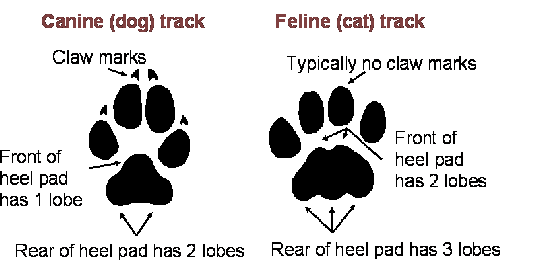
Different animal genera and species will make distinctly different tracks. For example, cat and dog tracks are very similar, but the differences between them are easily seen.

Picture from Michigan DNR.

Deer and other wild herbivores have a split hoof. As with predators, a larger, deeper track means a larger animal. Herbivores are generally harmless, but if they feel threatened, they can be even more dangerous than a predatory animal: for instance, a fully grown moose weighs upwards of 1200 pounds, with massive antlers and sharp hooves. Such an animal rampaging through camp would be like having a car drive through it.

Image from wildawareutah.org

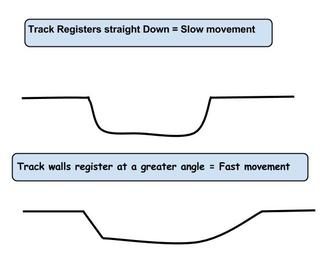
Tracks can also tell how fast an animal was moving. A slower-moving animal leaves tracks that have even, vertical sides; faster movement leaves a track with sloping edges as the foot rolls out of the track.  Faster movement also means that tracks are spaced further apart. 
http://wildfound.weebly.com/tracking/basics-of-tracking-part-2-reading-prints
For more information about animal tracks, including lots of examples and photographs, check out The Basics of Tracking part 2: Reading Prints on WildFound.

Next week, we'll shoot the poop as we talk about scat.

Lokidude

Friday, January 15, 2016

Guest Post: Air Rifles

by George Groot
Firearms are awesome. But unless you have a silencer, or are using a very low power rimfire cartridge, firearms are loud. Firearms are also expensive to feed, even rimfires.

For sake of argument, let's say that after the (insert apocalypse here) you have a nice plot of potatoes, carrots, other root vegetables, but need some meat for the pot. Odds are good that if you live in a city you can find some pigeon or other bird, and if you live in the suburbs you can find squirrels. It doesn’t take much meat to keep all the essential amino acids in your diet, and hunting small game quietly is preferable to hunting small game loudly.

To choose an air rifle for the taking of small game (and let’s be honest, there is a lot more small game than big game out there) your choices are effectively limitless for squirrel and smaller. For rabbit or raccoon, you’ll want bigger pellets and stronger energy levels, and enough accuracy to make headshots if you can for instant kills.

Types of Air Rifles
There are four basic types of air rifle; break barrel, single stroke, multi pump, pre-charged pneumatic.

Break Barrel Rifles
These provide good power pretty cheaply. They are also “hunting accurate”, but have been replaced by precharged pneumatics in competition because the spring action induces vibrations which are not good for accuracy. These are relatively easy to tune and repair for most people who are mechanically inclined. There are lots of manufacturers and lots of options.

Single Stroke Pneumatic
These are accurate, but you are stuck with the power level given. I don’t recommend them for hunting, but they are great for marksmanship practice. In fact I highly recommend them for marksmanship practice.

Multi-Pump Pneumatic
These can be very accurate. People have been using Sheridan Blue Streak (now called the Benjamin 397) or Silver Streak (now Benjamin 392) air rifles for hunting small game since the 1950s. They can be pricier than break barrels, and trickier to repair.

Precharged Pneumatic
The ones regulated for competition are in the same league as most single stroke pneumatics. But you can get these in .17, .22, .25, .35, .45, or .50 caliber if you want to drop a lot of money. These are the fastest for follow up shots because there is nothing to do but put in another pellet. These can get very pricey, and are not easy to repair on your own.

Recommendation
If you are a prepper and you don’t already own an air rifle for hunting, I recommend a break barrel .22 caliber. While not as common as the .17 caliber ammunition, .22 caliber pellets will reliably dispatch squirrels in trees and knock them down to the ground for recovery. The .17 caliber rifles, even high powered ones, don’t always knock the squirrels down.

.22 caliber pellets are more expensive than .17, but still less than $10 per 100 (some are $10 per 500), which is a pretty good price considering how much a 500 round “value pack” of .22 LR is going for lately.

I also recommend getting a low powered air rifle scope in the 4x range to put on your hunting air rifle, because most air rifles come with not much to write home about in the way of factory sites. Not that you need one, mind you, just that it isn't going to hurt to have glass on a rifle.

My recommended air rifles for Blue Collar Preppers are:
Should you go out and sell your rimfires to buy air rifles? No. But if you have squirrels and rabbits getting into your garden, or a raccoon making a nuisance of themselves, a hunting power .22 caliber air rifle is going to be a good addition to your preps.

The Fine Print


This work is licensed under a Creative Commons Attribution- Noncommercial- No Derivative Works 3.0 License.

Creative Commons License


Erin Palette is a participant in the Amazon Services LLC Associates Program, an affiliate advertising program designed to provide a means for sites to earn advertising fees by advertising and linking to amazon.com.