Friday, October 4, 2019

Water Bottles: Material, Construction, Purpose

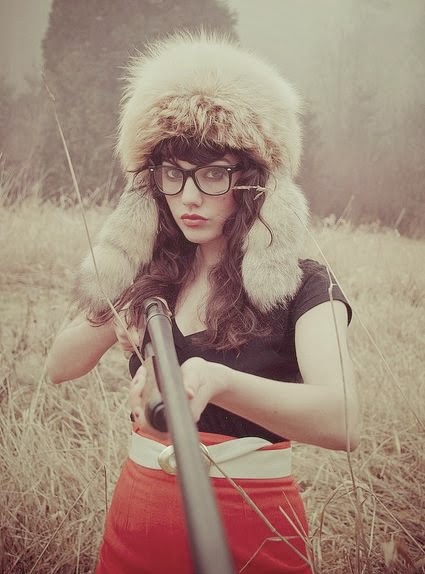
Not actually Erin.
& is used with permission.
A few days ago, David talked about getting a new water bottle for his Every Day Carry gear. What he said, and the comments that arose from it, have spurred me to talk about what to look for in a water bottle for your preps.

The biggest criteria is "How do you intend to use it?", followed by what it's made from and how it's constructed.

Material
When looking for water bottles for your preps, the three biggest contenders are plastic, aluminum, and steel.

Plastic
Unless you're like David and have actually managed to break a Nalgene bottle, this is probably your best bet. Nalgene is a brand name, but much like "kleenex" or "xerox" we now use it as a generic noun to indicate a type of durable plastic used in sports bottles. This kind of plastic is almost indestructible, lightweight, comes in a variety of sizes and colors and spouts, and is affordable by anyone. There is some concern about the long-term health risks of drinking from a plastic bottle made with BPA, so manufacturers such as Nalgene advertise that their products are BPA-free.

Aluminum
Aluminum is cheaper than plastic (unless you get a fancy insulated version -- see Construction, below) and weighs slightly less than Nalgene. It also scratches and dents more easily, which is a legitimate concern if you're using it every day; the daily bumps, drops and other oopses of daily life can do more damage to a bottle over the long term than taking one hiking or camping will.

There's also some concern about the long-term health effects of drinking from an aluminum container. This is because aluminium in solution is toxic, and there is concern that aluminum poisoning could be a contributing cause of Alzheimer's syndrome. In truth, this is outside of my field of expertise and I will ask Chaplain Tim, who was a professional water chemist, to explain this in greater detail. However, I wish to point out two things:
  1. Aluminum oxidizes when exposed to the air. Aluminum Oxide is both insoluble (doesn't dissolve in water) and very tough (fun fact: sapphires are composed of oxidized aluminum), but that coating can be damaged in a variety of ways:
    • Physical Deformation of the container, which exposes un-oxidized aluminum to whatever is inside. Remember, aluminum dents easily!
    • Chemical degradation of the oxide. All fruit juices and most soft drinks are acidic, which will strip off the oxidized layer, as will washing your bottle in the alkaline soap of a dishwasher. 
  2. The amount of aluminum needed to be a health hazard would require you to drink regularly from that bottle for years before any ill effects could potentially manifest. 
In other words, so long as you only put water in your water bottle, don't bang it to pieces, and don't drink from it and only it for years and years, you will be all right. 

Steel
Steel is non-toxic and tough. Steel is also more expensive than aluminum and slightly heavier, which may be an issue in a Bug Out or Get Home Bag. It's also less conductive than aluminum, which is why insulated thermoses are made from it. 


Construction
Some water bottles are insulated and some are not. While there are different types of insulation (double wall, vacuum insulated, etc) for our purposes today we only care if they're insulated or not.

Insulated
Insulated bottles keep your cold drinks cold and your hot drinks hot, and in a neat side-effect, prevent condensation from forming. I have never seen an insulated plastic water bottle and I don't think it's possible to make one; instead, you have to put an insulating sleeve over the bottles.

Both steel and aluminum bottles can be insulated, but this increases both price and weight, sometimes dramatically depending upon the type of insulation and size of the bottle. Given that aluminum is a good thermal conductor, it will reach room temperature faster than a steel bottle of similar construction.

Un-insulated
Given the advantages of an insulated bottle, some may ask why any prepper would want an un-insulated one. The answer to that is simple: You cannot boil water in an insulated bottle. The insulation will prevent the water inside from heating, and attempting to do so will result in damage to the bottle's insulation as you burn it away, as well as wasted time and fuel for the fire.

It is possible to boil water inside a plastic bottle, as the water itself absorbs the heat which would otherwise melt the plastic, but over the long term this will destroy your bottle.

Ironically, aluminum's heat conduction makes it an excellent candidate for purification in the field by boiling, as it will heat up quickly and also cool down quickly. Steel will take longer to heat and will also retain it for longer.

Purpose
This brings us to our main criteria, "What will you use it for?" These are my opinions.

Every Day Use
Unless your name is David Blackard, use a Nalgene style bottle for water. If the water becomes tepid before you finish it, top it off with cold water from a faucet. 

If you want to drink a non-water substance, get a steel bottle. If you want to keep it hot or cold, get an insulated version. I prefer vacuum-insulated bottles, also known as thermoses.

Hiking or Camping
I suggest un-insulated aluminum for this because it is cheap (so that if you damage it or lose it you won't be out a lot of money), it is lightweight, and if your outing turns into a survival situation you can purify water in it easily (because, as prepper, we always have on our persons multiple ways to start fires, don't we?).

BOBs or GHBs
I actually don't recommend bottles at all for BOBs; I think you are better served by boiling water using cooking equipment (such as a pot over the fire) and then being poured into a hydration bladder for drinking on the go.

For GHBs, I suggest both a Nalgene and a simple aluminum bottle. Boil water in the aluminum, then pour it into your plastic bottle for drinking while you Get Home. Not only will this allow you to benefit from the qualities of both bottles, it will increase your carrying capacity:
  1. Boil the water in the aluminum bottle.
  2. When you can touch the bottle, pour the water into your Nalgene.
  3. Repeat until Nalgene is full. 
  4. Boil another aluminum bottle's worth of water and seal it when it has cooled.
  5. Refill your Nalgene from the aluminum when you are running low. When the aluminum is low, start looking for another water source. 

As you can see, there are advantages and disadvantages to each material and design. To find which is right for you, first determine how you intend to use the bottle and work from there.

Thursday, October 3, 2019

A Potential Man-Made Disaster (part 3)

Having brought up the potential man-made disaster of a second American Civil War (ACW2), I've been doing a lot of thinking about how preppers could work to minimize the impact on their lives. Some people reason that we've already entered ACW2, it just hasn't gone “hot” yet.  Others believe that we're in a “Cold War” stage right now, with the battles being fought in courtrooms, legislative chambers, public opinion, and propaganda campaigns.

The wedges being forced between different sectors of society are many and vary in strength, but they're there. We need to acknowledge that things could erupt into violence soon and make our decisions before that happens. There will be no avoiding damage; ACW2 would hit each of us in some way. How can we minimize the damage?

Prepping for War

Situational Awareness (SA)
  • You're the best judge of what's going on around you. Get your head out of your phone and pay attention to the people and places around you.
  • God (or nature, take your pick) gave you five physical senses and at least one other. Pay attention to what you smell, taste, and feel as much as you do to what you hear and see. Smoke from a campfire smells different than smoke from a house fire; tap water has a different taste from town to town; and changes in weather can often be felt in your body before they become evident in the sky. Learn how to decipher these clues to heighten your SA. That “at least one other” sense is your common sense and paranoia, so don't disregard your “gut feelings” just because they don't always make sense.
  • If you live in a larger city, you probably already know the areas to avoid after dark. Expect those areas to expand as things heat up; opportunistic criminals aren't all stupid and lazy, and many of them will try to take advantage of any disruption of “normal” to further their own goals.
  • If you're old or have diminished senses for any reason, get a dog if possible. Their senses are much more acute than ours and they will warn you if somethings is “off”,

Be Ready to Move
  • Modern wars have a tendency to be fluid, moving battle-lines in unusual and sometimes random ways. An area can be safe one day and in the middle of a battle on the next, so you need to be flexible in where you sleep at night. I'm not in a position to be able to tell you how things are going to go down in your town or city, as I don't live there, so it's up to you to learn as much as you can about your local surroundings and how they can be used to help you.
  • Not all moves will be permanent. You may only need to get out of harm's way for a few days before venturing back home if a battle is short and decisive. Riots and other disturbances burn themselves out when there is nothing left to loot, but you're going to need somewhere to stay for the week or two that may take.
  • If you live near any of the likely infrastructure targets, you're more likely to have to relocate. Distribution and transport of any essential commodity will become a target, so bridges, pipelines, electrical stations, and shipping yards are likely to be attacked in one way or another.
  • Don't expect a lot of fore-warning. Our culture is based on instant communication, and there are groups out there today using those communication tools to gather large groups for bad reasons. There are also groups using the same tools to gather people for good reasons, but knowing which outcome is expected can be a challenge.

If You Choose to Fight
  • Becoming active in a civil war can take many forms. Serving in one of the branches of the military will give you a basic idea of what is needed, but you're not likely to be part of a large, organized force. 
  • Support personnel will always outnumber fighters by roughly 3:1; that's just how these things work. Logistics, tactics, intelligence gathering, and other “non-combat” roles will be highly prized skills. Sun Tzu wrote a book about the basic strategies that will cover most of the conflicts we're likely to see, and I highly recommend reading it and thinking about how it applies to your unique situation.
  • If you choose to be a trigger-puller, get your affairs in order. Make peace with whatever deity you choose and train as much as you can. Recognize that you and those fighting next to you have no guarantee of living through any given day. Choose your allies with care, and watch for informants and infiltrators.
  • Expect to be portrayed as a terrorist or whatever new name the mass media will use to denigrate you. Any resistance to authority will be called criminal, and the talking heads will grab anything they can find (or make up) to present that resistance as the worst thing to have ever happened. Never willingly talk to the press; they have proven time and again that they cannot be trusted to tell the truth about anything.

Plan Long-Term
  • ACW2 will not be a short conflict. We've forgotten how to conduct short conflicts, so I don't see an internal war being much different than the “war on drugs” that has been running for a few decades now. Part of the problem is that we have people in government that will gain power during any conflict, and being human, they will do all they can to maintain that level of power and control. Another factor is the risk-averse culture that has taken over most of our daily actions: warning signs on everything to avoid lawsuits, “safety first” campaigns at most job sites, military forces that have to obtain permission from an office thousands of miles away to do much of anything, and the ever-increasing “nanny state” that seeks to control us for our own good.
  • A 72 hour kit makes for a good Bug Out Bag, but you're going to need more than that for a long conflict. Think along the lines of providing the bare essentials for you and yours for a few years. As I mentioned last week, modern civil wars and revolutions are lasting longer than the historical ones did. I'd expect some form of disturbance in basic services to last for several years in some places. Do what you can to cover the basics of shelter, water, food, and fuel for as long as you can.
  • Every different region has its own pros and cons. Here in the Midwest we have plenty of food and water available, but the winters can be severe; areas in the Southwest will have milder winters, but not much arable land and brutal summers; and coastal areas are more heavily populated and rely on other areas for their food and power. Planning for the long term means taking a good look at the resources and conditions around you and finding a way to make them work for you.

“Unexpected” Doesn't Mean “Impossible”
“All swans are white until you see a black one.” That's the premise of the black swan theory: things that have never happened before are unexpected and will catch many people by surprise. A good grasp of history will show that more has happened than most people know about, but we also have a rapidly evolving technological sector that is making the “impossible” happen every day.
  • I expect a lot of the “fighting” in ACW2 will initially be digital. Hackers on both sides will be busy trying to disrupt the digital lives of their enemies, causing confusion and sometimes physical damage. With “deep fake” video technology becoming cheap and available, propaganda will reach new lows. Weaponized commercial drones are being used in some parts of the world already.
  • Hospitals, small cities, and medium-sized companies are being targeted by hackers taking control of their computer systems. The amount of disruption possible grows with the increasing reliance on digital everything in our lives.
  • So-called “weaponized autism” has become common, with several internet sites providing better data analysis that most governments can produce, and I know of one country that has recruited people on the spectrum as intelligence gatherers which can pick out patterns and minute differences that most “normies” would miss.

Like I said last week, none of this is earth-shaking news; it's mostly common sense once you think about it. I suggest that everyone set aside some time to actually sit down and consider the possibilities and how they would react to them. A little self-reflection wouldn't hurt, either.

Wednesday, October 2, 2019

Prudent Prepping: A New Water Bottle

The dust has settled and the First 72 Hours have passed. Follow along as I build a long term plan via Prudent Prepping. 

The recently departed water bottle in last week's post has been replaced with something that will degrade slowly in sunlight and be difficult for me to break.

I hear some laughter from the cheap seats, so check this out.

Iron Flask Sports Water Bottle

https://amzn.to/2nYGjyw


Iron Flask Sports Water Bottle - 18oz, 22oz, 32oz, 40oz, or 64oz, 3 Lids, Vacuum Insulated Stainless Steel
  • SPECIAL INTRODUCTORY PRICE! SPORTS WATER BOTTLE INSULATED: Goodbye sweat! The double wall insulation makes the Iron Flask sweat-free! It keeps your drink COLD for up to 24 hours, and HOT for up to 12 hours. *NOTE: ONLY the 18 Oz & 22 Oz fits in cupholders*
  • 3 LIDS: YES, Iron Flask comes with THREE different lids. Straw Lid with 2 Straws, Flip Lid (18 oz, 22 oz, 32 oz, and 40 oz ONLY), and a Stainless Steel Lid! *NOTE: The stainless steel lid is plastic from inside and stainless steel from outside*
  • 18/8 PREMIUM STAINLESS STEEL: The Iron Flask is made of 18/8 Stainless steel that is 100% BPA free and non-toxic. It will never leave a metal taste or rust. HAND WASH ONLY WITH SOAPY HOT WATER!
  • FUNCTIONAL DESIGN: The powder coat exterior finish is a classic. It assures that you stand out with a very durable and elegant bottle. Our logo is now LASER ENGRAVED to assure the highest quality as well.
  • 100% SATISFACTION GUARANTEED: We guarantee that the high quality Iron Flask bottle will surely please you! If, for any reason, you are not 100% satisfied with the Iron Flask, we will issue you a full refund or an exchange!
I really like the idea of having different tops for different uses, plus I have a second replacement straw for the 'sipping' top included in the box! Friends have seen this bottle and are thinking of ordering a larger size, so I can get another opinion and review.

The decision to not use another Nalgene bottle came from comments made on the BCP Facebook page in the discussion of plastic bottles, particularly the comments from George Strong, among others. If you haven't read them, I'll post some quotes from George (with permission):
"UV causes cross linking among polymers. The BPA was added as a sacrificial agent to protect the polymer in water bottles from UV generated cross linking.
"This is the same UV that forces carbon into a tight, four carbon bond that is essential in making vitamin D for your body. It has to do with the wavelength of the radiation matching up with the specific distance in carbon to carbon bonds.I recommend stainless steel water bottles for longevity, and titanium bottles for lightweight hikers. Aluminum is not good for human health."
In a separate conversation:
"Most plastic bottles are fine for long term storage in dark places, perfectly safe. However they will break down faster than stainless steel, glass, or silicone rubber containers. If you need to use"solar sterilization" to make drinking water, cheap disposable water bottles will pretty rapidly wear out, but they filter less of the UV than glass will, although glass won't stop all UV."
So, with info and advice from friends, I bought what I think is a nice water bottle with great features at a great price!

Takeaway and Recap
  • I'm always amazed at how much good information the readers of this blog have and how willing everyone is to share. I learn something every week it seems!
  • Purchased for this week: a 20oz.Iron Flask Sports Water Bottle from Amazon, $21.95 with Prime. Yes, 3 separate lids and a 20oz. bottle for $21.95. This size was my pick because it will fit into a standard cup holder. I'm looking at buying a 32oz. just to have a spare!
    * * *

    Just a reminder: if you plan on buying anything through Amazon, please consider using our referral link. When you do, a portion of the sale comes back here to help keep this site running!

    If you have comments, suggestions or corrections, please post them so we all can learn. And remember, Some Is Always Better Than None!

    NOTE: All items tested were purchased by me. No products have been loaned in exchange for a favorable review. Any items sent to me for T&E will be listed as such. Suck it Feds.

    Tuesday, October 1, 2019

    Muzzleloader Blues, Part 2

    Last week I fixed the rust damage on my poor muzzleloader. Today, I'm  going to clean and protect the bore, since I'm sure it's rusty as well.

    For most muzzleloaders, your ramrod will also serve as a cleaning rod. If not, locate an appropriate cleaning rod and patch holder or jag, as well as a bore brush sized for your rifle. An item called a bore mop is incredibly handy, but if you don't have one, patches can do its job as well.

    I'm proceeding directly from the rust cleanup, so my barrel has been removed from the stock, and the nipple is also removed. If your gun is not to this point, do so before continuing.

    (Editors Note: We apologize for the lack of pictures in this post. They were intended but there was a technical issue which prevented their inclusion.) 
    1. First, rinse the bore with hot water and a bit of dish soap, and by hot, I mean just shy of boiling. 
    2. Put the breech into a bucket or the bathtub and carefully pour the water down the muzzle until clean water comes out the nipple hole.
    3. Once the water flows clean, rinse the bore with water that doesn't have soap in it. 
    4. Dry the bore with cleaning patches.
    5. Swab the barrel with a black-powder-specific bore cleaner, such as Thompson-Center #13. Regular gun oils and solvents can cause problems with black powder, so use the purpose-made products. 
    6. Follow the wet patches with dry patches until they come out dry. 
    7. Use either a bore mop or patch to lube the bore with a black-powder-specific lube. My preference is Bore Butter, because it is useful for almost any muzzeloading lubrication needs.

    It's a bit different process than cleaning a cartridge firearm, but just as simple, and probably more important. Take care of your gun and it will take care of you for many years.

    Lokidude

    Monday, September 30, 2019

    Just Over Here, Sifting My Ash (Part 3)


    Winter is coming, and our eggs need ash to preserve them. Shipping pallets burn great, but they're full of nails and staples. What's a prepper to do? Why, make a sifting bucket of course!

    Unfortunately, the weather hasn't been cooperating, and trying to sift damp ash tore the screen. I’ll have to make an epic fire so the ash can be dry for sifting. With a few modifications, the next episode will be the final episode.


    Godspeed to you all.

    Thursday, September 26, 2019

    A Potential Man-Made Disaster (part 2)

    Last week I laid out the groundwork for a potential disaster called “gun control”. Lest you be mistaken, there are people in power who want to take away our right to keep and bear arms. One of my online friends has kept a running list of influential people who have stated their intentions to disarm the citizens of the USA. It's a rather lengthy list that is being added to with the recent proclamations of some seeking elected office.

    I also mentioned the types of resistance that such people are currently facing (active, passive, ignoring) but there are a lot of loud voices promising a second American civil war (CW2) if any serious attempts at disarming lawful gun owners is made. This has prompted a lot of thought and research for me, so I decided to share some of it.

    Desire for Conflict
    There are those who yearn for conflict. While there are a few who are adrenaline junkies who miss the action of their time in service, most of what I read is written by arm-chair warriors who have never had to make a life or death decision. I've laid out my military record in the past: I was a REMF during the Cold War that maintained nuclear weapons during my active duty and served in a Military Intelligence unit in the Reserves. Neither one put me on the front lines of a war (it was a cold war, after all), but there were several times where I was issued live ammo and given rules of engagement. We took security very seriously, and the “deadly force is authorized” signs weren't there for show; I know what it takes to be mentally prepared to kill another human being. Working on weapons capable of wiping out small cities caused some soul-searching and reflection as well.

    Another form of desire for conflict is reflected in what I have heard referred to as “war porn”, the fictional tales of how the “true patriots” will overthrow the “ruling elites”. Quality varies with the skill of the author, but most of it is fairly predictable once you've read the first few. The formula usually has several of these plot-lines mixed into the story telling:
    • Hero is former military with specialized training
    • Some sort of love interest
    • Personified evil character as a villain
    • A unified enemy force, often some global group
    • Lack of or sudden reduction in close family
    • A major set-back or loss
    • An ingenious plan or tactic that turns the tables
    • Final victory
    Nobody writes classical tragedies any more, and every story has to have a happy ending for the hero and the villains all have to pay for their misdeeds. Oh, how I wish life worked that way! From what I've witnessed over the years, the hero is often the one who dies and the villains too often get away. We don't live in a Disney world.

    ACW2
    On the subject of Civil War 2.0 (CW2), I've seen entirely too much “war porn” written, generally with a weak grasp of history and military history in particular. Recently I've found a few articles written by survivors of contemporary (the last 30 years or so) civil wars and revolutions and they have provoked even more thought and research.

    The concept of “going to war” against a government is outdated. With current technology, any organized armed force larger than a fire team (up to 4 people) will be targeted and watched. Back in the 1990s when the Militia Movement was going strong, there were plenty of FBI agents seeking to “infiltrate” such organizations and collect or create evidence against them. They had some success and some failures, with a lot of rhetoric thrown around to create a climate of fear. The Militia Movement broke down and became even more decentralized, eschewing regional command for a diffuse, cellular form of organization.

    Fast forward a few decades and we now have facial recognition software being deployed at airports and sports stadiums and internet-connected cameras installed in millions of houses. Police are finding that home security cameras are a good way to monitor activity in a neighborhood with very little capital investment on their part. Hard data on the full capabilities of the national intelligence agencies is understandably difficult to find, but reports of their ability to remotely activate cameras and microphones on cell phones are popping up. You can put away the tin foil hats, because hackers have been able to remotely activate laptop computer cameras for several years.

    We're not going to see a set-piece war like the Civil War of the 1860s. Technology has moved us beyond that point. A modern American CW2 will more likely be digital, with small battles fought in areas useful for propaganda purposes, and polarized media on all sides will see to it that propaganda outweighs actual news.

    Modern civil wars are worse on civilian populations than previous ones.
    • With no set battle lines, and ill-defined forces acting against each other, those caught in the middle suffer the worst. 
    • Urban dwellers are at the mercy of the suppliers of food, fuel, electricity, and water. 
    • Denial of those resources becomes a weapon in time of war, and can be more effective than firearms. Without going into details, I've found that it wouldn't take much to disrupt the flow of any of these to the metropolitan areas. 
    • Rail lines, bridges, pipelines, etc. are too exposed and there is very little to no redundancy built into the systems. Redundancy costs money to install and maintain, so it it rarely included in preliminary designs.
    • No major city is self-sufficient, and even the small ones are at risk of disruption of services. Look at the aftermath of any major natural disaster, and the amount of aid that has to be shipped in and the people who have to be shipped out before any rebuilding can begin. 
    • Talk to any of the folks who served in Iraq about the “Main Supply Routes” and what it took to keep them open. Now imagine any group trying to replicate that over an area roughly 2600 mile long and 1600 miles wide.
    Modern civil wars don't have easy-to-pick starting or end dates, and they last longer than earlier ones. The American Civil war ran from 1861 to 1865, roughly 4 years; the Spanish Civil war was from 1936 to 1939, 3 years; and the Russian Civil War (after the 1917 Revolution) was from 1918-1921, roughly 4 years. Compare those to the civil wars in Somalia (1991-present, 28 years and counting), Angola (1975-2002, 27 years), Nicaragua (1962-1990, 28 years), and the dozen or so that have never really ended but just keep grinding away at the population and economy.

    The size and sophistication of a country have very little impact on the duration of a modern civil war, since the wars have a tendency to drag huge chunks of the population down to a pre-industrial level of living. Case in point: Yugoslavia went from hosting the Olympics in 1984 to a series of bloody wars that lasted from 1991-2001. For insight into how one man survived that, check some of the articles by Selco.


    Next week I'll give my opinions on how to prepare for a potential CW2. It won't be anything earth-shaking, since most of it is common sense once you think about it for a while.

    Wednesday, September 25, 2019

    Prudent Prepping: Breaking Good (Things)

    The dust has settled and the First 72 Hours have passed. Follow along as I build a long term plan via Prudent Prepping. 

    I seem to have a strange super power, one that no one wants or appreciates: I have the ability to break things that to most people are almost indestructible. 

    For example, how many of you readers here have a Nalgene bottle of one brand or label? I don't gamble, but I'll bet a large percentage of you have at least one. I have three.

    Or more precisely, I had three. I now have two. 

    I broke a Nalgene bottle.
    Now, I can hear many voices crying out, "Inconceivable!", but it's true. There are two very famous classic blunders, and a third much less well-known: "If it's possible to break something, Dave can do it at the most inconvenient time and place." It was by no means a new bottle; in fact, I'm not sure exactly how old it was. It had to have been at minimum five years old, and maybe even older than that since it lived in my car and before that, my long-gone truck, so that is how I figured its age. 

    I've carried it camping and hiking, and I filled it almost daily at work. During all this time I've dropped, banged, scratched, kicked and generally abused a water bottle just like you see in the outdoor ads (only without the hot blond companion). Anyway, It took quite a lot of abuse over the years, and I guess the latest drop was the final one that caused a tiny weeping crack. It didn't show up right away, but it was pretty obvious when I grabbed my jacket and lunch box.

    I had a tear in my eye when I tossed it, or perhaps sawdust.

    Anker Bolder LC90 LED Flashlight
    In other news, a reader of the blog (hi Shane!) pointed me to a good buy on Amazon.

    https://amzn.to/2lOUW6C
    From the Anker Amazon ad:
    • SUPER-BRIGHT: 900-lumen (max) Cree LED sweeps bright light over the length of about two football fields (660 ft / 200 m) and reaches nearly 1000 ft. Fully zoomable from wide to narrow beam. Features 5 adaptable settings: High / Medium / Low / Strobe / SOS.
    • LONG-LASTING: Up to 6 hours (Medium-beam mode) of powerful, non-diminishing brightness from the included premium rechargeable 3350mAh battery. LEDs boast an extended 50000-hour lifespan. Recharge in just 6 hours with a 1A adapter (not included) and the included Micro USB cable.
    • TOUGH & RELIABLE: IP65-rated water resistant and designed for use in heavy rain. Its durable aluminum body and shock-resistance endure rough handling.
    • SMART DESIGN: A pocket-friendly compact chassis with an anti-slip finish holds fast in your hand or stands on-end as an emergency lamp.
    • WHAT YOU GET: Anker Bolder LC90 Flashlight, 18650 3350mAh rechargeable battery, Micro USB cable, wrist strap, welcome guide, and our worry-free 18-month warranty and friendly customer service.
    What's so special? How about all this for $20.49 with Prime shipping! It's only for a limited time, so if anyone is interested, check it out NOW!

    Takeaway and Recap
    • Nothing was purchased this past week, but I'm looking really hard at one of the Anker LC90 flashlights as a spare. Get one for a limited time from Amazon for $20.49 with Prime.
    • I don't think I'll order a new Nalgene bottle. I'll use one of my spares, instead.

    * * *

    Just a reminder: if you plan on buying anything through Amazon, please consider using our referral link. When you do, a portion of the sale comes back here to help keep this site running!

    If you have comments, suggestions or corrections, please post them so we all can learn. And remember, Some Is Always Better Than None!

    NOTE: All items tested were purchased by me. No products have been loaned in exchange for a favorable review. Any items sent to me for T&E will be listed as such. Suck it Feds.

    The Fine Print


    This work is licensed under a Creative Commons Attribution- Noncommercial- No Derivative Works 3.0 License.

    Creative Commons License


    Erin Palette is a participant in the Amazon Services LLC Associates Program, an affiliate advertising program designed to provide a means for sites to earn advertising fees by advertising and linking to amazon.com.