Showing posts with label Asking the Tough Questions. Show all posts

Thursday, August 6, 2020

Too Much

Once in a while I hear people say, “You can never have too much (whatever they're selling)”. This may be a good way to sell things, but it's a terrible way to prep. A wise prepper knows their limits and has plans for “events”, and knowing how much is “too much” should be part of those plans.

Too Much Food
Food has a set shelf-life and regardless of how it is prepared or stored, it will eventually decay to the point of being inedible or even toxic. This is why we suggest that you stock the foods that you normally eat and rotate through the stockpile to keep it fresh; putting food aside in excess of what you can eat or are willing to give away is the same as taking it home from the store and immediately tossing it in the trash can. Wasteful of both food and money, this is one of the easiest “too much” things to do right now.

If you run into a situation where you are producing more food than you can store or eat, consider giving the surplus away. My folks always kept a few chickens around for fresh eggs and the surplus went to church with them every week. There will always be someone who can use a free meal or two, so dad would set the extra cartons of eggs on a bench inside the door, free for the taking. 

Gardens worked in a similar manner; we always grew more tomatoes than we could handle, so we talked to the neighbors and worked out a system of trade. Everybody “specialized” in a crop or two -- the neighbor to the north planted extra sweet corn, one to the south planted extra squash, to the west it was berries -- and traded the excess with the others. Specializing allowed us to pay more attention to the garden and simplified the fertilizer and pesticide application. This system has a lot of positive value that I'll have to cover in a later post.

There is one exception that proves the rule for food having a shelf-life: honey. As far as I know, honey will last centuries in a sealed container and that's longer than even I tend to plan for.

Too Much Water
Water also has a shelf-life that varies by treatment and storage conditions, which is why we recommend having a way to treat or filter water on hand. You can't store enough water for a long period, so it's better to have a way to clean what you can find. 

Water is also dense, and carrying more than a day or two's worth will either force you to leave other things behind or carry more weight than your body should. For shelter-in-place, having a few hundred gallons on hand is “enough” to give you time to look for sources to resupply from.

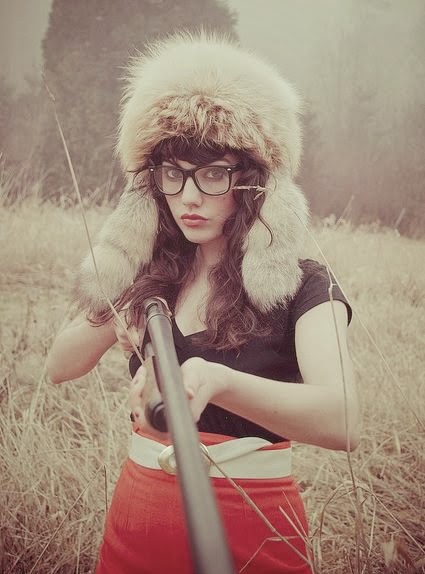
Too Many Guns
Firearms are long-term, durable goods. Kept properly maintained, you should be able to get at least 100 years use out of a quality firearm. How many guns is “too many” is a personal decision, as it varies with storage space and training. I'll freely admit that I have too many firearms! I tend to collect guns, and I have enough that I can afford to arm friends and family if they show up without any. I try to keep the ammunition required to a select few calibers, but that has been a challenge lately, as having a few oddball calibers around comes in handy when the gun stores can't keep the 9mm/5.56/.45ACP on the shelf.

You can only effectively fire one gun at a time, and they get heavier as the calibers go up, so choose your loadout to meet the expected threat. When hunting I'll carry a long gun and my EDC pistol, but if I'm traveling through unknown territory I add a back-up pistol to the EDC and carry more spare mags. Were I young enough to be on a combat footing I'd probably stick with the rifle/pistol combination that I know well.

Too Much Ammunition
Ammunition is close to firearms in terms of shelf-life. I've fired cartridges that were made for WW1 (nearly 100 years old) without any problems. I also have quite a bit of ammo that was made for WW2 in storage and don't expect to have any troubles with it. Heavier than water, I run into limits on how much I can carry under different circumstances, but the stuff in storage isn't going to be moved without a vehicle or two. Reloading gear and supplies would likely be a separate trip.

I stopped buying ammo a while back because I hit the “too much” limit and the fact that I have enough to keep my grandkids shooting until they have kids of their own. I don't keep it all in one place, which is a prudent prepper strategy for a lot of things. Fires, theft, and other ways to lose it are always a possibility so I don't keep all of my eggs in one basket.


Look at your preps and take stock of what you have. Is there any category that you can say “I have enough” and start working on another category? Having too much of any one type of supplies cuts down on your time and space to better round out your preps.

Friday, July 31, 2015

How Will You Deal With Sabotage?

& is used with permission.
It seems like most of my posts this month have referenced Naked and Afraid. That isn't intentional, but when I see I theme I tend to run with it.

Today I'm going to be discussing something that happened on Naked and Afraid XL. But before I go into that, I want start with some disclaimers:
  • I am aware that with every reality television show, there is lots more that we do not see and so we do not have context for many things. 
  • I am aware that XL seems to be pushing a dramatic narrative, and that annoys me (and detracts from my enjoyment of the show). 
  • I am aware that between editing and narrative, what we see is not the complete story. 
  • That said -- you can't film things that didn't happen, so if it's on film, it happened. Perhaps not in the same sequence, or with different motivations than shown, but visual proof is still visual proof. 
  • Finally, I am not attempting to assassinate anyone's character, but rather to use what happened as a seed for a thought experiment. 

What We See Happen
For anyone who doesn't watch the show, one of the participants had a meltdown after an argument (which, I note, was edited so we don't see the whole thing and therefore don't know what was said) and sabotaged her group by destroying survival equipment or throwing it into the river. 

Here's a video of the act in question:

>

My Question for Readers
Let us assume, purely for purposes of discussion, that something like this happens in your tribe/ survival compound/ whatever you call it. What do you do about it?

The immediate response from many folks is "We kill her, she's a threat to our survival, it's self-defense" or "Exile her from the group, possibly without supplies, depending on the damage and how I feel about the person."

Well, okay. I'm not going to tell you that you're wrong (although for legal reasons I can't tell you that you should do such a thing, either). What I am going to do, however, is bring up some points you might not have thought of, so that you can come to a conclusion now rather than being blindsided by events later. After all, not all prepping is material; consider this "ethical prepping."

What if she's a child?
Honora is an adult and therefore responsible for her actions. What if she were a moody 16 year old girl? (Right or wrong, we as a society DO give more leniency to children, especially female children; doubly especially if they're menstruating.) Do you kill her or kick her out then?

What if she's an emotionally troubled 10 year old? Are you still committed to death or exile (which, let's face it, is essentially a death sentence with nature killing her instead of you) ?

If so, can you live with yourself afterwards?

If not, what are you going to do -- try and rehabilitate her, and risk another incident which might be worse or result in death of another tribe member?  Or will you imprison her, in which case you are forced to keep her alive while she contributes nothing to the group?

If you exile her, how do you know she won't try to sneak back into camp and steal supplies, commit more sabotage, or burn the place down? How do you know she won't meet up with other survivors or raiders and say "Hey, I know a place that has food, water, and shelter. Let's go attack it!" ?

What if she has loved ones?
If no one likes the offender (such as Honora), then the answer is just a matter of personal ethics. But what if someone in the camp loves her and says "No, I won't let you kill her or exile her" ?

The simple answer is to say "If you love her so much, then you can leave with her."  That sounds all well and good until it's your group's only doctor saying that. Are you really willing to allow your source of medical knowledge to leave and depend solely upon what everyone knows about first aid?

If not, you might give the impression that justice can be manipulated via extortion.

If so, others in your group might feel that you made a terrible decision...

What if others resent you for it?
I truly doubt any prepper tribe will be a dictatorship, in which case there may very well be people arguing in favor of mercy. How do you plan to deal with a community that is unable to figure out what to do with a liability?

But perhaps you are a charismatic, benevolent dictator. Perhaps you rule with absolute authority... until you make an unpopular decision, such as killing a teenage girl, that leaves others in your tribe feeling that you are a monster. Are you ready for the split that may happen?  At best, it may just be feelings of divisiveness and friction between parties. At worst, it could lead to a coup, a mutiny, or whatever the proper term might be.

And if the person who is now in control of the tribe is the same person whose daughter you just killed... well, what do you think your chances are now?

In Other Words
Humans are stupid creatures who will bicker and fight among themselves even when their own survival is at stake. 

My Recommendations 
(such as they are, and for whatever they're worth)
  1. Think about this situation now, before it happens. Congratulations, you're already doing this!
  2. If you plan to form a tribe/ survival community, then you need to develop a legal code with pre-established punishments, and have everyone sign on. That way, when things DO happen, you can point at your Laws and say "I am simply enforcing what everyone has already agreed to -- if you want to be angry at someone, be angry at yourselves."  
    • Not that this logic will override reason, of course. But it does shield you (or whoever enforces the rules) somewhat. 
  3. For the same reasons as above, execution of the punishments ought to be a community matter, rather than a "group enforcer" who can be easily hated. 
  4. Make allowances for mercy in the rules, because sometimes The Law is not always Justice. However, these allowances should probably be codified in some way, to ensure fairness. 
    1. If pressed, I would allow for some sort of "second chance" policy for everything but the most heinous crimes. Perhaps instead of exile or death, the guilty party is restricted to half rations, or must perform hard labor -- something whose discomfort helps to reinforce the lesson of "don't do that again", but which does not leave lasting scar. 
    2. For example, Honora could have been told "Go get the survival tools you threw away, and until you bring them back you aren't eating our food, using our fire or sleeping in our shelter." Forced labor to replace deliberately destroyed resources is quite ethical, in my opinion. 
    3. If it happens again, that points to a pattern of misbehavior and therefore more drastic solutions need be implemented. 
  5. Remember that if rule of law returns, you may be held responsible for your actions. Have an excellent justification for everything that happens, and document as much as possible in case a loved one of someone who was executed decides to press charges. 

I realize this last point will meet resistance from the "Shoot, shovel, and shut up" crowd. And maybe that's a better policy; if no one knows you've killed anyone, documenting it is just generating evidence against yourself. However, if the body is found, and there's evidence or testimony elsewhere saying that you did it, it might be helpful to have your version of accounts documented and witnessed.

All of this is food for thought. Give it a good chew this weekend. 

Monday, March 23, 2015

Gun Blog Variety Podcast #31

It's time for Episode 31 of the Gun Blog Variety Cast!
  • A very caffeinated Erin Palette talks to us about "Springing Forward", prepper-style.
  • Nicki Kenyon discusses our President's recent imposition of sanctions on Venezuela.
  • Speaking of Venezuela, Miguel Gonzalez reports on the incredible rate of "Express Kidnappings" in that country.
  • Barron B. wants us to know that bits rot, which can cause backups to fail.
  • and Weer'd gives that "Funny or Die" video a good audio fisking.
  • As always, Adam and Sean tie it all together.

Listen to the podcast here.
Show notes may be found here.

Thanks for downloading, listening, and subscribing. And don't forget to share it with a friend!

Thursday, April 17, 2014

Contact

One of the many things that I see largely ignored on the prepper sites is the subject of inter-group relations and communication. It doesn't matter if you're bugging out or sheltering in place, eventually you're going to meet or see other people and you need to have a plan on how to react to those “others”. It doesn't matter if you're by yourself or in a group, unless you've managed to find Gilligan's Island there will be others around and you will have to interact with them at some level.

These are my (somewhat random) musings on making contact with others after TSHTF, without any attempt to put them into any specific order. I am throwing them out there to spark conversation and thought instead of trying to tell you what to do.


The old saying “you never get a second chance to make a first impression” holds true in a post-disaster environment in my opinion. If you're going to act like an ass, expect to be treated like an ass. Also, remember that a lot of people will be armed after a disaster, so be as civil as you can.

In the period immediately after a disaster, most people are going to be suffering some form of shock and won't be acting “normal”, but there will come a time when your life is not in danger every second of the day and that's when you need to take stock of your contacts. Find out who's around you and what their situations are. Even if you can't/won't help them, knowing who is around you is just as important as knowing what is around you. Personally, I'd very much like to know that the family in the house next door isn't the local front for a Mexican drug lord or criminal gang. If there are any forms of communication left after the disaster, I'm going to check on family and friends just to remove the doubt about them and to let them know my situation.

Personal contacts and the ability to network are going to be vitally important after any disaster, as knowing the people around you and being known by them is going to play a big part in deciding who to help and who to ask for help. Being able to barter with your neighbors is only going to work if they're willing to trade with you. I have made it a goal of getting to know a few families in every town in my rural county. This eases social contacts because once you have established something in common (a common friend, that you went to the same school, ate at the same diner, etc.) people are more willing to talk to you. It also spreads out my options to trade and work with the people in my area so I'm not forced into a deal or trade that is not mutually beneficial.

This can be modified by the city-dwellers quite easily. Make friends with, or at least get to know, people in different areas of your city. If you have a bug out plan, do you have any contacts along the route from point A to point B? Once you get to your retreat, do you know the people that live around you? If not, then you're the stranger that everyone will approach with caution.

Humans are predators at the DNA level, and unless they have been turned into figurative zombies by their culture they will fight for their survival. Tired, hungry, scared, and hurt people are going to be more common and more dangerous after a disaster. I don't have much use for zombies myself, but your mileage may vary. If you have huge stockpiles of food and are looking to start a harem, you'll probably have your chance. Anyone who will refuse to attempt to survive is going to be way down the list of people I'm going to be interested in helping, and they probably won't still be around by the time I get that far down the list.

Initial contact with strangers is going to be the most dangerous situation for both sides. Walking up to a house and banging on the door is not a good way to make friends. Shooting at people as they walk past your place is not very neighborly. If at all possible, initiate contact at a safe distance. Standing in the street or driveway and announcing your presence would be polite, as would telling someone to stop before they got to your door. The concept of “neutral ground” should be explored if your group is going to meet another group for the first time.

Rules of Engagement (ROE) are going to vary by your situation. ROE, for those of you without a military background, are a set of guidelines for when it is OK to open fire on an “enemy” or any other stranger that enters your area. The military sets very specific (and sometimes stupid) restrictions in their ROE in today's climate, where public relations are a part of fighting a war. A guard walking a fence line around an air base may not even be given live ammunition for fear he might shoot someone and sully the local reputation of the air base, but a sniper may be told that any male seen carrying a weapon on the street is a viable target. Your ROE are going to probably fall somewhere between these two, and I'll leave it up to you to decide your own rules. Be aware, however, that the guys on the other side of the fence have their own ROE and it may not be the same as yours.

Each of these concepts could/may be further explored in individual posts in great detail. If you have thoughts or ideas, let me know- I'm looking for feedback and conversation, since I know that I don't know a lot of things.

Friday, March 21, 2014

SHTFriday: Spring Forward, Fall Back, Prep Up

Not actually Erin.
Picture by KJ Photography
& is used with permission. 
I don't have the time this afternoon to give you another Apocalypse Arsenal post, so I thought I'd do a quick-but-still-kinda-relevant post on keeping your preps current.

Approximately two weeks ago, we "sprang forward" for Daylight Savings Time. Whenever that happens, we are encouraged to check or change out the batteries on our smoke alarms and carbon monoxide detectors.  I like to go one step further and suggest that folks do a complete teardown of their stored preps to make sure they're in good order:


  • One at a time, disassemble your Every Day Carry kit, your Get Home Bag, your Car Survival Kit, your Bug-Out Bag, and whatever other bags you have. 
    • If you need to switch out seasonal gear (such as cold weather clothes for hot), now's the time. 
    • Make sure that the bag itself is in good shape and is not showing signs of wear or fatigue. Repair all holes and torn/stretched seams, and patch areas showing wear. 
    • Check your food, medical supplies, and batteries to see if any of them have expired, leaked, or dried out. Replace those which have. 
    • You aren't storing batteries IN your appliances, are you?  Regular alkaline batteries are prone to leaking and corrosion over time if left plugged in, so put electrical tape over the ends if you leave them inside a device.
    •  Lithium and rechargable batteries are less prone, but they may have slowly discharged over time. Replace and recharge if necessary. 
    • If your batteries are kept loose instead of in an insulated carrier, tape over the edges as well, just in case those rumors about accidental contact fires are true. 
    • Make sure all your gear works, and hasn't become damaged due to rust or weight of other gear on top of it. 
    • Do a complete inventory to make sure you didn't take something out and forget to put it back. A checklist for what belongs in the bag is a good idea for this specific purpose.  
  • Check your medical supplies in your bathroom. 
    • Again, expiration dates. 
    • Again, damage from mice/water/leakage/whatever. 
    • Again, checklist. 
  • Check the food in your pantry to see if anything needs to be rotated out. 
  • Check your long-term food (MREs etc) and water storage. 
    • If your water comes from a pump or a well, check that. 
  • Do you use solar power?  Climb up on the roof and check the panels for signs of damage. 
    • Do you have energy stored in deep-cycle batteries?  Check them, and check the charge. 
  • Check your guns. 
    • Are they all there? Are all of their accessories (sights, lights, etc) all there?
    • Do they all work?  Take them out to the range for a quickie. 
    • Check for signs of rust or other damage. 
    • Check whatever they're stored in. Is it still strong? If it's lockable, is it still secure?
  • Check your ammo. 
    • Make sure it hasn't been damaged by heat or moisture. 
    • After you come back from the range, do an inventory. Buy more if necessary. 
  • Check your vehicle. 
    • Make sure all the tires are inflated properly
    • Make sure the oil has been changed if necessary
    • Make sure all the fuses are working and that you have spares
    • Make sure you have at least half a tank of gas in your car. 
  • Check your body. If you haven't been to the doctor in a while, GO. 
    • Get a physical. Make sure you're as healthy as possible. 
    • Get a dental check-up. If your teeth hurt, life sucks and eating is difficult or impossible. 
    • Get your eyes checked if you wear glasses. An updated prescription and a spare pair of specs are good things to have. 
  • Check your shoes for holes. 
    • Get new ones if necessary. 
    • Make sure you have good socks as well. 
  • Check your knives for rust/dullness/etc.
  • Check your house for leaks, draft, termites, trees that could fall....

Et cetera, et cetera. These are just examples; I'm sure a few minutes more thought could come up with more examples.  The idea here is that preparedness is not a "one and done" thing where you buy the right item and forget about it;  preparedness is a state of mind where you know (and if you don't know, you make sure) that everything is working and ready to go. Even if you're not 100% up to speed on everything in this list -- and none of us are, really -- it's good to get into the habit of checking things to make sure they're still good, and functional, and present, rather than just assume everything is in place and working properly only to be disappointed (or worse, endangered) later when you discover that they are missing or broken. 

Stay safe and keep prepping!

Monday, February 3, 2014

It's Serious Business

So, I'll be starting off my part of this site with a barrage of questions.  Don't worry about having all the answers right now, though; that's what we here at BCP are going to be helping you with.  Now, my point with all these questions will hopefully be obvious, but if not, I'll lay it out here for you to refer back to: Details, regardless of how small, will pile up and regardless how insignificant they might seem, when you're already stressed everything tends to add to misery.  

One of the reasons we prep is to increase the chances of survival for ourselves and members of our family/communities. Another reason is to ensure you've shreds of sanity left when you find yourself on the other side of the situation.

It's going to take determination, a healthy amount of stubbornness, and an unyielding will to become a person who can survive the crap hitting the fan. Both men and women will be facing threats like rape, murdered life partners (both gay and straight), enslavement, miscarriages, suicides, and death from things that once upon a time were innocuous.

If you're cringing right now: Look, honey, I warned you in my first post that words would NOT be minced.  I will NOT sugar coat what you will be facing.   Far too many preppers do that already.

Now, this list might seem overwhelming.  However, consider this your reality check if you think prepping is easy.  Every last question is going to need answers. Fortunately, this leads us to that old saying, "Knowledge is Power."  In this case, it is power to increase your, and your loved ones',  abilities to survive. Learning everything you can now will help you maintain the calm in your home, reduce the stress of the situation and help your group feel more in control of their surroundings during times of crisis.

All right, are you ready? Here we go.
  1. Do you know the bugs in your area (spiders, ticks, chiggers, etc)?
  2. Do you know how to alleviate discomfort associated with their bites?
  3. What works in keeping them away from you both inside and outside?
  4. Do you know how to preserve food without electricity?
  5. Do you know how to build a dehydrator and how long to keep foods in for?
  6. Do you know where you can find a source of salt in your area? Can you extract it?
  7. Can you make your own vinegar? (This can be used for things like food preservation and washing your hair.)
  8. How about the preps you've done for kids? What are you going to do about orphans you encounter (and you WILL encounter them)?
  9. Can you make simple toys for them?
  10. What are your daily activities that you can include them in?
  11. Do you have books put back for them that can teach them basic math, reading and writing skills?
  12. Are you going to teach them how to use weapons? If so, which ones?
  13. Back to kids, have you thought up games that they can play even now where they get to learn crucial survival skills and responsibility? (Bless children and the fun they can have in learning.)
  14. Do you know the allergies that might possible for your group to develop? The diseases?
  15. Have you put back any birth control/condoms or even two types of pain relief (say, naproxium sodium and aspirin)?
  16. How are you prepared for the monthly menstruation?
  17. Do you know any herbs that are local that help alleviate cramps and PMS?
  18. What about pads? (Tampons....feh, we'll go over why those are a bad idea in that post later on.)
  19. Have you figured out a reusable replacement for pads, when you run out of the nice store bought ones?
  20. How are you going to clean them and also keep yourself clean?
  21. Can you identify four animals good for food?
  22. Can you build traps to catch them?
  23. How about cleaning and preserving their meats?
  24. Do you know how to turn part of the animals organs into a liquid that will let you tan their own hides?
  25. Do you know the best seasons in your area to trap during and often to trap?
  26. Could you capture wild rabbits and ducks and then re-domesticate them?
  27. Back to weapons: can you make any?
  28. Have you made peace yet with the fact there will come a time where you will have to take someone else's life in defense of yours and your family/friends?
  29. Can you stone knapp?
  30. Have you given any thought to safe alternatives toilet paper?
  31. How are you going to dispose of your human waste?
  32. What about your teeth? Do you know which trees are good to make primitive tooth brushes from?
  33. How about when it comes to crafting? Like crochet, sewing, knitting, ceramics/pottery, ropemaking, thread making, weaving, woodworking, leather working, making candles, making baskets or even very basic bandages?
  34. Can you build a few different basic shelters?
  35. Do you know the edible plants in your area (be they wild greens or an ornamental plant in your neighbor's yard)?
  36. Can you keep what will then be packs of feral dogs at bay? Do you know how?
  37. Do you know the symptoms of rabies and how to treat it?
  38. Do you know the symptoms of scurvy?
  39. Do you know what foods (both wild and stored) are high in vitamin C in order to prevent scurvy?
  40. Do you know nutrition well enough to be able to throw together a well balanced meal from your stores for someone who is weak from disease or injury?
  41. Do you know what Pellagra is and how to treat/avoid it?
  42. Do you put back foods that are already in your diet?
  43. Have you learned how to cook those foods that are going to new additions to your diets in a variety of ways?
  44. Have you put back (hidden) a few bags of candy (from which a handful can "magically" appear whenever there's a low in morale)?
  45. Are you putting back vegetables and fruits, not just grains, legumes and proteins?
  46. Have you put back teas, drink mixes, instant coffee for when just water gets old (which it does rather quickly)?
  47. Can you spot the signs of depression in others and work with them to help get through it?
  48. Do you understand PTSD? (Despite vain hope, all humans are susceptible to PTSD. Everyone is going to be witnessing and experiencing traumatic things during the collapse. Expect for many people to end up with it in a broad range of varying degrees of severity. Also expect them to be in pain from it for years. Learning how to deal with it NOW could and will end up saving lives.)
  49. How about board games? Have any games of strategy (chess, Stratego, Risk), of luck (Chutes and Ladders, Monopoly) or just simple silly fun (Uno, checkers)?
  50. What kind of books have you put back and is there a broad range (your favorite science fiction like Star Wars, fiction like that by Stephanie Osborn,  or biographies of people you admire)? How about reference and how-to manuals?
  51. Can you raise a duck egg from hatchling to adult and then breed them for more eggs and more ducks?
  52. How about milking animals? Helping them give birth or when they have an egg stuck?
  53. Can you start plants from seeds?
  54. Do you know how long the growing season is in your area?
  55. Have you double checked to make sure your seeds will actually grow in your area?
  56. Do you know how to turn waste (human and animal) into safe to use compost?
  57. Food preparation: What are you going to do when the fuel runs out?
  58. Do you know the trees that are most common in your area?
  59. Do you know the difference between hard woods and soft woods and how long each takes to dry out before its safe to burn without it giving off smoke?
  60. Have you figured out how serious prepping can be and how all-encompassing?
Because we have.

The Fine Print


This work is licensed under a Creative Commons Attribution- Noncommercial- No Derivative Works 3.0 License.

Creative Commons License


Erin Palette is a participant in the Amazon Services LLC Associates Program, an affiliate advertising program designed to provide a means for sites to earn advertising fees by advertising and linking to amazon.com.