Wednesday, December 7, 2016

Prudent Prepping: 'Tis The Season


The dust has settled and the First 72 Hours have passed. Follow along as I build a long term plan via Prudent Prepping.

The season of giving is here, and I've got a few things to send and hand out in person to important people.

What do you get people who have lots gear or have what they need? I know several folks like this, and gifts for them are impossible to find, so for them I give Time. I help one of them with projects that require two reasonably strong adults; he has two girls who know how to use tools,but there are jobs where dexterity doesn't match muscle. For the other I dog- and house-sit so they can have weekend trips for Spartan races.

I do have gifts going out, this week and next, to several friends across the country and several of them are pretty well geared as well. Time is something I am not able to share with them, so gifts are the best I am able to do.

Gifts
I call on a large home improvement chain, and from time to time some "marketing genius" who has never opened a box, stocked a shelf or built a display comes up with a Neat Idea or New Product to put on the shelves. The latest was office supplies. Now I ask you: if you were shopping for 1/2" 4'x8' plywood, 5 gal. pails of asphalt sealer and roofing felt, would you think a three hole paper punch and dry erase markers would be available too? Me neither, but these and more were on the shelf and are now being clearanced out. Some of these possibly, sorta, maybe could find their way into boxes:

Rite In the Rain Pencil and Pad
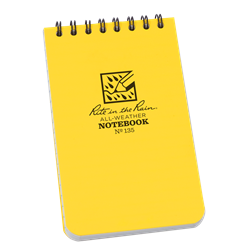
Our 3" x 5" Top-Spiral Notebook is small enough to fit comfortably in your pocket and tough enough to survive any of Mother Nature's onslaughts. This scrappy pocket notebook will survive sweat, rain, mud, snow, oil, grease, and the wear-and-tear of daily use in your pocket. Impact-resistant Wire-O binding won't lose its shape in your back pocket, and a PolyDura cover defends your notes from scratches and stains.


Do you like pencils but fear they will break when it matters most? You're not alone. A Rite in the Rain Mechanical Pencil may well be the last pencil you'll ever need to buy. True to the Rite in the Rain brand, this pencil is tough, reliable, made in the USA, and writes no matter what.

I have a Rite in the Rain notebook and pen or pencil in my GHB and my EDC sling bag. I find the possibility of writing and leaving notes that won't be destroyed by bad weather a brilliant idea. When I brought up these items to my geocache friends I was told --  by a 10 year-old -- that everyone knows about and uses them,

Look for yellow tags at The World's Largest Home Improvement Chain; you may find a bargain or two.

Boardwalk Buy Outdoor Tactical Waterproof Hiking Pouch 
I see another rep regularly in my sales calls who likes the look of the mini 1st Aid pouch mentioned in this post. He likes the look of my pouch, doesn't carry anything extra on his belt, and mentioned wanting something slightly larger. I've known this guy for years and he bought me lunch several times this year, so he's getting a surprise: this bag I ordered from an ad on Facebook.

I know, I'm feeding the Facebook ad monster, but with a great (advertised) return policy, I thought I'd give BoardwalkBuy a chance. At the time I ordered, these bags were $13.99 with free shipping.

The bag I bought for my friend looks like the photo, has two large and sturdy looking zippers to close the compartments and uses two straps with snaps to attach the pouch to your belt. There are convenient webbing strips to use to adjust the pouch to fit your belt width.
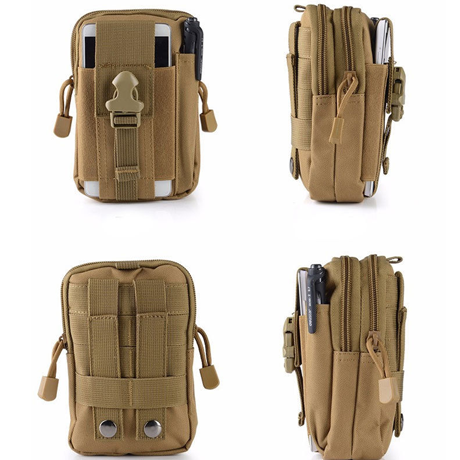
Bottom Left.Straps tucked under webbing
The bag has enough room for my friend to duplicate the 1st Aid portion of my kit and still leave room for a notebook and other small items.

Other than an extra-long time for it to be delivered (nearly a month), I think the pouch is worth what I paid and possibly even worth the $19.99 current advertised price.

The Takeaway
  • Give what you can, when you can. Something simple like an extra hand can be the best gift for a friend
  • Ideas for friends show up in the strangest places.

The Recap
  • Rite in the Rain pencils:$11.31 with Prime shipping from Amazon. 
  • Rite in the Rain notebooks: $6.85 and free shipping for a 3-pack from Amazon.
  • Belt pouch ordered from BoardwalkBuy (Facebook ad): $13.99, but currently $19.99. 

Just a reminder: if you plan on buying anything through Amazon for the Holidays, please consider using our referral link. When you do, a portion of the sale comes back here to help keep this site running!

If you have comments, suggestions or corrections, please post them so we all can learn. And remember, Some Is Always Better Than None!


NOTE: All items tested were purchased by me. No products have been loaned in exchange for a favorable review. Any items sent to me for T&E will be listed as such. Suck it Feds.

Tuesday, December 6, 2016

Mmm, Leftovers

(All apologies to Casey Jones for the title.)

This is the time of year when folks tend to get together to share warm wishes and piles of food. I tend to be a fan of both of those things, and would bet my paycheck that the rest of my BCP family is as well. Unfortunately, the most popular meats served at this time of year are expensive and frequently have unnecessary amounts of waste, due to difficulty removing it from bones. There is a very simple solution to this problem, however, and it requires nothing more complex than a large pot and a few hours of time.
Boiling down meat for soup is a classic way to make the most of your food dollars. It is (or at least was) so prevalent that you can ask your butcher for soup bones year round. Soup from bones provides a rich flavor that is hard to match otherwise, and it also works with virtually any meat. Every year after Thanksgiving, I cook down the turkey carcass, and my mom was an artist with ham bones when I was a kid.

For a turkey, I use a 3 gallon stock pot. The bird doesn't fit completely at first, but it will as it breaks down. Smaller bones, such as beef or pork, can also be cooked in a slow cooker.

  1. With your leftover meat in the pot, add enough water to cover the whole lot if possible, but not so much that it will boil over. 
  2. Cover your pot and set it to boil. (I like to season my soup at this point, but this can also be done before you serve it.)
  3. Let your pot boil until the meat separates and falls from the bone. This may take a few hours. Check on it occasionally, adding water as needed.
  4. When the meat has fallen off the bone, you'll need to remove the bones from the pot. I use a slotted spoon for this, and simply remove all of the meat and bone. I then separate them, returning the meat to the pot and discarding the bone.
  5. At this point, you can either add vegetables and other ingredients and serve immediately, or you can portion out and refrigerate or freeze your soup for later. A large turkey ends up making me about 2 gallons of rich, hearty soup. A beef or pork roast could make nearly a gallon.

Dollars always seem to need streching this time of year, and this is a tasty way to do it.

Lokidude

Monday, December 5, 2016

Guest Post: Carbohydrates and Fats in the Apocalypse

by George Groot
George is a member of our Facebook Group and has written for us before.


We’ve already covered essential amino acids and vitamins. I’m going to lump carbs and fats together in this final post because, biologically speaking, they are both very boring: science lists no “essential” carbohydrates, and only two essential fatty acids (omega-3 and omega-6). For a quick review, here is the list of essentials:

Amino acids: histidine, isoleucine, leucine, lysine, methionine, phenylalanine, threonine, tryptophan, and valine
Fatty acids: linoleic and α-linolenic acids
Vitamins: ascorbic acid, vitamin A, vitamin D, vitamin E, vitamin K, thiamine, riboflavin, niacin, vitamin B-6, pantothenic acid, folic acid, biotin, and vitamin B-12
Minerals: calcium, phosphorus, magnesium, and iron
Trace minerals: zinc, copper, manganese, iodine, selenium, molybdenum, and chromium
Electrolytes: sodium, potassium, and chloride
Ultratrace minerals: (essentially everything else)

Carbohydrates
Carbs are nowhere on the above list, but that doesn’t mean you can ignore them; a lack of carbohydrates in your diet can lead to hypoglycemia (low blood sugar, which results in being tired, cranky, and unhappy) or even ketosis, a serious medical condition that can lead to death. So you definitely need some carbs, but you have no specific need for any one particular carbohydrate, which is why none are labeled as essential.

But not all carbs are created equal, and you can think of them as “fast” or “slow” carbs. You’ll often hear them called “simple” and “complex”, and if you remember that simple is the “fast” kind that tastes good but isn't good for you, then you are on your way to success. Simple carbohydrates are monosaccharides (a single sugar molecule) or disaccharides (a molecule that is broken apart by an enzyme into two single sugar molecules). Not all of these sugars have the same glycemic index (how much they affect blood sugar and insulin production), and complex starches such as found in potatoes or pasta are still carbohydrates according to your body.

You don’t need much to survive; a single bowl of oatmeal or a medium potato is going to give you all the carbs you need to avoid ketosis or hypoglycemia if you are a healthy person. If you have flour, beans, rice, pasta, potatoes, and fruit as part of your preps, you are not going to have any issues getting enough carbohydrates to maintain health. I worry more about preppers being extremely carb heavy in their preps which, over the long term, can lead to health problems such as weight gain, heart disease, and diabetes.

Fats
If you cook with a vegetable oil, or eat fish, you are already getting the two essential fatty acids you need. In fact, the only people who are in danger of needing essential fatty acid are those who go for a long stretch of time on extremely lean meat. But if you have a fat source, then lean meat is no problem.

The normal household cooking oils (corn, canola, olive, and soybean) all have the essential fatty acids you need. There is some argument among foodies about which oil has the best ratio for human consumption and optimal health, but in a survival situation any of them will keep you alive and healthy. Sunflower oil may or may not have the omega 3 fatty acid you need, depending on how it is processed and what type of sunflower seeds were pressed. Cold pressed is best, in my opinion.


The two essential fats that you need aren’t hard to come by, and cooking oil is one of the essentials that you can buy cheap and stack deep as it has a myriad of other survival uses such as filling copper candles, weatherproofing cloth, and if you store it too long and it starts to go rancid, consider turning it into soap. And if you didn’t pack away enough cooking oil to keep yourself healthy and your cast iron pan seasoned, then go fishing and gather nuts to make sure you get the essential fats you need in your diet.

Sunday, December 4, 2016

Gun Blog Variety Podcast #120 - Your Life is a Kitchen

So bake as many pies as you want with the GunBlog VarietyCast!
  • Beth brings her husband Sean (not GBVC Sean, a different Sean) back on to talk about being a couple who shoot competitively.
  • A 32-year-old woman is accused of stabbing her 61-year-old former roommate to death. Sean takes a closer look.
  • Barron is on assignment and will return soon.
  • In the Main Topic, Sean and Erin answer a pair of questions from a liberal gun-owning listener: "What do you hear when a liberal says 'We need to have a conversation', and what do you hear when a liberal says 'We need to compromise' ?"
  • In a late night/early morning segment, Tiffany discusses the First Amendment concept of "fighting words" and how that relates to your Second Amendment right to armed self-defense. 
  • When the oil from the hurricane lamps you've got stored in the garage leaks all over the floor, how can you get it cleaned up? Erin gives you some tips.
  • Massachusetts Attorney General Maura Healey is back, this time in a Vice News interview. You know what that means: it's time for another patented Weer'd Audio Fisk™!
  • Our plug of the week is for Roll20.
Thank you for downloading, listening, and subscribing. You are subscribed, right? We are available on iTunes, Stitcher Radio, and now on Google Play Music!

Listen to the podcast here.

Read the show notes here. 

Thanks also to Firearms Policy Coalition for their support. 

Blue Collar Prepping Transcript:
Lamp Oil Cleanup on Aisle Five!

Now that my family has unpacked the Christmas decorations and strung them up across the house, it’s time for the annual cleaning up of the garage in the hopes that maybe this is the year we’ll get it all organized. I say “hopes” because invariably something goes wrong, and this year is no exception.

We maintain several hurricane lamps in the house for, not surprisingly, if we lose electricity from a hurricane. And we’ve had these lamps for a long time -- at least 30 years now.

Now despite these lamps being old they haven’t received a lot of use, because storms rarely knock out electricity for more than a few hours and because (with my help) my family has moved on to battery-powered means of long term light.

But batteries can wear down, and it’s always good to have backups, so we’ve kept these lamps around. However, the drawback to owning one is that you also need to stay well-stocked with lamp oil.

Now I don’t know if our listeners know this -- I certainly didn’t until this past week -- but apparently the plastic bottles that store lamp oil can become brittle after, oh, a decade of storage in a garage, and past that point bumping them, or even moving them, will cause them to crack (or in our case, shatter) and leak all over the place.

So this past week has involved me asking the collective wisdom of the Blue Collar Prepping Facebook Group -- if you aren’t a member, you’re wrong, join today -- how to clean up the stinky stain in my garage and if there’s any hazard associated with it.

So first of all, lamp oil is just highly refined kerosene, with a flash point -- that means “the temperature at which it ignites” -- of 363 degrees F. This is not to be confused with the auto ignition point, which means “the temperature at which it spontaneously ignites without needing a spark”, and is a much higher 428 degrees F.

These are all good things to know, because it means that the spill won’t catch fire in a hot garage!

So, onto the cleanup, and the techniques I outline here can be used for other forms of fuel, like gasoline.

The first thing I need to do it absorb as much of the oil as possible. This is best done with clay-type non-clumping cat litter, although dry sand will also work. Cover the stain with it, wait until it’s saturated, then dispose of the litter or sand and replace it. I need to keep doing this until there’s no more oil to be absorbed, and if I really want to get aggressive I can scrub the litter into the floor with my shoe or a broom.

After that, I’m going to spray the stain with carburetor cleaner. This is supposed to “lift” any remaining oil out of the concrete and allow it to be absorbed as disposed of.

I need to spray the stain until it’s covered -- not a thick coat, just wetted down -- let it stand about 5-10 minutes, then put more kitty litter onto it. I’m told that I should repeat this about 3 more times. This will probably get out everything it’s possible to get out.

After THAT, I need to use Dawn dishwashing soap to break down whatever oil is left and cause it float to the top. More kitty litter!

After that’s done, it’s just a simple matter of washing off the rest of the Dawn with water and a mop.

Of course, all of this trouble could have been avoided if I’d prevented the lamp oil from spilling in the first place. What I’m going to do to keep this from happening in the future is to keep our remaining bottles of oil in a big plastic storage tub. That way, even if the bottles break, the only mess will be inside the tub instead of all over the floor!

Friday, December 2, 2016

Guest Post: Vitamins in the Apocalypse

by George Groot
George is a member of our Facebook Group and has written for us before.

If you are prepping food, it is easy to get bulk calories in the form of starches. My previous article on proteins focused on ensuring the complete array of amino acids made it into your diet; this article will focus on vitamins.

I prefer to not rely on a daily multi-vitamin for essential nutrition, but in the case of survival it wouldn’t be a bad idea to stock up on a few bottles just in case. But vitamin supplements will eventually run out, and a longer-term solution will be required. The good news is that you can grow most of the vitamins you need from the dirt, and the ones you can’t grow (the B family) you can farm or hunt.

At the cellular level, vitamins are all cofactors and are needed to catalyze necessary chemical reactions. Minerals can also be a specific type of cofactor called a coenzyme. Some vitamins, such as B12, have a mineral component (in this case a cobalt ion) already included. Sometimes they are used whole as a prosthetic group tacked on to a protein, and sometimes they are just a precursor to the actual coenzyme or cofactor. But no matter the terminology, vitamins are important to maintaining your health.

Solubility
Vitamins also come in two main categories, fat soluble and water soluble. Quoting from the linked article:
Water-Soluble Vitamins
All B vitamins and vitamin C are water-soluble. Water-soluble vitamins are easily dissolved in the body. The kidneys remove excess amounts of these vitamins so they can be excreted in the urine. Still, this doesn’t mean that you can take vitamins B and C in unlimited quantities.

There is a misconception that if you consume too much of a water-soluble vitamin, your body will just ‘get rid of it.’ The truth is, there can be problems with excessive amounts of water-soluble vitamins, and upper limits have been set on their consumption.

Fat-Soluble Vitamins
The fat-soluble vitamins are A, D, E, and K. Fat-soluble vitamins are absorbed in the lymph, transported in the blood, and can be stored in the liver and fatty tissues for use as needed.

The fat-soluble vitamins are the ones you really need to be careful about. Because fat-soluble vitamins can be stored in the body, these vitamins can build up to toxic levels when consumed in excessive amounts.
Vitamin A is found in leafy greens like spinach, kale and in carrots, sweet potatoes, pumpkin, and butternut squash. As a fat soluble vitamin, feel free to consume it with a little pat of butter or other oil.

The B vitamins are found in the meat of ruminants. If you eat any of the kosher animals (they have cloven hooves and chew the cud), you are not likely to be deficient in any of the B vitamins. If you are a vegetarian, your only real option is vitamin supplements.

Vitamin C is the cofactor for the collagenase enzyme, which puts specific bonds on the collagen proteins to make connective tissue stronger; this is why lack of vitamin C causes the typical leaky gums and easily cut skin seen with scurvy symptoms. It's generally easy to get enough vitamin C from plants and fruits, but even rare meat can contain enough vitamin C to keep you healthy (animal protein is the main source of vitamin C for some Inuit native diets). If you are worried about getting enough vitamin C in winter, grow boxes with kale or spinach; they, and tubers like potato, sweet potato, turnips, and rutabaga, are all rich in vitamin C.

Vitamin D is something your body can create through exposure to sunlight. Ultraviolet B rays cause a tight ring structure to form and you are good to go -- for a while, at least.

Vitamin E, another fat soluble vitamin, is found in large quantities in spinach and in sunflower seeds. Sunflower oil is a decent cooking oil that stores relatively well when not exposed to oxygen.

Vitamin K is another vitamin that I don’t worry about much. If you are eating enough spinach or other greens to get your vitamins E, C, and A, then you are already getting more than ten times the vitamin K you require.

Growing Your Own
Now if you want to grow fresh greens year-round to take care of your A, C, and E needs (getting B from meat and D from sunlight if necessary), a cold frame system will work very well in the temperate regions. Since these plants have little in the way of calorie content, they are less likely to be a target for thieves than crops of squash, root vegetables, or fruits (in their seasons).

I know eating greens can have all the flavor of "blah" mixed with "yuck" to some people, but they are a great source of vitamins that can be grown year round.


Next: Carbs and Fats!

Thursday, December 1, 2016

Winter Hydration

Even though it is still officially autumn for a few more weeks, we all know that winter is just around the corner. While most of us pay attention to our water intake during the summer, it is just as important to manage hydration during the cold season as well.

Dry sinuses are one of the reasons colds and flu are more prevalent during the winter than the summer -- humidity levels in the air drop with the cold weather, making our mucus membranes work harder to stay moist, and
bacteria and viruses aren't being trapped in mucus and eliminated from the body. Drinking plenty of water will help replace the moisture lost through sneezing and expectorating phlegm.

Water will also replace moisture lost from exhalation as your body tries to warm and moisten the air before it hits your lungs. That's part of the reason our sinuses are so convoluted; it gives air time to warm up before it reaches our lungs. Breathing through your mouth won't help retain water any better; your lungs are moist and you'll still lose water as you exhale.

Drink Warm Things
Cold weather can also reduce the urge to drink, especially if the only available liquids are cold. Warm (room or body temperature) liquids will help maintain your body's thermostat. Hot liquids are good for boosting morale, since they tend to raise core temperature a bit and help relieve the piercing cold some of us deal with. 

Keeping your canteen or water bladder inside your clothes will prevent it from freezing and keep the water warm at the same time. Metal canteens can also be warmed by placing near a fire, but that doesn't work very well with plastic containers. 

Finally, check your water filters for winter storage requirements. Once a filter is used it will retain some water, and if that water freezes it will likely damage the internal parts of your filter. I keep mine on a cord around my neck and inside my jacket when I carry one during the winter.

Be Careful With What You Drink
Caffeine and alcohol are poor choices in cold weather, since they are both diuretics (they make you urinate more often) and will lead to a net loss of water in the body. Their stimulant and depressant effects are routine, and most people like their routines, but there are a wide variety of teas and infusions (made by steeping leaves in hot water) that are better suited to winter.

My personal favorite is rose hip tea. Wild roses are our state flower, and they grow like weeds. The “fruit” of a rose is a small berry that appears under the blossom and is known as a rose “hip”. Split it open and scrape out the seeds, then soak the hips in hot water for a while; the tea has a decent flavor and is high in Vitamin C, which I consider a bonus.

Look around your area and ask some of the more “back to basics” types about a good, local substitute for commercial teas and coffee.

Don't Eat Snow
Melt it and drink the water so your body doesn't have to waste the calories to do the melting once it is inside you. Munching on a snow-cone during the summer is a great way to col off, so why would you want to cool off if you're surrounded by snow? If someone asks I'll explain the physics involved, but just melting ice takes a lot of energy compared to warming the resulting water.

How Much Should You Drink?
Just like in the summer, you need to be taking more water in than you are losing through evaporation (sweating and breathing). Also like in summer, you can monitor your hydration level by observing the color of your urine. I covered the color spectrum of urine in a post about rehydration a while back; it's actually a little easier to check if you have snow on the ground.

When I was in the Army, NCO's (sergeant and above) were taught that the best way to oversee your troops' hydration level in the winter while in the field was to establish a “pee tree”: all of the guys urinated against one tree, so the sergeant could tell by a glance at the snow if any of his troops needed to be reminded to drink more often. Ladies, you'll have to come up with something similar on your own; w didn't have many females in my unit, and damn few of them went to the field with us.


You may not need a gallon a day, but you still need to drink water all winter long. Watch yourself and your tribe to make sure everyone is getting enough water to stay healthy. 

Prudent Prepping: Giving

The dust has settled and the First 72 Hours have passed. Follow along as I build a long term plan via Prudent Prepping.

It's the holiday season, and regardless of which holiday you celebrate or if you choose to ignore the whole thing, we are still coming up to the end of the year. The weather is getting colder, and there are people in several places hurting due to fires and other emergencies so those folks who are better off might be looking to make a tax-deductible donation. While I don't make enough for that to matter, I still look to give a bit more.

Helping Others 
I don't have much money available, but I'm still able to donate to help folks in worse shape than I am. I took some and bought a turkey to donate to my local Food Bank. (I donate to the Food Bank whenever I can, but especially this time of year.) Safeway has Food Donation barrels -- your local market may do something similar -- and so when I went shopping, I bought two cans of beans and two cans of soup to donate.

Helping Myself
After a recent checkup, the results came back showing my cholesterol to be up a bit along with my weight. Neither is up very much, but both are still more than I'd like to see. With that in mind, I took a local gym up on their introductory pricing in their newest location! This means no fast food lunches or Foo Foo coffee during the week, but that needed to be done anyway. I can still see a movie or have a dinner out if I'm careful not to damage my savings or prepping budget. I hope that by doing this I can keep my future medical bills low, maintain a reasonable level of health and mobility, and be able to do the physical chores I still want to do when I want to do them.

The Takeaway
  • Whether you believe in karma, various deities or whatever tickles your fancy, helping others who don't expect help feels good. 
  • Helping yourself is as important as helping others. 

The Recap
  • Purchased this week: one turkey and four cans of food from Safeway for $29.59 . 

If you plan on buying anything through Amazon this holiday season, please consider using our referral link. When you do, a portion of the sale comes back here to help keep this site running! 

If you have comments, suggestions or corrections, please post them so we all can learn. And remember, Some Is Always Better Than None!

NOTE: All items tested were purchased by me. No products have been loaned in exchange for a favorable review. Any items sent to me for T&E will be listed as such. Suck it Feds.


The Fine Print


This work is licensed under a Creative Commons Attribution- Noncommercial- No Derivative Works 3.0 License.

Creative Commons License


Erin Palette is a participant in the Amazon Services LLC Associates Program, an affiliate advertising program designed to provide a means for sites to earn advertising fees by advertising and linking to amazon.com.