Wednesday, September 6, 2017

Hurricane Irma Update

Not actually Erin.
& is used with permission.
Well, this is unpleasant.

To be clear, it isn't that the track has shifted east, aiming Irma's predicted northward turn right at me; it's that the various spaghetti models are starting to agree on the same general path.

Therefore, my posture has changed from "Wait and See" to "Plan to Evacuate". I've started packing and planning my route, with an eye to leaving on Saturday. This way, if Irma's course is different that predicted and evacuation isn't necessary, I haven't already spent the gas money and put miles on the car, but I ought to have enough lead time to get out before the rush if she's still headed my way and/or the spaghetti models form a consensus.


Prudent Prepping: Disaster Planning pt. 2

The dust has settled and the First 72 Hours have passed. Follow along as I build a long term plan via Prudent Prepping.

Another post on moving gear in an emergency... which has become a popular topic lately with all of us here at Blue Collar Prepping!

When a Trunk Will Have To Do
I mentioned last week that my Bug Out vehicle has changed from a truck to a car. This has caused me nothing but problems with what I want to carry versus what will actually fit into the trunk of my car! I've started the process of downsizing my stored gear, along with moving some items to my friends' places, especially those things that are duplicates of my gear. One thing that's a plus is that The Buckets of Holding fit in the trunk!

Room to spare!
I let the trunk organizer stay in and pushed it back enough to see if two buckets will fit. As you can see, they fit just fine, and if I empty and collapse the organizer, there's enough room to place all five buckets inside. However, that defeats the whole idea of having the trunk organizer in the first place.

I'll be doing some more experimenting with what will actually fit after adding some of my water jugs and then my full size backpack, tent, and some emergency supplies like the rolls of plastic and the hand tools that were to be carried in the bed of my trunk. Some of the other, larger and heavy supplies will soon be moved to one friend's place, since they have a 4 wheel drive SUV. They will have more than enough room for a Coleman stove, lanterns, and two or three of the buckets, depending on how they have their food stored. Regardless of what their food preps look like, they have the room to carry heavier and bulkier items that I do not.

I've looked at buying a utility roof rack for the Honda, and since the models have not changed much from '05 to my '12, model racks are available used and range in price from "really cheap and with a dodgy history" to "like new and stupid expensive with too many accessories I don't need". This will be put on my To Be Examined Later list.

The Recap
  • Don't be afraid to throw out what you've planned and start over. 
  • Don't let ego get in the way of being safe.
The Takeaway
  • Watching people you know get excited about planning how to be safe in a disaster is fun!
  • Nothing was purchased this week.

If you plan on buying anything through Amazon, please consider using our referral link. When you do, a portion of the sale comes back here to help keep this site running!


If you have comments, suggestions or corrections, please post them so we all can learn. And remember, Some Is Always Better Than None!

NOTE: All items tested were purchased by me. No products have been loaned in exchange for a favorable review. Any items sent to me for T&E will be listed as such. Suck it Feds.

Tuesday, September 5, 2017

Hurricane Irma Predictions

Not actually Erin.
& is used with permission.
As the resident Floridian of Blue Collar Prepping, I've received more than a few questions about my plans and my safety from friends who are watching Hurricane Irma
get closer to me.

And these are not unfounded fears. As I write this, Irma is now a Category 5 storm with winds up to 185 miles per hour. As Miguel said, this mean Irma is essentially an F3 tornado that is the size of the entire state.

My attitude about Irma can best be summed up with this picture:


So you can bet that I'm keeping a weather eye on the situation. Now is an excellent time to look over my preps and plan my escape route. This is made slightly harder by the fact that my personal vehicle has a problem with its electrical system, making it undriveable; my options are "rent a car" or "use one of my parent's vehicles". The former is expensive, and the closer the storm gets, the fewer options I'm going to have (and prices will likely increase); the latter doesn't make me comfortable because if my parents come to their senses and decide to leave, they'll have to fit two adults, two dogs and all their gear into a single vehicle. Fortunately it's a Jeep Patriot, so it's SUV-ish in terms of space, but more cars always means more space and more carried gear.

But right now, I'm not worried, merely concerned. Here's why.


This is the prediction of Irma as of 8 pm Sunday night. People started asking me "OMG, Erin, aren't you scared about Irma?" and my reaction was "What, did something change?" because I hadn't realized it had grown to a Cat 3. And looking at the spaghetti models, it's pretty scary; lots of "It's heading right for us!" in there.

(The red line with the time and date stamps is either the average of the models or the prediction with the highest probability, I'm not sure which.)


This is what those models looked like 11 am yesterday. Notice how the predictions have shifted from the east coast of the state to the west coast. While this is worse news for Tampa and Miami, this is great news for me.


This was taken this morning (spaghetti models removed for clarity, as they all pretty much indicated a hit on either the southern tip of Florida or the west coast near Tampa).


This was taken this afternoon, and there's much less deviation on the red line than before, indicating that the forecasters may finally have a lock on Irma's path. At this point, the models all pretty much agree that Irma will turn north; the question is when it turns, and by how much.


Most of those aren't bad for me, not even the bright purple line bisecting the state. This is because, even though it's aimed right at me, there's a LOT of land between the tip of Florida and where I live, and hurricanes lose a lot of power once they make landfall. (And this isn't even counting what power it may lose over Cuba and Hispanola.)

The gray line isn't too bad, because again the landfall is going to be an energy sink for me. If that happens, Irma will probably be a Cat 2 by the time it gets here, which is strong enough to keep things interesting but not enough to induce panic.

http://wistv.typepad.com/firstalertweather/2015/06/hurricane-quadrants.html

The bright blue line along the coast is actually the most dangerous for me, because if the eye stays along the coast without actually making landfall it won't lose much power, and the front left quadrant of the storm is the one with the greatest storm surge. The good news is that I live far enough away, and on sufficiently high ground, that I'm highly unlikely to be flooded. The bad news is that the most highly populated parts of my county live close to the shore, and are likely to be affected by flooding. And then of course there's the wind damage and loss of utilities that will affect all of us.

So I'm not worried, but I am concerned. I don't wish harm on anyone, but at the same time I don't want to get hit either... and it looks like Irma is going to hit someone. Maybe, if we're fantastically lucky, it'll expend its strength on Cuba, reduce to a Cat 1 or tropical storm, and just give us a lot of rain for several days.

Right now, Miami and the Keys need to begin evacuation. I'm told it takes 2 days for the Keys to evacuate, and while I don't know how long it takes the Miami metro area to GFTO, considering that it has 6 million people (8th largest city in the US) it'll probably take a while, so starting sooner and skipping the traffic congestion is a good idea.

Don't worry about me yet. I'll let you know when it's time to worry.


Monday, September 4, 2017

Product Review: Lifestraw Water Bottle


A lot of people hold up the Lifestraw as the gold standard for mobile water filtration, and since the introduction of the Lifestraw Go, it has started to gain ground in the water bottle market as well.

I have owned a Lifestraw Go for about eight months and use it regularly, because water with high chlorine content (such as in Maryland) plays hell on my gut bacteria. I also visit places with a lot of lead in the pipes (Philadelphia, San Francisco, etc). And besides, why not always have a water filter?

Technical Specifications
  • Filters down to 0.2 microns: does not filter out most of the smaller viruses and a (very) few of the smaller bacteria.
  • Does not do much chemical filtration at all without an in-line carbon filter, but does sediment just fine.
  • 23 ounce bottle capacity: it even includes a line to tell you where to fill up to before you put the lid (with the straw) on it, displacing additional water. As far as I can tell, it really does hold 23 ounces of water even with the filter in the bottle.
  • 1,000 liter filter capacity: this is from the product literature and seems to be a conservative estimate.
  • More information can be found at the Lifestraw Go website.

http://amzn.to/2iWlWyF

Components
The Lifestraw Go is a mechanically simple design that breaks down easily, and has only four components.

Bottle
A blue tinted polycarbonate type plastic, mine has survived being frozen, left in the car in the summer in 100 plus degree heat, and been dropped innumerable times, including once sliding off of my roof while I was working on repairing my chimney. It did fall onto the sidewalk, and has a fairly deep scratch from that, but no cracks.

Officially it is not dishwasher safe, due to the risk of warping, but mine has also done well in the dishwasher several times on both regular and high heat.

Lid
A screw-on top with a rubberized mouthpiece, which I have also run through the dishwasher without any problems.

http://amzn.to/2iWlWyF

The mechanism that keeps the mouthpiece up has not gotten “floppy” despite extended use. The mouthpiece does not have visible wear, nor does it feel notably different from when I first used it. Unlike CamelBak brand water bottles, I have not had the bite nipple come off.

The lid comes with a fabric strap and a carabiner. When I first had the water 
bottle I worried about the strap wearing through or breaking, but it seems to work well, and I have not had any problems with it to date. The carabiner has had no notable spring wear, even though the enamel has several scratches. 

Filter
This is a Lifestraw that has been made to attach within a water bottle. Mechanically, the filter seems to be fairly robust, and as far as I can tell really does filter 250-300+ gallons before things start to taste funny, even when filtering somewhat problematic water. When drinking tap water, the filter definitely has a longer lifespan, but only by about 50% (400+ ish gallons) before the water tastes off again.

(I base these estimations on the number of times I refill it in a day, multiplied by capacity.)

Replacements are easy to obtain from Amazon and are easy to install. After replacement, the water from the first two to three gallons tastes a little off. From what I can tell, this is normal and not a problem with the filter itself.

http://amzn.to/2iXYJft

Either this or the carbon filter (below) can be attached directly to the lid.

Replace this if ever freezes, as the expansion of moisture will damage the filter! Trust me, for I have made this mistake twice. Neither showed external signs of cracking or other wear after freezing, but the filter does become compromised on a microscopic level. This allows unfiltered water to get through. If your water starts to taste unpleasant soon after a cold spell, odds are good your filter is compromised.

Carbon Filter
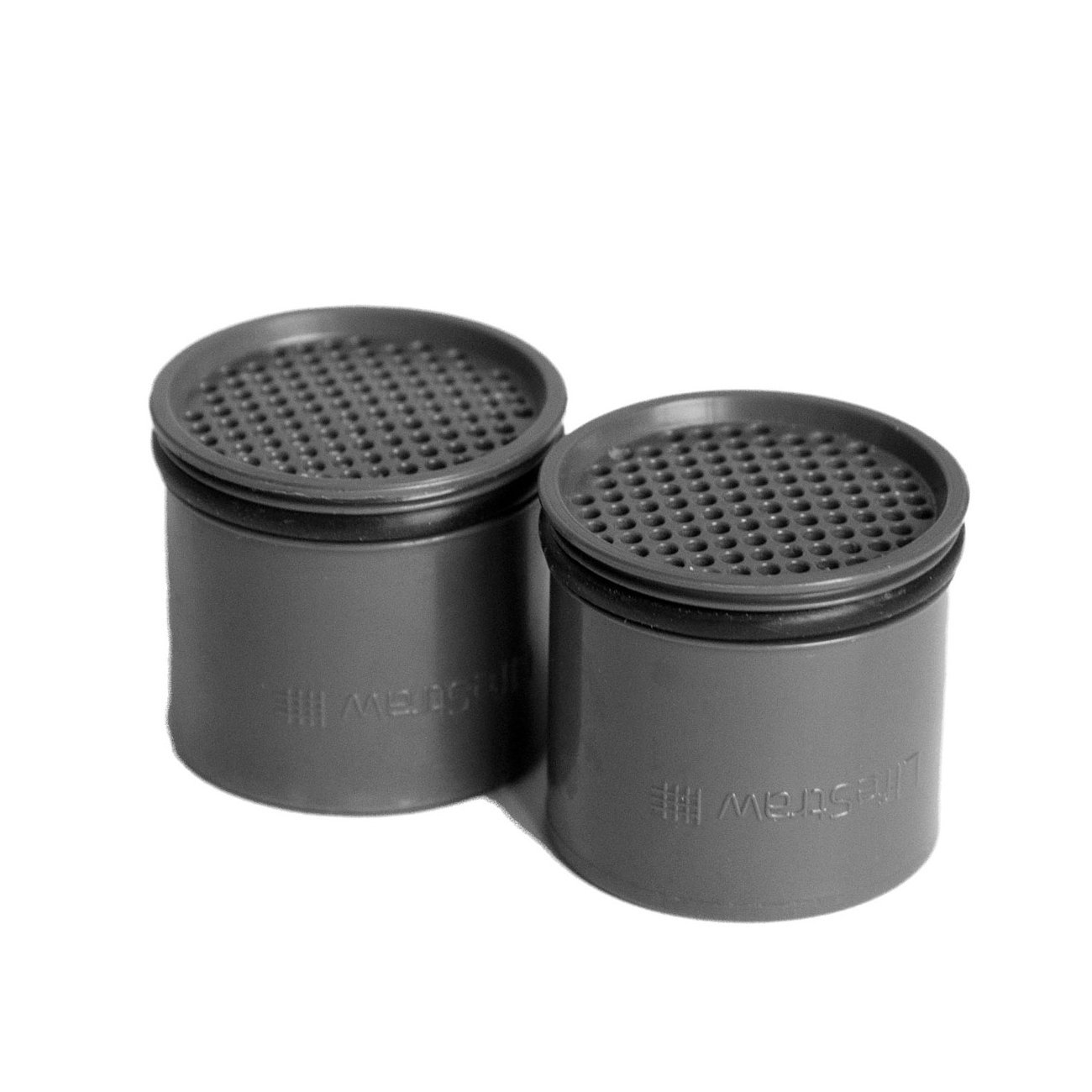
The carbon filter is only used to take out chemical contamination, such as excess chlorine, as well as odor and poor taste. (On a somewhat more personal note, I drink a lot more water when it does not taste awful.) It comes in packs of two, with each carbon filter lasting about 10% of the lifespan of the primary filter.
http://amzn.to/2gzwobb

You can attach a carbon filter to the lid and then a primary filter, and it takes about 30-45 seconds to add one to it.

General Notes
If you do not fully extend the mouthpiece, it has a tendency to suck in air. If left on its side and the mouthpiece is partially extended, it has a tendency to slowly leak.

I recommend that you mark your name or similar on it in a paint pen, since it looks like every other plastic water bottle on the market unless you are paying attention.

Overall, the filter has been fantastic. I have used others in the past, but this one seems to work the best for my needs and uses.

Sunday, September 3, 2017

GunBlog VarietyCast #159 - We Agree With Nancy Pelosi. Yes, We're As Surprised As You Are.


"Lickspittle" is an excellent pejorative that deserves more usage.
  • Beth taught a USCCA class in Connecticut this past weekend, where apparently the state wants to make it as difficult as possible for people to get CCW permits or firearms, with blocks at every turn! Where's reciprocity when you need it?!?!
  • What kind of person robs a bank and murders 2 tellers in the process? The story quotes the FBI report, but Sean reads the criminal record.
  • Barron is on assignment and will return soon.
  • Do you know a loved one's most important medical details when they need to be taken to the ER? Stuff that will be needed RIGHT THIS MOMENT? Miguel has some suggestions for us.
  • Our Main Topic is The End of Antifa. Their left wing allies are telling them to knock it off. It's a cynical Sister Souljah moment by the establishment.
  • Tiffany is on assignment and will return soon.
  • You survived the hurricane - now you have to survive the flooding. Erin gives prepping advice based on what she's seen in Houston.
  • Former Bloomberg lickspittle Mark Glaze goes out on his own, and now he’s out for blood! Weer’d looks at Glaze’s talking points through the ages.
  • And our Plug of the Week is for the Wondery podcast, "Tides of History."
Thank you for downloading, listening, and subscribing. You are subscribed, right? We are available on iTunes, Stitcher Radio, and Google Play Music!

Listen to the podcast here.
Read the show notes here.

Thanks to LuckyGunner and Remington for their sponsorship, and a special thanks to Firearms Policy Coalition for their support.

Blue Collar Prepping Transcript -
Flood Preps
Back in episode 51, when Tampa was flooded, I discussed what to do if your car was caught in floodwaters. Given the situation in Houston, it seems timely and relevant to discuss what to do if your home is flooded. The most important piece of advice I can give you is something that I’ve echoed many times before: If you know a disaster is coming and you have the ability to get out, do so.

I know the mayor of Houston told people not to evacuate, and I can sort of see his reasoning for it: the Houston interstate system is also its flood control system, with the water designed to follow the roads until it lets out into the Gulf - and the last time Houstonians evacuated, which was in 2005 for Hurricane Rita, the roads quickly became jammed because Houston is the 4th largest city in America. A combination of gridlock and a heatwave resulted in up to 118 deaths before the storm even arrived, as opposed to only 113 deaths caused by Rita itself.

So from a logistical point of view, I can see why Mayor Turner didn’t demand mandatory evacuation. But the key word there is “demand”; just because you don’t have to go doesn’t mean you shouldn't go. From my point of view, evacuation not being mandatory just means I have an easier time getting out of town! But let’s say you’ve decided not to evacuate for whatever reason. You’ve stockpiled food, water, batteries, and medical supplies, and your house made it through the storm in one piece - but now you have to deal with flooding.

Ideally, you live on high ground, which means your house isn’t flooded. But even if that’s the case, you are likely without power and running water, and you may need to leave your house to get supplies. If you aren’t on high ground, you definitely need to move so that you can get a warm, dry place to sleep, because floodwaters cause hypothermia, structural damage to houses, and disease with them. Your three biggest needs are waterproofing your preps, communication, and transport. 

Waterproofing is a subject that I discussed in its own segment in episode 29. I won’t repeat all of that here, just add that if you’re going to go to the trouble of making preps, you need to keep them dry and keep them from floating away. Having food in a waterproof box does you no good if that box has floated off in the floodwaters! So lash your preps your something strong. 

And I do mean strong. Two feet of water can pick up and move trucks, so don’t think that lashing your boxes to a 100 pound shelf is going to do you any good. I mean strong as in a structural support or part of the foundation.

Where you put them is also a bit of a gamble. You don’t want you preps on the ground floor if you’re expecting floods, so many preppers store theirs in the attic - which is great, except for the fact that hurricane-force winds have a distressing tendency to peel roofs off. 

The best advice I can give is to keep your preps with you wherever you shelter, so keep them portable, and have a variety of places where you can secure them. Make sure they are visible, with bright colors on the lids and sides, so you can find them if they are covered by dark water. 

Communication sounds difficult because the best kind in a situation like this is a HAM radio. Most people think this requires a lot of expensive gear and a large antenna, but they’re wrong. For the low price of around $25 you can get the Baofeng UV5RA, a handheld HAM radio that looks like a thick walkie-talkie. This means that they’re not only portable, but that you can also keep them in waterproof containers until needed. 

Best of all, not only can the Baofeng listen to FM and weather bands, but there are also local repeaters nearly everywhere. You can set your radio up to link into these repeaters, and the repeaters then send your signal out at a significantly stronger and more efficient range. This means that your inexpensive handheld 2-5 watts radio can communicate up to several hundred miles if you get into a linked repeater system.

The drawback to these is that you need a HAM license in order to broadcast on them. But from my point of view, if it’s a survival situation, you use what you have to call for help and to paraphrase Ellen Ripley from Aliens, “The FCC can bill me later.”

Transportation is where it gets expensive, because I’ve been told that the owner’s definition of “a boat” is “a hole in the water into which you throw money”. But if you have a fishing boat, a flat-bottom utility boat, or even a rowboat, you’re doing well -- assuming, of course, it didn’t get floated away.

If you don’t own a boat, the cheapest option would be to buy an inflatable raft of some kind and store it along with your preps. Right now, the best kind I can find is an Intex Excursion 5-person inflatable raft with oars for $115 on eBay.

If you go this route, make sure you have the following accessories with it:
  • A tow line for securing it
  • Life vests for everyone who will use it, including pets
  • Extra oars - if you have 5 people, then 4 should be paddling and 1 should be steering
  • Repair kits, in case debris in the water pokes a hole in it
  • Some way to get it and yourself out of the attic, such as a fire ax, if that’s where you keep the raft. 
A raised inflatable mattress, like the kind you get from Serta, can also serve as a makeshift cargo barge. The twin version is rated to support 250 pounds or more, and the queen size ought to be at least double that. A cargo net, or one made from paracord, would not only secure what’s on it but also give you tie-downs for towing and securing it. Check out the video in the show notes.

Stay strong and stay dry, Texas.

Saturday, September 2, 2017

Bug-Out Mobility Preps

Not actually Erin.
& is used with permission.
Those who have been listening to GunBlog VarietyCast Radio know that for the last few months, I've been working on making my room less cluttered and more organized. Finally, I get to show you the fruits of some of that labor: my bug-out preps, staged and ready to go.


The pack is on a folding camp stool, so instead of having to lift a heavy pack with my arms and back, I just follow this sequence:
  1. Squat down in front of pack
  2. Fasten pack straps around shoulders and waist
  3. Stand up
  4. Grab other things (like the stool or the walking stick/spear or a rifle) 
  5. Walk out the door.
If I take the stool with me, I can use a similar procedure to dismount. I feel that not only is this an easier method, but it's also healthier -- my legs are doing most of the lifting, rather than my back.


But what if I don't want to carry all that weight on my back? What if I'm traveling a long distance, or I need to carry a lot of gear, or a family member is unable to walk? This is why I bought a deer cart with a 500 lb lifting capacity, even though I don't hunt, and I'm pleased to report that my first use of it was a success.

Mom buys 100 lbs (!) of corn for forest critters every 2 weeks.* Normally, we each grab a 15-20 pound bag and carry it to the porch. This gets the job done, but it's tiring; the corn is constantly trying to slip out of our arms. So this time, instead of carrying the bags by hand, I instead loaded all the bags onto the cart, then pulled the cart to the back yard.
  • Was this faster than carrying each bag in by hand? Yes.
  • Was it easier? For me, no. I just ended up using different muscles by loading up the cart and then pulling it. On the other hand, it was much easier for mom, because all she had to do was open doors and gates for me and close them afterwards.
  • Note: Unless you're carrying something very large or very rigid, you'll need something between the bars to keep the contents from slipping out. I used a chaise lounge cushion, because it was handy. This worked quite well, and would also make the cart more comfortable if used as an emergency litter.
  • The wheels traveled well over the grass and dirt of the backyard, so I have a good idea how well the cart will handle off-road. 

It folds up rather tidily. The wheels can be removed with a simple locking pin, but that makes moving the cart a pain in the rear; it's far easier just to push it around like a dolly.

The retention loops on the linchpins can be used to help hold some pieces in place (such as the crossbars), but be aware that the bottom piece -- which is on top in this illustration, having been pivoted around the axle -- is loose and needs to be secured with tie-downs or held in place by hand.

The handlebar can also fold down, but I see no benefit in that for my purposes. It makes long-term storage easier, though.


There are however two caveats about this particular cart:
http://amzn.to/2wtU9dZ
  1. The instructions tell you to put the handles on pointing down. I thought this was dumb from an ergonomic standpoint, so I put them on the other way.
  2. Not all of the holes line up evenly, and getting the linchpins through them was such a pain that I eventually got out my power tools and reamed the holes out with a drill bit. 

Still, for $56 and free shipping, not a bad little cart.


(We have a forest behind our back yard, and the critters include squirrels, possums, raccoons, and deer. The animals make her happy, and if things get bad, we have a source of game animals for a while.)

Friday, September 1, 2017

How to Move All That Gear, Part 1


What do you do if you have a lot of gear to move and not a lot of time to do it?

Well, let me show you:

The Fine Print


This work is licensed under a Creative Commons Attribution- Noncommercial- No Derivative Works 3.0 License.

Creative Commons License


Erin Palette is a participant in the Amazon Services LLC Associates Program, an affiliate advertising program designed to provide a means for sites to earn advertising fees by advertising and linking to amazon.com.