Showing posts with label Vehicles. Show all posts

Wednesday, July 17, 2024

Summer Checkups

The dust has settled and the First 72 Hours have passed. Follow along as I build a long term plan via Prudent Prepping.

Checkups aren't just for cars, as there are many other things that can use looking after on a regular basis. 

Well... I did happen to start with my car, but that was just the beginning.

Car Checkup
I take my car through the wash at the local station about once a month, which is when the dust starts to show on the white paint. The last time I went, the overhead blower didn't do a very good job of clearing the water from the windshield so I turned on my wipers as I drove out. Bad idea: both arms struggled to move, and when they did, the blades partially tore off the frame. In my defense, I wash the windshield every time I fill up, but I don't necessarily lift the wipers up every time. 

I live close to 3 different parts stores, so the shop with the easy access got my business. I don't have a good picture of the old blades as this was after dark, so just imagine a good half of the rubber edge flopping on each side. I believe the past three weeks being in the high 90s to low100s signed the death warrant on these wiper blades.

Wipers, washer fluid and spare tire pressure check are things I do twice a year, 4th of July-ish and Christmas, so these were due. 

Get Home Bag Checkup
My bag is always being refreshed as I use some of its contents every month. What isn't looked at regularly is the Purple Pack Lady's bag; her schedule is so janky that I'm lucky if I see her car once a week!

The only thing needing to be refreshed was her older model Nitecore P12GT, so I recharged it with the boxy charger. This exact kit appears to be not available through Amazon, but the flashlight is still a current model, just with different charging options.

Available at Amazon for $69 (nice!)

Home Checkup
Since  I live in a rented condo, I don't have to worry about fixing leaks, physical faults or even smoke and CO2 detectors. That being said, there are items I do keep an eye on, and the security lights in the carport are one of the things I don't leave to the maintenance folk. Due to spotty coverage, we've added motion detector lights to ensure the cars and my motorcycle are visible without having extra  spotlights running 8-10 hours a night. 

I try to keep a gas shutoff tool by the meters for our fourplex, but the last one disappeared from where I had it somewhat hidden and hooked to the gas meter. However, our building is having foundation drains installed, and dirt was removed around the meters to the point where I guess the wrench was exposed.

I won't not be trying to replace it at the meter for at least another month, because the situation looks like this:   


Sorry, but I couldn't take a picture that really shows the depth of the trench. You'll have to trust me when I say it is 8' to the bottom of the bracing gear. My front door moat is even deeper, at almost 10' deep.! The plywood shown at the top is the sides of the 'bridge' leading to the front door.


We have another 2-4 weeks of this work before the trenches will be filled, landscaping replaced, irrigation run and the whole house air conditioner replaced. It's been an interesting 5 months, in the Chinese proverb definition of 'interesting'.

Medical Checkups
I have had myself looked at this year as well, and there is nothing major wrong with me: blood pressure is good and cholesterol is a bit high (it's hereditary), but I can't get new glasses until my cataracts are fixed. This isn't a shock; I knew I was due for this surgery two years ago, but now there's no avoiding it. I'm hoping to get everything done this year, as the chance of taking an actual, no-joke vacation early next year is possible! Wish me luck!

Recap and Takeaway
  • Regular checkups should be scheduled so that when a disaster hits, everyone is confident in what is packed and ready to use.
  • Be certain that bags and kits in your second (or third) vehicle are checked too.

* * *

Just a reminder: if you plan on buying anything through Amazon, please consider using our referral link. When you do, a portion of the sale comes back here to help keep this site running!
 
If you have comments, suggestions or corrections, please post them so we all can learn. And remember, Some Is Always Better Than None!

NOTE: All items tested were purchased by me. No products have been loaned in exchange for a favorable review. Any items sent to me for T&E will be listed as such. Suck it Feds.

Monday, June 3, 2024

Motorcycle First Aid Kit, Part the Latest

The dust has settled and the First 72 Hours have passed. Follow along as I build a long term plan via Prudent Prepping. 

Maybe the title for this should be "MY Motorcycle First Aid Kit", since I'm certain there have to be kits labeled for motorcycles and setups created by other riders. The problem I had is how to make the things I need accessible to me after a crash, and I believe I've solved it.

Zip Ties!
The old joke about fixing everything with duct tape or bailing wire needs to be amended to add zip ties since there are so many places tie wire won't allow for a tight twist to finish and tape isn't right. 


I'm attaching a zip tie mount to the interior of my saddle bag door as the final (for now, at least) place to keep everything secure and handy. I've had them loose in the saddlebag where they were flopping around when there wasn't anything in there, and I tried sticking them to the back. Neither was good: if I was carrying stuff no one could see the first aid gear on the back wall, and if I kept it loose I was worried about damage to the packaging and ruining any sterile seals. In March I posted the first attempt of carrying a first aid kit on my motorbike where you can get links to what I currently have.

The zip tie holding the two bags together is threaded normally, and the zip tie attaching the bag to the mount is backwards, meaning it won't ratchet down tight but still hold things together by a small amount of friction, allowing the first aid supplies to be removed from the saddle bag door easily when needed. There's no way that I could find to show that small zip tie in a picture, but if you try it you'll see that it'll slide out with very little effort. 

This project has been a struggle for me, as I had to stop adding bits and pieces of first aid gear to my motorcycle such like a very small kit with Band-Aids of various sizes, triple antibiotic and such. I've convinced myself that in the case of an actual accident, it's unlikely that Band-Aids are going to be much help, and if they are then many other people will probably have them. My only concession to this 'pack ratting' is a Pocket Pack of Kleenex and a small bottle of Advil in my riding jackets. The Advil gets refilled with fresh pills from a big bottle purchased from a warehouse store.

The end result, as of today.

I'll have to run this for a while to see if it really is safe and secure, but I'm optimistic. 

Recap and Takeaway
  • I try to have first aid gear close to me wherever I am, and on the motorcycle is one of the more important places where I never want to need it.
  • I really like what is in the Adventure Medical pack, which you can buy from Amazon and use our BCP link. The North American Rescue kit needs to be purchased directly from them. Seriously, go right to their site and shop there. 
  • Be safe and expect better, but plan for problems; those around you will appreciate it.

* * *

Just a reminder: if you plan on buying anything through Amazon, please consider using our referral link. When you do, a portion of the sale comes back here to help keep this site running!
 
If you have comments, suggestions or corrections, please post them so we all can learn. And remember, Some Is Always Better Than None!

NOTE: All items tested were purchased by me. No products have been loaned in exchange for a favorable review. Any items sent to me for T&E will be listed as such. Suck it Feds.

Saturday, March 9, 2024

Bike Time Is Near!

The dust has settled and the First 72 Hours have passed. Follow along as I build a long term plan via Prudent Prepping.

Decent weather will be here very soon, but that doesn't mean you should ignore motorcycles until you put away your sweaters. One thing I was told before I even had a license was "Look for and count motorcycles when you're driving around. That way, you'll have a good chance of always seeing motorcycles when you start driving on your own."

I was able to talk to a California Highway Patrol motorcycle officer at my local bike shop late last year, and I asked him if he rides on his own time. He said yes, but not as much as before due to what he sees on the job. He said in accidents where the biker wasn't 100% at fault (such as single bike accident, speeding, bad lane changes, etc.) 75% of accidents between a car and a motorcycle, the car driver always says "I didn't see the bike!" 

To me that says some bad things about about the bike rider. Do we have lights on? Are we riding so as to be seen as easily as possible? Are we riding with enough space front and back to give us 'bail out' space? Can you see the driver in their mirrors? Yes, I know, those seem to be as often ignored as turn signals on the Interstates. 

YouTube, Instagram and TikTok seem to be lacking videos of bikers riding the speed limit, following traffic laws and not auditioning as stunt riders for the next Mad Max movie. Now this isn't to say that I don't ride faster than the posted speed limit; I certainly do, and I drive faster that that in my car also. I also live where filtering at a stop is allowed and lane splitting is legal. What I don't do, and what I don't recommend, is splitting lanes when traffic is flowing well and at a double digit percentage of the surrounding traffic.

In short, we bikers have a responsibility to be cautious driver and to make ourselves as visible as possible (and I'm not talking enough reflective tape to look like a crime scene). This is as much for our own safety as it is to be good examples. 

On To More Fun Things
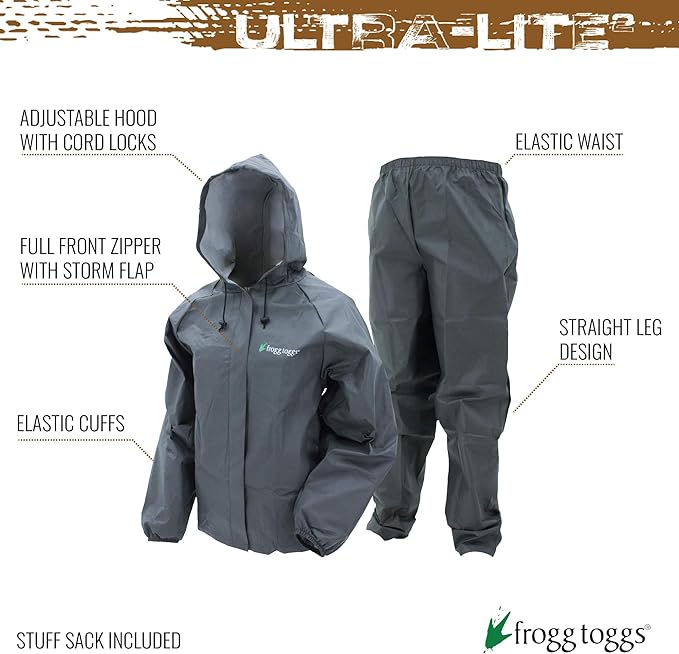
I am 100% a fair weather rider, and I embrace that label, so if there's the chance of rain my bike is parked. I do carry some waterproof gear with me, because here in North California the coast can be foggy and damp even in summer, let along the random rain in the Sierras. What I pack are Frogg Toggs Men's Ultra-Lite2 Waterproof Breathable Rain Suit.

https://amzn.to/3v2Lnog

From the Amazon ad:
  • WATERPROOF – Made with frogg toggs breathable, non-woven fabric that is waterproof, wind resistant and extremely lightweight. Perfect for light use when reliable waterproof protection is necessary. ASTM F1695 protection and blood penetration rated 
  • RAIN SUIT – Jacket and Pant included. The unique Polypropylene material provides an excellent, affordable, and reliable rain wear option 
  • FEATURES – Jacket features and adjustable hood with cord locks, full front zipper with storm flap and elastic cuffs. Pant features and elastic waist, straight leg design and stuff sack that fit s both pant and jacket 
  • USES – The Ultra Lite2 Rainsuit compresses easily and is perfect for backpackers, stadium seats, sports sidelines, golf bags, emergency kits or anywhere a lightweight rain suit is needed. The Ultra Lite is not designed for rugged use, wandering through brambles or areas where sharp objects could tear. For these uses we recommend you look at other frogg toggs Rain Suits for rugged use 
  • SINCE 1996 - frogg toggs has endeavored to provide the world’s best rainwear, waders, cooling products, footwear and accessories at the best possible prices

I like this rain suit not only for how it's made, but also how it's packaged. Previously I had a generic, inexpensive rain jacket that came in a plastic envelope that I kept in my saddle bags all the time. That was a mistake, as rubbing around unsecured wore a hole in the package as well as the jacket. Frogg Toggs come in a very heavy plastic/vinyl package, and I'm not sure that I want to try them on since the set is folded up so nicely and I don't think I could get them back into the package! I do know they will fit, though, as a friend has a set and he is the same build as myself.

Safety Equipment
In my last post, I mentioned the first aid gear that I carry in my car and on my bike, the Adventure Medical Kits Trauma Pak First Aid Kit with QuikClot Sponge and the bigger North American Rescue Mini First Aid KitTo keep them together and easy to grab I've hooked them together with a small zip tie.

The zip tie is barely visible.

I'm still working on how to secure everything in the saddle bags to prevent wear and tear, so as the weather gets better I'll hopefully work out a decent answer!

Recap and Takeaway
  • The only thing I haven't reviewed previously are the Frogg Toggs, and the folks who own them all swear by the quality at that price point.
  • Adventure Medical Kits and N.A.R. Kits are items I can't recommend any higher. You can certainly get better, more detailed kits, but you will be spending more that what you see here.
    • One Adventure Medical Kit was also purchased from Amazon for $25.97 with Prime.
    • One North American Rescue Kit was purchased directly from N.A.R. for $108.69, and I believe the price has gone up from when I bought my last one.
Stay safe on the road, everyone, and keep your heads on a swivel.
 
* * *

Just a reminder: if you plan on buying anything through Amazon, please consider using our referral link. When you do, a portion of the sale comes back here to help keep this site running!
 
If you have comments, suggestions or corrections, please post them so we all can learn. And remember, Some Is Always Better Than None!

NOTE: All items tested were purchased by me. No products have been loaned in exchange for a favorable review. Any items sent to me for T&E will be listed as such. Suck it Feds.

Friday, February 16, 2024

Guest Post: Car Roof Cargo Bag Review

by George Groot


George is a member of our Facebook Group and has written for us before.


Due to the price of gasoline (and airline tickets over the holiday season) my wife and I decided to take the extra time and drive from Georgia to Washington state. The problem was that our two vehicles aren’t great options for a family of 4 on a long road trip. My Nissan Frontier is fine, but doesn’t have a canopy over the bed and the gas mileage is not great (seriously, it’s shaped like a brick; not the most aerodynamic option). The wife’s Subaru Outback is better on gas by about 5 miles per gallon, but even with the station wagon-level storage, there wasn’t enough room for everything we’d need. We looked at hard-shell roof cargo options, but I ended up purchasing a soft roof cargo bag.

https://amzn.to/3SImCFB

The Good
These are cheap, and you get good quality for the price. They also fold up into a really small storage bag so you can throw one on the shelf in the garage, or toss it inside the car if you need to bring it with you to pick up stuff.

The Bad
These aren’t very secure at all; anyone with a knife or improvised cutting tool can get into your stuff. They also aren’t convenient to access routinely, and they can slip a bit over a 3,400 mile drive (we had about two inches of slipping, as the front straps got tighter and tighter).

The Utility
You can hold a lot of stuff in these bags. About five fully packed out green GI duffel bags fit snuggly, which represents a lot of sleeping bags, tents, and other stuff you might need to bring along, so long as you don't need it inside the car for immediate access.

Mileage
Over the course of 3,400 miles the Subaru Outback averaged 23.7 miles per gallon. This didn’t concern me too much, but it does represent a drop from the 30 - 32 miles per gallon a Subaru Outback would normally get on mostly freeway driving. Even with that decrease, it was still more efficient than using my pickup. With the bag installed and filled, the Subaru's top profile only came up to match the Frontier).

The Interesting
I went with the “international safety orange” version since I plan on re-using this bag to support my local Trail Life troop in the future. Having a great big, highly visible beacon has a lot of utility for normal outdoor recreational activities. However, if you wanted to be more clandestine, there is a grey option available. If you need to camouflage an orange version, keep some olive drab spray paint on
hand, or actual fabric paint to reduce the visible signature.

The Final Verdict
If you have a car with a roof rack or rail system, this is a great option. Even beyond using it to haul stuff from point to point, having a weather-resistant storage bag has plenty of utility at a campsite or location where some additional protection from the elements is needed (such as hand tools, spare batteries, extra rope, etc).

Friday, January 27, 2023

Car Prepping

The dust has settled and the First 72 Hours have passed. Follow along as I build a long term plan via Prudent Prepping.

It seems that I occasionally make wise choices that pay off! I don't get to say this very often, but this was one of those times. 

Jump Starting?
Do you remember that nice, compact Lithium Ion car jump starter from my previous post? I gave it a workout the other night when I left the lights on a bit too long after turning the ignition off and ran the battery flat. That's not to say the battery was suddenly bad; when I looked at it to try to jump-start it, the Date of Purchase showed a 2017 year and month code. 

Regardless, after hooking the Vector Battery Pack up to the battery, I didn't get the expected results. Even with having the unit sit for 15 minutes in the hopes of letting the battery recharge some, it still didn't turn the motor over enough to start.  

Enter "Plan B": 
 
Call Roadside Assistance
I've had the California version of AAA for longer than I can remember; it's been from at least the late 1970s, when I owned and worked on small British cars. I never abused the service, since there is some sort of limit to the number of calls you can make in a year, but I did use the service. Even after owning much more reliable US and Japanese vehicles, I kept my membership current. In fact, this was the second time in a year I called AAA, the first being to fix a flat tire. 

After the service truck arrived, the tech tried to jump the battery with his giant setup, again with no results. After checking everything with his built-in meters, the battery showed a bad cell and that it needed to be replaced. Fortunately, it just so happens the trucks are stocked with batteries that fit most vehicles! After 15 minutes and the exchange of funds, my car started right up and I was on my way.

I have 150,000 miles on my almost 11-year-old car, and it is due for several big services. I've been budgeting for this, and while it will be expensive to me, the cost will be a fraction of the price of a new vehicle... or even a good, used vehicle! 

Other Annoyances 
Due to parking in the open, my headlights are not as clear as they were when new. I need to find a good plastic headlight cleaner and polish kit and see if the lenses will clear up and maybe last several  more years. Another irritation is the pine trees that are close to where I park; in the spring, my car turns pale yellow from the pollen, and the rest of the year they shed one pound pine cone missiles and microscopic droplets of sap. The sap can't really be seen on the painted surfaces, but on the windshield the drops act like tiny prisms, causing mini-rainbows at sunrise and sunset. My next project, even before the headlights, will be to clean the glass of sap drops so that I can see better. I'm also finding that my wiper blades aren't lasting as long as before, so that is an added expense.
 
Recap and Takeaway
  • Your actual car insurance policy may include some sort of roadside assistance. I find that AAA is a nice back-up plan.
  • Do your own maintenance if you are able; the savings add up quickly. Know your limits, though; buying specialized tools that will be used only once every few years may not be the best investment for you.
* * *

Just a reminder: if you plan on buying anything through Amazon, please consider using our referral link. When you do, a portion of the sale comes back here to help keep this site running!

If you have comments, suggestions or corrections, please post them so we all can learn. And remember, Some Is Always Better Than None!

NOTE: All items tested were purchased by me. No products have been loaned in exchange for a favorable review. Any items sent to me for T&E will be listed as such. Suck it Feds.

Friday, September 10, 2021

Defensive Driving

I received my first driver's license a long time ago. (No, we weren't taught how to drive on dinosaurs, but they were still in some of the older books.  David Blackard might remember them, though). The year after getting my license I worked a job that required all new employees to pass a “defensive driving” class taught by the State Patrol, and it was a four-hour class with lots of video and text presentations peppered with real-life examples from the personal experiences of the two trooper that gave the class. Most of what they taught hasn't changed, although “distracted driving” has been added as a hazard since cell phones have been invented in the time since then.

The definition of defensive driving varies a little bit depending upon the source of instruction, but it boils down to “driving to save lives and money despite the conditions around you and the actions of others”. Most of it is basic driver's education stuff, like:
  • Leave a 2 second gap between you and the car in front of you
  • Obey traffic laws and signs
  • Slowing down before a corner rather than hitting the brakes while turning
  • Manage your speed to match the road and weather conditions
  • Don't drive distracted, leave the cell phone on “hands-free” or ignore it while driving.

Some of the other points are a little more obscure and need some explanation.

Always leave yourself an “out”
Regardless of your speed or location, always have an option to get away from trouble. Bumper-to-bumper traffic is a good thing to avoid, since you're trapped between cars and if someone has an accident, you're stuck with it, and leave room to maneuver around the car ahead of you since you can't do much about the idiot behind you. I do this in parking lots and drive-throughs, always leaving a path out of the line instead of pulling up tight to the car in front of me. It may slow the line down a bit, but I've seen cars break down in a drive-through and everyone sat there until a tow truck could move the dead vehicle.

Driving down the road at the posted speed, keep looking around and noting where you can go if you have to leave your lane. Cars crossing the median, sudden break-downs ahead of you, and drivers going the wrong way down a highway are all things I've seen in the 40+ years I've been driving. Can I drive into the ditch safely, or is the median a better bet? Can I move over a lane or two at any time to get around debris on the road? Is the shoulder wide enough and in good enough shape to slow down on? Those are the kind of “outs” you should be looking for.

Know your surroundings
This should be second nature to a prepper, but some folks tend to zone out once they get behind the wheel. Nothing should surprise or scare you, so keep your head on a swivel and check all of your mirrors regularly. Watch for the speed-demons flying up behind you as well as the idiot towing a camper with a boat trailer behind that (I had to take a special test for towing doubles/triples, but CDL rules don't apply to cars). As long as you're obeying the rules, the sight of a police car shouldn't be a problem, but they have a tendency to make abrupt lane changes and U-turns to go after other drivers.

Terrain plays a part in this as well. Going up a decent hill means that the truckers may slow down, only to speed up as they go down the other side. Watch for the impatient smaller vehicles that will weave in and out of the trucks, only to get passed on the downhill side. Cool mornings or early evenings and valleys can create fog, which will limit your visibility, so be ready to slow down as needed.

What time do the bars close in your area? Around here it's between 0100 and 0200 hours. I live near the border between two states with differing laws, and there's often a rush of drunks at 0100 headed to the bars that don't close until 0200 for one last round, then a mass migration of drunks on the roads until about 0230 when they get home or locked up in the drunk tank of a local jail.

Expect the unexpected
I could tell lots of stories about the stupid things I've seen on the roads. What people will do while guiding a couple of tons of metal and plastic down the roads at high speeds boggles the mind, and the more unique things like tires bouncing across the median on an Interstate or a sheet of ice flying off the roof of a minivan into oncoming traffic on a two-lane highway can be (and were) lethal.

Pedestrians are some of the worst at pulling the unexpected on you. Kids darting into the street, idiots on cell phones walking into traffic, and jaywalkers popping out between parked cars to cross the street are all things you have to keep an eye out for.

Treat the other drivers on the road like they're all drunk
I've also heard is phrased as “treat them all like they want to kill you”, but the sentiment is the same: don't expect them to act the way you would, don't expect them to follow the laws or obey the signs, and don't expect logical thinking from any of them. Running red lights, refusal to use their turn signals, ignoring “Yield” or “Merge” signs, and the various incarnations of road rage all fall into this category. Treat them like they failed driver's ed. and don't know how to safely operate a vehicle, which when you see how some people get confused at four-way stops and those accursed roundabouts, is probably true. This means giving them plenty of space and letting them get away from you; if they're going to cause an accident, let it be somewhere that you're not.

Defensive driving courses are handy in some states for removing “points” from your driver's license and avoiding increased insurance payments. For preppers, anything that avoids unnecessary cost or delay is a good thing, so if you've been ticketed for your driving and can find a class, take one. 


Now that I look back on what I wrote, most of this advice is also applicable to interpersonal interactions on many levels outside of a car: maintain situation awareness, know where the exits are, avoid unnecessary confrontation, and don't assume competence. 

Tuesday, April 6, 2021

What is a Core Charge?

I was shopping online for parts for my car this week, and underneath the price of the part was a "core charge" price. My brake calipers were only going to cost me $62 per side, so what was this other $60 tacked on to each of them? If you didn't know any better, it would feel like some serious dirty pool, but core charges are a legitimate thing, for a very good reason.

So what is a core charge? In essence, a core charge is a deposit you pay a parts supplier which gets refunded when you bring back a rebuildable core part. In my case of buying brake calipers, I would pay an extra $60 for each caliper until I brought the old ones from my car into the parts house, in which case my deposit gets refunded and they send the core off to be rebuilt and resold. It serves to keep remanufactured parts in the system, allowing for far less expensive auto repairs. Using my truck as an example (I can't use the car mentioned above, because new-manufactured brake components aren't readily available), buying a brand new rear left caliper starts at $61. A remanufactured caliper is right around $30. Half price is a pretty hefty savings in parts. "Reman" parts usually come with a warranty, although it may not be for as long a term as a new part, and are regarded as being of perfectly acceptable quality for general use.

The less-obvious thing that a core charge tells you is that a part can be rebuilt, which means that the components needed to bring the part back to function are likely available on the open market. Let's keep running with the example of brake calipers for my truck: $30 is a pretty healthy savings over $60, obviously, but what if you could do them for under $5? A rear brake caliper rebuild kit for my 2001 Silverado goes for just over $3, but this steep price savings comes at the cost of needing to read a shop manual or find other instruction on how to do the rebuild and takes more time than just swapping the caliper itself -- but doing the whole job for under $10 instead of $120 or more can easily justify some education and time.

In this instance, I'm buying the calipers because I'm up against a deadline and don't have the time to do the rebuild, but if it wasn't for that time crunch I'd be all over rebuilding. Most component rebuilds are fairly simple, consisting of replacing rubber seals and other wear components. Read the manual twice, pay attention to detail and take your time, and you can keep your vehicles running for far lower costs.

Lokidude

Friday, April 2, 2021

Vehicle Rescue

I got a message from a friend just as I was leaving work today: his car broke down on the side of the freeway, and all my friends know I'm available and capable. He's one of my car guy buddies, so he has skills himself, but he needed a tow. While I've talked about towing trailers, I've never covered towing cars or pulling them out of tight situations.

Towing a car, or pulling out a stuck vehicle, is different than towing a trailer. With a trailer, you have a fixed and engineered system hooking everything together; when pulling a car you may have hooks in the bumper or under the vehicle, but everything else is a bit up in the air. Depending on what is available to you, you may be pulling with chains, straps, ropes, or other equipment. Also, because the towed unit is not rigidly fixed to the tow vehicle, it will require a driver attending to it. This person steers the vehicle, and also handles braking to avoid a collision between the two.

When given the option of what to pull with, I avoid chains whenever possible. They're heavy, and because they have zero stretch, they provide a very harsh towing condition and can even damage vehicles if not used properly. Straps are my favorite pulling apparatus, as they have more engineered strength than ropes, a very forgiving stretch, and can be hooked up in a wide variety of ways, depending on the attachment points available.

The biggest concern when towing in this way is avoiding damage to either vehicle. The ways damage can occur here are legion, and care must be taken to prevent them. Inspect your straps, ropes, or chains for wear and damage before hooking up. These items are under extreme tension when pulling, and if they fail, they can cause serious damage and possibly death. Make sure they are solidly hooked up to a point intended for pulling if at all possible. Move the tow vehicle very slowly to set tension on the towing line, avoiding a sudden load that can do damage. Towing in this way should only be done for a short distance, as it is hard on the drivers, and the vehicles, and can cause annoying traffic issues. 

If the vehicle being pulled has a manual transmission, put it into neutral and tow at a moderate speed, always trying to avoid that sudden shock load when starting from a stop. 

If the vehicle has an automatic transmission, it can be towed in neutral, but only at an extremely slow speed (20mph tops) and for the shortest distance you can get away with. Automatic transmissions require a pump to be operating for lubrication, and that pump is driven by the engine. Towing them without that pump operating will burn up a transmission in short order, requiring very expensive repairs. Automatics should be moved on a trailer or tow truck, and only towed in emergency situations.

If you want to see a true master of the art of towing and vehicle rescue, check out Matt's Off Road Recovery on YouTube. He's from southern Utah, and uses simple techniques, patience, and skill to rescue vehicles that seem impossibly stuck.

Lokidude

Friday, March 19, 2021

Bearings

When you hear the word “bearings”, the normal prepper context is “a compass reading”. However, the other type of bearings that a prepper should know about are the mechanical ones that keep things spinning smoothly. Bearings are basically anything that separates moving parts, reduces the friction between them, and limits the direction of movement.

Knowing how to repair the things you use is part of prepping, so knowing a bit about bearings could be important.

Plain Bearings
A simple shaft or axle rotating through a hole, with some form of lubrication used to reduce friction and provide cooling; the lubrication itself is a plain bearing, which have been around for at least 2000 years and are still in use today because they're cheap and simple. Plain bearings provide fair performance at a low price, but are best used at low speeds and pressures. If you look at the wheels on a hand cart or child's wagon you'll see a plain bearing where the wheel is mounted on the axle. 

Discrete plain bearings are often found in older machinery; they look like a piece of pipe pressed onto the axle or shaft and are often made of bronze or some other soft metal. If you've ever rebuilt a car engine you've seen plain bearing where the piston rods connect to the crankshaft. “Babbitt” bearings are a plain bearing made by casting a soft alloy around a shaft where it passes through a mounting block, but working with molten metal might be beyond your abilities.

Packing boxes are a sub-set of plain bearings and provide pressure sealing as well as friction reduction. Where the shaft passes through a hole, a box or chamber is built around it. That packing box is filled with some form of fibrous material that has been infused with lubricant. A collar fitted around the shaft is attached to the packing box with threaded rods and as the threads are tightened, the collar compresses the packing around the shaft. Common in older boats for sealing propeller shafts, you'll also find packing box designs on high-pressure pumps.

Rolling Bearings
Both ball- and roller-bearings use a rolling part inside a fixed collar to reduce friction and limit the motion of a shaft. The fixed collar is called a “race” or “journal” and is pressed into a precisely bored hole in the block that the shaft passes through. The rolling element sits inside this race, and the shaft runs through the middle of the rollers. 

Ball bearings work well at moderate speeds and heavy loads, but require lubrication and maintenance for a long life. If you have a towed trailer, you'll have wheel bearings to inspect and lubricate. Boat trailers are notorious for consuming bearings because the axles get submerged in water every time you launch or recover a boat. 

Bicycles are another place where you'll find rolling bearings; I've seen both ball and roller versions in use. Automobiles have bearings all over them, with the wheels and U-joints on drive shafts being the most commonly repaired.

This is the type that I've been dealing with lately, rebuilding trailers and the various rolling mechanisms for agricultural equipment. Proper installation and maintenance makes them last a lot longer, but it's a dirty, greasy job that my predecessors neglected for several years. Common bearings aren't horribly expensive, but finding the proper ones can be a challenge; when things are measured in the thousandths of an inch, there is no “close enough”, it has to be exact. Have spares on hand if you're going to be doing your own work. 

Jewel Bearings
Old mechanical watches and clocks often used small chips of extremely hard jewels as bearings to support the end of a spinning shaft. Under very low load and at low speed, these bearings will last for decades or centuries; maintenance isn't an issue, as they either work or they don't. I doubt very many of us will have the time, training, or equipment to work on jewel bearings, but they are a type to be aware of.
 
Exotic Bearings
This is my classification for the “other” bearings in use today. Magnetic fields and fluid (gas or liquid) flow bearings are high-tech designs for very high-speeds (dental drills use air-bearings at 250,000 rpm) or extreme environments (the vacuum of space), and require no lubrication or maintenance while providing long life. I don't have the tools or training to work on exotic bearings and can't think of anything in my daily life that uses them, so they're an interesting topic of research but not something I worry about.


Next week I'll go through the process of maintaining and replacing a set of roller bearings. The process is the same on a bicycle, a car or truck, a trailer, and a 20-ton wagon, so it's good knowledge to have. We invented the wheel to make things easier to move, so keeping those wheels spinning makes our lives a lot easier.

Thursday, December 17, 2020

Diesel Treatment for Cold Weather

Cold weather is finally here. When the temperatures drop to freezing or below, I start to see a lot of customers buying various treatments for their diesel vehicles and storage tanks. I took care of the company vehicles and storage tanks back in October -- it's easier to prepare than to repair -- but some folks just have to put things off until it's an emergency so they have a reason to complain and panic.

Cold Weather Diesel Problems
Once it gets cold enough, diesel fuel will "gel", meaning that the components of the fuel will solidify and fall out of suspension. Normal #2 diesel has a fair percentage of paraffin wax as a component which solidifies easily. Solid wax doesn't flow, so fuel lines and filters tend to get blocked and fuel pumps have a hard time moving it through the injectors. This means that a cold diesel engine won't start or won't stay running once the fuel starts to gel.

The exact temperature of "cold enough" will vary with the grade of fuel, so in the winter most sellers will either switch to the more expensive, wax-free, #1 diesel (kerosene), or they will blend their #2 diesel about 60/40 with #1 diesel to keep the price down while still being able to pump it.*

Lets look at a few of the problem points of #2 diesel.

Cloud Point
At about 32°F, diesel fuel starts to get cloudy due to the wax starting to form solid crystals. Cloudy fuel will flow through pumps and pipes, but will start to plug filters unless those filters are kept warm. Engine efficiency will suffer and fuel mileage will drop because the fuel system is struggling to move enough fuel.

Cold Filter Plug Point
Since a fuel filter is designed to trap particles, once the wax starts to solidify it will get trapped in and blind off the filter. #2 diesel hits this point at about 15°F and engines start to stall... if they'll start at all.

Pour Point
Once the temperature drops down to 0°F, the wax will have gelled to a point that the fuel will no longer flow (or pour). No fuel means an engine will not run.

Fuel Treatment
This is what we have on the shelf at work and can be found in most truck stops.

The white bottles on the left are Power Service diesel supplement. It provides good anti-gelling and stabilizes the fuel for storage, and a one-quart bottle will treat up to 100 gallons of fuel. This is my choice for my diesel truck with a 50 gallon fuel tank.

The red bottles are Power Service 911, and that is used to fix already gelled fuel. The normal method is to remove the fuel filter and pour the 911 into the canister, where it can dissolve the congealed wax and allow fuel flow. The rest of the container, or another one, is dumped into the fuel tank and left to sit for an hour or two so it can do the same to the fuel there.

The clear bottles of brown liquid are Howes Diesel Treat, our best seller. Howes does everything that the Power Serve does, but backs it up with a guarantee that if you run six bottles of it through your equipment and it still gels, they will pay for the tow to get you fixed up. The two-quart bottles shown will treat up to 320 gallons of fuel, which is easier to use in storage tanks and commercial vehicles with large fuel tanks.


If you have a diesel generator or vehicle, winter can make life more difficult. Keep them warm if you can and treat your fuel so they will start when you need them.


* As a point of interest, home heating oil is basically #3 diesel and has even more wax content. This provides more heat per gallon, but gels up faster if unheated.

Tuesday, August 25, 2020

Vital Fluids and How to Find Them

In any vehicle there are a variety of vital fluids that keep you going down the road safely and smoothly. In order to assess and correct any issues with these systems, you need to know what you're looking for under the hood.

I talked before about finding, diagnosing and correcting a leak in my truck.The images I'll be using are from the engine compartments of two of my vehicles; they're not the be-all and end-all of under-hood layouts, but they give a good example. For your specific vehicle, look in your owner's manual, it should provide a complete layout of all of your vital fluid reservoirs and check points.


This is the engine compartment of my Miata. It is a manual transmission car without power steering, so there is no automatic transmission fluid (ATF) or power steering fluid to check. However, the blue circle is the clutch fluid reservoir. This reservoir, as well as the brake fluid reservoir next to it (circled in red) can simply be checked by noting the fluid level against marks in the exterior wall of the reservoir itself. Neither commonly gets low, unless a leak or very severe wear in the system develops.

The reservoir circled in green is the coolant reservoir, and the volume of fluid in this reservoir can change depending on your engine temperature. Your coolant expands as your engine heats up, and will lead to more fluid in this tank. It will have markings on the side for "Full Hot" and "Full Cold." DO NOT OPEN THIS BOTTLE WHILE YOUR ENGINE IS HOT! Severe burning is likely to result. When your engine has cooled, you can open this reservoir to add more coolant if needed, but do not fill above the "Full Cold" marking, thus leaving room for expansion to occur.

The areas circled in yellow are the oil level dipstick and the oil fill cap; the cap is the larger black piece towards the bottom of the picture. Your owner's manual will have instructions on how to read your dipstick, as some of them have several indicator areas on them.


This is the driver's side of the engine bay on my truck. The engine is big enough that it takes two pictures to show things properly. This truck is equipped with power steering and an automatic transmission, so there is no clutch fluid reservoir, but there are ATF and power steering fluids to check.

The purple circle is both the dipstick and filling port for power steering fluid. It's a very small reservoir, but a very important one to safely drive a vehicle of this size. The red circle is again the brake fluid reservoir, and the only difference from the Miata is size.


This is the passenger side of the bay. The yellow circles are again the dipstick and filling port for motor oil. The green is still coolant, and the same warning applies on the big diesel as the baby gas engine. Opening this cap on a hot engine is almost guaranteed to result in very nasty burns.

The area circled in orange has my automatic transmission fluid dipstick. On this engine, it's hidden behind my turbocharger piping, but it's back there and very well marked. On some vehicles, it is on the driver's side of the engine, but it will almost always be towards the rear of the engine compartment and well marked. The procedure for checking this fluid is fairly involved and a bit vehicle specific, so consult your owner's manual for the specific instructions to perform this check.

Keep your engine's fluids topped up and in top shape, and she'll purr like a kitten for years.

Lokidude

Tuesday, August 4, 2020

Vehicle Leak Identification

My truck developed a slight leak recently. It wasn't catastrophic, but it was a bit hard to locate the source. Over this weekend, though, the truck it developed a very noticeable whine on startup and particularly while steering.

A whining/groaning sound on steering is a dead giveaway that the problem was in my power steering system. What that problem was, however, could vary in cost and difficulty from under $20 and completely pedestrian to several hundred dollars and requiring special tools and hours of work.

In my case, the leak looks to be from a fitting or hose on my lower steering system, so I'll starting with the cheap and easy fix by adding power steering fluid to the reservoir. This should relieve the symptoms I'm currently experiencing, but it won't actually correct the problem; to do that, I'll have to pinpoint where the leak is originating from and replace or repair it. I'll detail the actual repair when I do it, but I'll explain the basics of leak identification now.

Identifying the Leak
The first step in identifying a leak is noticing that it exists. When you get in your car, take a quick look at the ground underneath it. If you see wet spots under your car, especially on multiple occasions, that's a strong indicator that something may be leaking.

Power steering fluid, like most of the fluids in your vehicle, is oil-based. Many of the systems in your car, including braking, steering, and transmission are hydraulic, and the oils in these systems hold up to heat and pressure well. They may even contain detergents or other additives to enhance the longevity and effectiveness of these systems.

The oily nature of these fluids makes them fairly identifiable, and the color of the fluid also can help identify the problem system. Touch the wet spot with your finger, then feel and look at it.
  • If it's watery but not oily, green or orange, and maybe a bit sweet smelling, it's probably coolant. 
  • If you see a red, oily fluid, that's likely to be automatic transmission fluid. 
  • If it's amber or brown and oily, it could be motor oil, power steering fluid, or possibly brake or clutch fluid. 
Once you've narrowed down the possible suspects, check the relevant reservoirs.  The reservoir with a low fluid level will be the culprit, so fill it to the correct level with the proper fluid to alleviate the symptoms. (Your owner's manual will tell you where each reservoir or fluid check location is located.)

Locating the Leak
Locating the point of the leak takes a bit of work and attention. Thoroughly clean any area that you suspect the leak may be coming from; a bit of good detergent will break down the oils and help in cleaning.

Some systems (such as cooling) have UV reactive dyes you can purchase, so if this is available for the system causing you problems, adding it now will make detection much simpler. The dye can be bought separately if you already have a blacklight, or can be purchased as a kit with dye, light, and possibly tinted glasses to help see the dye.

You simply add the dye to the appropriate reservoir, run the engine for a while (I like to drive around for a day or two) and check with the blacklight. The dye will glow just like blood detection on a police show, showing you everywhere the fluid has landed and where it came from. Then it's a matter of doing whatever repairs are necessary.


Keep an eye on your fluid levels and on the ground; it can save you from some very expensive repairs.

Lokidude

Wednesday, July 22, 2020

Prudent Prepping: Summer Vacation? Summer Interruption!

The dust has settled and the First 72 Hours have passed. Follow along as I build a long term plan via Prudent Prepping. 

Things don't always go as planned, so there had better be a Backup Plan, and a backup to the backup too, just to be safe. Ask me how I know this.

Plan G or Maybe H
Last week I talked about taking off for a day or maybe two to relieve some stress and be out of the city, but as German military strategist Helmuth von Moltke said, "No battle plan survives contact with the enemy." Nowhere is it stated that the 'enemy' can't be inanimate.

Look it up.  I'll wait.

Interrupted, In A Safe Way
Here is what ruined Plans A through F:
 
A worn rotor
All my plans of going fishing (not even to catch anything!), being outdoors and relaxing around a lake went out the window Friday as I backed out of my parking spot and the telltale SQUEEEEEK! of the wear indicator drifted through the window. 

Normally when you hear that it just means you're down to the end of your brake pads but not worn all the way out, but this time there was a bit of a grinding noise, too, which is not a good sign. 

For those that are familiar with brakes, this isn't too bad a picture but, since the wear indicator is on the opposite side, I needed to pull everything apart.


Safe working conditions
First Things First
Think safety in what you do, but don't be silly about it. A very wise man by the name of Mike Rowe wrote a very enlightening post called Safety Third. Read it and really think about what this man said: the guy doing all the crazy, dangerous and entertaining things on his hit show Dirty Jobs thinks safety shouldn't be first! I'm not going to talk about what he said; you can read it and get the enjoyment for yourself.

One thing I do want to make clear is that safe conditions are important and I do not deliberately put myself or others in danger. That's why you see an engaged jack stand and a jack in this picture.


Rotary Work
I won't go into the details of of servicing front rotors, even if the work is pretty universal. There are several YouTube videos to watch where you can find your car's make and model. What I will mention are several things that I always try to do.
  • If at all possible, I try to re-use my rotors. That means I have them machined to remove the ridges and put back on. This time I wasn't so lucky; the back side of the rotor in the top picture had a gouge in it where the old shoe either broke or something got between the pad and rotor. 
  • I had already checked on brake pads and rotors in two different parts stores, just in case. This turned out to be essential.
  • Collect all necessary parts and accessories before you start. There's nothing like getting 3/4 through the job and finding you're short one bit needed to finish and no way to get to the store. 

Anti-seize
If you decide to do your own work, one thing I recommend you use is anti-seize lubricant on the bolts and screws along with the specified grease for the other areas.

This isn't required, but since it can be several years before everything gets disassembled, I want the removal to be as easy as possible. The small screw shown in the picture (right) is the mounting screw that holds the rotor on the hub. Don't believe me? Look at the first picture in the post and you will see two small screws, one at one o'clock and the other at seven o'clock. These two screws and two other pairs of bolts get their threads coated before putting everything back together. Many parts stores will give you lube with your purchase of the parts.


Lube In The Groove

The new brake pads mount in the groves, so there needs to be a small amount of lube for the pads to slide on. There are matching greased points on the back side of the brackets.

Acceptable for disassembly
Required for assembly


The new rotors need to be cleaned of any grease and kept clean until the wheels go on! Any oil, grease or even the anti-seize on either the pads or rotor could affect how your brakes work. There are special brake cleaners designed to remove oils and they really work well.

I normally wear gloves, but I mistakenly thought I had some left in my gear. Since this was only dirt and not oil or grease, I didn't mind washing several times during to job.

While the wheels are off, look at the underside of your motor for any obvious leaking fluids. It doesn't matter if you don't know power steering fluid from brake fluid, look for wet spots so that you can clearly describe to someone else where you found a possible leak.

And that's the way I spent my Sunday: several hours in the hot sun, a little sunburn, and not quite three times what my fishing trip would cost. At least I now have a safe car that I can trust for many miles. All things considered, I'm okay with how things turned out.

Recap And Takeaway
  • Once again, have a plan and be ready to change it.
  • Set aside money for vehicle repairs -- you know they are coming.
  • If you can't do your own repairs, ask around for a good shop. Friends you trust should be your first source of information.
  • Nothing was ordered this week, but $147.86 was spent at the local auto parts store.
* * *

Just a reminder: if you plan on buying anything through Amazon, please consider using our referral link. When you do, a portion of the sale comes back here to help keep this site running!

If you have comments, suggestions or corrections, please post them so we all can learn. And remember, Some Is Always Better Than None!

NOTE: All items tested were purchased by me. No products have been loaned in exchange for a favorable review. Any items sent to me for T&E will be listed as such. Suck it Feds.

The Fine Print


This work is licensed under a Creative Commons Attribution- Noncommercial- No Derivative Works 3.0 License.

Creative Commons License


Erin Palette is a participant in the Amazon Services LLC Associates Program, an affiliate advertising program designed to provide a means for sites to earn advertising fees by advertising and linking to amazon.com.