Showing posts with label Books. Show all posts

Monday, December 16, 2024

Book Review: Max Brooks' "Devolution"

Not actually Erin.
Used with permission.
As a general rule, "prepper fiction" tends to be either 
  1. Competence Porn (stories featuring competent characters carrying out difficult tasks with great aptitude).
  2. Survival (stories featuring characters struggling to survive in dangerous conditions).
  3. All of the above.
The survival horror subgenre seems to be hit or miss for us; some preppers dismiss it as unrealistic, while others (such as myself) will watch practically any show featuring zombies. 

But what about a story where a bunch of soft urban yuppies create a high-tech utopian "green enclave" deep in the woods of Washington state, an hour away from civilization and dependent on weekly food drops, who then get cut off from society when Mount Rainier erupts? That's definitely a survival story. 

(Of course they don't have guns. They're too enlightened for that. They barely have equipment for a day hike). 

Now what if these soft, urban yuppies then had to survive attacks from a tribe of hungry sasquatch, who had been displaced from their usual hunting grounds because of the volcanic eruption? 

That's the basis of Max Brooks' novel Devolution: A Firsthand Account of the Rainier Sasquatch Massacre.  

https://amzn.to/4g7sqTD

If you've read Brooks' previous novel World War Z: An Oral History of the Zombie War, you know exactly what you're getting: first there's significant worldbuilding via backstory, then the inevitable Bad Thing happens, and then things get a lot worse because people are unprepared or react poorly, and people only survive by wising up and adapting to the situation. 

Fair warning: this is anti-competence porn, by which I mean that the characters are deliberately depicted at first as being annoying and blind to the situation around them. I was rooting for all but one of them (Mostar) to die for most of the book. They adapted or they died, and I was fine with either outcome. (I watch zombie movies for much the same reason.) You'll likely be rooting for the Sasquatches for most of the book like I was, and that's okay. 

As a friend of mine observed, "the central conflict hinges on you believing that there's an entire enclave of wealthy eco-separatists  and none of them have a toolbox or a gun."

Some would say that the story suffers because of that, but to be blunt there'd be no story if someone had a gun. Slasher movies have the same flaw, and you either accept that going in or you just don't watch them. And yes, I can easily imagine a group of eco-yuppies living out in the middle of nowhere, utterly dependent upon drone drops for supplies, yet somehow thinking they're being "green" and "off grid" and maybe even "living off the land." They're engaged in the same kind of totemic magical thinking as people who believe that owning a gun is a talisman against harm, and so they don't need training.

In conclusion:
  • Is it a book about prepping? No. It's more like a cautionary (and fantastic) cautionary tale about what might happen if you don't prep for emergencies. 
  • Is it entertaining? I thoroughly enjoyed it, but some people might not be able to get past the whiny people. I tell those people "They'll either get smarter or you'll enjoy their deaths." For me it was a win-win. 
  • Is it nonsense? Setting aside the sasquatch issue for a moment, I found it highly plausible. There may have been things which I missed due to my own gaps in knowledge, but considering I was reading it as entertainment and not an instruction manual, I wasn't worried.

    However, about that sasquatch business: I want to point out that the Mount Rainier area has the highest density of Bigfoot sightings in the US, and that many soldiers and airmen who have been stationed at Joint Base Lewis–McChord (JBLM) say that there's just something "off" about those woods. A friend of mine says "There's some sh*t down in Rainier Training Area. Avoided Lewis since '94."


I say this not to convince you of the existence of Bigfoot (I'm skeptical of that myself) but to give readers, who would otherwise dismiss the entire idea as preposterous, a reason for entertaining the possibility that it might not be. 

Regardless of your feelings about cryptids, I thoroughly enjoyed this book and I think most preppers will too. It's available in hardcover, paperback, Kindle e-book and audiobook from Amazon

Sunday, April 7, 2024

Guest Post: Disaster Entertainment Options

  by George Groot


George is a member of our Facebook Group and has written for us before. 


Years ago, the tornado warning siren went off in our neighborhood. We took the kids to the basement and brought along a laptop so they could watch some cartoons while we waited for the storm to pass. We’ve since moved away from that area, and now live in a home without a basement, so our tornado room is an internal bathroom where we keep some basic survival kit under the sink. But if we lose power for days (such as after a hurricane) I still want to keep the boys and myself entertained, and that means having battery-powered devices or options that don’t require batteries. 

Streaming services such as Netflix, Spotify, YouTube, Hulu, Crunchyroll, Amazon, Disney+, etc. all offer complete libraries of drama, romance, adventure, comedy, and horror at the convenience of nearly any screen capable of accessing the internet. This is an incredible bargain for a lot of people who don’t have the means to purchase physical media of every movie, TV show, or program that they find entertaining. However, it also means that entertainment is connected to steady broadband internet access that’s not always available during or after an emergency. In fact, once you get through an emergency there can be a lot of time spent just waiting for normal to return.

In the spirit of You Always Have Other Options (YAHOO), here are the options as I see them:
  1. Physical books. The great thing about the dead tree format is that it doesn’t need to be recharged. However books can be bulky, and it can get expensive to keep expanding on your private library just in case a disaster happens. My wife and I love shopping in thrift stores for used books, and often they have a good selection of DVDs.
  2. Physical disks. DVD or Blu-ray disks are “old tech” at this point, but they last indefinitely if they are not all scratched up. These can be used with DVD or Blu-ray players and a screen, or they can be played on a computer, such as a laptop. Not every laptop comes with a built-in DVD drive these days, so we’ll look at that in a bit. We have a habit of shopping for bargains in the $5 bin at Walmart for DVDs or Blu-ray disks.
  3. Digital copies of books. A Kindle or e-reader can store lots of ebooks and last quite a bit of time on battery power. These are much more compact than the dead tree format, but are also a single point of failure if the device breaks. Erin wrote an article about her “Survival e-Reader” years ago. 
  4. Digital copies of visual media. You just store these as files on your local disk, or on your network attached storage device. If you set up a media server, like Jellyfin or Plex, you can even have the server handle transcoding duties to save battery life on your display device for movies and TV shows. If you don’t want to set up a home server you can use a USB drive of sufficient size to store the digital copies, and plug that external drive into a playback device.
  5. Digital music. I know there are audiophiles that would rather listen to the end of the world on vinyl than any other format, but for the rest of us it's very easy to rip our music to digital format and use an old smartphone as a playback device with cheap earbuds kept on hand. 
BCP isn't a tech support blog, so the hardware and software needed to build and deploy a home server that serves as network attached storage and media server is beyond the scope of this article, but a quick search on any search engine will show you many step-by-step guides to doing that particular chore. However, even as a tech guy I don’t recommend putting all your eggs in the digital basket. I realized quite quickly that a home server is a “nice to have”, not a necessity for keeping kids entertained.

Getting Started
My recommendation is to get started with physical disks, physical books, a low power draw/long battery life laptop such as an Ultrabook, and a USB disk player if you need one. This will cover the vast majority of entertainment needs for children of all ages, and most disruptions are measured in hours instead of days.

The next upgrade from there is the external USB storage device, but you’ll want a big one. A normal DVD contains about 4.7 gigabytes of data, so I don’t recommend drives less than 4 terabytes for spinning hard drives, or 2 terabytes for solid state drives (SSD). You will also need some method of recharging batteries, which can be as simple as a 12V plug into a vehicle accessory outlet, or as complex as an off-grid generation system. 

To “rip” media from disk to digital format you’ll want a more powerful computer than a low power draw laptop, but you’ll not need something bleeding edge tech either. You will need some ripping software like HandBrake or MakeMKV, and of the two I prefer MakeMKV (they release a free serial number every month for people using their beta version). Any 4th gen or newer Intel chip (Haswell or newer) with 4 cores should be sufficient for the task. You could get away with older CPUs, but it’ll just take longer per disk.

Chromebooks
A word of caution about Chromebooks: while they have a very low power draw and generally a very long battery life, they will often be unable play DVDs through a USB attached disk drive. The version of Linux that ChromeOS is based on doesn't have the proprietary software enabled, which is why I recommend a good Windows or Apple laptop with long battery life for most people. If you are experienced with Linux, you don't need my advice on how to modify them. 

However, if you decide to go the home media server route, Chromebooks access those digital files through a web browser and work well as a cheap terminal for kids. If you have a machine that can rip those disks to an external disk drive using HandBrake or MakeMKV, then the Chromebook should be just fine as a playback device even through USB. A second word of caution about Chromebooks: if you buy them used you run the risk of getting an “end of life” product without any security update support.

What I Do
In my house we use all of these options:
  • If the internet goes down, but not power, we have a home media server.
  • If internet and power go down, we have laptops, disks, books, and the ability to use external drives. 
  • If we need to recharge, and our vehicles are functional, I have a 1500 watt inverter to recharge devices. 
  • My “to be read” pile of sci-fi novels keeps growing....
My wife has collapsed the disk collection we have down to boxes and books, minimizing the size/volume footprint for storing disks (It also means we dispose of the DVD jackets that take up a lot of space). After I rip them to digital format and put them on the Jellyfin server she has access to them as long as the house has power (or the UPS hasn’t died), but we still keep all the disks because it eliminates the server as a single point of failure. 

As Erin as said, “Morale is an important part of survival, and anything that makes your life better and takes your mind off boredom or miserable conditions is worthwhile.” This is especially true if you have children who are too little to be helpful, as keeping them happily entertained can keep you sane. 

Friday, June 10, 2022

Book Review: The Lost Superfoods

While wandering a bunch of prepper sites I saw an ad for a book called The Lost Superfoods. The ad mentioned that it had a recipe for the emergency ration crackers used by the US government in the 1960s when they stocked the fallout shelters around the country. Since I have an interest in most things from the Cold War era, having served in the military back then, I spent the $27.00 and had a copy delivered.

This is a review, so don't expect me to copy the entire book; I'll give an overview and my opinions on the quality and quantity of information in it.

https://amzn.to/3Hb3tpM

The first chapter covers the emergency rations that were stockpiled to feed people in fallout shelters in the event of a nuclear war with the USSR. This was a short-lived program, but thousands of shelters were stocked and ready. The rations were a thick cracker, sort of a hardtack crossed with a graham cracker, with hard candies to provide extra calories. Less than 1000 calories per person, per day, for two weeks was enough to keep people alive in a shelter where there was little chance of strenuous activity. All of the original rations were recalled in the 1970s, but I've seen a few examples that were not sent back and they were inedible by the 1990s; 30 years was just too long for a cracker to survive. The recipe and baking is pretty simple, because most survival foods are simple. If I get the time this fall I may test this one and see if my limited kitchen skills can pull it off.

Other chapters cover various ways to store meat and fish for long periods. Going back to the recipes used by sailors and explorers hundreds of years ago, long before refrigeration was available, the authors present each in a chapter with clear instructions and plenty of color pictures to help you get it right. (Spoiler: preserving meats uses a lot of salt.) Some of the items are a bit odd, but that makes them fit into the category of "forgotten" foods. Jerky, pemmican, biltong, home-made Spam, bully beef, potted meat, and bacalao (salted cod) are covered in sufficient detail to get you started on storing animal protein.

Canning several different things is covered fairly well, and I liked the chapter on canning butter. It's been a long time since I last used a pressure cooker, but I know several families that put up a lot of food in them every year. Fruits and vegetables are staples when canning food, and this book covers the basics. There are plenty of recipe books for canning fruits and vegetables and the information doesn't get old, so look in used book stores and garage sales for grandma's old cookbooks.

About a third of the book is general prepper knowledge, things like how to grow your own yeast, what to do with the food in your freezer if the power goes out, and how to use Mylar bags and oxygen absorbers to store food.  Good general information, but only lightly related to "lost superfoods".


In my opinion, this is a good book to have on the shelf. The price isn't horrible for the amount of information presented, and the color photos and clear descriptions are rare in prepper books. You can buy the book at Amazon for $27.00 (shipping is extra). 

Thursday, September 9, 2021

Where To Start?

The dust has settled and the First 72 Hours have passed. Follow along as I build a long term plan via Prudent Prepping. 

Word is out around work that I write for a  prepping blog. Thankfully, only one person has asked the obvious and clichéd prepping question, and they were mildly happy to hear I didn't have a hidden hideout/bunker.

(If someone has recently hit the PowerBall, won the lottery or is otherwise able to afford and is interested in having a bunker, I actually know a guy that does them. Seriously.)

While most of us here at BCP have been asked the bunker/hideout/secret lair question, this was the first time someone has been happy I didn't have one. The more I think about it, the more I'm confused.

At the Beginning
An ancient Chinese proverb says "A journey of a thousand miles begins with a single step." I didn't save the link to a guy who once said "Some is the same as none" when prepping, and don't want to raise my blood pressure by looking now, but needless to say I disagree. There has to be a first step, a first purchase and yes, a first mistake when prepping. I find my mistakes are much better learning moments than are getting things right, whether they be right by accident or right on purpose.

I admit to being a book collector and have bought many different prepping books, and here are three that I always have on hand to pass on to friends asking serious questions. A fellow by the name of Tony Nestor has written many different prepping books, and he wrote two of the three that I like to give out. 

1) Surviving A Disaster by Tony Nester

https://amzn.to/3zUK9bP
From the Amazon ad:
Could you evacuate from your home in 15 minutes with the pertinent survival gear necessary for overcoming a disaster?

The most effective means of surviving such an event is to have the essential gear and plans in place beforehand and this only comes from developing a mindset of self-reliance. In his third book in the Practical Survival Series, Tony Nester takes you through the scenarios, planning, and emergency kits for surviving natural and manmade disasters where you are forced to evacuate your home.

Surviving A Disaster covers methods that have worked for real-life survivors and delves into the practical skills that can be used for preparing your family and surviving on the run. You will learn how to formulate an escape plan for your specific region and what an evacuation entails along with a straightforward approach to assembling emergency kits for the home, office, and vehicle. There is also a special section on preparing children for a crisis and what their personal survival kits should contain. The strength of this book rests on field-tested strategies and pragmatic tips taken from actual first responders and survivors.
While the book is on the slim side at 58 pages, the information inside is worth it. The author lives in the Southwest, and so is familiar with wildfires similar to what we have here in California. The basic information is solid, even with the book being published 13 years ago. I've mentioned to my friend that when the time comes to start buying extra things to search out 'water filters', 'stoves' and 'first aid kits' as a start, since there have been amazing improvements in all three categories.

2)When the Grid Goes Down by Tony Nester

https://amzn.to/38WOBe8
From the Amazon ad:
Disasters come and go each year but it is through developing a self-reliant mindset, having essential survival gear and possessing a handful of critical skills, that you and your family will be able to prevail in an urban crisis.

Jammed with field-tested information from real-world applications, survival instructor Tony Nester covers how to prepare for both short-term survival ranging from 24-72 hours as well as long-term situations resulting from a grid-down emergency or pandemic.

When the Grid Goes Down will show you the 6 key areas to make your home and lifestyle more self-sufficient and the critical gear needed along the way. Topics Include: Creating a Self-Reliant Home, Water Storage and Purification Methods, Alternative Water Sources At Home, Creating a Water Map for Your Region, The 3 Essential Food Types to Stock Up On, Designing an Off-Grid Medical Kit, Home Security and Personal Defense Measures, Safeguarding the Exterior and Interior of Your Home, and Alternative Sanitation Methods.
Another slim volume at 78 pages but again, it has really nice information set out in easy to read and understand chunks. This was written in 2013, so I don't have as many small quibbles with the text. I especially like the chapters on Water, Food, First Aid, Home Security & Personal Defense, Heating, Cooling & Energy Needs and Hygiene & Sanitation. I've followed many of the suggestions in this book.


The last book I hand out is also the longest to read. It is fractionally more expensive, but it can make non-readers eyes start to glaze over due to the extra details... and pages. Not that it's too long; it's just not as easy to get through as the previous two.

https://amzn.to/3nxMypJ
From the Amazon ad:
Prepare. Survive. Thrive. Is your survival plan complete from A to Z? Are you truly 100 percent prepared? Because if you overlook one vital area, fail to stock one critical supply or underestimate one potential danger, your whole plan could come crashing down.

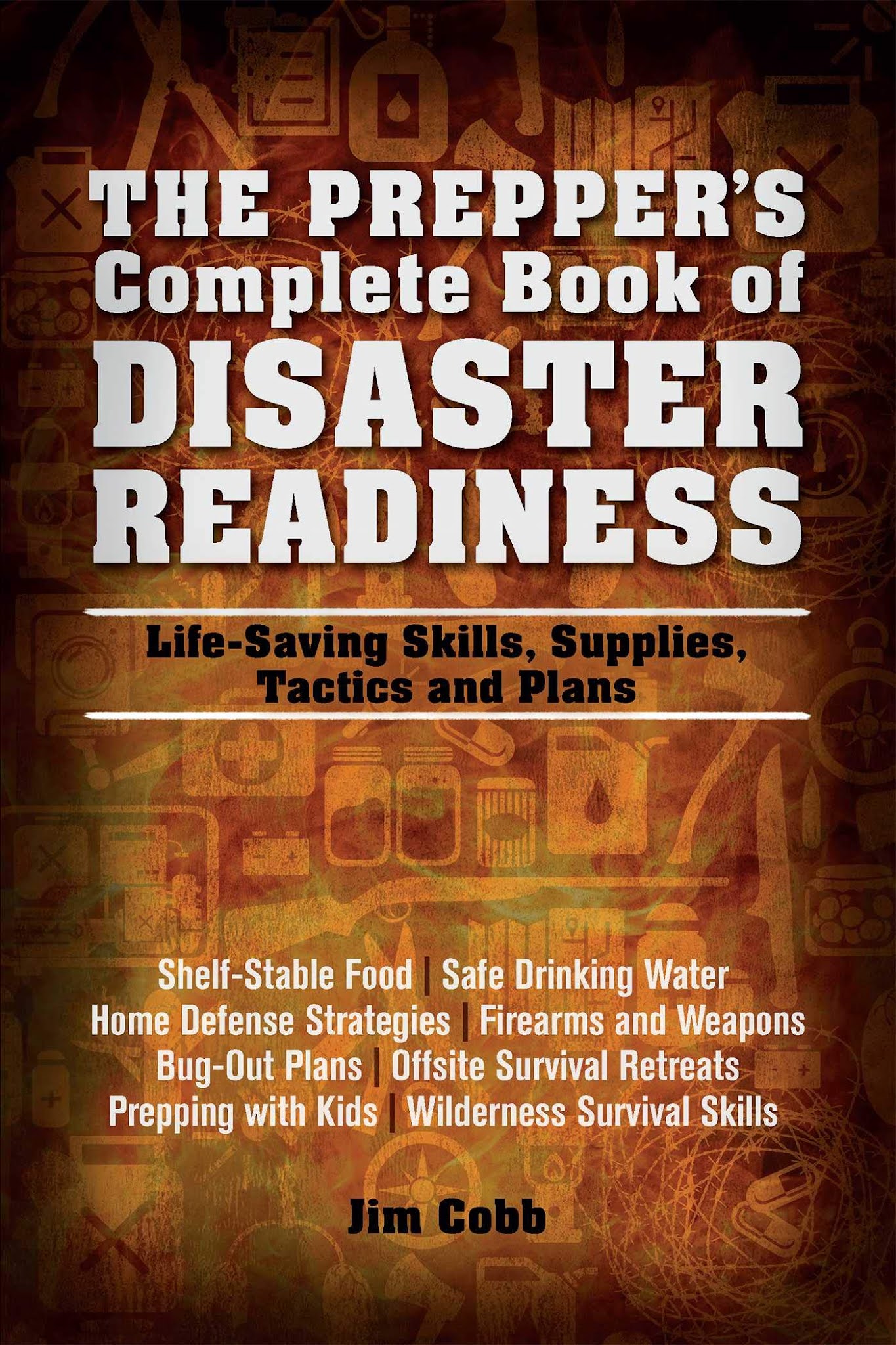
The Prepper’s Complete Book of Disaster Readiness guarantees you won’t miss a thing as you prepare for the most important moment in your life. This bible of prepping shows each and every life-saving step necessary to keep your family alive and well when the world around you is in chaos, including how to: Efficiently store water and acquire additional fresh water after a collapse; Build a shelf-stable food stock and supplement it by harvesting edible wild plants; Strengthen the security of your home as well as have a back-up bug-out plan; Treat illness and stay healthy when there are no doctors or hospitals; Build a safe and secure survival retreat that allows for long-term off-the-grid living.

While there is a small amount of overlapping information in all three books, this particularly covers preparing a house/apartment in a lot of detail: like 272 pages of details, including Note Pages. When I was sharing an actual house several years ago, I followed the home hardening tips as well as possible in the place we were renting. Things aren't quite as simple in a condo.

I particularly like the several appendices where the author lists his recommended books and has several checklists based on what has been written in the book. Due to the extra Suggested Reading, this could be a rabbit hole for some people, but as the author says, "I'm not sure which would be worse: not having a particular skill and having no means of researching it, or knowing damn well you have the information... somewhere... but can't find it."

Recap And Takeaway

  • I am going to purchase another set of these three books very soon, as the copies I have now are dogeared, page flagged, marked up and not attractive as a giveaway.
  • I will be going over the important information with the Purple Pack Lady when our schedules match up so that she understands why I have some of the "silly stuff" in my various bags.
  • Nothing was purchased this week.
* * *

Just a reminder: if you plan on buying anything through Amazon, please consider using our referral link. When you do, a portion of the sale comes back here to help keep this site running!

If you have comments, suggestions or corrections, please post them so we all can learn. And remember, Some Is Always Better Than None!

NOTE: All items tested were purchased by me. No products have been loaned in exchange for a favorable review. Any items sent to me for T&E will be listed as such. Suck it Feds.

Thursday, March 11, 2021

Prepper Fiction

I was chatting with a prepper friend whom I've known most of my live, and we started talking about books that we've both read. Being veterans as well as fans of fiction, we have similar tastes and our libraries have a lot of overlap. We started comparing our views of some of the popular prepper books of the last 30 or so years and came to the conclusion that while nobody had a crystal ball that told them everything, they each foresaw a corner of what has happened in recent history (or could happen soon). 

I'm going to mention some titles that you may or may not have heard of; some of them have acquired bad reputations and others are just not politically correct. I really don't care what the SPLC thinks about a book or author; if a story is well-written and can make me think a bit, it's good enough to keep around. Here are a few examples:

I picked up a copy directly from the author when it was first published back in 2008. The story is fairly simple: the Federal government signs on to a UN gun ban and people in a western state decide that they will not comply. The story has a strong start and middle, but a weak ending in my opinion. Some of the scenarios are believable even 12 years later, which makes it a good source of “what if” material for my late night musings. I think I paid $10 and shipping for my copy; it was a form of crowd-sourcing funds for a larger print run. A quick check on Amazon shows that copies are now selling for $46 used to $910 new.

The “Enemies” trilogy by Matt Bracken

The fiction is strong, some of the heroes are borderline superhuman, and the concepts and scenarios are more believable now than when they were written ca. 2011. I have the paperbacks buried somewhere in a box. I bought them new for $6 or so; they're still available new for $20 from Amazon. Not quite as collectible due to a larger print run and continued popularity, but still four times the money in ten years.

The Turner Diaries

A truly racist screed that culminates in a race war and the extermination of “non-white” people, this book has been banned from eBay and Amazon. It's been a long time since I read a borrowed copy, but I recall some of the “predictions” and a few of them have come true. If I ever find a copy it will go on the shelf that contains other non-PC books as a reference library of things to avoid. I'm sure I could find a pile of them at a local gun show, on the same tables that sell other banned books.

One Second After by William Forstchen
A chronicle of the events following an EMP strike on the USA and the destruction of our electrical systems, this book gets a few things right and a few things wrong. Mass printed, so used copies can be found for a few dollars. Not a bad read, you just have to double check some of the science and remember that it is fiction so “artistic license” is being used.

Pulling Through by Dean Ing
The effects of a nuclear strike from the vantage point of one man and his extended family, as written by an aerospace engineer. The science is tight; the original edition even had diagrams in the back for building your own Kearny Fallout Meter. The interpersonal and logistical problems of the first week in a fallout shelter are well-written and ring true. I'm a fan of Mr. Ing, as he writes good fiction and this one is actually helpful. Used, you can find this one for less than $5.


I read a lot of books. I buy them when and where I can, and I have a diverse library that is heavy on reference books but also has a fiction/fantasy section for entertainment. I try to have a few books aimed at audiences of all ages and education levels so information can be preserved and passed on. I am a strong believer in having a physical library for anything more important than entertainment, as digital books are too easy to electronically delete (it has already happened with some copyright issues) and I don't like the direction our education system is heading when I see reports of “teachers” claiming that math is subject to social pressure. History is constantly being rewritten and I like to have hard copies of how the stories used to be told.

Monday, November 9, 2020

Review: "The Bug Out Survival Vest"

 Hi there! This week I review Creek Stewart’s The Bug Out Survival Vest pocket field guide. Lots of good information in a small handy self-contained notebook. Check it out below.


Wednesday, November 20, 2019

Prudent Prepping: Disaster Prep, pt. The Latest

The dust has settled and the First 72 Hours have passed. Follow along as I build a long term plan via Prudent Prepping.

There is another PG&E power shutdown starting at 4 am tomorrow that, lucky for me, does not include my county. As of 15 minutes ago, most of the local counties have been dropped from the potential shutoff list. This doesn't mean that they won't be added back; just that as of now, the power will not be off starting at 4 am Wednesday. Now is not the time to relax or stand idly by.

Making A Difference
I have friends making serious plans and following through with them. I've been telling them about prepping even before I started blogging here; it just took another set of fires that are even closer to finally get them doing something about taking care of themselves. Besides pointing them here, the need for really simple, easy to read info was required by one friend with pre-teen kids. The book I mentioned the other week will work for my friend, but that isn't really what she wanted for them. There are many different places to start, but since these are younger kids that I know are pretty sharp, getting them involved in the process seemed like a good idea.

Since earthquakes are common here, planning for a generic disaster sounded like a better idea to Mom than talking about fires; the kids have felt and seen small earthquakes, but there haven't been too many small fires here lately. One place I don't think I've mentioned before is the government site Ready.gov . The chapters are easy to navigate and cover the basics in a format that anyone can follow. The pages oriented towards kids are just one example of how nice this site is built.

Fair Warning! There is quite a bit of information to go through, and I have to say there is very little fluff that I've seen! Here is the page directed to kids and here are a few of the chapters:
Be a Ready Kid!

Emergencies and disasters can be scary, but there are ways to help you stay safe before, during, and even after a disaster. Here, you can play games to become a Disaster Master and learn how to build an emergency kit. You will meet our friend Pedro the Penguin, who will teach you all about staying safe. You will even be able to make your own emergency plan with your family!
 There is a section for very young children and also a Spanish language section.

Build a Kit
When making an emergency kit, it’s important to know what your family already has and what you still need. Sit down with your family and use this checklist to decide what else you need to make sure you and your family are prepared for any emergency.
Digging into the Build a Kit page, it shows all the normal prepping items for Bugging Out, with the addition of an interactive Build A Kit Game to make a scary task into something fun. I think that idea will be really helpful for these kids, who are very responsible around their house now.

Mm mom is reading my copy of When The Grid Goes Down, so I think I need to do what I said previously and buy some copies to pass out, either dead tree or eBook version.

Recap And Takeaway
  • Nothing was purchased this week, but I will be buying 2 copies of When The Grid Goes Down from Amazon: $4.49 eBook or $14.95 paperback  with Prime.
  • It doesn't matter why you start; it matters that you did, and then follow through to take care of your family.
                                                                    ***

Just a reminder: if you plan on buying anything through Amazon, please consider using our referral link. When you do, a portion of the sale comes back here to help keep this site running!

If you have comments, suggestions or corrections, please post them so we all can learn. And remember, Some Is Always Better Than None!

NOTE: All items tested were purchased by me. No products have been loaned in exchange for a favorable review. Any items sent to me for T&E will be listed as such. Suck it Feds.

Thursday, November 14, 2019

Low Tech

While I'm a fairly tech-savvy person and use a couple of different digital formats to read books, I still enjoy sitting down with an actual, printed paper book. Certain reference books and maps are better in physical form than in digital; it's much easier to flip to the correct section than trying to scroll through pages on a small screen.

Printed books are also less dependent on electricity and the format is well-defined and stable. Digital media standards change, and without the proper hardware/firmware/software the data is unavailable. I have several boxes of floppy disks that I had to transfer data from a few years ago, and the CDs and DVDs that I moved the information to are rapidly becoming obsolete.

Archiving digital information is difficult without a lot of equipment and constant electrical power. 
  • Magnetic storage media like floppy disks, magnetic tapes, and hard drives will reliably hold data for about 10-20 years at best. The mechanisms for reading that data may not last as long, which is another thing to consider.
  • Optical storage like CDs and DVDs are highly variable, depending on the properties of the disc. Recordable disks use a dye that changes color when exposed to a laser of the correct frequency; this dye has a 5-10 year shelf-life under good conditions and heat, humidity, and UV light will shorten that life rapidly. Manufactured, or “pressed”, disks have a metal layer that is physically changed as the data is stored. They are sturdier than the recordable disks, but still have a shelf-life of only 20-30 years.
  • Digital e-books are handy if you have a reader, as you can carry a library around in your bag, but the formats (.mobi, .pdf, etc.) aren't stable yet and you need electricity to be able to access the data. There have also been cases where the publisher remotely deleted books from users' machines -- sort of a modern-day book burning. I use my tablet/e-book apps for ephemeral titles; fiction and news mostly, nothing I actually need to save for later.
  • Books, if printed on good paper and given decent care, can last for centuries. I own several reference books that are more than 100 years old and the information is still readable. Daylight or a good candle or two is all you need to be able to retrieve the data in a book.

All of the above has been covered here before, but I ran across a service last month that brought it to the front of my attention. One of my frequently visited sites on the Internet is Low-Tech Magazine. The entire website is designed to use as little electricity as possible, from the choice of fonts and picture quality to the static page design and the lack of animation (and ads). The webmaster has even managed to build a website that is 100% solar-powered and located in his home. High-tech but with a small footprint, and he's keeping the site online over 90% of the time.

I can ignore the low-level politics and climate-change rhetoric on the site because it covers old and new technology from a unique perspective. Some of the links in the header take you to “no-tech” and obsolete technologies pages, which may prompt some thought about projects you have in mind.

Since the web-pages are small and don't have any dynamic links or animations, the owner decided to publishthe last six years of articles in book form. He uses Lulu, a print-on-demand service, so he doesn't have to stock or ship anything, which is handy since he's based in Spain. Lulu works with printers around the world, so your book will be printed and shipped from the source closest to you. I ordered a copy and it was printed and shipped via the cheapest carrier in about two weeks. The total cost was about $30 for a 710 page book printed on heavy, acid-free paper, which is a fair price. I was actually surprised at the heavy paper, as I was expecting something similar to paperback or photocopy paper.

The topics covered in the 37 articles originally published between 2012 and 2018 are mostly old tech and are based on minimizing power consumption, a topic that might be of interest to any of us planning or building a more self-reliant home. Here's the table of contents, but remember that you can look the articles up online and read them to see if it is something you want to have a print copy of.

  • How to Build a Low-tech Website?
  • We Can't Do It Ourselves
  • Ditch the Batteries: Off-grid Compressed Air Energy Storage
  • History and Future of the Compressed Air Economy
  • How Much Energy Do We Need?
  • Bedazzled by Energy Efficiency
  • How to Run the Economy on the Weather
  • How (Not) to Run a Modern Society on Solar and Wind Power Alone
  • Could We Run Modern Society on Human Power Alone?
  • Heat Storage Hypocausts: Air Heating in the Middle Ages
  • Why the Office Needs a Typewriter Revolution
  • The Curse of the Modern Office
  • How to Get Your Apartment Off the Grid
  • Slow Electricity: The Return of DC Power?
  • Power Water Networks
  • Fruit Walls: Urban Farming in the 1600s
  • Reinventing the Greenhouse
  • How to Build a Low-tech Internet
  • The 4G Mobile Internet that's Already There
  • Why We Need a Speed Limit for the Internet
  • How Sustainable is Stored Sunlight?
  • How Sustainable is PV Solar Power?
  • Restoring the Old Way of Warming: Heating People, not Places
  • The Revenge of the Circulating Fan
  • If We Insulate Our Houses, Why Not Our Cooking Pots?
  • Well-Tended Fires Outperform Modern Cooking Stoves
  • Modular Cargo Cycles
  • High Speed Trains are Killing the European Railway Network
  • Power from the Tap: Water Motors
  • Back to Basics: Direct Hydropower
  • The Mechanical Transmission of Power (3): Endless Rope Drives
  • The Mechanical Transmission of Power (2): Jerker Line Systems
  • The Mechanical Transmission of Power (1): Stangenkunst
  • How to make everything ourselves: open modular hardware
  • Electric velomobiles: as fast and comfortable as automobiles, but 80 times more efficient
  • Cargo cyclists replace truck drivers on European city streets
  • The solar envelope: how to heat and cool cities without fossil fuels

There is a decidedly urban European slant to the articles, but the information is useful anywhere. I suggest that you at least give the website a look and check out the archives, as they're planning on putting out a second book with older articles in the near future.

Friday, August 23, 2019

The Survival e-Reader

& is used with permission.
After writing last week's article, I realized that while I have mentioned the Survival e-Reader before, my argument for why it's a good thing is something which is not readable on this blog, due to it being presented in episode 56 of the GunBlog VarietyCast. Since referring to a concept that is inaccessible to our readers is in poor form, I present to you a transcript of my segment from that episode.

Sean: In addition to being the bratty kid sister of the blogosphere, you're also like Auntie Erin the prepper aunt. We all look to you for the most amazing, exciting, neat, very inexpensive ways to hack our way to safety and live through dangerous things. So what are you going to tell us about today?

Erin: Well, last podcast's plug of the a week about your Kindle Fire inspired me to talk about how to make a survival e-reader.

Sean:
You're kidding, right? My Kindle is a survival tool?

Erin: You have a Kindle Fire HD 6, right? That comes with eight gigabytes of memory. You probably have access to only six for storage. The average e-book is about 500 kilobytes, so six gigs is roughly 600,000 kilobytes. So that's about a thousand to twelve hundred e-books you could store. Now your options increase if you have a Barnes & Noble Nook instead. They have slots for micro SD cards, in which case you can just expand that storage space massively. Amazon has 64 Gig micro SD for about $20. Now your Kindle cost you only $114, whereas the cheapest version of the newest Nook, the 7.0, costs about $150, so you pay for that versatility. But, if you don't mind getting an older model, a Nook from 2012 will only cost you about $50.
Editor's Note: This was correct when I said it four years ago. Things have changed since then; all current Kindle models have much more internal memory and all have SD cards. The cheapest is the Kindle 7 with 16 gigs of memory (and the ability to add 512gb more with an SD card) for $50. The $80 Kindle 8 HD can have up to 400gb additional memory. I do not recommend the Kindle 10 as it only allows the addition of a 256gb card to its 64gb of internal memory; you end up paying more for less storage, which is of critical importance to a survival e-reader. 

Meanwhile, the only Nook to still have SD card access is the Tablet 10.1, which at $130 costs much more than the Kindle 8 but has less memory (32gb internal and 256gb SD card). I no longer recommend the Nook; get a Kindle 7 or 8 instead. 
Alternately, make a field expedient e-reader as explained in this BCP article by Scott Bascom
Ultimately, the main difference between the Kindle and the Nook are file types. Nook uses the very common ePub format, while Kindle uses its proprietary MOBI format, which is mostly popular because it's on Amazon. Fortunately, there is a way to convert one to the other on your home computer; just follow the link in the show notes below.
 So what can you do with all of this storage? Well, you create a survival library of ebooks that can teach you first aid, or help you identify plants and animals, or show you how to do any number of other things. And the wonderful thing about these readers is that they can show you what to do using full color pictures rather than simply telling you through words. And sometimes that makes all the difference. For example, edible plants look different in the winter than they do in the summer, and a good e-book will show you both pictures. And what's more, there are plenty of e-books about prepping and survival that are absolutely free. I've included a link to a Web page for that.
Now, I do want to caution people about using apps. There are many apps that do similar things like do first aid or have survival information, and they do have the benefit of being interactive. However, apps often take up more room than ebooks -- you need the memory to run the program, not just read from a file -- and many have a tendency to not work without an internet connection. But, sometimes these are fine, so be sure not to dismiss them out of hand. Just investigate before you invest.

Sean: Oh, come on, Erin. My Kindle is fragile. It needs power, and what if it gets wet. I mean, aren't regular books better?

Erin: Well, these are good points, but you're fragile, too. You'll break if dropped from a great height, just like a Kindle. And you need a light to read a regular book; your e-Reader makes its own light. And yes, an e-reader that gets wet is likely broken. But a book that gets wet has pages that can tear, or stick together, or become moldy. The fact of the matter is that e-books and regular books both have a place in a bug out bag. Your Kindle weighs as much as one book, but can hold the information of over a thousand. That's not a bad weight to value ratio. Now yes, you will need to take care of it just like any other piece of gear. Fortunately, there is an entire industry dedicated to creating waterproof and shock proof tablet cases. Just yesterday I was in the sporting goods section of Walmart and found a lockable waterproof plastic case shaped for an iPad and it was filled with that pluckable foam so you could create a custom cushion. And this was around $20, which is not a bad investment for an expensive tablet.
Now, yes, you are going to need to power it. Fortunately, most e-readers can be powered by solar or by crank, just like a cell phone can, so any cell phone recharging strategies work for them, too. The problem is that most of these are trickle charged, so you're looking at a lot of cranking for many hours in sunlight. Now for this, I would recommend getting a USB-based battery that can charge your tablet while you sleep and then recharge that battery during the day. I've included my recommendations for solar panels, batteries and crank chargers and the show notes.
And even if the worst happens and your Kindle or Nook breaks, you can still make use of it by taking it apart and using the pieces. For example, the battery can be used to start fires. The circuit boards can be turned into cutting tools, and you can use the back of the LCD screen as a signal mirror. 
So you see, Sean, it makes a lot of sense to have an e-reader in a bug out bag; just make sure to take care of it.

Sean: Then when I'm bored, I can just read a book for entertainment?

Erin: Or listen to music, or watch a movie. Yes, morale is an important part of survival, and anything that makes your life better and takes your mind off boredom or miserable conditions is worthwhile.

Sean: All right, Erin. It was good to talk with you. See you again next week.

Erin: See you, take care.

Thursday, August 15, 2019

Book Recommendations: Survival Handbooks

& is used with permission.
Today I received a PM from a friend which said:
Hey! Long time no see! I've started watching a series on YouTube on the American Frontier (Townsends is the channel, with Coalcracker being a guest for some episodes). Watching this stuff has me longing for my boy scout days. Can you recommend a good field manual? Something for plant/tree identification, tying knots, and other wilderness/forest survival?


I've found that the SAS Survival Handbook is a good, all-purpose book, rather like an old Boy Scout Handbook but for adults. There's a lot (a lot) of excellent information inside it, from bushcraft to survival skills to plant & animal identification. There's first aid and knots and navigation. There are plenty of full-color illustrations to help you understand what's being taught. It's a legitimate weighty tome, both in information density and in actual weight (it's a trade paperback but it weighs at least as much as a hardcover book.) Fortunately for those of us worried about weight, there's both a Kindle edition for your survival e-reader and an app version for both Apple and Android phones.


Another book which I recommend is Wilderness Survival by Gregory J. Davenport. This is smaller and lighter than the SAS guide, and the illustrations are less detailed, but I feel it has a different focus. The SAS Survival Handbook is geared towards "Here's how to survive anywhere on earth, and your efforts should be focused on getting rescued or self-rescue", while Wilderness Survival 
is more "Well, you're stuck here, and could be here for a good long while. Might as well make yourself comfortable." It, too, is also available in Kindle format, and has earned itself a place in my survival e-reader.


If you're looking for good book on bushcraft skills and general survival, you won't go wrong with either of these. Put SAS in your bug-out bag and Wilderness Survival in your camping backpack and you'll be better prepared than a lot of people.

Wednesday, May 8, 2019

Prudent Prepping: Reading Pile, pt 2


The dust has settled and the First 72 Hours have passed. Follow along as I build a long term plan via Prudent Prepping.

I finished The Book I Can't Recommend from last week. I can't remember the last book I didn't read all the way through; lately I've become more discerning, or possibly less of a risk taker in the books I buy or borrow, which means I don't start bad books. However, since this was a book a friend asked me what I thought, I had to finish it. 

Emergency: This Book Will Save Your Life 
by Neil Strauss

https://amzn.to/2Lh19E8
I have to say the book has grown on me, if just a little bit. There still are all the red flags I mentioned in last weeks post:
  • Odd titles and topics
  • Strange topics strung together in a chapter
  • Weird chronology, like chapters mentioning 1999 in a book published in 2009
  • Where and how to hide money off-shore
  • How to establish a second residency and get another passport.
In all of this, however,  there are still some good topics: 
  • A really nice endorsement of CERT training
  • Discussion of how to make a realistic prepping plan
  • Building a GHB and BOB

Yes, the book actually makes several good points. No, I still won't recommend it as a book to buy new. In my opinion, there is just too much garbage to be worth paying full price for it, but if a copy can be found used for less than $5, I say give it a try.

If I was going to spend full price or recommend a book to a friend, there are many, many choices before this book would come to mind. Les Stroud is a personal favorite, and I'm giving a copy of Survive! to the guy who loaned this book to me. 

Unfortunately, I might have to place this book right at the bottom of my book list, beside another, much more popular book, written by an odd author. 


Takeaway and Recap
  • I have the same points and reservations as last week
  • If this book wasn't from a friend, I probably wouldn't have finished it.
  • Nothing was purchased this week.

* * *

Just a reminder: if you plan on buying anything through Amazon, please consider using our referral link. When you do, a portion of the sale comes back here to help keep this site running!

If you have comments, suggestions or corrections, please post them so we all can learn. And remember, Some Is Always Better Than None!

NOTE: All items tested were purchased by me. No products have been loaned in exchange for a favorable review. Any items sent to me for T&E will be listed as such. Suck it Feds.

Wednesday, May 1, 2019

Prudent Prepping: One For The Reading Pile

The dust has settled and the First 72 Hours have passed. Follow along as I build a long term plan via Prudent Prepping.

My close friends know that I am a prepper, so I get asked some odd questions and see some funny links and articles. I also get some books that I don’t really know how to classify, or know whether to keep or pass back after reading. This is one of those books.


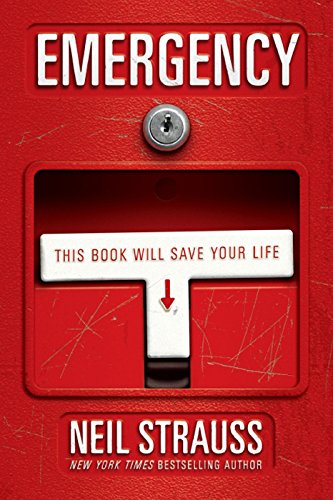
Emergency: This Book Will Save Your Life 
by Neil Strauss

https://amzn.to/2Lh19E8
This book is really difficult to categorize. Really, really hard. I’m only about halfway through it and the topics veer around like a drunk rollerblader on an ice arena. You have these chapter headings:
  • Orientation
  • Five Steps
  • Escape
  • Survive
  • Rescue
Seems pretty normal, right? Some of those titles could have come right out of a Les Stroud book, no problem. But let me share several sub-chapter headings with you:
  • How To Become Immortal In One Easy Step is discussing cryo-freezing yourself;
  • Why They Hate Us But Like Our Movies, a modern take on Bread and Circuses;
  • The Britney Spears School Of Pregnant Surfing, a segue from celebrity ghost writing to leaving the country.
From the back cover: 
  • Why You Should Think of the Zoo as a Restaurant
  • Proper Care and Handling of Hawaiian Tropic Girls
  • Where to Swim Across the Border
  • Bikes of the Apocalypse
After looking at who the author is, his other books and for whom he writes (the New York Times), this book reads to me like a collection of articles that was pitched to, and rejected by, the NYT editors. I say this after looking at the copyright page (2009), and also after noting that one of the chapters mentions preparations for the Y2K non-disaster. All of this isn’t necessarily a Bad Thing, but it is not what I was expecting to read.

Again I admit that I am only 1/3 to 1/2 through the book, and once I got over the style of writing, I have a better feel for this book. It isn’t a survival guide or a lesson plan, but rather how this particular man went about learning how to start prepping. Right from the first chapter, where he admits to being nauseated thinking about slaughtering and dressing a goat, Neil Strauss obviously doesn't have a practical background. That’s really okay, since many of us didn’t grow up on farms and had limited chances to hunt and dress game. As a writer for the Times, Strauss gets a chance to ‘fail spectacularly’ by interviewing fringe groups and meeting odd characters, with few consequences other than a girlfriend that appears to be less and less willing to go along with some of the wilder stunts.

I don’t know if I would recommend this book as a Must Read today, since many things have changed in the 10 years since it was published, but I would list it as a book to read for the parts that apply to how Blue Collar Prepping works. It’s just going take some work to filter out those parts.

The Takeaway
  • Something that looks like a good book but seems poor at first may have some interesting bits if you stick it out.
The Recap
  • Nothing was purchased this week; the book is a loaner from a friend.
  • EMERGENCY by Neil Strauss is available from Amazon for $13.80 with Prime, or Kindle for $10.49.

* * *

Just a reminder: if you plan on buying anything through Amazon, please consider using our referral link. When you do, a portion of the sale comes back here to help keep this site running!

If you have comments, suggestions or corrections, please post them so we all can learn. And remember, Some Is Always Better Than None!

NOTE: All items tested were purchased by me. No products have been loaned in exchange for a favorable review. Any items sent to me for T&E will be listed as such. Suck it Feds.

The Fine Print


This work is licensed under a Creative Commons Attribution- Noncommercial- No Derivative Works 3.0 License.

Creative Commons License


Erin Palette is a participant in the Amazon Services LLC Associates Program, an affiliate advertising program designed to provide a means for sites to earn advertising fees by advertising and linking to amazon.com.