Showing posts with label Getting Started. Show all posts

Thursday, October 14, 2021

Getting Started: Food

The dust has settled and the First 72 Hours have passed. Follow along as I build a long term plan via
 Prudent Prepping.

The friend I gave prepping books just asked what I think are questions every beginner asks: How do I start? What do I buy? Where do find everything? 

The cliché' answer is, of course, At The Beginning. I recommended looking at our entire blog and searching (from the actual blog, not Facebook) for the topics that are important. 

The question I seem to be asked most is What food do I buy? and the answer is Buy What You Use Now. Start with buying two extra of your normal canned/jar items and put those away. Then search for 'Food Storage' in the box on the upper left of the blog page, and be prepared to scroll through many really good posts. especially those from Chaplain Tim and Erin.

The next question, especially from folks that might be a bit well-off, is How long can I expect canned goods to last? The answer is longer than you might think. Erin has a post on 100 year old cans that is quite an eye-opener! 

There are several other posts on this blog which mention shelf life, but an article appeared in my news feed recently that addresses this nicely. From the article How Long Does Canned Food Last? Here’s What You Need to Know:
"Exactly how long does canned food last, and is it safe to eat canned food beyond its printed expiration date?
Here’s the good news: Canned goods actually last indefinitely if they're kept in good condition, according to the USDA. But that doesn't necessarily mean that they’ll still taste optimal ten years from now! There are actually several factors that limit the shelf life of canned goods, but in general, foods that are more acidic will expire sooner, while low-acid canned foods will actually last for longer. If you’re wondering about specific canned foods, though, here’s how long they’ll last on your shelf, as well as in the refrigerator after you open them." 
I do recommend reading all related posts from the blog to get even more food storage ideas. 

What if I want to plan further out than 5 years? Or have a budget that allows spending more? Possibly a lot more? 

That is something I personally don't have any experience with, since I am solidly Blue Collar in my upbringing and budget. I strongly recommend diving into Jim Cobb's book that  I mentioned in this post and reading pages 68-69. Two weeks to a month's worth of food is pretty easily done, following the 'Buy Two  Extra' plan. After 3 to 6 months, depending on how much you spend each week, you will have your month supply. 

Now, if you've recently hit Powerball or Super Lotto, things are much different. There are many different long-term food storage companies, but the one I like is Mountain House. Their product tastes good to several different people I served samples, and they have a very wide assortment of to choose from. 

Mountain House 6-Month Emergency Food Supply: $3,999.00

https://mountainhouse.com/products/6-month-emergency-food-supply

From the webpage: 
Emergency food supply of breakfast, lunch, and dinner for one person for six months, or two people for three months. Kit contains 540 total pouches and provides approx. 1,724 calories per day. Just add water and have a comforting, delicious meal in minutes. No pots, pans or cooking required. With the longest, proven shelf life in the industry, have peace of mind with Mountain House.
Or, if you want to go big:

Mountain House 1 Year Emergency Food Supply: $7,829.00
https://mountainhouse.com/products/1-year-emergency-food-supply
Emergency food supply of breakfast, lunch, and dinner for one person for twelve months, or four people for three months. Kit contains 1,080 total pouches and provides approx. 1,724 calories per day. Just add water and have a comforting, delicious meal in minutes. No pots, pans or cooking required. With the longest, proven shelf life in the industry, have peace of mind with Mountain House.
Here is a link to what is in the 1 Year Emergency Supply assortment. It is pretty complete, in my opinion.

Unfortunately, both items are sold out at the moment and, from what I can tell, when they are in stock inventory disappears very quickly. Now I want to say this certainly isn't the only way to go, and I would like the other authors here to add their recommendations to this list. Google can be your friend, but the "Prepping Food Rabbit Hole" can be very wide and deep. That's not to say don't look; just have a plan for what you are searching for... and maybe a lifeline to pull you out.

I can't tell you what you need, but all of us can at least point you to resources where you can find reliable information. Happy Hunting!

Recap and Takeaway
  • I seriously doubt there are any Powerball winners hidden here, but even so, knowing what is out there can make searching easier.
  • Find out what you and those around you like. Buy that and keep it in a secure place.
  • Nothing was purchased this week, but there will soon be additions to the Purple Pack, my own GHB and house stores.
* * *

Just a reminder: if you plan on buying anything through Amazon, please consider using our referral link. When you do, a portion of the sale comes back here to help keep this site running!

If you have comments, suggestions or corrections, please post them so we all can learn. And remember, Some Is Always Better Than None!

NOTE: All items tested were purchased by me. No products have been loaned in exchange for a favorable review. Any items sent to me for T&E will be listed as such. Suck it Feds.

Thursday, September 9, 2021

Where To Start?

The dust has settled and the First 72 Hours have passed. Follow along as I build a long term plan via Prudent Prepping. 

Word is out around work that I write for a  prepping blog. Thankfully, only one person has asked the obvious and clichéd prepping question, and they were mildly happy to hear I didn't have a hidden hideout/bunker.

(If someone has recently hit the PowerBall, won the lottery or is otherwise able to afford and is interested in having a bunker, I actually know a guy that does them. Seriously.)

While most of us here at BCP have been asked the bunker/hideout/secret lair question, this was the first time someone has been happy I didn't have one. The more I think about it, the more I'm confused.

At the Beginning
An ancient Chinese proverb says "A journey of a thousand miles begins with a single step." I didn't save the link to a guy who once said "Some is the same as none" when prepping, and don't want to raise my blood pressure by looking now, but needless to say I disagree. There has to be a first step, a first purchase and yes, a first mistake when prepping. I find my mistakes are much better learning moments than are getting things right, whether they be right by accident or right on purpose.

I admit to being a book collector and have bought many different prepping books, and here are three that I always have on hand to pass on to friends asking serious questions. A fellow by the name of Tony Nestor has written many different prepping books, and he wrote two of the three that I like to give out. 

1) Surviving A Disaster by Tony Nester

https://amzn.to/3zUK9bP
From the Amazon ad:
Could you evacuate from your home in 15 minutes with the pertinent survival gear necessary for overcoming a disaster?

The most effective means of surviving such an event is to have the essential gear and plans in place beforehand and this only comes from developing a mindset of self-reliance. In his third book in the Practical Survival Series, Tony Nester takes you through the scenarios, planning, and emergency kits for surviving natural and manmade disasters where you are forced to evacuate your home.

Surviving A Disaster covers methods that have worked for real-life survivors and delves into the practical skills that can be used for preparing your family and surviving on the run. You will learn how to formulate an escape plan for your specific region and what an evacuation entails along with a straightforward approach to assembling emergency kits for the home, office, and vehicle. There is also a special section on preparing children for a crisis and what their personal survival kits should contain. The strength of this book rests on field-tested strategies and pragmatic tips taken from actual first responders and survivors.
While the book is on the slim side at 58 pages, the information inside is worth it. The author lives in the Southwest, and so is familiar with wildfires similar to what we have here in California. The basic information is solid, even with the book being published 13 years ago. I've mentioned to my friend that when the time comes to start buying extra things to search out 'water filters', 'stoves' and 'first aid kits' as a start, since there have been amazing improvements in all three categories.

2)When the Grid Goes Down by Tony Nester

https://amzn.to/38WOBe8
From the Amazon ad:
Disasters come and go each year but it is through developing a self-reliant mindset, having essential survival gear and possessing a handful of critical skills, that you and your family will be able to prevail in an urban crisis.

Jammed with field-tested information from real-world applications, survival instructor Tony Nester covers how to prepare for both short-term survival ranging from 24-72 hours as well as long-term situations resulting from a grid-down emergency or pandemic.

When the Grid Goes Down will show you the 6 key areas to make your home and lifestyle more self-sufficient and the critical gear needed along the way. Topics Include: Creating a Self-Reliant Home, Water Storage and Purification Methods, Alternative Water Sources At Home, Creating a Water Map for Your Region, The 3 Essential Food Types to Stock Up On, Designing an Off-Grid Medical Kit, Home Security and Personal Defense Measures, Safeguarding the Exterior and Interior of Your Home, and Alternative Sanitation Methods.
Another slim volume at 78 pages but again, it has really nice information set out in easy to read and understand chunks. This was written in 2013, so I don't have as many small quibbles with the text. I especially like the chapters on Water, Food, First Aid, Home Security & Personal Defense, Heating, Cooling & Energy Needs and Hygiene & Sanitation. I've followed many of the suggestions in this book.


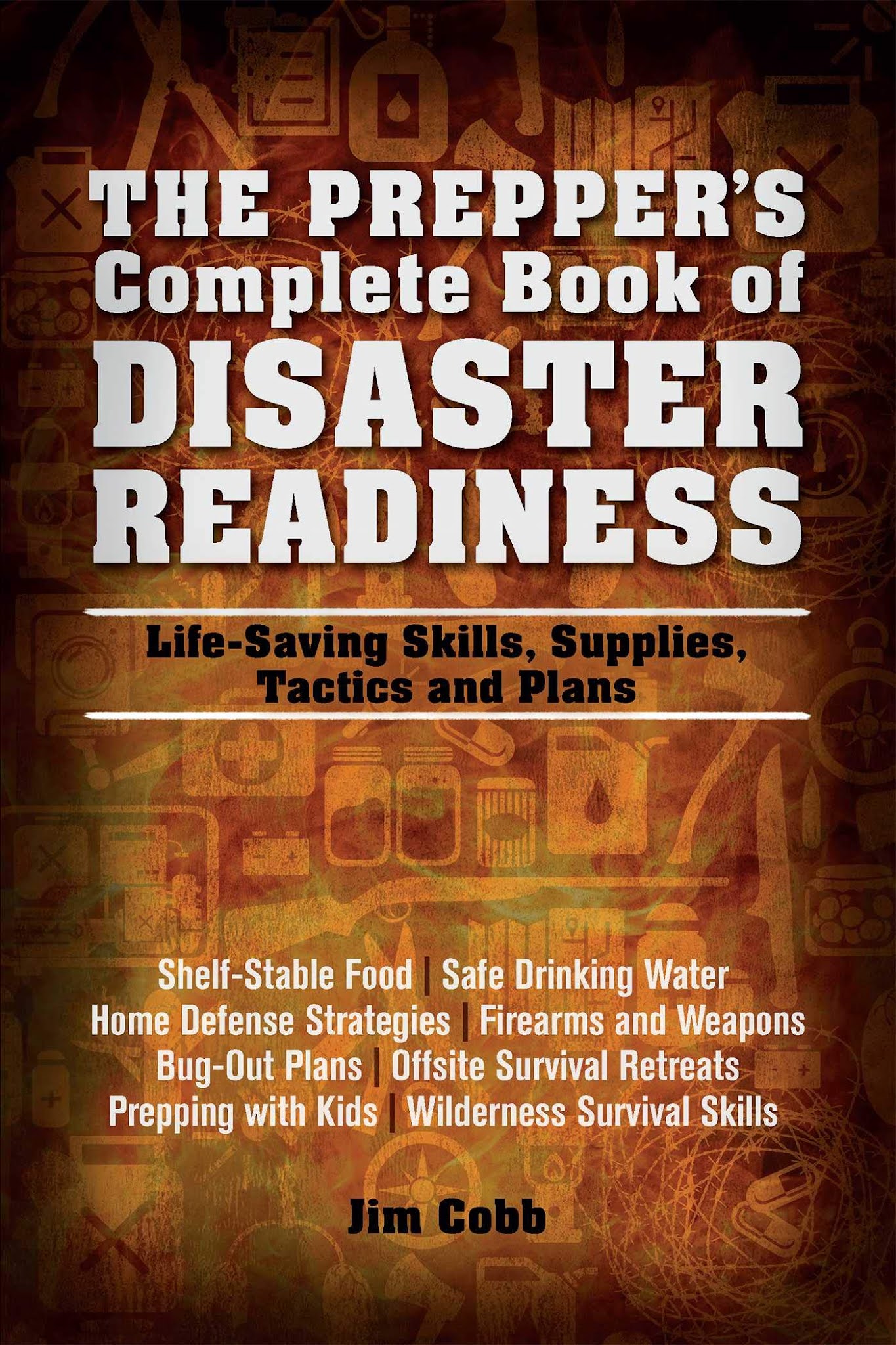
The last book I hand out is also the longest to read. It is fractionally more expensive, but it can make non-readers eyes start to glaze over due to the extra details... and pages. Not that it's too long; it's just not as easy to get through as the previous two.

https://amzn.to/3nxMypJ
From the Amazon ad:
Prepare. Survive. Thrive. Is your survival plan complete from A to Z? Are you truly 100 percent prepared? Because if you overlook one vital area, fail to stock one critical supply or underestimate one potential danger, your whole plan could come crashing down.

The Prepper’s Complete Book of Disaster Readiness guarantees you won’t miss a thing as you prepare for the most important moment in your life. This bible of prepping shows each and every life-saving step necessary to keep your family alive and well when the world around you is in chaos, including how to: Efficiently store water and acquire additional fresh water after a collapse; Build a shelf-stable food stock and supplement it by harvesting edible wild plants; Strengthen the security of your home as well as have a back-up bug-out plan; Treat illness and stay healthy when there are no doctors or hospitals; Build a safe and secure survival retreat that allows for long-term off-the-grid living.

While there is a small amount of overlapping information in all three books, this particularly covers preparing a house/apartment in a lot of detail: like 272 pages of details, including Note Pages. When I was sharing an actual house several years ago, I followed the home hardening tips as well as possible in the place we were renting. Things aren't quite as simple in a condo.

I particularly like the several appendices where the author lists his recommended books and has several checklists based on what has been written in the book. Due to the extra Suggested Reading, this could be a rabbit hole for some people, but as the author says, "I'm not sure which would be worse: not having a particular skill and having no means of researching it, or knowing damn well you have the information... somewhere... but can't find it."

Recap And Takeaway

  • I am going to purchase another set of these three books very soon, as the copies I have now are dogeared, page flagged, marked up and not attractive as a giveaway.
  • I will be going over the important information with the Purple Pack Lady when our schedules match up so that she understands why I have some of the "silly stuff" in my various bags.
  • Nothing was purchased this week.
* * *

Just a reminder: if you plan on buying anything through Amazon, please consider using our referral link. When you do, a portion of the sale comes back here to help keep this site running!

If you have comments, suggestions or corrections, please post them so we all can learn. And remember, Some Is Always Better Than None!

NOTE: All items tested were purchased by me. No products have been loaned in exchange for a favorable review. Any items sent to me for T&E will be listed as such. Suck it Feds.

Thursday, March 26, 2020

Welcome, New Preppers!

Ah, spring, the time of year when anything can happen and usually does, including rain, snow, earthquakes, tornadoes, floods, and fires all over the place... and that's just Monday. The world is going through a rough patch right now and lots of people are starting to look at prepping in a different way. Some are admitting that maybe, just maybe, having some things set aside for emergencies isn't such a bad idea. Others are demanding that all of those “hoarders” be punished and their supplies redistributed to those who couldn't be bothered to plan ahead. The truly evil are looking at ways to take what they want and are looking for opportunities, while ordinary people are stepping up and providing supplies and services to their neighbors. Everyone is getting an education on prepping, whether they wanted it or not.

If you're new to the idea of prepping, welcome to the family. We're not all a bunch of greedy psychopaths looking to take your money in exchange for some piece of gear with dubious utility or longevity, and here at Blue Collar Prepping, we deal in information and teaching instead of sales and marketing. You may have noticed the shortage of ads: no flashing banners or pop-ups, no email harvesting, no books or classes for sale. For the last six years we've been cranking out new articles almost every Monday through Friday to try to enlighten and entertain our readers. None of us have gotten rich off of this; in fact, several of us have lost money. We do it because we think you, the reader, should have good information about a topic that we think is important.

We also welcome questions and guest articles if you need or have specific information pertaining to prepping. There is a search box in the upper left-hand corner of the blog page that will let you check out our archive of articles. After six years we have over 1700 of them, so you may find some of what you're looking for in a previous post.

The writers do have a few rules that have served us well.
  • We Have No Politics. I stretch this one some days, but most of the time we avoid taking sides in political issues. There are few things in today's world more divisive than politics, and we're not here to drive anyone away. Everybody deserves the information they need to survive an emergency, regardless of their political party or other “difference”. There are plenty of other blogs and webpages out there that cover the political sphere, and this is not one of them.
  • We Promote No Specific Religion. This is close to the rule above, and is important because the writing pool is such a mixture of differing beliefs that we'd all quit if anyone tried to push their specific religion. As I have explained to a few, I'm a Chaplain, but I am not likely your Chaplain. I'm not here to push my beliefs; I'm here to pass on information on other matters.
  • We Do Not Give Sales Pitches. Several of our writers have personal businesses, but you won't see them pushing their wares here. Our product reviews are done mainly on items that we have purchased with out own money (and on the rare occasions when an item was donated for testing & evaluation will state so), and we are not afraid to be honest in our reviews. If something is worthless, we'll let you know so you don't waste your money.
  • We Keep It Personal. Most of our writing is based on personal experience, not a regurgitation of something we read in a book but have never tried ourselves. If we don't know something, we're not going to lie to you and say we do. The writers are scattered across geological, educational, ideological, age, and lifestyle divides, so we can probably find someone with personal experience on most matters.
  • We Are Reasonable in Scope. The blog's name is Blue Collar Prepping, so you're not going to find descriptions of 10,000 sq ft “Doomsday Bunkers” or maps of where to fly your plane to escape a hurricane. We're working-class folks and we try to keep in mind that most people have to live within a budget.
  • We Are Civil. We don't deride or ridicule anyone other than a few really obnoxious snake oil salesmen out there. We'll call out a charlatan, but we welcome questions and differing opinions. Conspiracy theories and racist commentary are a good way to get blocked and ignored around here, as they serve no constructive purpose and hinder the flow of information.

Other than the blog, there are several ways to reach us:
There are no stupid questions, and we were all new to prepping at one time, so feel free to ask us anything. 

Wednesday, November 20, 2019

Prudent Prepping: Disaster Prep, pt. The Latest

The dust has settled and the First 72 Hours have passed. Follow along as I build a long term plan via Prudent Prepping.

There is another PG&E power shutdown starting at 4 am tomorrow that, lucky for me, does not include my county. As of 15 minutes ago, most of the local counties have been dropped from the potential shutoff list. This doesn't mean that they won't be added back; just that as of now, the power will not be off starting at 4 am Wednesday. Now is not the time to relax or stand idly by.

Making A Difference
I have friends making serious plans and following through with them. I've been telling them about prepping even before I started blogging here; it just took another set of fires that are even closer to finally get them doing something about taking care of themselves. Besides pointing them here, the need for really simple, easy to read info was required by one friend with pre-teen kids. The book I mentioned the other week will work for my friend, but that isn't really what she wanted for them. There are many different places to start, but since these are younger kids that I know are pretty sharp, getting them involved in the process seemed like a good idea.

Since earthquakes are common here, planning for a generic disaster sounded like a better idea to Mom than talking about fires; the kids have felt and seen small earthquakes, but there haven't been too many small fires here lately. One place I don't think I've mentioned before is the government site Ready.gov . The chapters are easy to navigate and cover the basics in a format that anyone can follow. The pages oriented towards kids are just one example of how nice this site is built.

Fair Warning! There is quite a bit of information to go through, and I have to say there is very little fluff that I've seen! Here is the page directed to kids and here are a few of the chapters:
Be a Ready Kid!

Emergencies and disasters can be scary, but there are ways to help you stay safe before, during, and even after a disaster. Here, you can play games to become a Disaster Master and learn how to build an emergency kit. You will meet our friend Pedro the Penguin, who will teach you all about staying safe. You will even be able to make your own emergency plan with your family!
 There is a section for very young children and also a Spanish language section.

Build a Kit
When making an emergency kit, it’s important to know what your family already has and what you still need. Sit down with your family and use this checklist to decide what else you need to make sure you and your family are prepared for any emergency.
Digging into the Build a Kit page, it shows all the normal prepping items for Bugging Out, with the addition of an interactive Build A Kit Game to make a scary task into something fun. I think that idea will be really helpful for these kids, who are very responsible around their house now.

Mm mom is reading my copy of When The Grid Goes Down, so I think I need to do what I said previously and buy some copies to pass out, either dead tree or eBook version.

Recap And Takeaway
  • Nothing was purchased this week, but I will be buying 2 copies of When The Grid Goes Down from Amazon: $4.49 eBook or $14.95 paperback  with Prime.
  • It doesn't matter why you start; it matters that you did, and then follow through to take care of your family.
                                                                    ***

Just a reminder: if you plan on buying anything through Amazon, please consider using our referral link. When you do, a portion of the sale comes back here to help keep this site running!

If you have comments, suggestions or corrections, please post them so we all can learn. And remember, Some Is Always Better Than None!

NOTE: All items tested were purchased by me. No products have been loaned in exchange for a favorable review. Any items sent to me for T&E will be listed as such. Suck it Feds.

Wednesday, October 16, 2019

Prudent Prepping: Earthquake! Part the Latest

The dust has settled and the First 72 Hours have passed. Follow along as I build a long term plan via Prudent Prepping. 

Well, the post I wanted to make last week has been pushed back again. I wonder if the idea behind it should be shelved, since things are conspiring against turning it in...

Earthquake!
Yeah, we had a medium-size one last night, 4.5 on the Richter Scale; big enough to wake me up and shake up the dog, but not enough to break anything here. It was quite a surprise to our recently arrived from overseas house guest! They are used to typhoons, but the house shaking for no apparent reason was a novel experience for them, and there was a little squealing and shouting from one end of the house to the other, checking on everyone.

That by itself wasn't too bad, but the text messages coming in for the next hour wore me out. I was scheduled to start an hour early that morning so I really needed some sleep, but the check-ins were (and are) appreciated.

This past week has really been crazy at work. How crazy you ask? This crazy!

Prepping Without Knowing How
With PG&E's announcement of a preemptive power shutoff, flashlights and batteries sold out fast along with the normal stock of generators carried in local stores. Many people decided to place orders to guarantee having one in case the power actually went out in a larger area than was first outlined. From last Monday to this Wednesday morning, a local store ordered and sold 144 generators of several sizes. This morning, the store I was in sold out of generators again.

I believe the blackout, and now an earthquake, has really opened many peoples' minds to planning for a disaster. Thursday the 17th is the 30 year anniversary of the (almost Big One) Loma Prieta Earthquake, and on the U.S.G.S. website is an explanation of what happened -- and what will happen -- to this area in the future. I wrote about earthquake prepping and showed an animation in this post from last year that pretty accurately showed where things were shaking in last night's quake. Please read through the linked posts under "What To Do". My fellow bloggers show what, and also explain why, they do when planning for a disaster.

Blackout Update
P.G.&E has said that all but a few isolated areas will soon have power restored. Now that they have potentially prevented a fire similar to what So. CA. had this past weekend, the Governor is now demanding PG&E pay people affected by the blackouts $100 and businesses $250, while respected news outlets are questioning whether this situation is potentially the New Normal for California.

Here at Blue Collar Prepping we have a very strict 'No Politics' policy that is enforced for members and bloggers, so I am not blaming any party. What I am going to blame, however, is 50 years of forest mis-management (in my opinion) and short sighted business practices for contributing to the fires that have burned too many square miles, destroyed far too many structures, and killed so many people for far too long.

Be safe and be prepared.

Takeaway And Recap
  • Nothing was purchased for this week, but I'm being asked even more questions on where to start. I have to dig my prepping books out of the totes to see which might be a good beginner book.
* * *

Just a reminder: if you plan on buying anything through Amazon, please consider using our referral link. When you do, a portion of the sale comes back here to help keep this site running!

If you have comments, suggestions or corrections, please post them so we all can learn. And remember, Some Is Always Better Than None!

NOTE: All items tested were purchased by me. No products have been loaned in exchange for a favorable review. Any items sent to me for T&E will be listed as such. Suck it Feds.
Thursday, December 6, 2018

Little Things Add Up

A lot of the ads that I see in the prepper magazines and online offer food and other supplies in large quantities. The common “year's supply” of food for one person starts at around $1000 and there is no upper limit. I'm seeing a year's worth of MREs going for $5-10,000 depending on the vendor.

Shelter is often sold the same way; tents are still fairly cheap, but buying/building a cabin or underground shelter starts to get into the “second home” price range. Folks around here that live in a flood plain (which means they have no basements) have been buying tornado shelters that sit in their garages. These are essentially a concrete box with a heavy door and which cost as much as a good used car. Getting pricing is difficult due to the costs of shipping and varying local codes and conditions, but I've seen reports on underground concrete bomb shelters that cost $100,000 and up. Around here, $100k will get you a starter home in a small community.

Firearms are another field where every “expert” has his/her ideal combination of “required” guns that everyone should own. A quality handgun, shotgun, and rifle combo will start at around $1500 and again, there is no upper limit.

This form of sticker shock can be daunting to new preppers. Being expected to shell out large sums of money that they don't have is one of the more common replies I get when I ask friends why they don't prepare more. If all you read is the ads, prepping looks too expensive for a lot of people, but that's not the case. There's no reason anyone should be expected to pay out a year's wages just to get the basics covered. If you have an extra $100k laying around and can spend it on preparation, more power to you, but you're in the minority; most of us have to take another route.

It's been stated that anything can be built given enough time, money, and manpower, and that a shortage of any one of those three can usually be made up for by increasing the other two. A prime example is the Burma Road project of 1937-38, when the decision was made to build a road from British-held Burma through the lower end of the Himalayas into China to supply Chinese troops fighting the Imperial Japanese Army shortly before WW2. 200,000 laborers built 717 miles of road through mountainous terrain in less than two years, mostly by hand. Time was short, but manpower was plentiful and money was available, so two of the three made it possible. Building up your supplies can be accomplished in the same manner.

If you don't have the money, invest your time and manpower. Repairing/modifying your gear, preserving your own food, and building your own shelter are three good examples of this. I know that canning and drying your own food allows people with food allergies the option of having stored food since very little to none of the commercially produced stuff completely is free of gluten, soy, dairy, or nuts. Storm shelters can be built by hand with a small crew a lot cheaper than having a precast box delivered, but it will take a lot more time.

If you have the time to do the research and money is coming in slowly (I know people with a “preps” line in their monthly budget), start small and trade up to what you want. I have a friend who really wanted a top-end 1911A1 pistol, but couldn't afford the $3000 price tag. He started by buying a cheaper, polymer-framed pistol in .45ACP and as his budget allowed, he traded it for a lower-priced 1911A1. After three or four more trades he eventually got the pistol that he wanted, but it took him a couple of years and he probably spent a bit more that the $3000 due to losses in trade value. At no time was he ever without a serviceable pistol, and he didn't have to go into debt to get the one he really wanted, both of which were important to him.

If time is short, getting what you want is going to be expensive. If you've ever been around when a natural disaster strikes, you'll know all about the price-gouging and profiteering that happens with essentials like water, fuel, and generators. It's human nature, and the law of supply and demand is about as flexible as the law of gravity. Manpower can mitigate this a bit if you have the bodies available to seek out smaller supplies at more reasonable prices.

If you're alone or working with a small team, money will make things happen faster but time is usually what gets spent. I could spend thousands of dollars to stockpile ammunition for the various firearms I own, but I prefer to spend a couple of hundred to buy the equipment and supplies to reload. Spent brass is cheap (or free), and the components cost about 25% of what store-bought ammo does. I can also tailor my ammo for specific guns, increasing my accuracy which means more efficient hunting.

Don't let the lists and big price tags scare you away from getting better prepared. Break things down into smaller, more manageable pieces and take them on one at a time. The old joke about “How do you eat an elephant?” applies: One bite at a time.

Friday, July 3, 2015

Blue Collar Prepping Recommends...

& is used with permission.
I have been asked by several people if I would make a post where I list basic survival equipment and prepping supplies that have been endorsed by our authors. Since many of these these links lead to Amazon Affiliate pages and therefore indirectly help support this blog, I am more than happy to oblige.

As more recommendations are made, I will give this section its own page in the header, so it can be found easily.

For a Ready-Made Bug-Out Bag, BCP Unanimously Recommends:
Michael Z. Williamson's Bail-Out Bag. A comprehensive review of it begins here.


Erin Recommends:

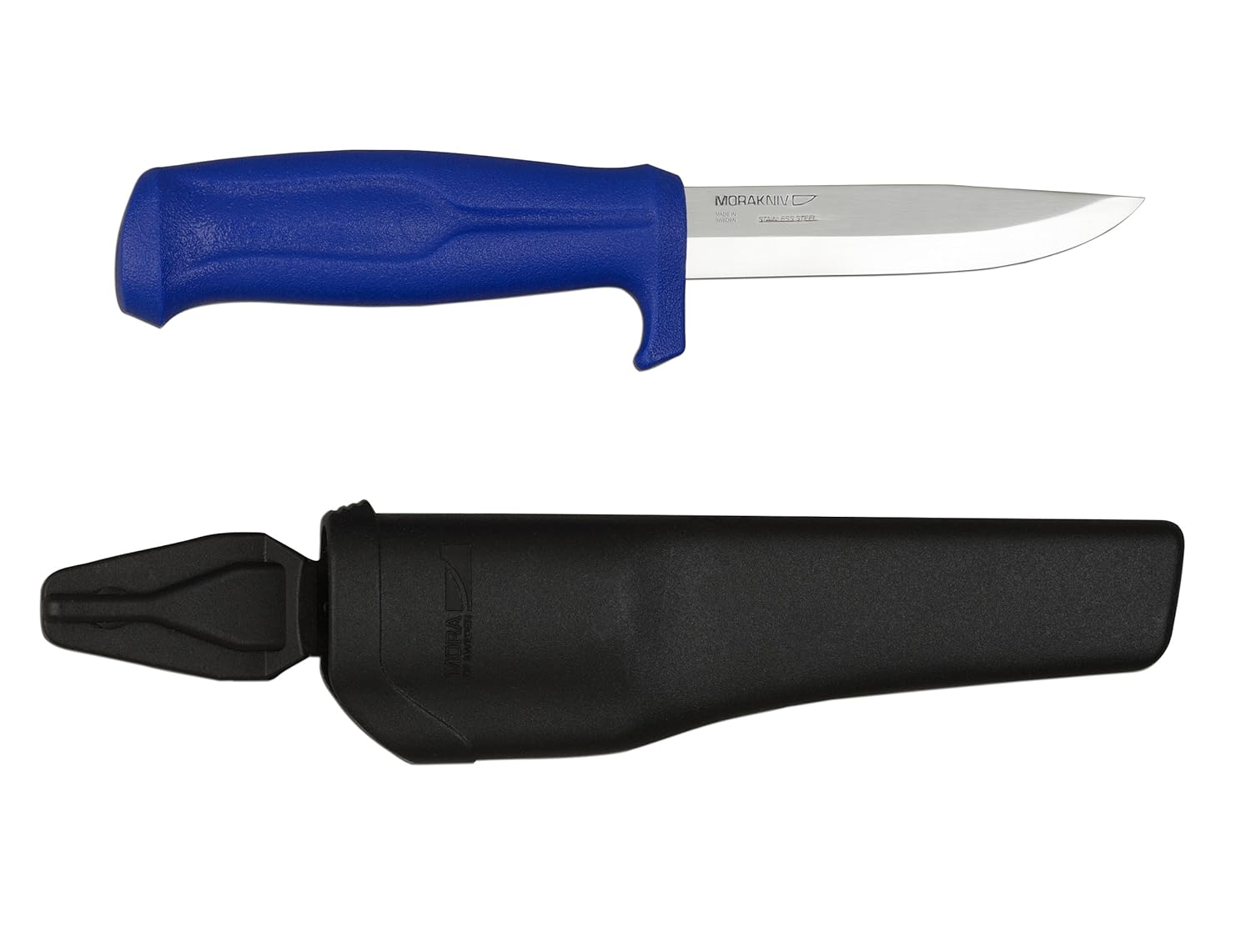
Mora Knife. Every prepper needs a good fixed-blade knife, and Moras are some of the best kept secrets of the knife world -- very sharp, durable, high in quality and ridiculously inexpensive. The carbon steel version holds a sharper edge, but is more prone to rusting, so I recommend the stainless steel version for new preppers or for folks who just want to throw a knife into their bags and not worry about it.

Cold Steel Kukri Machete. It's part machete, it's part cleaver, it's part hatchet. I have used mine to cut down small trees. I've used and abused this blade for six years and it's still going strong, as it's made of incredibly tough steel. It's also very affordable ($20-25). Regardless of which version you get -- regular, Magnum, or Royal -- you will not be disappointed.

EZE-LAP pocket diamond sharpener. If you carry a knife you'll need a way to sharpen it, and this little gadget is both effective and convenient. I've been carrying one in my EDC kit for years.

Speedy Sharp. For when a file just can't fix a really damaged knife, or you need to put a working edge on a seriously blunt piece of metal. Read my review of it here.

Nalgene Tritan Wide Mouth BPA-Free Water Bottle. It holds a quart of water (almost a liter) and is practically unbreakable. (I'm sure dedicated destructoids could find a way.)

GSI Outdoors Glacier Stainless Bottle Cup. It  fits over the bottom of the above Nalgene bottle for maximum space savings.

Water Pasteurization IndicatorYou don't even have to boil water; just pasteurize it instead. Save time and fuel!

Rothco ParacordBasically the duct tape of camping, not only is it very strong rope (the 550 stands for being able to support 550 pounds), you can take out the inner strands and use them for things like dental floss, fishing lines, etc. Replace your shoelaces with paracord and you have a free, weightless prep.

Spool Tool. A handy way to store that paracord, along with other useful tools like a lighter holder and an integrated cutting tool. Read my review here.

Adventure Medical Kits Heatsheets Survival Blanket. It isn't exactly comfortable, but it's light enough to carry anywhere and it'll keep you warm and dry in a pinch. I suggest getting the two-person version, as it's always better to have more blanket for one person than try to fit two under a single-size.

Rothco Shemagh. I talked about this in the second Gun Blog Variety podcast. Get one in military colors and avoid red, red & white, black & white, and if you're in gang country, blue.

Military Surplus Swiss Poncho. Actually, this is properly a rain cape and not a poncho; the difference is that a cape is a fitted garment while a poncho is essentially a rectangle folded in half with a hole cut in the middle for your head. I like this item for three reasons:
  1. Countries in wet Western Europe know how to make proper rain gear that keeps you dry.
  2. You can fasten the snaps around your legs if you want to ride a bicycle (or a horse).
  3. It's large enough to cover a military rucksack and still keep you dry.
Emergency Sleeping Bag. Similar to the mylar rescue blanket, only enclosed so that you don't lose heat to the cold, hard ground. Pair this with the poncho above and you'll make it through any cold and wet situation that doesn't involve snow.

Doan's Magnesium Fire Starter. Make sure it's true magnesium from a reputable source like Doan's, and not a conglomeration of cheap pot metal.

Coughlans 36 Hour Survival Candle. A stable source of flame is damn handy, and this will also give you light to see if it's getting dark. Comes with a book of matches.

4x Magnification Fresnel Lens. While you can start a fire with it, there are easier ways. Instead, just keep this credit card-sized magnifying lens in your pocket/wallet/purse and use it to, well, magnify things. Good for minor first-aid tasks like removing splinters and the like.

Starflash Signal Mirror. Reflective like glass but made of plastic, it's scratch-resistant, aimable, unbreakable (they claim) and it floats. Pair it with...

UST Jetscream Whistle and you have an unbeatable combination for signaling with sound and light.

Eton FRX2 Hand Turbine AM/FM Weather Radio with Smartphone Charger is a flashlight, a radio, and a way to charge electronic devices. Pair it with the Power Practical Fast Charge 3 in 1 Cable and you ought to be able to charge most anything in the field. Read my review of both here and here.

Halo Pocket Power Charger. A lipstick-sized battery that holds a charge for a very long time. Comes with a variety of adapters. Read my review of an older model here.

WaterBOB (Bathtub Oblong Bladder). A single-use water storage and dispenser unit that turns a bathtub into an emergency water source and keeps that water safe from contamination. See my review here.

Solo Stove & Pot and/or Folding Firebox. Both are excellent camp stoves with features that the other lacks. Read my review of them here.


Lokidude Recommends:

Instafire fire starting fuel. Catches a spark easily and can serve as tinder or kindling in a pinch. Read his review here.

CRKT Eat'n Tool XL.
 The ultimate spork. Read his review here

UCO Micro Candle Lantern. A way to turn tea candles into useful camping equipment. Review here

Sparkie Fire Starter. This will get a fire going easily, even use it one-handed. Review here

Esbit Folding StovePut your cup on this stove and you can boil water, then pour the purified water into your bottle. Review here.

Outdoor Element Kodiak Bracelet. Firestarter, tinder and fishing line, all inside a paracord bracelet. Review here.

Gerber MP400 Compact Sport multi-tool. The Gerber version of a Leatherman. Review here.


David Recommends:
Butane Camp Stove. His review stove says "Jinyu" but it appears to be sold under a variety of names, all of which are made in China.

Sawyer Mini Water Filter. Weighs 2 ounces, fits in the palm of your hand, and can filter up to 100,000 gallons of water with proper maintenance. Its big brother can filter up to 1 million gallons. Review here.


Light My Fire Ferro Rod with Whistle. Two important rescue elements in one easy to use package. Review here.

Goal Zero Guide 10 Plus. An excellent solar charger that just happens to be rather expensive. Review here.

Power Pot. Generate electricity via thermocouple while boiling water at the same time. Works on various camp stoves or on hot coals. Review here.


Firehand Recommends:
KT Sports Tape. Some people have called it a placebo, but placebos have been proven to help reduce pain. Either way, it helps with muscle and joint pain. Read the product review here

Cree Ultrafire 7W LED FlashlightIt's 300 Lumens, has an adjustable focus, runs on a single AA battery and costs around $4. What's not to love? Read his review here


Chaplain Tim Recommends:
Nebo Twyst LED Flashlight. It's a flashlight, a work light and a lantern, and it has many useful features. Read his review here

Evelyn Recommends:
Prepping For Women. A book that focuses on the specific health and sanitation needs of female preppers. Read her review here


Friday, March 20, 2015

Normalizing Prepping

& is used with permission.
It's been my experience that a lot of non-preppers look at us like we're crazy... or at least foolish. Since we preppers want to normalize prepping (If everyone is prepared for a disaster, then no one will be hurt or go hungry when one happens!), I asked a non-prepper friend to ask me a handful of questions to help her understand why I do what I do. She agreed, and this is what happened.

What made you specifically get into prepping?

A number of factors:
  1. I live in a state where hurricanes regularly cause evacuations, so prepping for them seems just as natural as wearing my seatbelt when I drive my car. 
  2. When you think about it, everyone preps: Smoke alarms are preps against fire. Car insurance is a prep against an accident. Health insurance is... you get the idea. 
  3. All the men in my family are Eagle Scouts, so it's in my blood. And the Boy Scouts say "Be Prepared" and society looks at the BSA as a good thing, so why is it bad for me to take it to the next level?
  4. It gives me something constructive to do instead of worrying. Proactive preparedness is healthier, both mentally and physically, than reactive worry. 
  5. Besides, it's really cool to have just the tool or medicine or solution that someone needs. It's a rockstar moment for me to go "Hey, don't worry, I have just the thing for that in my bag."

Do you really think all this apocalypse talk is real?

Do I think some folks really believe the world will end? Sure. 

But what I think you're asking is, "Do you believe an apocalypse will happen?" And that invites the question of "Well, that depends on what you mean by an apocalypse." I don't think that there's going to be an ebola pandemic, or that the poles will catastrophically shift. 

However, I do think it's possible that some nasty stuff can happen. An electromagnetic pulse, either caused by the sun or by a rogue nation detonating a nuke in our upper atmosphere, is possible if unlikely. The New Madrid fault could go live and mess up the country's infrastructure. 

There are also some disasters that could happen because they've happened before, and if they do there's really nothing we as a species can do about it:
So yes, I do think an apocalypse is plausible. I don't spend my time worrying about it, though, because 
  1. It's unlikely
  2. If it happens, I'll likely die immediately. 

Where do you think the safest place to go is if there's an emergency?

The safest place to go in an emergency is wherever there isn't an emergency. I know that sounds flippant, but it's true, and that's a very open question. 

A more specific answer requires a more specific question. Sometimes it's best to get out of town (such as with natural disasters); sometimes it's best to shelter in your house (such as with disease or loss of infrastructure.) This is something you'll need to answer on a case by case basis, as you gain experience with prepping.


How are you different than those crazy people I see on TV with their escape routes and underground bunkers?

For starters, I'm not crazy.  I can't speculate as to the TV folks' mental state (Doomsday Preppers is a show that makes everyone look bad), but I can tell you that I've had my background checked multiple times, both at the state and federal level, and nothing jumped out at them to have them say "Hey, this chick is crazy."

I don't think it's crazy to have an escape route, though. Again, I live in a place where natural disasters happen -- back in 1998, the state was so dry that during the summer every county but one (the Keys) was burning from a wildfire. My family and I escaped the fire by knowing where to go. So why is it crazy to have an escape route?

"Underground bunkers."  I have friends in the Great Plains states (Texas, Oklahoma, Kansas, etc) who have underground shelters where they can ride out a tornado and store their survival gear. These locations are called "basements" and are commonly built for houses in that part of the country. 

Now, if you want to make the differentiation between a basement and a $50,000+ bomb shelter for long term habitation -- yeah, that's kinda crazy in the "fiscally irresponsible" sense. But what does it hurt you for them to have one?


Let's say I'm interested in getting started, but on a very small level, like preparing for an emergency situation and not a SHTF kind of thing. What are your top three things you think I should do?

Look at you, using "SHTF" like a prepper!
  1. Realize that emergencies can be personal rather than catastrophic: losing your job, having your house burn down, getting in an accident or contracting a long-term illness can be just as devastating. Get that part of your life in order first. 
  2. Prepare for the most likely disaster first:  an earthquake if you live in California, a hurricane if you live in an Atlantic or Gulf state, a tornado in the midwest, an ice storm in a state with bad winters, etc. 
  3. Read David Blackard's posts on this blog. He started off with having no preps, worked his way up to having 72 hours of supplies, and is now working on longer-term preps. 

I invite any non-prepper reading this blog to ask me further questions; I'm happy to answer them. I also invite my prepper readers to share why they got into prepping. 

The Fine Print


This work is licensed under a Creative Commons Attribution- Noncommercial- No Derivative Works 3.0 License.

Creative Commons License


Erin Palette is a participant in the Amazon Services LLC Associates Program, an affiliate advertising program designed to provide a means for sites to earn advertising fees by advertising and linking to amazon.com.