Showing posts with label Bug Out Bag. Show all posts

Wednesday, March 20, 2024

Guest Post: Tidewe 5500cu External Frame Backpack

by George Groot


George is a member of our Facebook Group and has written for us before.


I’ve written before that military issue rucksacks generally suck for actually hauling lots of stuff long ways. The Infantryman on patrol needs a rucksack that doesn’t increase his overall profile from the front, so military rucks get bigger away from the body rather than packing gear higher and closer. This leads to “rucksack lean,” where you put your shoulders forward to get the weight closer to where your natural center of gravity normally is. Civilian backpacks don’t have that design consideration, so they are generally more “up” than “out” when packing in your kit, which leaves the weight closer to your center, and minimizes the “rucksack lean” quite a bit.

I mentioned in a previous post that for the past few years I've participated in the Mammoth Sniper Challenge, a three-day event in January where there’s a lot of ruck marching, no resupply of anything except water, and you sleep outside. I needed a rucksack that would hold a winter level sleep system, all my food, ammo, shelter, and clothing for three full days. I’ve lived out of a large ALICE pack for long enough to know that it can be done, but it’s not exactly comfortable, so I went looking for an affordable, large capacity, civilian hunting pack. 

A “merely good” external frame rucksack/backpack can cost several hundred dollars, and all of the more affordable options are made overseas, mostly in China. While I ultimately ended up choosing an American-made (and more expensive) ALPS OutdoorZ Commander freighter frame and pack bag, the Tidewe 5500cu (90L) hunting backpack may be a decent option for you given the volume that it can carry and the features that it has. 

https://amzn.to/3TqbU7c


The Good
  • Two main compartments, two zippered side “sustainment pouches”, and two small convenience pouches on the waist belt. 
  • A built-in pack cover for rain, a convenient top flap cover for items you may need to grab quickly, and a center flap pocket (ideal for storing magazines). 
  • A rifle buttstock pocket to strap a full-size rifle to the side of the rucksack. 
  • Cinch straps across the body so you can pull the load tight against the frame, or use the straps to attach items externally.

The Bad
  • The nylon straps are a bit “floppy” and not milspec stiff, which means you will likely need to adjust them more often as they slip, or you’ll need to modify the straps to stay in place. 
    • If you are handy with needle and thread, then modification isn’t a bad thing. 
    • If you are fine with tightening down attachment points when you do a rest stop, there's no need to modify them. 
    • If you aren't fine with either, then this isn't the pack for you. 
https://amzn.to/3TqbU7c


Testing
My initial test with the pack was about a 30 pound load: two tarps, 100 rounds of 9x19, 100 rounds of 7.62x51, a complete Army modular sleep system, a sleeping pad, two days of MREs, a one pound cylinder of propane and burner, wool hat, neck gaiter, a few rifle magazines, and a half gallon of water. I took it on a one hour hike (about 4 miles) and at that weight level it is much more comfortable than either an ALICE or MOLLE military rucksack.

I started off with a light weight because I was in the “condition my feet” level of ruck marching, and needed to get a good set of callouses built up between now and January. Over a span of weeks I increased pack weight and distance until I was able to knock out a 12 miler.

I used this pack for Mammoth Challenge 2023, but for this year I replaced it with the Alps. 

Final Verdict
The Tidewe 5500cu is a decent hunting pack, but not a great rucking/hiking pack. I recommend it for hunters, or for a short  “into the woods” weekend camping trip. If used for long hauls, you'll have to keep tightening the straps that connect the pack to the frame or the whole thing will shift and/or rock on your back and suck the energy out of you.

I do however recommend the Tidewe over a large green ALICE pack, because you can pack the weight closer and higher than the ALICE, making things much less painful on your back and shoulders. 

The Tidewe pack can be removed from the frame so the frame can be used purely as a cargo carrier, for deer/elk or even firewood, that's pretty useful. (My Alps pack has the same feature.) If you just need an external frame backpack for hauling things around short distances, a used one off of eBay or secondhand store is probably going to be more affordable. 

All in all, if you don't have a good hunting pack or hauling frame pack, the Tidewe 5500cu isn't bad for what it is, but honestly I would look for a used Alps or Eberlestock, or another better brand on the used market, over a new Tidewe 5500.

Sunday, February 25, 2024

Guest Post: Titanium at the Mammoth Sniper Challenge

by George Groot


George is a member of our Facebook Group and has written for us before.


In January of 2023 I participated in the Mammoth Sniper Challenge, a three day endurance event where you have to pack everything except water and live out of your pack. This year I used an ALPS OutdoorZ Commander freighter frame and pack bag, stowing an AR-15 in the rifle retention system on the pack and carrying 150 rounds of 5.56x45 and 100 rounds of 9x19 on the opposite side pouch to balance the load. Magazines went in the outer utility pockets. My food, clothes, cooking kit, and pistol went in the upper compartment, my sleeping system went in the bottom compartment, and my sleeping pad was rolled up and strapped to the bottom. 

https://amzn.to/49HtERS

All told, my pack weighed in at 59 lbs at the beginning. I had 2.2 lbs of food per day, with around 3,000-3,500 calories per day. At the end, with most ammunition expended and two days of food gone, my pack was around 45 lbs.

Cooking
I’ve served in the US Army for 25 years, and I have plenty of experience long distance rucking, but I always had the opportunity to make a small cooking fire or to re-supply with MREs at logistics points. Since fires aren't allowed during Mammoth by Fort Eisenhower Range Control, I had to purchase a packable cooking solution. I went to Walmart and picked up this Coleman Peak One butane-propane stove for my cooking needs.

https://amzn.to/3T8kFDH

The good: It works, it’s small, and it is easy to use. It was available at my local Walmart for about $14 when I bought it in 2022.

The bad: It’s 6.7 ounces, or nearly 200 grams. 6.7 ounces feels light in the hand, but I learned the hard way, again, that ounces make pounds, and pounds make pain.

For Mammoth 2024, I used a titanium stove that weighs only 26 grams:

https://amzn.to/3uMZMEW

The good: It works, it’s small and it's light. At $24, its price is competitive with the Peak One whose 2024 price has risen to $22 at Amazon. 

The bad: It’s slightly less efficient at turning fuel into heat than the Coleman, adding about 20 seconds of time to boil one liter of water. My partner for Mammoth picked up the same stove, and neither of us had any issues actually using it throughout the event.

Fuel
Another thing I learned is that I should pack the absolute smallest isobutane canister possible. Since Mammoth only lasts three days, I only really need to cook about seven meals, and even the smallest fuel container can cover boiling water to re-hydrate nine freeze dried camping meals. 

In 2023 I bought the “econo-size”450g canister at Walmart, and I’m still using it multiple campouts later. While it was good value for my money, it was also weight that I didn’t need to carry for three days. This time I bought the absolute smallest canister I could, and it lasted the entire event just fine, and because the location hardly ever drops below 25° F, I chose a pure isobutane fuel instead of an isobutane/propane mix. If you live in an area where it does get colder than the boiling temperature of isobutane, you’ll want an alternate cooking method.

Mess Kit
The second upgrade to my kit was going from two stainless steel cups to a titanium cup and a titanium pot. The 450 ml cup was 20 dollars and comes with a lid...

https://amzn.to/3uNrTnn


... and the 750 ml pot with lid was 18 dollars.  

https://amzn.to/3USdnoT

As you’ll see later, the real upgrade is going to vessels with lids, which makes it easier to cook over a fire without cinders or ash falling back into your food. 

Weight Savings
Between the burner and the two vessels, I’m shaving six ounces off my load.  

Old Stainless Kit: 14.9 ounces (no lids). This “heavy” loadout cost me about $23 because I got the burner on sale and one of the stainless cups from the Goodwill thrift shop for 99 cents. 

Stainless Steel


Pure Titanium Kit: 8.9 ounces, including lids. This new loadout cost about twice as much, for just over half the weight. My partner at Mammoth 2024 used a stainless steel Stanley cup with a plastic nesting cup, and he’s already decided to replicate my Titanium loadout if he competes in Mammoth 2025. 

I also  have two teenagers, one of whom needs his own backpacking setup, so he can get the “heavy” option until something better comes his way.  
 
Pure Titanium

If you're curious, my old stainless kit with a new titanium lightweight burner weighs in at 9.2 ounces, but don't get any lids for the cups, and I have no idea where you can get my bigger cup that I got from Goodwill. 

For me, the weight savings are worth the cost. For those of you who might need a “get home bag” that isn’t carrying a long gun with 150 rounds of ammunition and a  pistol with 75 rounds of ammunition, your weight budget might easily handle a stainless steel cup or pot, or even a 1.7 lb Kelly Kettle. If you plan on “bugging in”, then having a stainless Kelly Kettle at your location is very good at rapidly boiling water.

https://amzn.to/3SUotY8


Recommendations for Blue Collar Preppers
If your “get home bag” doesn’t need to include food prep items, this entire article doesn’t apply.

I am a big fan of stainless steel, as it is affordable and durable, but it's also heavier than aluminum or titanium. I am against cooking in aluminum, as over the long term it can negatively impact health, but if you just need to get from Point A to Point B over a few days rather than a long term thing, I’d have no issue with boiling water in aluminum vessels (the human body routinely cleans out aluminum ions, but too much can overwhelm the system). 
  • If you are really pinching pennies and just need it for insurance in your go bag, or are really trying to cut weight for a short term survival kit such as on an aircraft, aluminum is the best value and weight option. 
  • If you need something to cook with long term, and are pinching pennies, stainless steel is your best choice. 
  • The cost premium is titanium, which is a good long term cooking option that is lighter than stainless steel (but not lighter than aluminum), but the weight savings only really matter if you're going to be walking a lot.
My recommendation is that you get a titanium burner since the cost difference is minimal at best, and stainless steel cups with at least one lid since they cost half that of the titanium equivalent.

https://amzn.to/3UNzWv9

Whichever setup you choose, I highly recommend keeping some black teabags in your kit in a ziplock bag. They weigh just a few grams, and heating up the 750 ml cup in the morning with two Tetley brand tea bags gave me and my partner a hot, caffeinated drink that tasted pretty good. In Mammoth 2023 I used Starbucks Cafe Vita instant coffee packets, but those are expensive, and I honestly think the hot tea was easier on our bodies this year, especially on Saturday when it rained from 0100 until 0900. There's nothing like ruck marching in the rain, soaked to the bone, and when your life really sucks a hot beverage is great, and tea just brews easier than instant coffee (and cleans up easier too).

Additionally, if you search Amazon for “long handled titanium camping spoon” you’ll see quite a few options. I didn’t use one the last two years, but it is now on my purchase plan because when you're rehydrating freeze dried meals, the long handle allows you to stir the food without sticking your hand deep into the bag. 

One final thought: a three day endurance event isn’t a disaster “get home” rehearsal, but it is pretty close to the same level of physical exertion and “outdoor surviving” required to go from point A to point B. I never had to worry about getting clean water (it was provided to us, and I never needed to carry more water than I planned to drink on the ruck march), but you probably will, so bring at least a Sawyer Mini filter or iodine tablets

Friday, February 9, 2024

Some "Must Have" Pack Items

The dust has settled and the First 72 Hours have passed. Follow along as I build a long term plan via Prudent Prepping.

These are some of the things that are really high on my list of "Must Have" items. All of these items are in my Get Home Bag and in the bag Purple Pack Lady has in her car. In no way is this the most thorough, amazing set of items; they're just what fell out of my bag as I was switching out some smashed energy bars, and inspired this article. 

I have previously used a much larger battery storage box, but due to a change of circumstances I've gone back to a much smaller set of boxes for my standard batteries. These fit into any size pouch or side pocket, and I like how the latch is reasonably positive for a simple box. I also like how the colors show up well in low light, and even the clear box is easy to find!

https://amzn.to/3OCh4v2
From the Amazon ad:
  • Package included:4 pcs of battery cases
  • Convenient and intuitive to use, can combine in row
  • Holds either 4 AA or 4 AAA rechargeable batteries
  • Colors: Clear, Pink , Blue, Green
  • Batteries are not included.


One of the first First Aid items I bought to go into my GHB after a basic kit full of band-aids was this handy pouch right here. I've had one in my work gear for several years now, and actually used the gauze and QuikClot once, even though it probably wasn't necessary for how big the cut was.   

https://amzn.to/498WBWS
From the Amazon ad: 
  • Includes QuikClot gauze, trauma pad, triangular bandage, and other key supplies for your trauma kit
  • Nonallergenic QuikClot first aid gauze speeds up natural clotting and stops bleeding within minutes
  • Used by hospitals, EMS/first responders, military, law enforcement, general public & outdoorsman
  • Fits perfectly in any first aid kit, suture kit, medical kit, iFAK pouch, EDC pouch & survival kits
  • Travel safely with QuikClot in your car first aid kit, camping essentials & backpack emergency kit
You can see a more detailed description of contents, and a very nice video showing what is included in the pouch, by following the link to the Amazon listing. 

While this isn't what many would call a starter Individual First Aid Kit, if I were to try buying all these bits and pieces separately they would certainly cost a lot more than the kit itself. I keep one of these and the Adventure Medical pouch above, in my work supplies and another in my motorcycle saddle bags with a mini zip-tie through the pouch top and the kit carry handle to make pulling them out fast and easy. 

As my fellow bloggers have mentioned over the years, North American Rescue makes very high quality equipment that isn't cheap. This leads to a problem when shopping for their gear: counterfeit goods sold with the NAR logo. I was pointed to this website for a nice writeup on how to tell the fake from real NAR tourniquets, but the short answer is "expect to pay no less than $30-$40 for a genuine NAR CAT tourniquet". 

https://www.narescue.com/outdoor-adventure-products/medical-kits/m-fak-mini-first-aid-kit-red.html

   From the website:

  • NAR's most compact, versatile Mini First Aid Kit
  • Contains the First Responder's most requested critical point-of-wounding medical equipment for treating penetrating, blast or other traumatic injuries in the line of duty
  • Super compact, rugged nylon platform that allows attachment both vertically (MOLLE backing) and horizontally (3 in. belt loop)
  • Clam shell configuration utilizes (2) two main sleeves that open on both ends for easy access
  • Multiple elastic loops for secure gear organization
  • Vertical mount can be set to open left-to-right or right-to-left based on shooter preference
  • Horizontal mount on a belt allows opening directly to your C-A-T. tourniquet

Kit Contents:
  • 1 x C-A-T (Combat Application Tourniquet) Orange
  • 1 x 4 in. Flat Responder ETD
  • 1 x NAR Wound Packing Gauze
  • 1 x HyFin Vent Compact Chest Seal, Twin Pack
  • 1 x Pair, Responder Nitrile Gloves, Large
Dimensions:
  • L 6 in. x W 3 in. x D 3 in.
  • Weight: 13 oz

Some Closing Thoughts
Even in the middle of winter it's a good time to go through your gear and see what might be out of date (first aid cream, pain relivers, etc.), what is damaged or broken (my energy bars), and what might need recharging or fresh batteries, like flashlights.

After being reminded by seeing the IFAK, I looked through the paperwork in my wallet and saw that it's time to go back to the Red Cross and re-up my First Aid training. During Covid, no one was doing classes for the general public and a blogger didn't qualify for special treatment. If my work would have certified it was necessary I could have gone, but no such luck.

Stay safe and expect the best, but plan for less that that!

* * *

Just a reminder: if you plan on buying anything through Amazon, please consider using our referral link. When you do, a portion of the sale comes back here to help keep this site running!
 
If you have comments, suggestions or corrections, please post them so we all can learn. And remember, Some Is Always Better Than None!

NOTE: All items tested were purchased by me. No products have been loaned in exchange for a favorable review. Any items sent to me for T&E will be listed as such. Suck it Feds.

Sunday, September 10, 2023

Bug Out Rations

Not actually Erin.
& is used with permission.

When it comes to food for bugging out, there are many options that are nutritious, portable, and shelf-stable. 

I didn't mention "tastes good," did I? That was deliberate. The two biggest problems I have encountered when choosing bug out rations are their palatability and the amount of volume they occupy. This post will be a brief overview of what I believe are the best choices for bug out foods, with more detailed articles coming later. 


Survival Ration Bars

http://amzn.to/2tt3P46

Also known as "lifeboat rations", these are vacuum-sealed packages of bars of... well, I don't know if I'd call them food per se, but they meet Coast Guard standards of life-sustaining nutrition. 
  • The Good News: They have a small form factor; have a five-year shelf life at room temperature or above, as they are designed to be stored in life rafts; and are inexpensive (about $12 for a 3600 Kilocalorie package).

  • The Bad News: Flavors start at "not bad" and get worse; flavors are consistent throughout the package, which can result in appetite fatigue; Kcal ratings are based on being sedentary and waiting for rescue (1200 Kcals per day for three days) and not being active -- activity will double your calorie requirements. 
Chaplain Tim wrote an excellent series on survival ration bars on this blog, and since I agree with his assessments I feel no need to duplicate his efforts. Please go read his posts to learn more. 


Meals, Ready to Eat (MRE)

https://www.mreinfo.com/mres/#

If you're a prepper, you know what these are and likely have eaten at least one. If you haven't, these are high-calorie single meals with a lunch/dinner menu; I believe that at one point there was an omelet MRE and it was... not good. In fact, the flavor profile of MRE is such that they have been dubbed Meals Rejected by Everyone, although they do continue to improve over the years.
  • The Good News: They come in a tough, watertight bag which protects the food from pests and weather; they stay good for at least 3.5 years when stored at room temperature; they are designed to provide an infantryman enough calories to fight; they are reasonably affordable at around $20 per meal

  • The Bad News: Food taste and texture can be hit or miss; high amounts of protein and sodium in meals can result in dehydration and constipation if you don't drink enough water; at an average weight of 22 ounces and dimensions of 12"x8"x3", each meal is larger than an average hardcover book and nearly twice as heavy; breaking down an MRE into smaller elements greatly reduces its longevity. 

Humanitarian Daily Rations (HDR)

https://www.mreinfo.com/other-us-rations/current-us-rations/humanitarian-daily-ration/

Not many people have heard of Humanitarian Daily Rations; the short version is that they are "like MREs, but for civilians" and are handed out at disasters or given to natives as a show of goodwill. Unlike MREs, HDRs provide a full day's worth of meals for an adult. Also unlike MREs, they are strictly vegetarian, although they are not vegan. Per mreinfo.com, "In order to provide the widest possible acceptance from the variety of potential consumers with diverse religious and dietary restrictions from around the world, the HDR contains no animal products or animal by-products, except that minimal amounts of dairy products are permitted. Alcohol and alcohol based ingredients are also banned."

I have not yet eaten one of these, but a friend of mine has, and I will include his review in the expanded article on HDRs. 
  • The Good News: They contain an entire day's worth of food; they are less expensive than MREs (about $10 per HDR); their packaging is comparable to  that of MREs, so shelf stability and impermeability is similar; they are designed to appeal to as wide a demographic as possible. 

  • The Bad News: Their taste is similar to MREs; vegetarian but not vegan is likely to make everyone unhappy; lack of animal proteins may result in lack of energy in high-activity situations; there is no chemical heater like MREs have. 

First Strike Rations (FSR)

https://en.wikipedia.org/wiki/First_Strike_Ration

First Strike Rations are relatively new, having been invented after the onset of the Second Gulf War. True to their name, they are a lightweight, high-calorie meal system that is meant to be carried by soldiers and Marines during the initial stages of war when odds are high that they will be beyond the reach of resupply for days. Because of this, the FSR is meant to be eaten by hand (although a spoon is supplied for convenience) and do not need heating to be palatable; pocket sandwiches, energy bars, and other finger foods predominate. Unlike MREs, they carry a full day's supply of food, including snacks and caffeine in various forms, and despite all this are approximately half the weight and dimension of the three MREs it would take to match its nutrition. 

There will be a greater review on FSRs, but I want to say that they have been an absolute game-changer for me when it comes to packing BOBs and GHBs. Furthermore, they taste good. I opened one at my LibertyCon demonstration to show its contents and I ate it on the way home the next day. While I wouldn't call it great cuisine, I enjoyed the taste of every component within the ration pack; at worst, it reminded me of a packed school lunch, and at best it was similar to tasty fast food. 
  • The Good News: A full day's worth of food in a package slightly larger than a single MRE; easy to eat on the move / one-handed; plenty of snacks, goodies, and caffeine; the food tastes good.

  • The Bad News: If you want a hot meal you will be disappointed, as heating  pocket sandwiches doesn't do much and hot applesauce is disgusting; the lighter-weight packaging which reduces weight and volume also cuts the shelf life; an individual FSR costs about $30-$35; buying a case of 9 gives you a better per-unit cost (sometimes as low as $15 each) but the case costs over $130. 


Which of the three-letter ration packs (MRE, HDR, FSR) would you like to see reviewed first?

Sunday, July 2, 2023

BOB Ergonomics

Not actually Erin.
& is used with permission.

The biggest problem I have with creating a Bug Out or Get Home Bag isn't assembling it, but rather with its ergonomics. I want to be able to retrieve quickly and easily things that I will use often, such as insect repellant or sunscreen. Things which I will not need often, such as my tent, can then be packed deep in my bag and not be as easy to retrieve. 

Such extremes are obvious, but things become more complicated as I progress to the middle. A simple choice is trauma gear, like a pressure bandage and tourniquet; while I hope I will never need to use them at all, let alone repeatedly, but if I need them I will need them right now and therefore they must be quickly and easily accessible. Unfortunately, they are also bulky and take up a fair bit of space, which means that I don't have room for all the things which I would like to have handy. This is why I say that ergonomics is my biggest problem; when I am working with a BOB/GHB, I end up playing a mental game of "How often will I need this?"

As a case in point, let us consider toilet paper. You'd think that when you need to go, you need to go right now, and that may be true for people with sensitive bladders or tricky bowels. For me, right now at least, I'm not at that stage; I typically have a window of five minutes or more between "I think I need to use the toilet" and "I AM GOING TO EXPLODE." Combine that with the knowledge that I will need to take off my pack before I do my business in the bushes and that means I can safely put the toilet paper in the less-accessible parts of the pack, because I will be stopping for several minutes. 

Ah, but on the other hand I have allergies, and that can mean runny nose and watery eyes, and I will need some kind of tissue to help with that! So do I keep the TP in the quick access area for allergy purposes? Or do I pack some Kleenex or similar to help with that and keep the TP elsewhere? This is the sort of conundrum which perplexes me. 

This is what is going through my head these days as I rebuild my BOB and my GHB, which I took pieces from in order to build a demonstration "jack of all trades BOB" for my presentation at LibertyCon last weekend. In my experience, it's always harder to make a generalized pack than a specialized one, because specialist packs can rule out certain conditions which generalist packs cannot. For example, because I live in central Florida where it maybe flirts with freezing about one week out of the year, I can get by with three-season gear, whereas those of you who live in states with actual winters cannot. An urban GHB will have little need for water purification, as municipal water treatment should have eliminated giardia and cryptosporidium by the time it's reached the city; a more pressing need will be getting to that water, so a sillcock key is highly recommended to activate publicly accessible faucets. A rural GHB will be the exact opposite, with few locked faucets but likely lots of flowing (or standing) water of questionable cleanliness. 

https://amzn.to/3NzTYEe

... that was certainly a digression! Getting back on topic, I needed to steal from my BOB and my GHB in order to build a demonstration BOB that could do anything. Now that I'm back home (and mostly recovered from whatever con crud I picked up) I won't be happy until I have at least one of my bags reconstituted. You'd think that would be easy, but it isn't, because putting a bag back together forces me to re-examine my thinking regarding bag ergonomics. This slows me down a great deal; the only real comfort I have is knowing that each time I rebuild a bag, it's better than it was before, because each new version benefits from the wisdom of previous iterations. 

Speaking of wisdom, if you ever think you absolutely have command of a subject, prepare to teach a class or give a presentation on that subject. I guarantee you that you will think of questions (and problems!) you'd never before considered, as the act of explaining the subject to another person forces the mind down new paths. I am a better prepper for having taught my class, as the act of explaining my reasoning for things caused me to confront certain assumptions I'd made which I hadn't noticed while thinking quietly to myself. 

So, to summarize:
  • Generalist BOBs/GHBs are bigger and heavier than specialist. 
  • Tearing down and rebuilding your bag will result in a better bag. 
  • If you think you know your stuff, teach a course to realize all the things you don't know. 

Wednesday, December 21, 2022

Rucksack Night Walking

Not actually Erin.
& is used with permission.
Now that it's become pleasantly cool here in Florida, I've been taking nighttime walks around the neighborhood loop with my camping rucksack. 

As I mentioned back in April, my Bug Out Bag had become too heavy to carry without back pain, and I needed to slim it down. To that end, I tore everything out and rebuilt it from the ground up with the philosophy of "a pack suitable for a three-day camping trip is also a 72-hour BOB". I then supplemented it sparingly with some items that would be useful in a longer-term emergency. 

I think it's safe to say that I've gotten most of the kinks worked out of this bag, and I can carry it without either pain or difficulty. I'm now able to walk the full loop, 1.1 miles, without back pain or getting out of breath. My stamina still needs work because my goal is to be able to do two full miles -- well, 2.2 in reality, because that's two full loops -- and by the time I finish the first loop I'm exhausted and ready for a shower and bed. Still, this is progress that I'm quite proud of, and I know that if I just keep at it I will eventually reach my goal. 

Last night really wore me out, though. I was wearing hiking boots rather than my usual sneakers because it had rained earlier, and they weigh slightly more than I'm used to having on my feet. Around the 3/4ths mark of the walk my feet felt like they were weighed down with sandbags, and I had to concentrate on putting one foot in front of the other. My new rule is that I either walk in boots or with my rucksack, but not both until I'm stronger. 

For those who want to know more about my current 72 hour bag / camping rucksack, it's a High Sierra Long Trail 90L. 


Specs:
  • 90-liter, expedition-sized backpack with extra cargo capacity.
  • Top-load main compartment with gusseted drawstring closure and adjustable top lid.
  • Drop-bottom sleeping bag compartment with divider.
  • ERGO-FIT shoulder harness, constructed with HEX-VENT mesh and foam padding.
  • Dual, contoured aluminum frame bars
  • Molded foam back panel with AIRFLOW channels.
  • Waist belt, with HEX-VENT mesh and high-density foam padding.
  • Side and bottom compression straps.
  • Internal hydration reservoir sleeve and dual exit ports for tube.
  • Front access to the main compartment.
  • Adjustable sternum strap.
  • Webbing daisy chain for attaching other gear.
  • Soft lashing hardware.
  • Mesh pockets hold water bottles.
  • Tuck-away rain cover also protects pack when checked for air travel.
  • Capacity - 5500 cu. in.
  • Weight: 6.91 lbs.

I'll tell you more about my new boots in another post, once I have a bit more experience with walking in them. 

Sunday, September 4, 2022

Odds and Sods

Not actually Erin.
& is used with permission.
David Blackard calls these "Buffet Posts": articles which are just collections of topics that by themselves aren't enough to warrant a full post. Throw enough of them together and what you get is something that's at least filling and hopefully tasty.

National Preparedness Month
September is, you guessed it, National Preparedness Month according to Congress and FEMA. I don't normally think to mention it, because to me and to most of our readers Emergency Preparedness is something we think about all the time, not just once a year. However, not everyone does that, which is why prepper are seen as odd sorts... at least until disaster strikes. 

The resources on the site are pretty sparse as far you or I are concerned. But it's a good source of entry-level information for family and friends who are new to prepping, especially for those who think it's paranoid to prepare for emergencies. You can point at this website and say "Look, even the government says we should be prepared!"

Aches and Pains
I'm at that age now where I just wake up with spontaneous pains in various muscles and joints, and from what I can tell it seems like that's only going to get worse until I die. To that end I have added the following over-the-counter remedies to my preps, including my Get Home and Bug Out Bags, and I recommend you do the same if you're over 40 or prone to similar discomfort. 

Voltaren is a topical NSAID pain reliever that until a few years ago was prescription only, and now can be bought in generic form as Diclofenac. While it can be used for most aches, I find that it works best on joints -- which is no surprise, as it was originally prescribed for arthritis pain. 

For muscle soreness, I recommend Tiger Balm. It's your typical hot-then-cold pungent ointment that penetrates deeply and lasts for a long time, and it comes in a compact little jar because a little goes a long way. Just be sure to wash your hands thoroughly, because you definitely don't want this stuff in your eyes, nose, mouth, or crotch. It's greasy (which accounts for its stickiness and staying power) so scrub well. 

Know When to Get Out
This last entry is a bit fast and loose with our "no politics" policy. I instituted that policy because I don't want this blog to be taken over by partisan shouting matches that aren't relevant to our mission. However, I feel that this rule can be skipped when talking about other countries, especially when there is a very important point to be made involving evacuation from a country that turns hostile towards you. 

The following videos were made by an American who lived in China from 2008 to 2018, and they explain his concern over the growing hatred towards foreigners and increased police interest in him during that time, culminating with him fleeing the country and then his family joining him. Politically speaking, it is anti-Chinese government (but categorically NOT anti-Chinese people), but if I'm being perfectly honest I don't think I have many pro-CCP people reading this blog anyway, and even if I did, they aren't my target audience anyway. 

This first video sets the premise for the others. I was amused at the beginning where he described everything he loved about close, crowded urban life in China, and I thought "That sounds horrible" and then he talks about visiting his parents in a small town and I thought "That sounds lovely," so there's clearly a difference in values at the start. His opinion changes towards the end, however, and it reminds me very much of people who start off thinking preppers are paranoid and then being very happy for their preparations when disaster finally strikes. 


This second video explains why he felt he needed to leave, and why it had to be immediately. I will confess that this reminded me, far too much to be comfortable, of the stories my father told me of escaping the Nazis in 1942 by fleeing Austria for the safety of America. 

It's important to note that he posted this video two years after escaping China, probably to protect those who helped him get out. 


As you would expect, the next video is how his Chinese wife and child escaped and were reunited with him.


This final video shows that it's a good thing he got out when he did.


I know this is close to an hour of videos to watch, but I think there's important information here. Break them up and watch a video with your morning coffee over the next four days, if you can't watch them all at once, or do what I do and listen to them while doing household chores. The important thing is that you watch them and learn from them, especially if you live abroad. 


I hope you enjoyed this "buffet" of posts; hopefully I'll have more coherent content for you next week. 

Sunday, August 21, 2022

Which Way is the Wind Blowing?

The dust has settled and the First 72 Hours have passed. Follow along as I build a long term plan via Prudent Prepping. 

Summer is ending, schools are opening in many places, and before you know it Halloween decorations will be on display. With Fall rapidly approaching, change is on everyone's mind. 

Bag Up, Sack Up, and Be Ready
When I see non-preppers posting articles to their blogs that talk about building Bug Out Bags, I feel like it may be time to check my own gear because of the direction the winds of change are blowing. Relatively mainstream people are now waking up to the idea of being prepared for disasters of any kind. 

The part that is funny to me about the normalization of prepping -- odd funny, not "haha" funny -- is how many people once laughed at the idea of planning for a disaster when they heard I write at a prepping blog. However, just last week a man I've known for six years contacted me for information about gear and equipment and the companies who carry them. I was surprised that he even knew  they existed! 

All of you should know this info by now and could, with a little thought, make a similar list for a neighbor or a friend in no time at all. Please take the time to be a good example and reference source for family and those around you. With the fires here in the West and various storms hitting the rest of the country, I'm hoping this could be the chance to help a friend be set for a disaster.

Dealing With Protests
We're also heading into election season, and with that come protests and demonstrations. Don't worry, I won't get political here; I'm just pointing out that these kind of situations can get bad quickly. 

There are several books written by experienced folks who have either been law enforcement, been caught in riots or both, in the case of Greg Ellefritz. His blog, Active Response Training, has an amazing amount of information on a wide variety of topics, including getting out of riots. 

In his book Choose Adventure: Safe Travel in Dangerous Places, Greg wrote a chapter about being in South American disturbances. From reading the book, it seems to me that mobs and other large collections of people will act similarly no matter what nationality.


Here is an excerpt from the chapter titled "Surviving Third World Riots and Political Demonstrations":

"The more dangerous situations are the riots or mob violence situations that seem to pop up without warning.  The best advice I can give you is to pay attention to your surroundings and have an escape plan for every location you visit.  When you see things starting to go bad (massing police, masked looters, people setting fires), GET OUT!  Implement your escape plan. Don’t stick around and become a target for police batons, gangs of teen looters, or panicked crowds. Usually the people who get hurt or killed in these events are the people who aren’t paying attention or who want to stand around and be a spectator.

If you accidentally happen upon looters, rioters, or large political demonstrations, walk away by the most direct route possible that allows you to avoid the unpredictable crowd. Don’t run; that only draws unwanted attention from the rioting crowd. Just walk quickly, avoiding eye contact or any interaction with the rioters. As you walk, keep an eye out for places of sanctuary you may be able to use to escape the violence for a short period of time until the crowd passes.  Fighting against the crowd will be difficult. Think of crossing a river, it’s easier if you don’t fight the current. It’s the same way with crowds. If you get surrounded by a group, move with the group as you work your way to the edge of the crowd or to your pre-planned escape route or sanctuary location."

Do you see the part about "your pre-planned escape route"? This is the same thing as always knowing where the closest exit is when shopping, and having a designated rally point wherever you go. I've written about being in a building fire and not having supplies or a discussion about meeting up in an emergency with my friends. This is not the same as a riot, but planning a meeting spot is simple and is a good habit to start.

The truly important part about demonstrations in the USA is that there are news reports on who is holding it and where and when it us, usually several days to a week in advance. If you live anywhere close to a known demonstration zone like I do, then do like I do and tune the  radio to the local "all news station" and do your best to be nowhere close to those spots whenever demonstrations are planned.

Recap And Takeaway
  • While it should be common sense to plan for a disaster, far too many people don't. Be a good example and share what you know.
  • If you don't have a Bug Out Bag or Get Home Bag, put one together. Search the blog for "Bug Out Bags" or "Get Home Bags" and you will find many different versions and sizes.
  • It's always best to have a plan that gets changed in the face of Reality, than to have no plan and let Reality bite you in the butt. 
* * *

Just a reminder: if you plan on buying anything through Amazon, please consider using our referral link. When you do, a portion of the sale comes back here to help keep this site running!

If you have comments, suggestions or corrections, please post them so we all can learn. And remember, Some Is Always Better Than None!

NOTE: All items tested were purchased by me. No products have been loaned in exchange for a favorable review. Any items sent to me for T&E will be listed as such. Suck it Feds.

Thursday, August 18, 2022

Bug Out Foot Care

Not actually Erin.
& is used with permission.
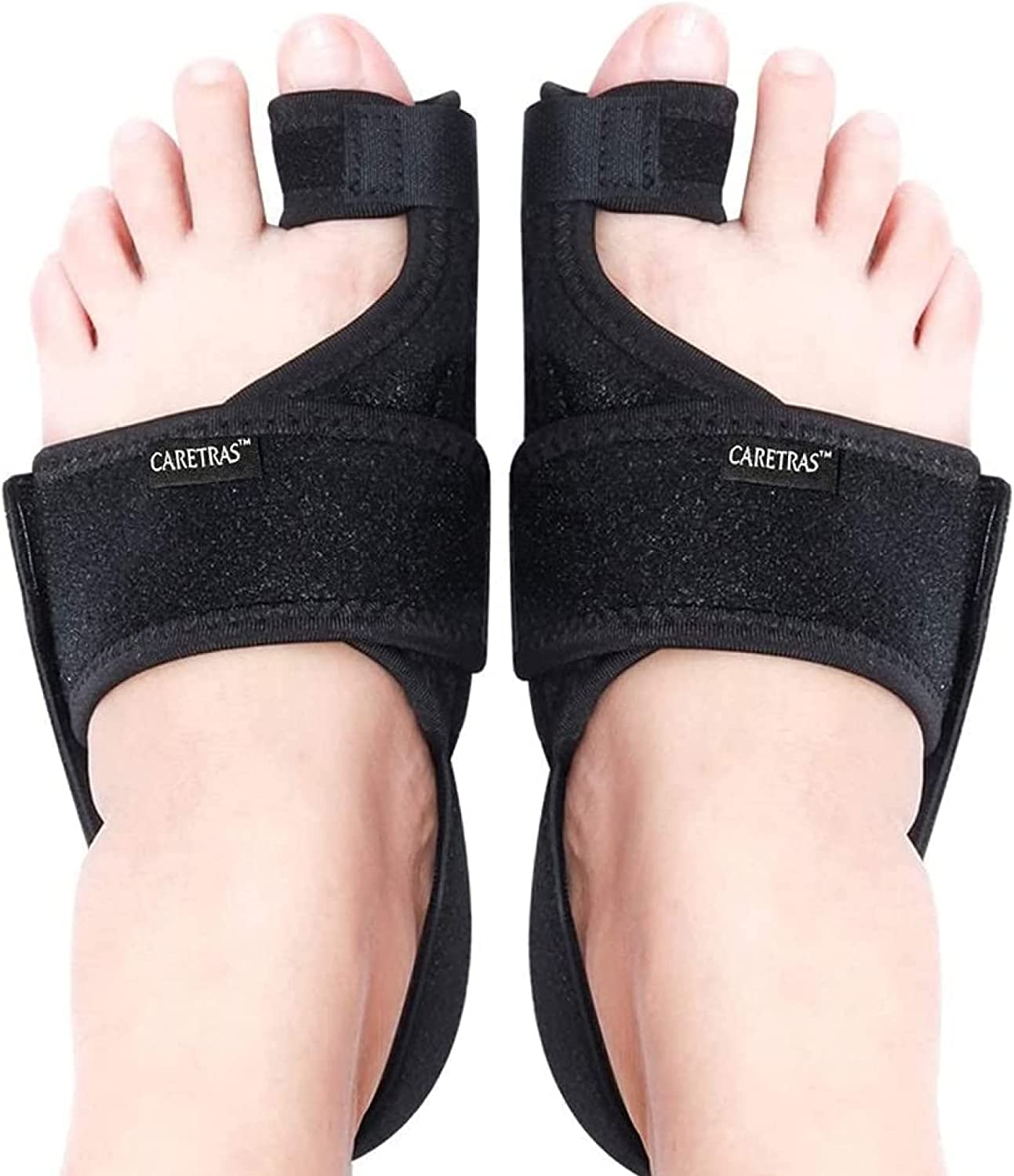
Ever since adolescence I've had an annoying tendency to roll my ankle, and recently my right big toe has been acting in an uncomfortable bunion-like manner. While painful, neither of these conditions are debilitating... at home. In an emergency situation, though, either of these could slow me down enough that it could mean the difference between being rescued and being stranded. I have added the following items to my Get Home Bag in order to prevent just such a thing happening. 


https://amzn.to/3K4UNCI

This is my solution to a rolled ankle. It's breathable, doesn't slip, gives a comfortable amount of snug support, and I can even walk with it on.

Yes, I could probably achieve the same effect with an Ace Bandage, but this is faster and easier to put on, and much easier to adjust than an Ace -- and besides, this allows me to save my Ace for something else. At $6.64, it's also cheaper than an Ace. 

Pair it with a SAM Splint and you have a handy solution to a host of ankle injuries. I have two, one for each ankle, just in case. 


https://amzn.to/3whstHI

While it's possible to walk with these on, given that it effectively immobilizes the big toe by splinting it along the side of the foot, such movement is awkward at best. Hobbling between rooms of my house is one thing, but I wouldn't want -- nor do I think I would be able -- to hike with it. 

Fortunately for me, I don't have to. I've caught my bunion in time, so it's neither particularly bad nor does it hurt all the time; instead, it mainly flares up when I've been wearing shoes with a narrow toebox, and a few hours with the bunion corrector on serves to drag my to back into alignment. In a bug out or get home emergency, I would put this on only right before bed, and I'd sleep with it on to get maximum effect from it before taking it off in the morning. 

Other Footcare Items
While the above are for my specific foot problems, there are some preps which everyone should have in their GHB and BOB:

Take care of your feet now, and they'll take care of you when you need them most. 

The Fine Print


This work is licensed under a Creative Commons Attribution- Noncommercial- No Derivative Works 3.0 License.

Creative Commons License


Erin Palette is a participant in the Amazon Services LLC Associates Program, an affiliate advertising program designed to provide a means for sites to earn advertising fees by advertising and linking to amazon.com.