Showing posts with label Useful Idiot. Show all posts

Tuesday, May 30, 2023

Data Recovery

Not actually Erin.
& is used with permission.

Dear readers, if you can't recall the last time you backed up your computer, do it now. (Ask me how I know this.)

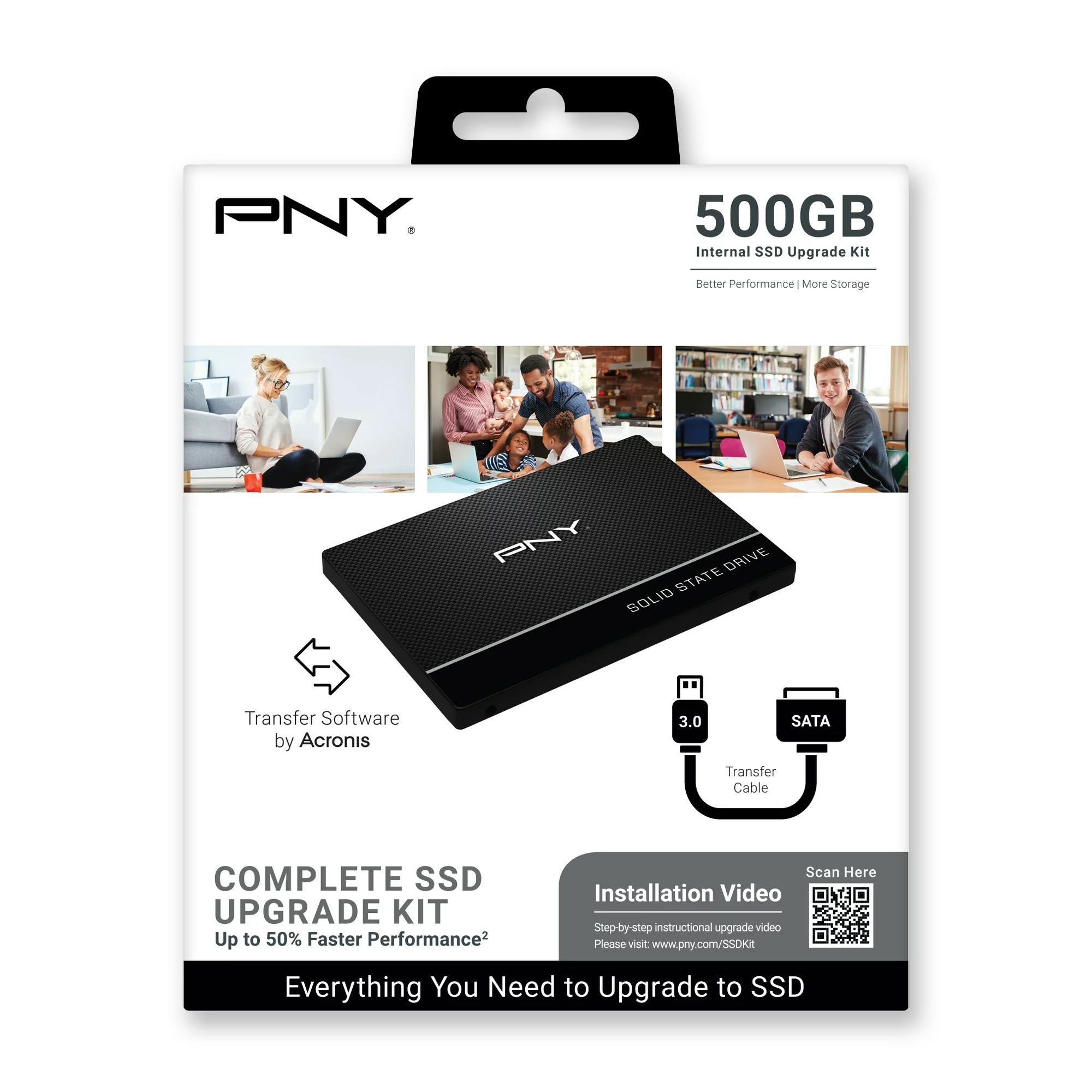
If you've never backed up your computer before, or don't have the hardware to do it, I suggest you go to Walmart and get the PNY Complete SSD Upgrade Kit in either 500 Gb or 1 Tb, depending on the size of your computer's main hard drive, and clone your drive. The bundled Acronis True Image software is almost criminally easy to use:
  1. Download and install the software, using the registration number included in the kit. 
  2. Plug the cable into the SSD and then into your computer's USB port. 
  3. Run the software. 

https://www.walmart.com/ip/PNY-500GB-2-5-SATA-III-SSD-Upgrade-Kit-with-Transfer-Cable-and-Software/172976564

It is that easy. The software handles everything else for you, including the incredibly annoying disk partitioning (and if you've never had to do that, consider yourself lucky), and when it's done you have a bootable solid state drive that contains a perfect copy of your original drive in about 2-3 hours. Once you get it started you can let it do its business as you go on about yours (just so long as your computer doesn't go into hibernation while you're away). 

SSD vs. HDD: What are they?
Put simply, a Hard Disk Drive (HDD) is mechanical, with a motor that spins the hard disk to read and write data. A Solid State Drive (SSD) is purely electronic in operation, much like a thumb drive. Because it has no moving parts it is faster, more forgiving of movement while operating, and hopefully lasts longer than an HDD. 

Unfortunately, I hadn't backed up the HDD of my computer since I bought it in November 2020. Now in my defense, I had frequently backed up the data I had by copying that data to other drives, but I neglected to back up Windows itself. This oversight came back to bite me last weekend when my computer slowed to a crawl and then refused to boot. 

One new computer later (it cost about as much as a new pistol... sigh), I plugged the old HDD into to new computer and while Windows saw the old drive, it wouldn't let me access it due to, and I quote, "The disk structure is corrupted and unreadable."

The good news in all this is that Windows was able to see the drive, which meant it could be accessed with the proper program. In this case that program is the EaseUS Data Recovery Wizard Pro, which can be downloaded for free to see if the program works. It did, so I shelled out the $70 year-long license (ouch) and set about recovering my data. 

The process was long, because it scanned my drive three times using different recovery methods to maximize the chance of recovery. This triples the amount of data I have to sift through, and since I had nearly 1Tb of data on that drive, that means I have nearly 3Tb of data to sort through. Fortunately there were things which I could ignore, such as the entire OS and all the data I knew I'd backed up (such as my folder of mp3 music). This still left me with a lot to sift through, and not a lot of free time for that sort of thing. 

At this point I've reinstalled all the programs I had (except for maybe a couple of games), and the only data which I haven't been able to recover is copied onto a thumb drive I have around here... somewhere... and hopefully I'll find that before I need it. I've copied the pictures and documents from the old drive to my new one (which I now keep backed up with my PNY) and will sort through those whenever I have a spare moment. The misbehaving HDD will be kept for a while, just in case I remember something I needed which I didn't copy over, and hopefully it will still work at that time. My thinking here is that if I can't remember something I had on the old drive within the next month or so, I probably didn't need it, and so when the drive finally dies I will either have gotten everything from it that I wanted or decided that whatever is left isn't worth the effort to recover. 

By the way, if you don't own something like this SATA IDE to USB 3.0 Adapter, you should get it. I've found it incredibly useful lately; not only does it run the old HDD for recovery operations, but I also use it to power my formerly-internal-but-now-external DVD drive because this new computer didn't have space to mount said DVD drive. 
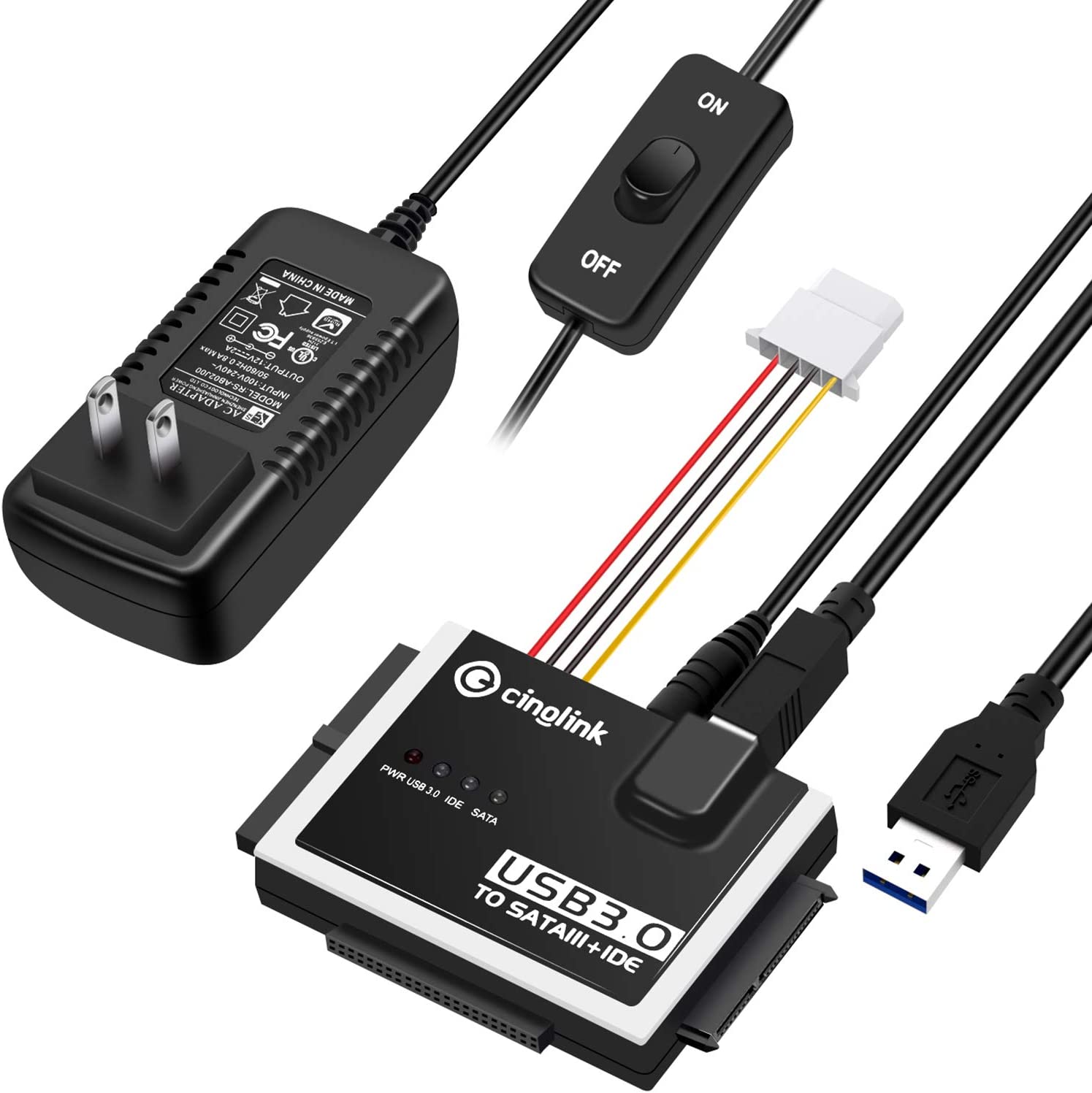
https://amzn.to/42dLjwy

Please, don't be foolish like I was. Let my pain be a lesson to you all, and back up your OS. It's far better to pay tens of dollars now to clone your drive than to lose that drive and spend hundreds of dollars getting a new computer*.


* I couldn't just reinstall the OS with a new drive because my old computer did not come with a copy of Windows on CD-ROM. Furthermore, the old computer ran Windows 10, which I couldn't find in stores, and lacked the ability to run Windows 11. So my choices were "Spend money to get up and running now, so that I can do my job" or "Try to find what I need online, wait for them to arrive, and hope like heck I can get it to work". I may have made a foolish decision, but I'm not convinced I made the wrong one; the true foolishness was in not backing up my OS. 

Besides, this new computer is very nice and I'm quite happy with it. Which is good, considering what it cost. 

Saturday, November 21, 2015

Situational Awareness is a Two-Edged Sword

Not actually Erin.
& is used with permission.
It's been a week since the Paris attacks and my mind is still fixated on them. I cannot think of anything else, prepping-wise, to talk about. Unfortunately for me, most of the important things have already been said by others and I'm not sure what else I can bring to the conversation.

Chaplain Tim, who lived through a riot in Germany, spoke about how to prepare for and protect yourself from mass violence in cities in last Friday's post. On Monday, Bearing Arms wrote an article titled "Ten Ways to Avoid Being killed During a Terrorist Attack". The entire event has been analyzed and dissected from multiple perspectives.

And for the life of me, the one thing that I cannot get out of my head are the conflicting notions of "Stay away from crowds, you're vulnerable there" and "If I stop doing the things I want to do because there are other people there which might make a good target, then my actions are being dictated by fear which means that terrorism has already won."

If we don't want terror to win, then we need to continue living our lives as we normally would -- but that leaves us vulnerable to people who terrorize us because we haven't taken precautions.

As preppers, we have a certain advantage in that we normally live our lives at least aware of the possibility of trouble and with an idea of how we'd react to it. We are fortunate that situational awareness is a way of life for us... but unfortunate in that it keeps nagging at us.

Example: Let's say that I live in a city that is famous for having tourists from all over the world, and that I am eagerly awaiting the new Star Wars film. Do I:
  1. Not go see the film until well after opening day (and risk having key parts of the movie spoiled before I see it), because the risk is too great?
  2. Avoid large crowds by skipping the nice theaters with digital projection/IMAX/3-D and instead go to smaller theaters where presentation is merely average?
  3. Say "screw it!" and go anyway, and try to enjoy myself as much as possible -- which means being completely enraptured by the event and letting my guard down?
  4. Go to the movie, but maintain situational awareness -- which means watching people as they enter/leave the theater, being alert for unusual sounds or smells, and generally not paying attention to the movie I just paid to watch?
  5. Give up on watching the movie in the theater and see it on DVD months later?
To be honest, none of these appeal to me. I'm not even sure if there is a right answer here; it's all a question of how much risk a person wants to take, and that's something which must be decided individually. 

I'll tell you this much, though:  if I do decide to see the new Star Wars movie, I'm going to do it armed, and I'm going to go see it with a group of people who I know have my back. 

Stay safe, everyone.

Thursday, November 12, 2015

A List of Lists

Prepping is becoming more popular, and as a result more and more people are publishing their ideas of what supplies and skills are needed. We do some of that here, but I wanted to share some of the other offerings that are out there. I'm not supporting (or supported by) any of these sites; I just want to share some of the other opinions that are out there. I thought about ranking them by the level of “urgency” expressed on the site, but decided to leave it like a chocolate assortment - a surprise in every bite. I will give a few hints, though.
  1. Prepper's Checklist - 12 pages long and quite detailed. A lot of doom-and-gloom on the webpage, though.
  2. Doomsday Prepping Checklist -  A simple list, all on a single web page. No ads and pretty straight forward.
  3. The Prepper Journal - Lots of ads, some good information, more ads.
  4. The Survivalist Blog - Has an annoying pop-up with a hidden “close” button that covers the page. Full of basic information, but not all of it is good.
  5. Disaster Preparedness Checklist - A simple list put together by a survivor of the tsunami in Japan. Has a very basic list of storage foods.
  6. Preparation Checklist - I like the way this page works. The lists are broken down by category with a separate page for each list.
  7. Ready.Gov - The same government that will call you a hoarder after the disaster, tells you what to hoard before said disaster. 
  8. FEMA Emergency Supply List - Another government agency that gives you a list of preparations.
  9. The Power Hour - One of many lists of the top 100 things to disappear after a disaster. I haven't found one yet that ranks them by type of disaster.
  10. American Prepper's Network - I generally want to like APN, but their pop-ups and ads annoy me. Networking can be useful, but keep your OPSEC skills handy.
  11. American Red Cross - The Red Cross is mainly first-aid based, but they have some good information for general survival.
  12. Disaster Plan Checklist - The lay-out reminds me of the old days of the internet: simple typewriter font and no ads. Good information, well organized.
  13. Family Survivors - This one earns its place as unlucky number 13. This is how not to write a list... unless you're a salesman.
  14. Survival Goods - A list of things to prepare for, in case you need more things to worry about.
  15. CNN Money - How to spend over $100,000 and fail. What else would you expect from CNN?
  16. CDEMA (Caribbean Disaster Emergency Management Agency) - A nice list from a group that deals with hurricanes every year. They can speak from experience, so I trust them.

That's a few of the hundreds that are out there. Most of them are nothing but ads for one vendor or another, so the information is suspect.

Like anything else in life, take what you think you can use from these lists and make one of your own. Nobody but you is going to know what exactly you are going to need in an emergency.

Friday, May 8, 2015

Revisiting my GHB: First Aid

& is used with permission.
I've been thinking about first aid kits lately, partially because I cut myself last week and partially because I had my Get Home Bag graded by someone when I was in Nashville last month for the NRA Annual Meeting.

How did I do? Not very well, according to him -- I was carrying too much stuff and I needed to re-think the layout of my bag.

Now, I disagree with the grade he gave me, mainly because he was thinking in a military/tactical sense and that's not my main purpose with this bag. I'm not going to be marching 3 days to a battle -- it's a combination "Crap, I need to spend the night here" and "Well, it looks like I'm walking home" bag that is reinforced with general prepper stuff like a first-aid kit and the like.

I will admit that it's likely too heavy. If I'm being honest, I'd rather have too much stuff than too little; I can always ditch items to lighten the load but I can't pull fresh equipment out of thin air. But yes, I have a tendency to over-pack and over-prepare.

However, I completely agree with some of the things he said. They were things I hadn't thought about, or hadn't realized, but when pointed out to me they made perfect sense. One of these things was about the accessibility of medical equipment within my bag.

It was pointed out to me that I should always maintain my first aid stuff, and specifically my trauma stuff, for me. If I need to use it on someone else, that's fine, but I need to be able to get to it quickly in case I'm hurt badly and bleeding out. My instructor demonstrated that by the time I had dug out the Israeli bandage and tourniquet, I'd have likely passed out from blood loss.

Again, this makes perfect sense and yet I hadn't thought of it until now. Hi, I'm Erin Palette, and I'm your Useful Idiot. 

So after having given this much thought, I have attempted to optimize the trauma portion of the first aid kit in my Get Home Bag.  Naturally, this means I ended up buying stuff, because I am a girl who likes shopping and a geardo who likes stuff.

https://amzn.to/3u0gavU
The first thing that I needed was a bag that would open up 180 degrees so I could get to everything inside it without digging, and would attach to the outside of my GHB so I could find it quickly. I went with the Voodoo Tactical EMT Pouch ($14.14 + Free Shipping) because it had good reviews and was MOLLE compatible so I knew I could attach it anywhere. I went with BRIGHT RED because I don't need to be camouflaged, and nothing says first aid like a bag the color of arterial blood.

The one drawback to this bag is that it did come with elastic straps that kept the sides from opening up completely. Fortunately, that's easily fixed with a pair of scissors.


This is where it lives on my GHB:  Right in the open, easy to spot and easy to access. I also mounted a Tooblite Mini to one of the zippers so that I could find the pouch in the dark if needed. The Tooblite also makes a dandy zipper pull.


And this is the pouch when it's open. As you can see I can now access everything inside of it. I do however need to be careful when I open it, because if I open it too quickly the contents can spill out onto the ground. While that won't be a tragedy (everything inside is wrapped), it could still cost me valuable time in an emergency.

On the other hand, if I'm looking for something, there are times dumping it all out onto the ground is the best way to find it.

These are the contents I've packed inside. Some were bought (I switched out the old Israeli bandage for a fresh one) and some were acquired from a class taught by Kelly "Ambulance Driver" Grayson last summer (the HALO chest seal, the SOFTT-W tourniquet, and the gauze dressings). Add some fresh gloves, a set of snips and a sharpie for writing medical information, and I think it's good to go. 


Here's a close-up of the dressings. Most of them are basic gauze pads/bandages, but the roll of Bloodstopper really caught my attention. I have no experience with it, mind you (and I hope I never do), but if Kelly says this is good stuff then I trust his judgement. 


Not shown is the package of  3"x 9"petrolatum dressing. I couldn't take a good picture of it because the mylar wrapper was casting some wicked reflections, so please follow the link for more information

By the way, the reason the dressings are in a Ziploc bag in the above picture is because most of them are wrapped in paper, not plastic, and there's every chance they could get wet if the pack is rained on. 


As you may have noticed, the contents of my GHB have changed twice since last I blogged about it (February 2014).  I've added new component and, most recently, rearranged them to be more accessible. This is a good thing; in my opinion, GHBs and BOBs need to be constantly evolving for optimal configuration. My bag continues to evolve; I have plenty of changes to make before I am happy with it again. 

As always, I will write about what I changed, and why. 

Your Useful Idiot, 
Erin Palette

Monday, May 4, 2015

Erin's Interview on the Jack July Show

& is used with permission.
Sean was kind enough to mention this right after my Gun Blog Variety Cast segment, but I figured I should link to it for those of you who don't listen to the podcast (and if you don't, why aren't you?).

It's roughly an hour of me talking about how everyday folks can prep for things like bad storms and urban unrest (especially relevant in the wake of the Baltimore riots) and occasionally getting caught flat-footed by questions outside my expertise, like how water gets from storage towers to homes.

Give it a listen.


Check Out Culture Podcasts at Blog Talk Radio with We Built That Network on BlogTalkRadio

Friday, April 11, 2014

Some quick thoughts on fire starting

Not actually Erin.
Picture by KJ Photography
& is used with permission. 
One of my early claims to fame (and still a very popular post to this day) was when I reviewed four camp stoves that required no special fuel like alcohol or white gas to boil water or cook food -- just tinder and kindling that could be scavenged nearly anywhere.

Last month, I received a shipment of three such stoves from Bushcraft Essentials.  While I am not (yet) ready to review them, an afternoon of messing with fire and camp stoves has made me want to share the following observations with you:

Fire is hungry.  I know that we all know this in an intellectual, "Well of course fire needs fuel to consume, that is what makes fire fire, you know?" way,  but that is totally different from the visceral "Ah crap, I need to get more fuel AGAIN?" way.

There's a proverb that goes "Get as much fuel as you think you will need, then double it."  I can state  from first-hand experience that either this is wrong, or I do not have a good idea of how much I will need, because I needed to go for more fuel about four times. (It's probably the latter. See: Useful Idiot.)

In fact, just think of a fire as a baby:  It's hungrier than you think, it needs constant attention to keep it alive, and if you turn your back on it then it will probably get into mischief.

Know the difference between tinder and kindling.  Tinder, being smaller, is easier to find and gather, but since it is smaller it has a lower "fuel density", i.e. it doesn't burn very long. If all you have is tinder, you're going to be feeding your stove constantly just to keep it from going out; you need kindling which will burn longer and produce a nice set of hot coals.

http://scoutmastercg.com/category/infographics/

You know what burns well?  Chunks of mulch. Not necessarily the fresh mulch with the brick-red dye on it; I'm talking about the mulch that has been on the ground for several months and is the color of the surrounding dirt but which hasn't yet started to rot. Get chunks of that in finger and thumb sizes.

Pine cones also work well, if you can get them into the stove opening.  I have a suspicion that a closed pine cone will burn for longer than one which has opened, but I have yet to test this.

Not so much apropos of camp stoves, but of fire starting in general:  if you buy a magnesium fire starter, make sure it's actually magnesium and not a chunk of aluminum or zinc or some conglomeration of pot metal.  Many years ago (before I knew better) I bought one of these from Amazon (link is for information purposes only -- DO NOT BUY), and when I went to test it today I found that it wouldn't ignite at all, even when I applied a burning ember directly to the pile of shavings.

This video will tell you all you need to know on the subject.


The video specifically mentions Doan Magnesium bars. I do not have any of this brand (oh, but I am going to fix that tout suite, have no fear), but a quick search on Amazon shows them here. Again, I have not tried this product, so I am not recommending it quite yet, but everything I have read says that Doan's the best. As soon as I get one of these I shall report back with a review.

I should have the review of all three stoves up by next Friday. Have a great weekend, everyone!

Friday, April 4, 2014

Your Apocalypse Arsenal (part 4)

Not actually Erin.
Picture by KJ Photography
& is used with permission. 
It's time for another Apocalypse Arsenal post, which means it's time to rustle some more jimmies!  I expect that this week's entry will leave many jimmies rustled.


Ammunition Efficiency

While I touched on firearms that fired different types of cartridges in my first Apocalypse Arsenal post (and I recommend all those for this category as well), this post is more along the lines of  "Let's have your long gun and sidearm each take the same caliber to simplify your ammunition demands, and if those firearms can shoot multiple types or calibers, so much the better."

There are multiple choices here, and I'm going to admit my bias by starting with my personal preference:

Kel-Tec Sub-2000 and Glock pistol (either 9mm or .40 S&W)

This is my home defense loadout, bought specifically because 9mm is the most common self-defense ammunition in the United States  (something like 90% of all police departments use 9mm) and Glocks are the most commonly-issued pistols. This means that parts and ammunition for them are plentiful and relatively cheap now, and in the case of a catastrophic collapse or disaster ammunition and magazines should be relatively easy to scavenge. 

What's more, any magazine that fits the Sub-2000 will fit your Glock (although not necessarily vice-versa; magazines for the Glock 19 and Glock 26 will not fit a Sub-2000), so in the case of magazine loss or malfunction you can load one from the other. Also, those 33-round extended magazines work really, really well with the carbine-length Subbie. 

Finally, both the Sub-2000 and Glock pistols come in .40 S&W as well, if you want a bit more oomph in exchange for increased expense in ammunition & magazines.


Beretta Cx4 and 92FS

A similar loadout to the above, only using Beretta's proprietary magazines. The bad news is that you'll pay more for the guns and magazines;  the good news is that you can still use 30 round magazines in both. The good news is that the 92FS is the sidearm of choice for the United States Army, and has been for over 20 years, so the same rule for buying and scrounging applies.  Both also come in .40 S&W. 


Hi-Point 95 series carbine and matching pistol

Yes, this is going to offend some people, as Hi-Point has acquired a reputation for cheap guns that break. Not having owned one, I cannot testify to this. What I can say is this:


  • For as long as they're in business, Hi-Point will guarantee your firearm for life and will repair it for free.
  • This may be all that someone can afford.
  • In an emergency, any gun is better than no gun at all.
Their .40 S&W pistol has complete magazine compatibility with their 4095 carbine; their 9mm pistol will accept 995 carbine magazines, but not vice-versa. To the best of my knowledge, their .45 ACP firearms do not share magazine compatibility, but I could be mistaken.


Marlin Model 1894 Cowboy and revolver in matching caliber

True, it doesn't have an interchangeable magazine, but look on the bright side:  that's less weight to carry and fewer magazines to load.

If you get the .357 Magnum chambering, you can also shoot the less-punishing and more-plentiful .38 Special cartridges in it; if you go .44 Magnum, you can also use the less-common .44 Special.  Get a revolver to match (and there are lots of these) and you're all set. 


I almost mentioned getting one of those pistols that can shoot both .410 shotshells and .45 Long Colt, but investigation into similarly-chambered carbines did not fill me with confidence -- either there were questions of reliability, or a choke/sleeve had be used depending on the ammunition, or both. I'd love to find a reliable rifle that can fire both types without needing sleeves, and if it can use moon clips to shoot .45 ACP, so much the better. 


Once again, I reiterate that these are simply my opinions; you are free to disagree with me. What I present is A solution, not THE solution. If you believe I am mistaken, please leave a comment below and we can discuss it. 

Friday, March 28, 2014

Your Apocalypse Arsenal (part 3)

Not actually Erin.
Picture by KJ Photography
& is used with permission. 
This past Wednesday, I had the pleasure of meeting a blog-buddy for the first time (Hi Larry!) and taking him shooting. I seem to be infamous for owning a Mosin-Nagant that I remorselessly modify, and so of course that was one of my guns which he wanted to shoot.

It then occurred to me that I have yet to talk about one of my favorite rifles in this Apocalypse Arsenal series, and that I had better rectify this tout suite.


It has long been a tenet of conventional wisdom that every prepper should have a rifle chambered in .30 caliber for long range work, like hunting and "homestead defense"  (coughsnipingcough), and in that role I have my trusty Mosin-Nagant.

But what Apocalypse Arsenal category does it fill?   I find that hard to determine, so I'm going to have to dance around the issue and see if I can define it by my stumblings.

It's an inexpensive rifle.  I have recently seen them being sold for as little as $100, and I've never seen one for more than $300 unless you count the truly rare variants or the ones that are touted as being "sniper-grade."  That puts it within the same price range as a Ruger 10/22 or Marlin 60.  When is the last time you've seen a big-game rifle that costs roughly the same as a .22?

The ammunition is powerful.  The Mosin shoots 7.62x54R, which is the same caliber as the Dragunov sniper rifle. It's an incredibly robust round, as its operational lifespan proves -- created in 1891, it is still being manufactured and issued 123 years later. If that's not enough, it's also a very powerful round; Russian hunters frequently shoot bears with it.

The ammunition is cheap.  There are cans and cans of this stuff, each one packed with 440 cartridges and hermetically sealed. As of this moment, you can buy a can of 440 rounds for $90. Because they're sealed, the ammo is good pretty much forever, and you can stack the cans alongside your food stores.


Sadly, the cheap ammunition is corrosive.  This means that you need to clean your Mosin thoroughly after using it, especially in a humid environment, or else you're going to have an impressive rust collection in your chamber and bore.

The non-corrosive ammo isn't cheap.  Last I checked, the retail stuff sold for about $1 a round. On the up side, you can re-load that brass, because...

You can't re-load the surplus ammo, either.  I'm SO not an expert here, so hopefully another reader can chime in with an educated response, but I understand it has something to do with the primers which are used. But hey, the ammo is cheap.

It's incredibly rugged. It's a rifle designed for idiots.  No, really; if you were in the military, you know how dumb some soldiers can be, sometimes deliberately so  ("Hey, let's see if I can break this thing that I signed for and will have to replace out of my own paycheck if I do!")  Now, those were trained soldiers. The Mosin-Nagant was meant to be used by illiterate farmers who had been conscripted into the Russian army. If you're new to gun ownership, you can buy this rifle and rest assured that unless you deliberately set out to destroy it, there's nothing you can do to it to accidentally break it short of dropping it a dozen feet onto a hard surface -- and even then, I think it would still work.

It will work in bad conditions.  Again, this was a rifle that has seen action in the muddy trenches of World War 1 and the Siberian winters of World War 2.  The manual of arms for working the bolt when it's frozen to the receiver is, essentially, to get a piece of firewood and hammer on the bolt until it unlocks. As long as the barrel isn't clogged, the Mosin should fire.

It comes with a bayonet.  Some people don't see the utility in one, but I love a bayonet. A rifle out of ammunition is just a club, but put a bayonet on it and you have a spear. Since the most common version of the Mosin is the 48" long M91/30, putting the 18" bayonet on it gives you a  five and a half foot long melee weapon.  And if you don't put a decelerator pad on the stock, there's a steel skull-cracker plate on that end as well.


On the other hand, It kicks like a mule on steroids.  There's a reason that recoil pads and muzzle brakes are popular with Mosins.  In fact, there's a joke among Mosin shooters that the first shot dislocates your shoulder, so you shoot a second time to re-seat the joint.

It only holds five rounds at a time. This isn't a big deal when you're hunting, but if you're in a combat situation, you'll want more capacity. There is a magazine extension which I own and recommend, but that only increases the ammo capacity to 10.  It's not a quick magazine change like with an AR pattern rifle.  On the other hand, you don't have to worry about carrying enough magazines; stripper clips are lighter and easier to carry.


The trigger sucks.  And I mean suuuuuuucks.  It takes about ten pounds of force to move that beast. There are ways to lighten this, from trigger jobs to the aftermarket Timney Trigger (which I also recommend), but some folks balk at paying for accessories which cost as much, or more, than the rifle itself.

It's not as accurate as a purpose-built hunting rifle.  These were front-line issue in WW1 to soldiers whose purpose wasn't to be accurate, but to produce lots of volley fire (again, remember: illiterate conscripts).  It just so happened that the power of the 54R cartridge and the length of the barrel made it far more accurate than it had any right to be, such that the best examples were turned into sniper rifles during WW2.  Keep in mind, however, that those were hand-picked from the best of approximately 17 million manufactured from between 1891 and the end of World War 2. Unless yours is already in sniper configuration, it is not one that was selected for its accuracy.  Of course, that doesn't mean it was rejected, either; perhaps the inspectors never got to yours.  The point here is that your Mosin will likely not be as accurate as an "out of the box" Remington 700.


So while the Mosin-Nagant isn't a light, accurate rifle with ammunition you can get at any sporting goods store or Walmart, both it and the ammo are definitely affordable, so stock up. It's forgiving of new shooters  (excepting the recoil), it's damn effective, and it will work when asked.  So I guess its category is I'm new at prepping and I need a good, inexpensive gun to fulfill a variety of roles. 

And in that role, it's fantastic.

Sunday, March 16, 2014

Why I do what I do, and why you should (and shouldn't) listen to me

Not actually Erin.
This lady is Rosaline Crow.
Picture by kjten 22.
I apologize in advance if this comes out as a detached torrent of word-vomit, but I have something on my mind that's been stewing for a while now and I really need to get it out.

I am not an expert on anything*.   I believe I have said this from the beginning, and if not, I'm saying it here: I'm not an expert on prepping, or on firearms, or on anything else I talk about on this blog. I do not speak for my other co-bloggers in this manner, just myself.

I am what I call a "Useful Idiot".  I don't mean this in the political sense (although I am aware of the term and use it ironically); I mean this in the sense of More often than not, I don't know what I'm doing. If I manage to succeed in what I am doing, then that means anyone with a bit of skill or training can get it to work, too. If I fail, I am an example to you of what NOT to do.  Don't use me as a role model; use me as an object lesson instead. 

Why, then, do I talk about things as if I have authority? Because I've basically reached my limit in the learning I can do through reading, and now I'm looking for experience and exchange of ideas in order to improve myself. Since I have some skill at writing, I figured I would put my limited experience (and, therefore, my unlimited ignorance) on display so that I could learn from other people.

Exchange of information and learning from others is the entire reason I started this blog.  Every time I read an article by one of the other writers, I learn something new. That's huge for me. Just by being here, I am becoming smarter because I directly benefit from the wisdom of the authors (and, indeed, the commenters) here.  I want Blue Collar Prepping to be a place of learning and exchange of ideas -- dialectic, not rhetoric, should be the order of the day here. 

However, it really chafes my butt when people start arguing matters of opinion like they are facts. Disagree with someone all you like, but unless you can prove them factually wrong, just agree to disagree. Philosophies on prepping are often matters of judgement, and we won't know who is right and who is wrong until the after-action reports have been written. The same goes for discussions on guns.

When I screw up, I admit it. As an example, until I started writing this blog I believed both that "revolvers are more reliable than semi-auto pistols" and that "an AR-15 round will over-penetrate and go through multiple walls". Since then, I've read a lot of ballistic reports on how high-velocity AR ammunition will tend to disintegrate once it hits something hard, and I've heard from many people who know their guns that while a revolver is less likely to break, when it breaks it breaks HARD.  When confronted with these facts, I do my best to swallow my pride and admit that I have been wrong. While being wrong sucks  (it's very embarrassing to me),  I would rather be proven wrong here, where I can make a correction and improve myself, than continue with a mistaken belief and learn a lesson the hard way.


In conclusion:
  • I put my ignorance on display so that I can learn and improve. This is rather like an out-of-shape person going to the gym.
  • Don't blindly believe everything I say, as I could very well be wrong. Go out, try it for yourself, and if I'm wrong, let me know. I will own up to my errors.
  • If it works for an idiot like me, then either I got very lucky or it will work for you, too. 
  • If it doesn't work for me, then learn from my mistakes (or tell me what I'm doing wrong).

 Thank you, and I hope you've all had a lovely weekend.


*Well, not unless you count role-playing games and My Little Pony: Friendship is Magic, and even then there are people more hard-core about it than I. 

The Fine Print


This work is licensed under a Creative Commons Attribution- Noncommercial- No Derivative Works 3.0 License.

Creative Commons License


Erin Palette is a participant in the Amazon Services LLC Associates Program, an affiliate advertising program designed to provide a means for sites to earn advertising fees by advertising and linking to amazon.com.