Sunday, January 10, 2016

Gun Blog Variety Podcast #73

Adam and Sean bring you another fine episode of The GunBlog VarietyCast.
  • Erin Palette decided that she didn't want to spend New Year's Day with the amateur drinkers, so she took her Bug-Out Bag camping. Today she tells you what she learned.
  • Nicki Kenyon tells you why the US is seeking the extradition of the former VP of Honduras on drug kingpin charges.
  • Our Special Guest this week is Beth Alcazar of Pacifiers and Peacemakers. Beth reminds us men that we should buy a gun WITH the ladies, not FOR the ladies. This is a great segment, don't miss it.
  • Barron B gives us a quick primer on what to do if we dump our drink into our laptop. Plus how to avoid doing that in the first place. 
  • And while we're trying to figure out what kind of a soup sandwich the President's "Executive Actions" are, Weer'd does a Patented Weer'd Audio Fisk™ on some of the news coverage out of Minnesota.
Thanks for downloading, listening, and subscribing. Please like and share The GunBlog VarietyCast on Facebook, and if you use iTunes, give us a review!
Listen to the podcast here.
Read the show notes here.
Next weekend, the 16th of January, our sponsor Law of Self Defense will be holding one of their in-person legal seminars in Orlando, Florida. As a special bonus, in addition to the legal expertise of Attorney Andrew Branca, there will be a presentation by Attorney Don West, the co-counsel for George Zimmerman. There is NO EXTRA COST for this. If you can get to Orlando to take this Florida specific class, it is $150. But if you use discount code "Variety" at checkout, you get 10% off.

I (Erin) will be attending... will you?

Friday, January 8, 2016

Shaking Out my Bug-Out Bag

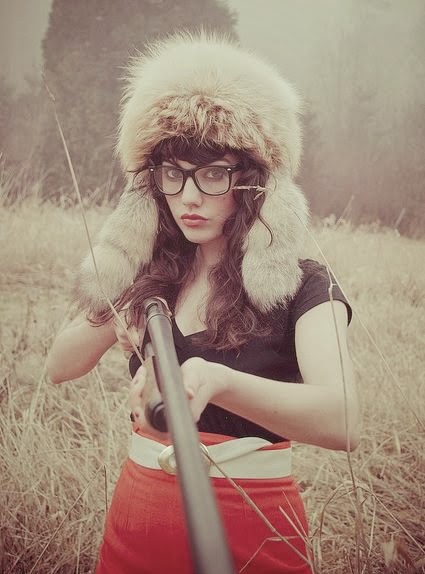
Not actually Erin.
& is used with permission.
On Monday I mentioned that I went camping from Dec. 31 to Jan 2 in order to test out my bug-out gear. While I previously discussed the contents of my bug-out bag here, it should be noted that my gear is always in a state of flux as I add, remove, and re-arrange items, so what is listed in last year's posts is not necessarily what I had with me.

I encourage all preppers to take their gear out for a test drive at least once a year; not only will it give you an idea of how well your gear works (and therefore whether or not it deserves a place within your BOB), but it is also a way to keep an eye on the state of your gear that may need repair or replacement due to torn seams, rusted metal, or expired food.

My Tent
My tent is a Stansport Black Granite Starlight, and it worked very well. The open top and sides gave excellent ventilation during our hot and humid first day, and the rainfly did an excellent job on the second day when it rained practically nonstop. An interesting feature of the rainfly is that it extends out further than the mesh when deployed, which means that I avoided the annoyance of condensation building up within the tent during the night.

At 5.5 pounds it's relatively light and fits in a backpack well (but see below). This is a very good tent, and I recommend it, but there are two complaints that I have:
  1. It's listed as being a two-person tent, and while it can technically sleep two people, they are going to be very cramped. If you try to add your gear inside the tent, you're going to be intimately familiar with each other, especially if you're trying to dress/undress inside it. So unless you're family members or are at the "My, what pretty panties you have" stage of your relationship, things are going to be cramped.
    • On the other hand, for a single person it is ideal, with lots of "rolling-around room" to either side. I even had enough room for my pack at my feet, but then I'm 5'4ish; people who break six feet might not have that luxury. 
  2. Likely as a result of having walls made of nothing but mesh, there isn't a way to hang a drying line. If you need to hang something up to dry or air out, you'll need to rig something up. 
Unfortunately, sometimes the most efficient method of packing a bag results in being unable to quickly get at gear. My tent, being one of the heaviest things in my pack, was as close to the middle of my back as possible for proper weight distribution, but that means it had other objects on top of it and in front of it. It took me several minutes to unpack my bag so that I could reach it, which wasn’t a good thing because by the time I had it out and ready to set up, it was already dark. I have since re-packed it in a different position that is easier to retrieve.

My Lights
Speaking of being in the dark, be sure to pack enough illumination. I brought several flashlights with me, and they really weren't sufficient for the task of setting up a tent at night: either they didn't throw enough light, or the light was too directional. I was fortunate in that I had a headlamp with me -- do NOT discount the extreme usefulness of having a hands-free light that points wherever you look! -- but mine had a very feeble LED. I have since ordered a brighter headlamp.

It’s also very easy to trip over tent stakes or lines in the dark, and that can lead to people getting hurt or damaging a tent. I make extensive use of UV Paqlite glow sticks to find my gear in the dark, and so I took one from my bag and looped it around the stake I kept tripping over. With that glowing marker, it didn’t happen again.

I had intended to bring a Goal Zero Lighthouse lantern with me to provide campsite illumination, but in all the excitement I forgot it. (In my defense, it's not part of my BOB; it's what my family uses in the house when the power goes out due to a storm.)  The lesson here is Make a checklist of items you want to bring along. If I forgot that gear because I was excited to go on a trip, just imagine what could be forgotten during the panic and chaos of an evacuation!

My Sleeping Arrangement
My Klymit Static V was comfortable mattress, although it did take a little bit of getting used to. Less comfortable was my large Exped air pillow; I'm a side sleeper and it wasn't large enough to put my head at a comfortable angle. I've since ordered the extra-large version in the hope that it will solve my problem.

Another issue I had with the Exped is that its surface is rather slick and it has a tendency to slide along the surface of my Klymit and/or sleeping bag. Fortunately, this issue was solved by wrapping the pillow in the fleece blanket I always carry.

The winner of the "Most Valuable Piece of Gear" for this trip goes to my set of silk long undewear. I really cannot say enough about these, or why they belong in every prepper's BOB, but I'll try:
  • The first day it was so hot I didn't need a sleeping bag, and just slept on top of my mattress. The longjohns kept me from sticking to the plastic and helped wick sweat away from my skin. 
  • When it got cold on the second night, they served as an extra insulating layer. 
  • When I woke up on the third day and it was in the 50s (which is cold for Florida), I just put my clothes over them (being silk, they didn't add extra bulk) and they kept me warm until noon. 
  • Finally, they are extremely lightweight and pack down small, so they will fit in any rucksack. 
Get a pair; you will not be disappointed.

Cutting Tools
The campsite we stayed at was an oddity; there were fire pits, but we couldn't cut our own wood. Instead, we had to have it delivered to us by the park ranger, and what we received were logs about a foot across and half a foot long. The ranger asked us "Y'all have an ax or a hatchet, right?"

Well, no we didn't. I haven't been able to find a good, lightweight ax that fits into my pack; I generally make do with my kukri machete for chopping down smaller trees, and for larger things I have since acquired a Sven Saw, but I didn't have that saw during the campout. Hopefully the machete/saw combo will remove the need to carry an ax.

My Mora Clipper got lots of use during the trip and proved its worthiness once again, but the most unexpectedly useful tools were my Mezzaluna and cutting board when, on Friday night, my camp buddy drafted me to chop up vegetables. Instead of slowly cutting the veggies with my Mora on an iron skillet I was able to quickly chop and dice them! I'm very glad I was able to find room for them.

Cooking and Fire
Because I was busy setting up my tent, I asked my friend to start the fire Thursday night, and he seemed to interpret that to mean he was in charge of fire for the rest of the trip. I wasn't complaining, mind you; he's a better cook than I am. But I did feel bad that he was constantly making the fire and cooking meals, so I pulled out my handy Solo Stove and used it to boil water for morning coffee. It worked great in that regard, and because I was feeling lazy I used its little alcohol burner to make things easy.

And it worked great... until the fuel ran out. Apparently the stove only carries enough fuel to boil 64 ounces of water, and I didn't have any more in my bag. I didn't think this was particularly a tragedy, because I had other fuel sources in my bad. I pulled out an Esbit fuel tab and tried to light it.

I don't know if you know this, but Esbit tabs will NOT light in the rain. In fact, rain dissolves them. I have since learned that a good trick is to cover the tab with hand sanitizer and then light it; not only will the gel keep the tablet from dissolving, but it will also light with a spark from a ferro rod. (Regular tablets need open flame, such as from a match or a lighter.) However, I didn't have this knowledge when I needed it.

Fortunately my friend came through by producing a can of Sterno which fit nicely inside the Solo's burn chamber. It took longer to boil the water than the alcohol, but when it was done it looked like I'd hardly used any fuel at all. I am definitely going to add a can of that to my bag.

Other Things (aka multi-media crossover)
There are other lessons I learned from my camping trip, but this article is already plenty long. When Gunblog Varietycast #73 drops on Sunday, you'll hear about other things, like why you should bring a tarp even if you have raingear and the many uses of an empty water bottle.

Thursday, January 7, 2016

Area Air Purification, Part 1: Making a Clean Room

Since there was interest in an article covering air purification for more than just personal protection, I'll do my best to cover filtering air for a small area. This is a fairly deep subject, so I'm going to break it into at least two parts.

Filtering air isn't all that much different than filtering water. If you think of a personal respirator as analogous to a personal water filter, then it isn't too much of a stretch to think of a room air purifier as a small water filtration plant or a large water filter (like a Big Berkey).

If you have to shelter in place through a disaster, it's worth considering having to filter the air you'll breathe:
  • Claustrophobia is a real issue for some folks, and a mask is just not an option for them. 
  • Having a filtered enclosure that you can drop over a crib or playpen is worth looking into if you have ankle-biters crawling around. 
  • Setting up filtration for small children, the elderly, and the infirm is also much easier physically and emotionally if they have space in which to move.
There are some steps to go through, I'll cover the first two in this post:
  1. Identify what is in the air that needs to be filtered out (contamination).
  2. Keep the contamination out of your air supply.
  3. Filter the air coming in.
  4. Monitor for contamination.
Identify the Contamination 
This is the step where you figure out what you need to remove from the air you want to breathe.
  • If your main concern is the eruption of the super-volcano under Yellowstone National Park, the main contaminant will be fine ash or dust. 
  • Forest fires a few hundred miles upwind can make life miserable for people with breathing problems; the smoke and ash in the air travel a long way. 
  • If you live near a chemical plant that you fear may catch fire, the contaminants will be varied and considerably harder to remove. 
  • Chemical warfare attack is the worst-case scenario, requiring filters designed to remove the specific chemicals used by the military. 
  • Biohazards are another possibility that can be filtered out of the air with the right equipment. Anthrax has been used to contaminate buildings before, and may be used again. Airborne diseases are a medical research field all by themselves, but the filtration is fairly standard.

    Keep the Contamination Out
    Sealing a room or two is about as much as most of us will be capable of doing without spending more on filters than on the house itself.

    The choice of which room to use as a "clean" space will take some thought and planning. Ideally you'll want a room with as few openings and as little exposure to the outside air as possible, like a basement room. Dirt makes a good seal against the foundation and will keep out more air than most common house walls. Basement windows are usually smaller than those above ground, and entrances often have a "mudroom" or stairway leading outside which can be turned into an "airlock" for entering and exiting the clean area. An airlock is a small sealed area with two doorways, one leading to the clean area and the other leading outside. This arrangement minimizes the loss of clean air when you have to go in and out of the clean area and also gives you a place to leave dirty or contaminated clothes before entering the clean area. The idea is to never have both doors open at the same time unless there is an emergency.

    If you don't have a basement (perhaps you live in an apartment building), you'll want to pick an interior room with enough space to be comfortable in and as little contact with the outside walls as possible. Use as many existing barriers between you and the outside as you can, because each one is going to slow down or stop a portion of the contamination. Think of it as allowing that muddy water to settle out before running it through your LifeStraw.

    Creating a Clean Room
    Plastic sheeting and duct tape will take care of sealing up large openings like doors and windows, and expanding spray foam will work around cracks and gaps. (If you've ever winterized a house, you'll know where to start.)
    1. Close the windows and place a layer of plastic over them, holding it in place with duct tape. Tape along the whole border to get a good seal around the frame.
    2. Find and seal (plastic and/or duct tape) all vents coming into the room. This covers heater vents, floor drains (most of which have a P-trap to prevent sewer gasses from coming up through the pipe), drier vents, sink drains (the S-trap under the sink will stop more than a P-trap but isn't perfect), showers/tubs, and toilets. If you're in a hurry, a quick shot of expanding foam into a drain will seal it in a few minutes and the foam is easy to dissolve (acetone, gasoline, etc.) or remove later, when the crisis has passed.
    3. Electrical outlets and switches on outside walls should have the covers removed and expanding foam sprayed in the cavity around the wiring box. If you don't have any foam, duct tape over the switches or outlets to seal them as much as you possibly can.
    4. Doorways that are not going to be used should be sealed the same as windows. The doorways you are going to use to enter and exit the clean area (assuming you're not sealing yourself inside for the duration) will need to be closed off with overlapping sheets of plastic that will allow you to pass through without creating a 20 square-foot hole in your sealed area. 
      1. In an open doorway, tape a sheet of plastic -- wide enough to cover the doorway and long enough to hang all the way to the floor -- to the top of the frame, leaving the sides free. 
      2. Tape a second sheet of plastic to the top of the frame over the first one, but tape the sides of the plastic sheet to the sides of the frame and then carefully slice the second sheet from top to bottom in the center of the doorway. The idea is to make a plastic "valve" that blocks most of the airflow but will still allow a person to squeeze through. 
      3. Two or more doorways like that will help keep dirty air out and clean air in. 
      4. If you want to be able to close the actual door, you can nail wood to the frame of the doorway and attach the plastic sheets to that.
    5. If you live in a house or apartment with unsealed wood floors (polyurethane is great), you'll need to either get underneath the floor and tape plastic to the joists, or lay plastic down on the floor of the room and cover it with rugs after taping securely. 
    6. Ceilings are usually sealed better than floors, but look up and decide if there is anything that should be covered in plastic. Light fixtures and ceiling fans may need a layer of  plastic and tape if the wiring goes through to an unsealed attic or crawl space. Acoustic tiles or a drop ceiling are an indication that you'll need to get a ladder and investigate what's above your head.
    Positive Pressure
    Positive pressure is keeping the air pressure inside your clean room slightly higher than the pressure outside. Positive pressure systems are commonly used in hospitals for patients with failing immune systems, since they do a good job of keeping isolation rooms clean. Maintaining positive pressure will take energy to drive a blower, and sizing the blower gets difficult without knowing how well the room is sealed. More on this when I get to filters in part 2.

    You don't need a lot of pressure -- typically not more than 0.05- 0.10 inches of water column*. This will force your sealing materials against any openings (providing a better seal) and prevent outside air from seeping in through cracks or openings that you may have missed.

    The Next Step
    Once you have a clean area established, seal up windows and other openings in the building as time and materials allow. All forms of protection are best done in layers and this is no different.

    Part 2 will cover the expensive parts -- filters and monitors.


    *inches of water column (iwc) is a low-pressure scale of measurement. One atmosphere of air pressure at sea level is about 14.7 pounds per square inch (psi), a common scale of measuring air pressure. 1 psi = 27.7 iwc, and 1 iwc = 0.036 psi. For reference, a 25mph wind exerts about 0.30 iwc of pressure on your skin.

    Wednesday, January 6, 2016

    Prudent Prepping: Prepped Gifts

    The dust has settled and the First 72 Hours have passed. Now we concentrate on what to do in, and how to plan for, the long term via Prudent Prepping.

    I've been helping a friend get some preps for her person and her car for the past several months now, with the latest installment here. In that post, pots and pans were a sticking point, since the recipient had definite ideas about what she wanted. Camping and backpacking are in the future, so items that are adaptable for a BOB and camping are required.

    After some serious shopping and looking at options online and at REI, what was found to be 'perfect for me' was this:  

    GSI Outdoors Pinnacle Soloist Cookset
    Weight: 10.9 oz.
    Dimensions: 5.00'' x 5.40'' x 5.50''
    Material: Non-Stick Coated, Hard Anodized Aluminum, Clear Polypropylene, Nylon 6-6
    Product Use: Ultralight Backpacking
    Includes: 1.1 L Pot, Strainer/Sip-It Lid, 14 fl. oz. insulated mug/bowl, Telescoping Spoon, Stove Bag, Welded Sink

    From the GSI website:
    • Folding handle locks into place for cooking and secures entire set for transport, eliminating the need for a stuff sack.
    • Unique mug/bowl solution with low center of gravity and Sip-It virtually eliminates spills while the integrated insulating sleeve keeps drinks hot.
    • Welded stuff sack holds set while traveling and doubles as a sink or wash basin.
    • Integrated nesting allows for stowing of ultralight stoves and fuel canisters (220/110 g).
    • Coated with Teflon® Radiance technology for exceptional non-stick performance.
    (Please look at the animated demonstration on the GSI page that demonstrates how everything nests! Scroll up and down over the parts.)

    This was purchased from REI, as Amazon did not have a comparable price or availability when it was time to buy. Also, as said above, my friend has done some backpacking and she has some definite ideas on what she wants! Obviously this was not a surprise, what with all the comparison shopping that was done, but it was still well-received as a thoughtful and useful gift.

    I am suggesting a complete set of utensils to go into the kit, and the Sea to Summit Delta Cutlery Kit is my #1 recommendation. I have them; they work and will fit into the pot easily.
    The next addition to the "Baby BOB" will be food, which is another point of contention. I have been told that some of the freeze dried items I suggested are 'too expensive' and not necessary to have in the car bag. Again, since my friend comes from a different culture, I am not making any decisions. However, I am making suggestions which may or may not be followed. And I'm fine with that. Canned goods and more ethnic items seem to be going into the bag, and since it is NOT my bag, it's good.

    A future post will break down what all ends up in the bag. Expect some interesting items... really interesting!

    The Takeaway
    • This is a good, single person cook set with everything needed to prepare a meal. 
    • Finding items that are 'just right' may take some time but is worth the effort. 
    • There is no one item fits all in life as in prepping.
    Recap 
    As always, if you have comments, suggestions or corrections, please post them so we all can learn. And remember, Some Is Always Better Than None!

    NOTE: All items tested were purchased by me. No products have been loaned in exchange for a favorable review. Any items sent to me for T&E will be listed as such. Suck it Feds.

    Tuesday, January 5, 2016

    Driving In a Winter Wonderland

    Winter hit my area hard in the past couple weeks, and with the cold and the snow comes the rash of accidents from folks who either never learned to drive in inclement weather or were never taught. Even if you live someplace that rarely gets snow, you may find yourself in a place that does, so driving in it is a skill worth learning.

    4 Wheel Drive
    A 4x4 is a great thing, and very handy to have. The added traction and clearance are a great aid in getting where you want to go. However, four wheel drive and all-wheel drive do not mean four wheel stop. Slick is still slick, and you will still slide. You aren't exempt from the laws of physics or the rest of the tips in this article.

    Check Your Tire Pressure 
    This is something you should be doing on a regular basis anyway, but it is particularly important in the winter, as cold temperatures cause air to take up less volume, lowering your tire pressure. This increases stopping distance, hampers maneuverability, increases tire wear, and dramatically reduces fuel economy. It is a simple thing, but vital to monitor.

    In addition, make sure you have appropriate tires for the weather:
    • Summer performance tires are completely inappropriate. 
    • All-season tires will usually suffice, especially on passenger cars. 
    • My truck wears something a bit more aggressive, but that is because I spend a lot of time in the dirt and mud. 
    • If you can afford them, a set of snow tires are a very worthwhile investment.

    Take Your Time
    Increase the following distance between yourself and the vehicle in front of you. Travel speeds can be markedly slower than usual, so give yourself added time. In one storm this winter, I saw my commute time triple on what is normally a 25 minute drive. Watch the news or your weather site of choice, and plan ahead.

    Be Gentle
    By this I mean "Have gentle control inputs".
    • Use a lighter foot than normal on your gas and brakes. 
    • Use smaller, more frequent steering corrections. Big, rapid control inputs get magnified by slick surfaces, and cause catastrophic loss of control. 
    • Also, avoid using cruise control in these conditions; maintain as much manual control of you car as possible.

    Practice
    For me, this is the fun part.
    1. Find an empty parking lot with minimal obstructions, and make your car skid and slide. 
    2. Learn where your brakes will lock and the vehicle will slide. 
    3. Figure out which direction it likes to slide. 
    4. Learn to turn into a skid, and how to apply little braking during the slide. 
    5. Don't get out of hand, as you don't want someone to call the police, but learn as much as you can when there's nothing to hit.

    If You Do Get Stuck
    Stay with your vehicle.
    • If you're stranded away from civilization, you can tie a bright piece of cloth to your antenna and use your flashers to be more visible. 
    • If you're using your car's heater, do so in short intervals and shut the car off in between. 
    • Make sure that the exhaust pipe is clear when you start the engine, otherwise deadly fumes can build up. 
    • Don't leave your car unless remaining is entirely unsafe. A two ton block of metal and plastic is far easier to find than 200 pounds of human.

    Plan ahead, be smart, and stay warm.

    Lokidude

    Monday, January 4, 2016

    Happy New Year!

    Not actually Erin.
    & is used with permission.
    As we get into the swing of things with a new year (don't forget to sign all of your papers with 2016 instead of 2015!), I'm going to begin with a basic post to handle some bookkeeping and administrative tasks.

    Resolve to Test Your Preps
    This New Year's Eve I went camping with a friend of mine specifically to test some of my preps. Some of them worked very well, others not as much, and I also left some at home. While unpacking at camp, I realized that while my BOB organization was good for saving space, it also made it rather difficult to get to certain needed items without first removing a bunch of other things.

    While the lessons that I learned will be the subject for another post, the message I want to impart is The best way to find out if your preps work is to test them. Camping, hunting and fishing trips are some of the easiest ways to perform these tests, so at least once in 2016 please take your Bug-Out preps into the field and test them!

    We're a "Prepper Diamond"
    I'm several months in noticing this, but Happy to Survive listed us as one of their Best 250 Prepper Websites! I'm very pleased to have received this award as it's the first that Blue Collar Prepping has been given. Not bad for a website that isn't yet two years old!

    We're Still Looking for a Monday Contributor
    If you have an area of expertise that isn't covered by our regular authors and can write one post a week, we'd love to have you join our staff. Send me an email with a sample article and a description of the niche you'd like to fill (such as "primitive skills prepper"or "MacGuyver prepper") and I'll see if you'd be a good fit for us.

    Please Consider Supporting Us
    Unless you're a writer you may not know how much time and effort it takes to produce quality blog content. A 500-1000 word post can take several hours to write, and that doesn't include time spent doing research to make sure our information is correct. Nor does it include the time I spend proofreading and editing each post for grammar and comprehension and formatting text and pictures for ease of reading. What this means is that I end up spending a LOT of time on this blog making sure the posts are of the highest quality possible, and that time spent is time that I am not using to write other things.

    On top of that, we want to provide you with interesting and entertaining information that is unencumbered by lots of advertisements (Yes, we have some,  and I go to great pains to make them as inoffensive as possible), which means that this blog is mainly a labor of love for us.

    It would therefore be a big help to me -- and therefore, a big help to the rest of my co-authors -- for everyone who enjoys this blog to donate one dollar a month to help with costs and time spent. That's essentially 5 cents per post, and far less than you spend on a daily newspaper.

    To make a $1/month pledge via Patreon:
    1. Click on this Patreon link
    2. Enter $1 in the "per Blog Post" field and click the "Become a Patron" button. Do not panic. You will not actually be charged $1 per blog post.
    3. You will see "No reward, I just want to support." Click Continue. Remain unpanicked.
    4. You will see your pledge as "$1 per blog post" and under that is a check box which says "Optional: Set a monthly max on your pledge". Check that box and write in 1 for the number of times you wish to support per month. 
    5. Fill out all other fields (Paypal, etc) and then hit "Confirm". you have now pledged one and only one dollar per month!
    Regardless of whether or not you donate, please know that your readership is appreciated. Thank you, and have a wonderful 2015 2016!

    Sunday, January 3, 2016

    Gun Blog Variety Podcast #72

    Come ring in the New Year with the crew of The GunBlog VarietyCast Episode 72!
    • Erin Palette gives us some strategies on managing chronic pain during a disaster.
    • In our Foreign Policy for Grownups segment, Nicki Kenyon tells us why she thinks that Russia is becoming more like the old Soviet Union.
    • Our Special Guest, Benjamin Turner of the Personal Defense Talk podcast, explains to us how to avoid a fight in the first place.
    • In his triumphant return, Barron B explains how $100 worth of dash camera can make the difference when a bad driver claims an accident is all your fault.
    • And in another Patented Weer'd Audio Fisk™, Weer'd watches the Democrat debate so that you don't have to.
    Thanks for downloading, listening, and subscribing. Please like and share The GunBlog VarietyCast on Facebook, and if you use iTunes, give us a review!
    Listen to the podcast here.
    Read the show notes here.
    A special thanks both to Firearms Policy Coalition for their support and to our sponsor, Law of Self Defense. Use discount code "Variety" at checkout and get 10% off.

    The Fine Print


    This work is licensed under a Creative Commons Attribution- Noncommercial- No Derivative Works 3.0 License.

    Creative Commons License


    Erin Palette is a participant in the Amazon Services LLC Associates Program, an affiliate advertising program designed to provide a means for sites to earn advertising fees by advertising and linking to amazon.com.