Wednesday, January 24, 2018

Guest Post: Faberware Stainless Steel Percolator

by George Groot
George is a member of our Facebook Group and has written for us before.


Coffee isn't a necessity for preppers (although I think it is an excellent trade item), but it is often the difference between low morale and high in a disaster scenario.When you are without municipal services like water and electricity, there are still plenty of ways to get your coffee.


Instant coffee is easy, but I've never found good instant coffee in America the way it is readily available in Europe. Instant coffee works, but you still need a way to get hot water, which means you'll want something to boil water in for sterilization. Odds are good that you have pots & pans that can do this chore already, but most household versions are too large for most camp stoves to heat effectively, let alone bring to boil. Camp stoves are made to work with camp cookware, which generally holds smaller quantities, has thinner construction, and is lighter weight.

Percolators are great for a "shelter in place" solution because they are low tech, and because they boil the coffee they provide their own sterilization solution. If you have a two-burner Coleman camp stove (the green one that folds up), or even a single burner stove sturdy enough to hold several pounds, a coffee percolator will work well with your alternative energy source. If you make your own "hobo stove" you can size it to fit a stove-top percolator quite easily, which brings us quite handily to the subject of today's blog post.

Faberware 8-cup stainless coffee percolator
http://amzn.to/2DE4sAm
This product nicely fills the niche between "lightweight camping" and "serious base camp" products.

The base is broader than the body, and has a nice design feature of indented rings along the outside of the base which are great for open flame stoves. The grooves "trap the heat" from flames a little better than a flat bottom solution, which would be better for a glass top range.

The Good
At $23 dollars and Prime delivery, with all-stainless construction including basket and stem (save for the glass percolator top and plastic handle), it's a great buy. Replacement parts are also available on Amazon, and because it is essentially a stainless steel pot it can do double duty boiling water or cooking soups on a camp stove or hobo stove where a larger pot would tip over or just be too big.

The Bad
If you want something truly lightweight for a bug-out solution, this is probably not the product for you as it comes in at 2.4 lbs (just over one kilogram for our metric friends). The pour spout looks like a traditional wedge, but is actually a drilled hole inside the wedge, which meant the first time I used mine it didn't pour the way I thought it would. I over-tipped the pot, which can get annoying if a lot of people are passing the pot around to fill cups. Finally , the handle is plastic, which means you have to be careful not to expose it to open flames.

How to use it:
  1. Fill the percolator basket half full with a standard coarse ground coffee.
  2. Fill the pot with 8 cups of clear, cold, palatable water.
  3. Put the stem and basket assembly into the pot and push down on the lid until it snaps into place. 
  4. Place over a heat source and wait. 
    • The percolator concept works because the stem assembly, being close to the heat, gets hot and the pressure of the colder water above makes "going up the stem" to the top of the pot a lower resistance pathway than going up the sides. So as your pot starts to boil, you'll see the characteristic "burps and splatters" in the percolator top, and they will get more and more brown as the process continues. 
  5. When a lot of steam comes out of the pour spout, and the sound of a constant boil is heard, your pot is ready after one minute of this rolling boil. 
    • Why one minute? That comes from the EPA recommendations on sterilizing water in an emergency. They also recommend 3 minutes of boiling above 5,000 feet (Denver residents take note).
    • The EPA also says "To improve the flat taste of boiled water, add one pinch of salt to each quart or liter of water, or pour the water from one clean container to another several times." 
    • The pinch of salt is actually an old trick to make coffee taste better. A soldier I knew always added a pinch to my cup whenever he was trying to sober me up (but that's another story involving one of the many uses of ethanol in a non-survival scenario). 
Filters
If you want to filter your coffee, you can either purchase disk coffee filters or simply punch a hole in the middle of regular basket filters. There are plenty of YouTubevideos to show how to use paper filters with percolators in case you want use filters. Filters have many uses, some culinary and some not, and so have a place in a prepper pantry.

Other Thoughts
There are other ways to make coffee, and other ways to sterilize water. This one is great for "glamping", "bug out by vehicle", or "shelter in place" scenarios where the size and weight of the unit aren't huge drawbacks to routine use. It's also cheap enough to stash at a bug out location or cache site without feeling too bad about wasting money on preps you might never use.

Protip: if you add fresh grounds to your once-used grounds you'll be able to make a can of ground coffee go longer. If you're like me and need a few stiff cups of black life water to keep you going through the day, this will help you wean yourself of a caffeine dependency over time.

Overall
While this percolator won't make a perfect cup of top-end dark roast, it will make a strong black brew that will taste a tad different from standard drip coffee makers. I recommend a French Press setup for "gourmet" in grubby times if you want a luxurious cup of coffee to start your day, but the percolator will make more coffee (often faster) and will be able to service more people than other solutions, which is important if you have neighbors or a work crew helping out. Never underestimate the goodwill that offering someone a warm drink on a cold morning will buy you! And even if it is hotter and muggier than the third ring of hell in your disaster, you can bet there is at least someone jonesing for their caffeine fix.

Tuesday, January 23, 2018

Keeping It In Rotation

I've said before that emergency preparedness is an actual tenet of my religion. A major part of that is food storage, above and beyond what many preppers keep around. With this level storage, my options boil down to heavily preserved/freeze-dried food (which can only be called food in that it is a source of nutrition), or normal canned and dried foods that everybody gets at the grocery store.

The freeze dried stuff is awesome in regards to stability and shelf life (there is some of it on the market that I could buy today and still eat when I retire, and I'll be working for the next two-plus decades) but seeing as it tastes terrible and nobody wants to eat it, it's really not a great option for food storage.

Eating normal canned or dried foods is far more palatable, as well as being pleasantly familiar in a time of utter chaos and often far less expensive. Unfortunately, shelf life is far shorter (often a year or two instead of decades) so the simple solution is to just eat from my food storage and restock as I go.

The trouble with rotation is that it's a whole lot of work to keep the older product forward and the new stuff behind it, and can feel like four hands are needed. Thankfully there is an easier way for at least some of your supplies.
Large can organizer

Small can organizer


My grandmother had several of the small organizers in her kitchen, running pop cans and canned soup. You load new product in the top, and it feeds older product out the front. They work as well in a refrigerator as a pantry. The larger organizers work great for all your canned goods in a pantry.

My current method for bagged and boxed goods is to pull them forward as I consume them and load new product into the pantry behind them. I still haven't found a better way to rotate them, but I'm always looking. If anybody has a method or solution, please share it in the comments or the Facebook group, as I'd love to give it a try.

We can all get better at this by learning from each other.

Lokidude

Monday, January 22, 2018

Product Review: Gerber Center Drive

Assuming your circumstances permit, the majority of preppers will have a knife, multi-tool, or both in their EDC.

On most days, I carry a pocket knife of some sort, (usually the Klein folding electrician's knife) a razor (usually the Gerber EAB) and a Gerber Center Drive*.

Years ago, Lokidude reviewed the Gerber MP400, and I feel that our readers would benefit from a similar review of the Center drive.

http://amzn.to/2E0Vknl

Features
The Center Drive has a pair of needle nose pliers with a replaceable carbide wire cutters/stripper cutting surface, which extend by pressing the button on the side  and sliding it upwards. It also has one fine edge knife, one serrated knife, one cat's paw prying tool, a bottle opener, a file, a spare bit holder, and a ruler stamped into the frame.

Mine came with a belt sheath that can be positioned either sideways or in a standard up/down configuration and closes with a sturdy Velcro type fastener. The sheath is MOLLE compatible, and holds a bit driver set. With the exception of the spare bit holder, all of the tools lock when extended.

http://amzn.to/2E0Vknl

The tool that it is built around is the magnetic bit driver, which extends out in such a way that it is very close to the center line of the tool. When you have to remove a screw, or drive one, this can be a real life saver.

http://amzn.to/2E0Vknl

The Good
The build quality on this is excellent. The moving parts are all made to tight specifications, and all of the tool locks are either metal, or plastic over metal, with ridges built into them to allow easier use. I have had my hands covered in oil from working on a car on the side of the road and not had an issue extending the pliers.

The straight fine-edge knife and the pliers can all be opened one-handed, and both the bit driver and knife have a quality liner lock on them. I don’t use a file very often, but when I do, it is VERY nice to have on hand.

The magnetic bit holder is a lifesaver if you have to use it to drive screws. While not as nice as a dedicated screwdriver, it is definitely more ergonomic, and less slip prone, than a normal multi-tool.

I have not done torture testing on this, just daily use (and yes, I have put it through the dishwasher), but it seems to hold up well. Have to change a stuck oil filter on the side of the road? Stab knife into oil filter, rotate out, hand screw new one on. Have to fix your hot glue gun? Sure. Have to pry up a 500 lb steel plate so that you can get to the thing underneath it? Awkward, but not really a problem with sufficient grip strength and leverage.

The best part is that I have yet to have this one stolen. I have traveled with it, worked with it, taken it to conferences etc, and have yet to have someone try to walk off with it. I have lost several Leatherman tools that way, but for whatever reason (my theory is that it is not a Leatherman brand, and so people do not think of it as quite so valuable) no one has “forgotten” to return it or grabbed it out of my luggage.

The Bad
The “handedness” of the tool tends to get in the way. I can get the knife out one-handed using my right hand, or the bit driver one-handed using my left hand, and put them away the same way; but trying to open or close them with the opposite hand is quite difficult.

The Ugly
This is not the best bang for your buck. I dearly love this tool, and use it quite often, but it does not have the widest range of accessories, or the biggest knife, or… you get the idea.

There are tools that have almost all of the same features for about a third the price. That is something that you have to keep in mind with this.

Overall: 4.5 of 5
I really like the tool and the sheath. If it is within your price range, I would recommend this, preferring it to the other options I have used (Leatherman Surge, Core, Wave, Mut EOD, and Micra; a couple of other Gerbers; and a multitude of knock offs and off brands). It seems to overcome the ergonomic issues with using a screwdriver on a multi-tool, and it has a high build quality. If you use a multi tool on a regular basis, but don’t need any more exotic tools (like the M-16 cleaning tool available on the Leatherman Mut), it is wonderful.

If however you do not mind a somewhat lower build quality, and do not need all of these exact features, you can purchase a quality tool for less money.


*I use the model # 31-003073N multi-tool, and Amazon has a slightly different model, but as far as I can tell they are the same tool; mine just came with some driver bits.

Sunday, January 21, 2018

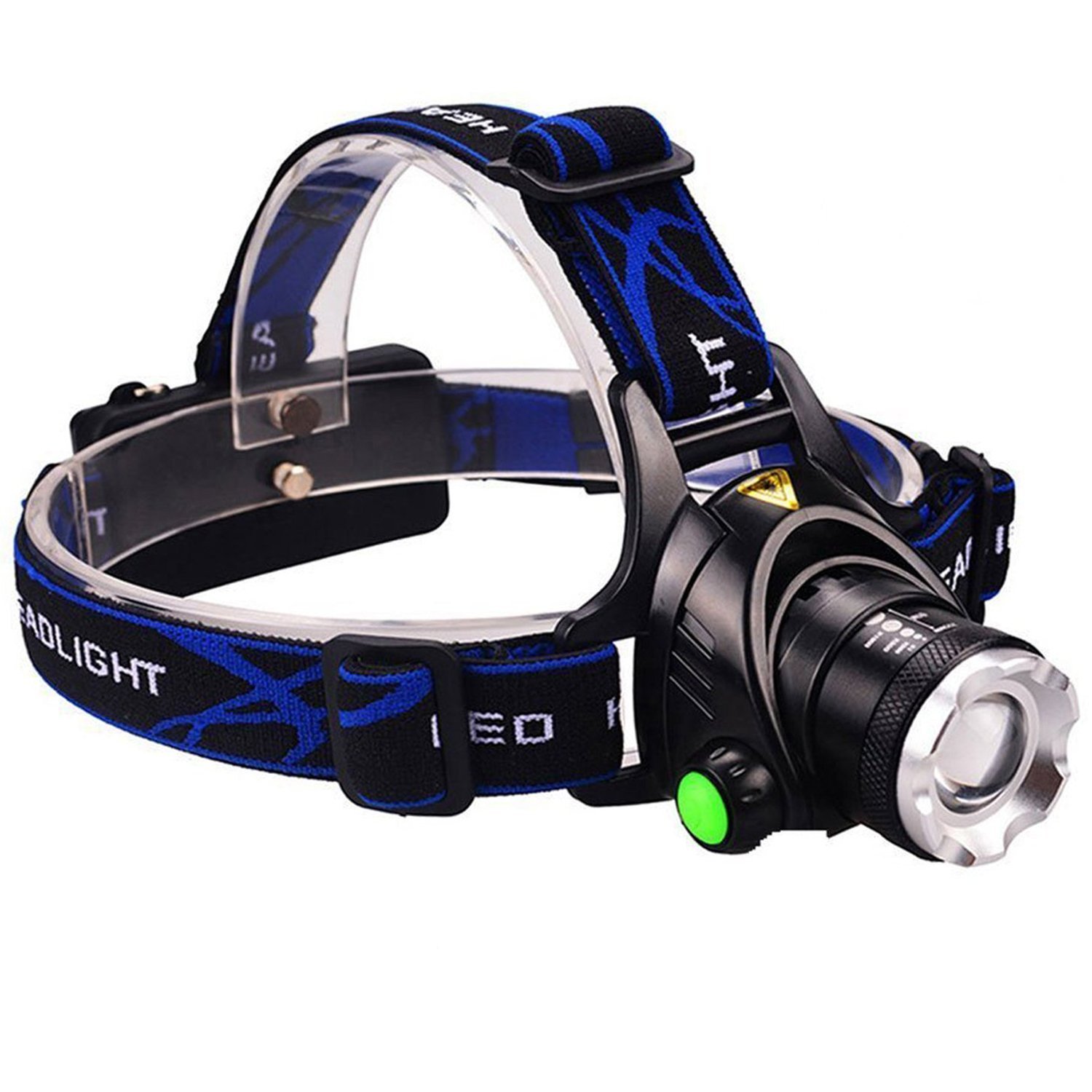
Product Review: Dland 1000 Lumen LED Headlight

Not actually Erin.
& is used with permission.
I received this headlamp at Christmas and have been using it for about a month now.

It has three settings which I have named
  1. Set Things On Fire
  2. Rather Dim, Actually
  3. Let's Induce Epilepsy!
Setting one is great for doing things at night, but beware of "light splash". Setting two doesn't have that problem by virtue of being substantially less bright, and setting 3 is basically a strobe version of setting one.

I compared this light's output to a flashlight of known power (my 420 lumen Kel-Tec CL-42)  and discovered the following:
  • The dim setting is actually brighter than 420 lm when zoomed in to spotlight mode, but not by a whole lot; when zoomed out, the 420 lm light was brighter. From this I infer that the "dim" setting is probably 500 lm. 
  • The bright setting is noticeably brighter than 420 lm in flood mode, and definitely brighter in spot mode. While I'm not sure if it's actually 1,000 lumen, it's demonstrably brighter than 500 lm and likely 750 lm at the least. 
  • The strobe mode has the same output as setting one. 

The Good
  • It is comfortable to wear, which is slightly surprising given the weight of the light in front and the bulk of batteries to the rear. 
  • The battery case has a red light in the back which illuminates when the light is turned on, making it easier for buddies to find/follow you in the dark. 
  • The light is adjustable from spot to flood and angles up and down to conveniently illuminate the ground in front of you at ranges from "where your feet are" to "twenty feet ahead". 
  • It comes with two 18650 lithium batteries. 
  • The battery case is also a battery charger and comes with three input devices: a wall outlet, a car port, and a USB cord. 
  • The price. $15 for a comfortable, bright headlamp is great. 

The Bad
  • The battery lifespan is pretty abysmal on "bright". After 2 hours of use, the light output quickly diminished; the bright setting was dim and the dim setting was practically nonexistent. 
  • It's very, very easy to dazzle yourself if you get too close to a white or reflective surface. Even adjusting the light with your hand can cause light splash if your hand intersects the beam. 
  • It's also very easy to shine the light in someone's eyes while talking to them. What is an annoyance with a regular flashlight is absolutely painful with a high-lumen beam. 
  • It might make for a good tactical light if not for the dual faults of being mounted to your head and requiring you to take a hand off your weapon to turn the light on and off. 

My Verdict
The battery life make it a no-go for bug-out bags, but the price and performance are excellent for bug-in preps, especially if you have additional 18650 lithium batteries charged and ready to go. 

Friday, January 19, 2018

Banging the Pillow: .32 ACP


This week we continue our ballistic testing with one of my favorite pocket guns, the Kel-Tec P-32, and my favorite round for .32 ACP pocket guns, the Winchester white box 71gr flat point FMJ.

Next week I’ll cover the .22 Magnum out of everyone’s favorite pocket revolver!


Thursday, January 18, 2018

Another Swiss+Tech Pocket Tool

Since I reviewed one of the Swiss+Tech (ST) tools last week, I thought I'd keep going with a few more reviews of their products. When I find a brand of something that I like, I tend to explore their full line to see if the quality stays the same. That's one of the reasons I like Sawyer water filters and Nebo flashlights; quality is consistent throughout their line of products.

Back in late 2015, I added my Every Day Carry (EDC) list to the ones our other authors had done. One of the items on that list is another ST tool that I received as a gift which has been with me for about eight years now. That tool is the ST66676, a six-in-one multi-tool that looks vaguely like a key and attaches to a key ring. Mine is a bit dinged and pitted from the years of riding around in my pocket, so I'll use the picture from Amazon to illustrate.

The six tools available are:
  1. Straight screwdriver: Smaller than a #1, roughly 3/16 of an inch wide. It's the squared off piece at the top of the picture.
  2. Philips screwdriver: It appears to be a #2 pattern but without the depth. You can see it on the "left" leg.
  3. Bottle opener: Functional, but the arm isn't long enough for much leverage. Also on the left leg in the picture.
  4. Straight cutting blade: The front half of the "right" leg, about an inch of blade.
  5. Serrated cutting blade: The rear half of the "right", also about an inch long.
  6. Micro screwdriver for eyeglasses: Also serves as the locking tab for when the tool is closed. The protrusion on the curved piece at the top.
My thoughts, pro and con.
  • Like most of the ST tools, this one is designed to securely lock when closed around a key ring. The latching mechanism is stout and, when coupled with the small size of the tool makes, it a challenge to open. I doubt you'd be able to open this one-handed, and good fingernails are a major plus. There's just not much to grip when opening it.
  • I'm not sure which type of stainless they used, but it has held up to several years of abuse pretty well. Mine is showing some minor pitting from the sweat and chemicals it has been exposed to, but no rust. Like the multi-tool I reviewed last week, there is no plastic in this tool.
  • The Philips screwdriver is actually made of two pieces riveted together. This probably makes the manufacturing easier while providing a groove for the cutting blade to sit in when the tool is closed. With the short length of the arms, it would be hard to get enough leverage to damage the screwdriver, so I don't think this is a problem.
  • Being roughly the size and shape of a normal house key, this tool is light enough to carry on a key ring without adding too much weight. It isn't much thicker than an ordinary key, so it adds no bulk to a key ring.
  • Being shaped like a key, the tool should be able to get past the TSA but there are no guarantees. They keep changing the specifics, but generally don't allow any sharp blades in your carry-on.
  • The cutting blade is small (about 2 inches total) and is exposed when the tool is opened. Watch your fingers when using the screwdrivers, since a slip could slice open your fingers. The blades are sharp and take a good edge, so ST uses quality stainless steel.
  • When opened 90°, the latch locks the tool open to make it a bit safer to get some leverage. This is a nice safety feature, but I wouldn't bet my fingers on it. It will also latch when opened 180°, making the knife easier to use. Be careful when closing it; the latch is quite positive and fingers of one hand will be near the knife blade.
  • Priced around $10.00, this tool is cheap enough to have several attached to various gear. They also make good gifts for like-minded people.

As part of my EDC, this is my third-level blade -- a lock-back pocket knife and BSA pocket knife are my primary and secondary -- but it's comforting to have a backup to the backup. I rarely use it since I have other tools that work better, but it is an insurance policy against getting caught with nothing. It has come in very handy at times over the years and functions moderately well. It's not an everyday use tool, but I don't think it was designed to be one.

I have a few other ST tools on order, so I'll be reviewing them in the next couple of weeks.

Wednesday, January 17, 2018

Prudent Prepping: Safety Alerts

The dust has settled and the First 72 Hours have passed. Follow along as I build a long term plan via Prudent Prepping.  

I had a wake-up call this week, and it was caused by a mechanical failure. Funny enough, it was a problem with a button.

Seriously, a button was pushed, shaking up a bunch of people.

OOPS! I Did It!
Sorry everyone, I was not in Hawaii causing havoc. I wasn't in Japan either, for that matter. No, I was at work, just getting started for the day when my phone rang. My phone doesn't ring often that early, since I start at 5 AM.
Phone: Ring, Ring!
Me: "Hello?"
Sis: "Hey, it's your sister, are you okay?"
Me: "What?"
Sis: "You sent us two emergency texts and a sound recording of footsteps and banging noises."
Me: "Uhhh, I don't know what to say. Everything is fine here, we are just setting up for the normal work day."
Sis: "Look at your phone, the whole thing should be there."
I looked over my phone, and it was all there in black pixels.

The only thing that might have caused this to happen is that my phone case pinched the phone and rapidly punched the power button to activate the emergency message function on this model. I wear my phone in a horizontal case on my belt, not in my back pocket, and the case is two years old and getting a little soft. Since I am left handed, the phone is carried on my right side and  facing screen-in, so the power button is pointed upward.

Now this is a bit funny since my sister has a habit of checking on me anyway, but it usually isn't when she is pouring her first cup of coffee, and this only happened because I went through the steps to actually set up the Emergency Alert function available on this phone.

Samsung is not the only company to have this type of program, so look through your instructions or Google your particular make and model. This is something my friends and family have done and is something everyone needs to do, especially their kids or those working odd hours and places.

To have something so simple to set up and use already in my phone, even with the possibility of a false alarm, made the decision to spend the two minutes setting it up a no-brainer,

The Takeaway
  • Personal safety can be as simple as pushing your phone's "ON" button and almost that simple to set up.
  • Pick a reliable contact and be prepared to be the recipient of a future call. 

The Recap
  • Nothing was purchased this week. 

Just a reminder: if you plan on buying anything through Amazon, please consider using our referral link. When you do, a portion of the sale comes back here to help keep this site running!

If you have comments, suggestions or corrections, please post them so we all can learn. And remember, Some Is Always Better Than None!

NOTE: All items tested were purchased by me. No products have been loaned in exchange for a favorable review. Any items sent to me for T&E will be listed as such. Suck it Feds.

The Fine Print


This work is licensed under a Creative Commons Attribution- Noncommercial- No Derivative Works 3.0 License.

Creative Commons License


Erin Palette is a participant in the Amazon Services LLC Associates Program, an affiliate advertising program designed to provide a means for sites to earn advertising fees by advertising and linking to amazon.com.