Thursday, February 8, 2018

One More Swiss+Tech Review: the ST33309 Credit Card Multi-tool

This is the last Swiss+Tech (ST) tool review for a while, I promise. I've gone through the ones I have had for a while as well as a couple that I bought just to evaluate, and this is the last of the new ones. Normally people save the best for last, but I decided to give this one a few extra weeks to show its potential and it failed to do so.

The ST33309 Credit Card Multi-tool is a stamped piece of stainless steel that claims to give you 11 tools in a form that you can carry in your wallet. Smaller than a credit card, it comes in a plastic carrying case with a simple set of instructions in English, French, and Spanish. Priced at under $10, it was cheap enough that I added it to my order of the tools I reviewed earlier. Instead of going through a pros/cons list for the whole thing, I'm going to list the 11 “tools” and my impression of each as I go along.

http://amzn.to/2C5kize
1) Can Opener
A hook and a beveled edge at the top left in the picture makes a somewhat functional can opener. While it will open cans, it is slower than a surplus P-38 can opener and doesn't grip the seam of the can top very well. The main problem with this design is that you have to grasp the tool with your fingers wrapped around the saw blade when using it. That's poor ergonomics as far as I'm concerned.

2) Knife Edge
Located along the top edge in the picture, the knife edge is present but its functionality is questionable: it's a flat blade, with no usable point, so it's limited to “shaving” forms of cutting. As with the can opener, your fingers are likely to be wrapped around the saw blade as you use the knife edge. As delivered, the edge is so dull that it wouldn't cut a plastic bag, so expect to spend some time sharpening it. Since it's still technically a cutting blade, the TSA will likely frown on any attempt to travel with it outside of checked baggage. 

3) Screwdriver
A medium-sized flat screwdriver is on the top right-hand corner in the picture. It works, but the bulk of the tool prevents you from using it on anything recessed very far. The point of the can opener can be used on #2 Phillips head screws, but deforms under any serious pressure. Stainless steel tends to be softer than carbon steel, so that's not surprising.

4) Ruler
Stamped into the steel along the right side in the picture is a functional metric ruler with markings every 1mm for a length of 40mm (about 1 5/8th inches).

5) Bottle Opener
The large rectangular hole at the top with a tongue in it. This is the most useful part of the whole tool, working quite well and is more sturdy than most bottle openers I have tried.

6) 4-size Wrench
Unmarked, but the sizes are 7, 8, 9, and 11mm.

7) Wing Nut Wrench
When was the last time you saw a wing nut that needed a wrench? They're designed to be used with fingers, and if you need a wrench to loosen one the slot along the left side is only about 1/8th inch wide so it will only fit small wing nuts. Again, your fingers will likely be wrapped around the saw blade or the knife edge as you use this tool.

8) Saw Blade
Set along the left-hand side, the saw blade is small (about 1.5 inches long) and will cut through wood. The teeth are stamped in a cross-cut pattern and sharp. Being made of stainless steel, I didn't test it on metal, but it should be able to cut through mild aluminum.

9) Water Compass
This one was a bit puzzling. The instructions say to place the tool flat on the plastic carrying case and fill the round hole (with rudimentary compass marks) with water, then you're supposed to float a magnetized piece of steel wire on the water. The magnetized wire will point towards north. The magnetized piece of steel wire is not included*, and unless you know the trick to floating steel on water (cover it with oil from your skin before trying) this one can be challenging. Since the tool is made of stainless steel, it didn't hold a magnet and won't affect the magnetized piece of wire. Not a very useful addition to the tool in my opinion.

10) 2-size Wrench
Unmarked, but they appear to be 4 and 5mm.

11) Lanyard or Key Ring Hole
Useful if you don't want to lose the tool, which is a judgment call I will leave to you.

Of the five ST tools I've covered so far, this one is the most disappointing. Other than the bottle opener, it has very limited usefulness. It's a cute design, but the designers obviously never tried to use it once it left the drawing boards.With the poorly placed saw blade, you're more likely to injure yourself than get any real use out of this one.


* If you find a piece of steel that needs to be magnetized, there are ways to do it without using electricity. Sliding it down the edge of another piece of carbon steel (not stainless steel), always going in the same direction, will impart a small, temporary, magnetic field on a piece of steel. I may cover this in detail in a future post.

Wednesday, February 7, 2018

Prudent Prepping: Unused and Neglected

The dust has settled and the First 72 Hours have passed. Follow along as I build a long term plan via Prudent Prepping.

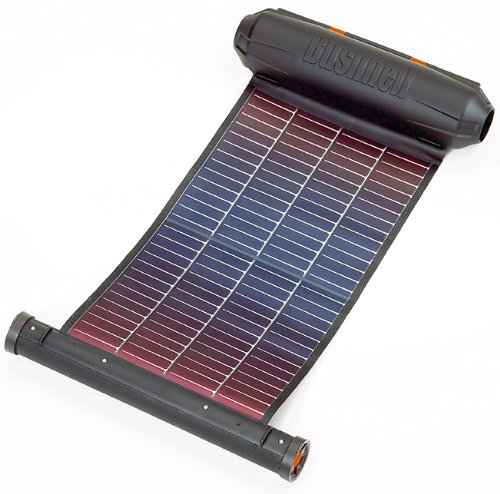
In the off-chance the weather stays in the normal range for California, I dug into my camping gear box to clean and reorganize those items I haven't used for far too long. I pulled out a day pack I haven't used in about three years because the straps were too flimsy and not positioned correctly for my bad shoulder. At the bottom, under some clothing, was a solar charger I first reviewed three years ago! I haven't made any hiking trips of any length in that time, so I had no need for a solar charger, which is why it has been neglected for so long.

http://amzn.to/2E6TLHH

As I said at the time, the model shown has been discontinued by Bushnell, but they have continued to make a line of somewhat unusual solar chargers. I like the idea of a flexible, non-rigid and non-glass screen charger, since I know how rough things can be treated in a pack or on a hike.
As an aside, why is a large percentage of camping gear either black or packaged in a black bag or covering? In the dark or a low-light situation, finding things is really difficult, which is why I overlooked the charger for so long.
After cleaning dirt off the bag (which I'm keeping as an Emergency Shareable Bag for friends) and removing some way-out-of-date jerky, repackaged almonds and clothes, I found the Bushnell solar charger. I set it up this morning, facing due South where it would get as close as possible to full sun in my yard.

After I arrived home this afternoon I picked up the charger, took it inside and didn't check it until evening. What I found is not what I expected: the charger did not show a full charge, and when I plugged it into a micro-USB cable, it showed as charging. 

The solar recharge time is supposed to be ~4 hours and the USB recharge time is ~6 hours. I've had it plugged in almost 6 hours now and the charging light is still on. Even though Lithium Ion batteries do not have what is called the memory effect that can damage them in recharging, they can and do go bad -- just not as quickly as traditional batteries. Do I need to say I'm disappointed? Yeah, I thought not.

I will be leaving the USB cable plugged in overnight, on the off-chance the battery takes a charge. Wish me luck.

UPDATE: This morning the "charged" indicator is lit! I need to drain the battery several times and see if I can, in fact, get a good, solid solar charge.

The Takeaway
  • Keeping an accurate inventory and cleaning out stored, seldom-used items can prevent expensive-for-me disasters.. 
The Recap
  • One (possibly dead) Bushnell solar charger similar to this model. $39.99 from Amazon, with free shipping but not Prime eligible. 
  • Surprising to me is the fact that 3 years on, the Amazon price for a current model is very close to the clearance price on my original buy!

Just a reminder: if you plan on buying anything through Amazon, please consider using our referral link. When you do, a portion of the sale comes back here to help keep this site running!

If you have comments, suggestions or corrections, please post them so we all can learn. And remember, Some Is Always Better Than None!

Tuesday, February 6, 2018

One Year, Three Blades: The Machete

I want to break down the three blades I'll be using for all my backwoods and "innasticks" work this year. I've explained some of the rationale behind my selections; now I want to show exactly what I'm carrying and how I expect they'll fill all the tool needs I have when I leave civilization. We'll start big and work down, meaning that this week we will focus on the SOGfari Kukri machete.

The blade on my machete is obviously a kukri pattern, but they offer many other styles including bolo and traditional Latin varieties. Whichever style you pick, they all accomplish the same tasks.

http://amzn.to/2DMGTCk
The handle is nicely rubberized and fits well in my hand, and has good, functional stops at each end to keep me from getting cut or losing the tool.

The overall balance is quite weight-forward, which is something we want in a chopping tool. Think of a machete as a hatchet with a long blade and a short handle; where an axe or a hatchet uses weight to build chopping momentum, the machete uses that forward balance to drive energy into your work piece.

The blade comes from the factory with a decent edge on it, as well as a sawback. The saw has sharp teeth in a very functional pattern, which makes me hope it will function well, despite being in a somewhat awkward position on the curved blade spine.

The sheath is where I encounter my biggest criticisms on this tool. It is slow and involved to draw from, due to securing the blade with a zipper and a Velcro flap. The kindest thing I can say about it is that it does a good job protecting the blade.

In addition, belt carry is less than ideal. If you have dreams of carrying this machete and wielding it like a short sword, I recommend eating fewer spicy foods before bedtime. I carry it on my pack in the same place I carry my hatchet. In that position, it carries well and the limiting parts of the sheath don't bother me as much, but they are something to be aware of.

All in all, it is a solid chopper and a good start to the three-blade toolkit.

Lokidude

Monday, February 5, 2018

Basics of Solar Panels: Limitations

This is the first in a series of articles about solar panels, so please understand that all topics will not be covered in this one article. 

Solar Panels (specifically Photovoltaic Panels, or PV panels) are a very popular prep right now. They provide power when things go out; they have very little maintenance; they are sold as being "very green"; and they can even be used to make money from the grid in the right circumstances. While these are attractive qualities, any prepper who is considering an investment in solar power must first determine if solar panels are right for them because as awesome as PV panels are, they have some fairly severe limitations to them, and they may not be what you want.

First Major Limitation: Size
(Power Density)
I am fond of using real world measures to show people what something actually does. An iPhone X battery -- which is a fairly good benchmark for a number of things, just because so many people are familiar with it -- is rated at 4000 milliamp hours (mAh). For an average user, you will want to charge it about once per day.

To charge that iPhone, you need 3-4 square feet of solar panels.

If you have a perfectly clear day and live in a high sun area (for example, Southern California or Arizona) and it is summer and you have a high-efficiency panel, you can get your minimum needed square footage down to about a one-quarter square foot. This isn't terrible, if that really is all you need, but if you need more than that, you will have to up the square footage. Charging an appliance, such as a window air conditioner, requires 40x or more that surface area of solar panels.

If you live where I do (in a mountainous area with moderate cloud cover most of the year), you may need to double or quadruple your solar panel area just for that. Is it winter? You have fewer hours of sun, so you need to increase your solar panel footage to compensate.

Second Major Limitation: Fragility
Solar panels are basically glass-coated electronics. The ones used for mobile applications are usually very tough, and cost more, but they still break if something goes wrong. The glass also gets scuffed over time, which can cause a decrease in effectiveness along with a chance of total failure.

They can be wonderful for long term stationary applications, and even for things like RV’s, but be aware of what they are, and what inherent problems they have.

Third Major Limitation: Cost
Solar panels are quite expensive. Because they have no fuel source, they may be able to recoup their cost in time, but the up-front cost is high.

Generally speaking, you will not find small batches of solar panels (less than a pallet load) of a reliable brand for less than $1-$2 per watt. That iPhone X solar charger mentioned earlier? The panels for that cost anywhere from about five dollars and up -- sometimes as high up as the $30-40 range just for something like that small panel, due to durability increases.

Remember that you also require infrastructure for those panels: batteries to store power, charge controllers, inverters (to tie into the grid or to use for yourself) and similar. These things add up, and even if you are buying a pallet load of panels at once, it can cost quite a bit.

All That Said...
If this doesn’t scare you off, there are some amazing things you can do with solar power. I will have follow-up articles for the next several weeks explaining some of those amazing things you can do.

Sunday, February 4, 2018

The Super Bowl and Preppers

Not actually Erin.
& is used with permission.
If you are watching the Super Bowl tonight, odds are excellent that you're watching it with friends or family. If so, take a moment to appreciate these people, for they are your tribe.

We've talked about the importance of Tribe, of having a close-knit group of people upon whom you can depend when things get messy. But your tribe should be more than a circle of preppers; they should be your family of choice, if not by blood, and that means you ought to spend time bonding with them by having fun.

Prepping is more about being ready for emergencies; it also means having supplies laid in so that when your friends come over, you will have what you need and not need to make a late run to the store for food, beverages, or charcoal.

So as you enjoy this most American of holidays, realize that you are also affirming what it is to be a prepper by surrounding yourselves with your chosen kin and digging into your supplies while enjoying yourselves.

Just don't forget to restock your pantry tomorrow.

Friday, February 2, 2018

Banging the Pillow: .32 ACP, Part 2


This week we revisit the Kel-Tec P-32 by propping up the pillow in the same manner as I did with the .22 Magnum to see if that produces a different result.

Thursday, February 1, 2018

Two More Swiss+Tech Gadgets

I bought a few of the other pocket tools that Swiss+Tech (ST) has to offer and gave them each a week or so in my EDC just to see how they worked out. Here's what I learned.


ST501196-in-1 Screwdriver
Features:
  1. Photo by Chaplain Tim
    #1 Phillips head screwdriver
  2. #2 Phillips head screwdriver
  3. Small straight screwdriver
  4. Medium straight screwdriver
  5. Metric ruler marked every 5mm
  6. Standard ruler marked every 1/8th inch

Pros
  • It's small enough to carry without noticing. I believe this is about the smallest multi-tool that ST has to offer and it weighs no more than a small keyring.
  • The construction is solid, with no plastic on this one. I have had poor luck with any multi-tool that incorporates plastic in its construction; the plastic always seems to be the weakest part.
  • It's made of some grade of stainless steel, so you don't have to worry about it rusting under normal use.
  • It has no cutting blade, this should be safe to travel with.
Cons
  • The tips of the screwdrivers weren't very well finished. The larger Phillips head was cut off-center, and both of the straight blades were rounded and not square with the axis of the blade. They almost seemed to be twisted a bit when new.
  • It's small, so you're not going to get much leverage with it. Rusty or corroded screws are going to be a problem, even moreso than with a traditional screwdriver.
  • The rulers are marked in large increments for a short length, so their versatility is limited. You're going to have to interpolate (guess) at measurements on either one.

Features:
  1. Photo by Chaplain Tim
    Mini-pliers
  2. Wire cutter
  3. Wire stripper
  4. Phillips screwdriver
  5. Straight screwdriver
  6. Sheet ripper

Pros
  • Like the ST50016I reviewed a few weeks ago, it closes on itself and locks onto a D-ring or key chain securely.
  • This one is much easier to open than the ST50016. The straight legs fold easily.
  • The screwdrivers were clean-cut and worked well on the few smaller screws I used them on (switch plates and conduit box cover screws). Handy in tight work spaces, too.
  • The wire cutter/stripper worked well on 12ga copper wire and will handle anything smaller than that. I'd avoid steel wire, since I doubt they used a high grade of stainless steel.
  • Without a cutting blade, it will set off metal detectors but should be safe from the TSA thieves.
Cons
  • Like the ST50016, the legs are attached with rivets which will be the weakest point and limit the pressure you can safely apply to the pliers.
  • I'm not exactly sure what a “sheet ripper” is supposed to be or do, and the instructions gave me no help. It appears to be just a mildly sharp edge on the inside of both legs and serves no real function that I could figure out.
  • The jaws of the pliers weren't ground evenly and do not meet, except for at the tip when closed.
  • The pliers are even smaller than the ones on the ST50016, barely opening one half-inch (12mm).

Conclusions
Both of these would be handy additions to a small tool kit for a motorcycle or bicycle, or thrown into a tackle box. While limited to light duty, they would both work better than any field-expedient tool for small bolts and screws. As long as you recognize their limitations, I feel that these two would be a good addition to any BOB/GHB.

The Fine Print


This work is licensed under a Creative Commons Attribution- Noncommercial- No Derivative Works 3.0 License.

Creative Commons License


Erin Palette is a participant in the Amazon Services LLC Associates Program, an affiliate advertising program designed to provide a means for sites to earn advertising fees by advertising and linking to amazon.com.