Wednesday, June 20, 2018

Prudent Prepping: Seasonal Changes

The dust has settled and the First 72 Hours have passed. Follow along as I build a long term plan via Prudent Prepping. 

It's finally warming up here and Summer is officially close, so I started swapping out the last of my cooler weather gear. What could possibly go wrong?

Road Trip
I spent last weekend in Reno for a graduation celebration. It was wonderful! I met some people that are now relatives by marriage, spent time with my son, and was caught a little short in my preps due to the weather. It wasn't really a bad error; I was just a little uncomfortable when the temperature dropped into the low 40's and high 30's at night. I had checked the forecast for the weekend and things seemed to be fairly mild, considering I was coming from ~50 ft altitude to ~4,500 ft in Reno.

What caused the problem? A not-so-unusual summer storm rolled in, and coupled with some strong winds and a little rain it made the evenings not fun. I had packed my normal GHB, a change of clothes for the event, and a windbreaker, but a light jacket or sweater and rain gear would have been useful. In my defense I tend to be a pack rat, so I was trying to keep the amount of gear I carried to a minimum.

What I did have in my gear was something that didn't see any use due to the unseasonably cool weather:

Mission Blue Microfiber Small Cooling Towel
https://tinyurl.com/ydyyuplo


There are neck wraps I have purchased in the past that were some sort of water-absorbing crystals inside a tube that kept you cool, but those were only sized and shaped to fit your neck. These are large enough to soak in water and wrap around your head AND neck!


From the Home Depot website:
Keep cool and feel refreshed in any condition with the original, durable Mission HydroActive Microfiber Cooling Towel. Ideal for any outdoor activity on a hot day so that you can stay cool when things heat up. Just wet, wring and snap the chemical-free towel, and the proprietary technology in our woven fabric cools to 30° below your average body temperature. The towel stays cool for hours when wet and is soft and absorbent when dry. From the toughest conditions to everyday use; the performance enhancing cooling towel helps you keep cool during training, working or exercising. The soft machine washable fabric provides you with years of reliable use. The Mission HydroActive Microfiber Cooling Towel is a simple solution to keep you cool and feeling comfortable in the heat, and on the go.
  • Proprietary technology cools to 30° below average body temperature when wet
  • Permanent cooling technology is re-usable, machine washable and dries soft
  • UPF 50 protection from the sun
  • Chemical-free
  • Stays cool for hours
Despite these not getting a workout in Reno, I will be using them on an up-coming fishing trip to one of several local reservoirs.

The Recap


If you have comments, suggestions or corrections, please post them so we all can learn. And remember, Some Is Always Better Than None!

NOTE: All items tested were purchased by me. No products have been loaned in exchange for a favorable review. Any items sent to me for T&E will be listed as such. Suck it Feds.

Monday, June 18, 2018

Cheap Gear Review: Peelu


Personal admission time: I have some terrible teeth. I have a ridiculous number of fillings, a crown on one of my front teeth, and I am pretty sure that I have bought at least one BMW between the dentists that I have gone to. Because of this, I am a big fan of good oral hygiene.

If and when SHTF, being able to maintain oral hygiene is a big deal. If you expect to be in a situation with limited water, or if every gram of weight counts, Peelu may be what you are looking for.

https://amzn.to/2t7gqfx

What is Peelu?
Peelu (also called Miswak and Selak, among other names) is a twig from the Salvadora persica (a type of tree) native to Africa and the Middle East. It has been used for oral hygiene for centuries (or millennia, according to some claims) and it appears to actually have an effect comparable to toothpaste on oral hygiene. The World Health Organization released an endorsement of it in 1986. There is still a debate about if it is better than toothpaste, and I have been unable to find a definitive study about that.

Pros and Cons
The advantage to Peelu is that all you need is a knife (or scissors, or a sharp rock) to trim the bark off an end of it. To use it, just chew on it for a couple of minutes -- it has a strong antimicrobial effect, and seems to work well -- and put it back in its container. There is no need to rinse your mouth, and the fibers on the end are non-toxic, so if you swallow them (which isn't recommended) it just acts as fiber in your digestive tract and passes through.

https://amzn.to/2t7gqfx

Disadvantages to Peelu are its flavor and texture, which are akin to the taste of a raw white potato and clove with the texture of a soft tree branch. I totally understand if this is off-putting; if I used this as an alternative for brushing my teeth, I would purchase the flavored ones (I prefer the mint ones).

Another disadvantage of Peelu is cost. A toothbrush is supposed to last three to four months, and costs about two dollars (or less); toothpaste costs about seven dollars for over a year's supply on Amazon, so total cost per month is usually just under a dollar. Peelu cost about a dollar a stick, and you have to replace them about once a month, so that's $12 or more a year.

Storage
To store Peelu in your bug out bag, all you have to do is throw it in a pocket; they tend to be fairly flexible and crush resistant. If it dries out (which I have only had happen when I tried it deliberately), it gets hard to use, so soak it in your water bottle for a few minutes, and it should work just fine afterwards.

I keep mine in a ziplock bag to prevent it from drying out, but you can also purchase a specialized case for one for about five dollars.

My Rating: 
5 professional, 1 personal
I strongly recommend Peelu for anyone who is looking to space of weight, so in that regard I give it five stars.

However, I find the flavor very off-putting, and the texture can cause problems for people who are not expecting it, so I rate unflavored Peelu at one star

So, in conclusion: if weight and space are issues and you aren't concerned about flavor or texture, Peelu may be a good option for you.


Good luck, and don’t forget to practice (or brush your teeth).

Thursday, June 14, 2018

Commuting

I'm looking at switching jobs soon, and since there aren't many local jobs that pay more than I'm making now I'll probably end up having to commute to the city again. The idea of driving an hour each way five days a week is displeasing, but I'm burning out physically and mentally where I am now, so it's time for a change. The change from work being 10 miles away to work being 45 miles away means I will have to make some changes to my vehicle and what I carry in it.

Vehicle
I currently drive a Ford pickup to and from work. It's handy for when I need to haul or tow something and the shop pickups are gone, but it only gets about 15 MPG. It's also coming up on being 20 years old and is starting to require too much maintenance too often to be considered reliable transportation. If I were to keep using my truck, the additional 70 miles per day would cost (using the current gas price of ~$3.00/gallon) $14.00 more every day. That's equivalent to losing $1.75/hr over an eight hour day, which means that I'd need to make that much more just to break even. The added wear and tear is harder to estimate, but the IRS uses $0.545/mile as a reference for gas and maintenance expense, which works out to a bit over $38/day (about $750/month) in extra cost. That's a monthly payment on a nice car with full coverage insurance.

One option is to find a vehicle that gets better mileage and has fewer maintenance needs, so I'm looking at used cars. There are plenty of small cars out there that get ~30MPG, which would drop the loss down to about $7.00/day or $0.875 per hour. That's a reasonable raise in wages to expect when looking for a new job, and the lack of maintenance bills will cover any car payments or increases in insurance costs. I'm currently scanning the local car markets, trying to find something that will carry what I need (GHB and such) and that I can comfortably drive -- I'm over 6' tall, so a lot of the really small cars don't have the leg room or head room for me to drive.

Carried Preps
I'll be traveling mostly Interstate highways instead of two-lane county roads, so my GHB is going to have to be modified.
  • Longer distance means I'm going to have to pack more food (water is covered by the same Sawyer filter as my current GHB). I could walk home from my current job in a couple of hours, but trying to walk from the city would be closer to a day or two due to terrain and distance. That means I'll need to add some sort of shelter and sleeping gear to the GHB, and probably a few more toiletries. Extra socks and maybe a change of boots are going on the list as well.
  • My vehicle first-aid kit is currently under reconstruction. The bag is over 20 years old and is starting to wear out, and I dumped a lot of the contents due to age a while back. I need to get it restocked and find a new bag that will fit in a small space, but that hasn't been high on my priority list. I have a smaller kit that I moved from another vehicle in the truck at the moment, but it is limited in its contents. With the possibility of a longer commute on a busy highway, I'm expecting to see more traffic and more accidents, so the first-aid kit has been bumped up a few notches on the list of things to get done.
  • I normally carry a full 5 gallon gas can in the back of my pickup. It's there for helping stranded motorists and making sure I have enough gas to get home (an extra 75 miles in the truck) in extreme situations. That won't be an option in a car, so I'm going to have to figure out a back-up plan for fuel. The requires more research and is something else to consider when looking at cars.
  • Tools are going to be an issue. I carry a lot of tools in my truck because I've had to work on it on the side of the road a few times. I'm praying that a newer car won't have as many mechanical issues and won't require as many tools, but I'll still have to find a spot for the minimal tool bag that I will always carry in a vehicle.

Being a prepper impacts all aspects of your life. Something as simple as switching jobs brings up a chain of things that have to be taken into consideration. This added complication can cause some people to avoid change, but I prefer to see it as a way to challenge my creativity and resourcefulness. I'll keep a list of what I have to change if I do end up finding a new job, and will explain those changes in a future article.

Wednesday, June 13, 2018

Bicycle Cable Locks for your Get Home Bag

& is used with permission.
If your route home takes you through urban areas, or if your GHB doubles as an overnight bag, I recommend that you add a bicycle cable lock to your preps because you never know what you might need to secure, such as:
  • the gate behind which you are sheltering for the night;
  • critical equipment to a tree or a pole so that it doesn't fall or is stolen;
  • or yourself to a safety rail.
Cable locks have the advantages of being small, lightweight, able to secure more things than a regular padlock due to their length and flexible nature. 

https://amzn.to/2JDHtsQ

I recommend a combination lock instead of a key lock. With four 10-digit dials, there are 10,000 possible combinations, which means it won't be easily cracked. There are also no tumblers accessible for picking like a traditional padlock. 

Furthermore, keys can be lost but a combination can be written down. If you are the forgetful type, I suggest you place a note with the combination inside a water-tight plastic bag alongside the lock. If you are worried you will forget the combination during a high-stress moment, use a Sharpie marker to write the combination on the wrist of your non-dominant hand so you can quickly access it. 

Best of all, if it's a programmable lock, you can give the combination to a friend (perhaps someone who needs to secure their bicycle?) and then change it later.


Safety is your prime concern during an emergency, and there are few places safer than behind a locked door. 

Tuesday, June 12, 2018

Prudent Prepping: Second Helpings at the Prepping Buffet

The dust has settled and the First 72 Hours have passed. Follow along as I build a long term plan via Prudent 
Prepping. 

It's refill time at the Good News Buffet!

I'm in a Big Box home improvement store 5 days a week, so many of the posts are focused on deals or products I see in my wanderings up and down the aisles. Here is another!

Food Safe Buckets
Yup, you read that correctly, I found food-grade 5 gallon pails in the Paint Dept. at Home Depot! The pails seem to be in stock in all the Home Depot stores in my area, but this might vary. With 2,200+ stores, I've seen products only be available regionally, so do some checking.

Labeled Food Safe


From the Home Depot website:
  • Durable plastic construction great for use at home or work
  • Carry handle helps you cart water, paint or food
  • Made with FDA-approved material for safe food transport


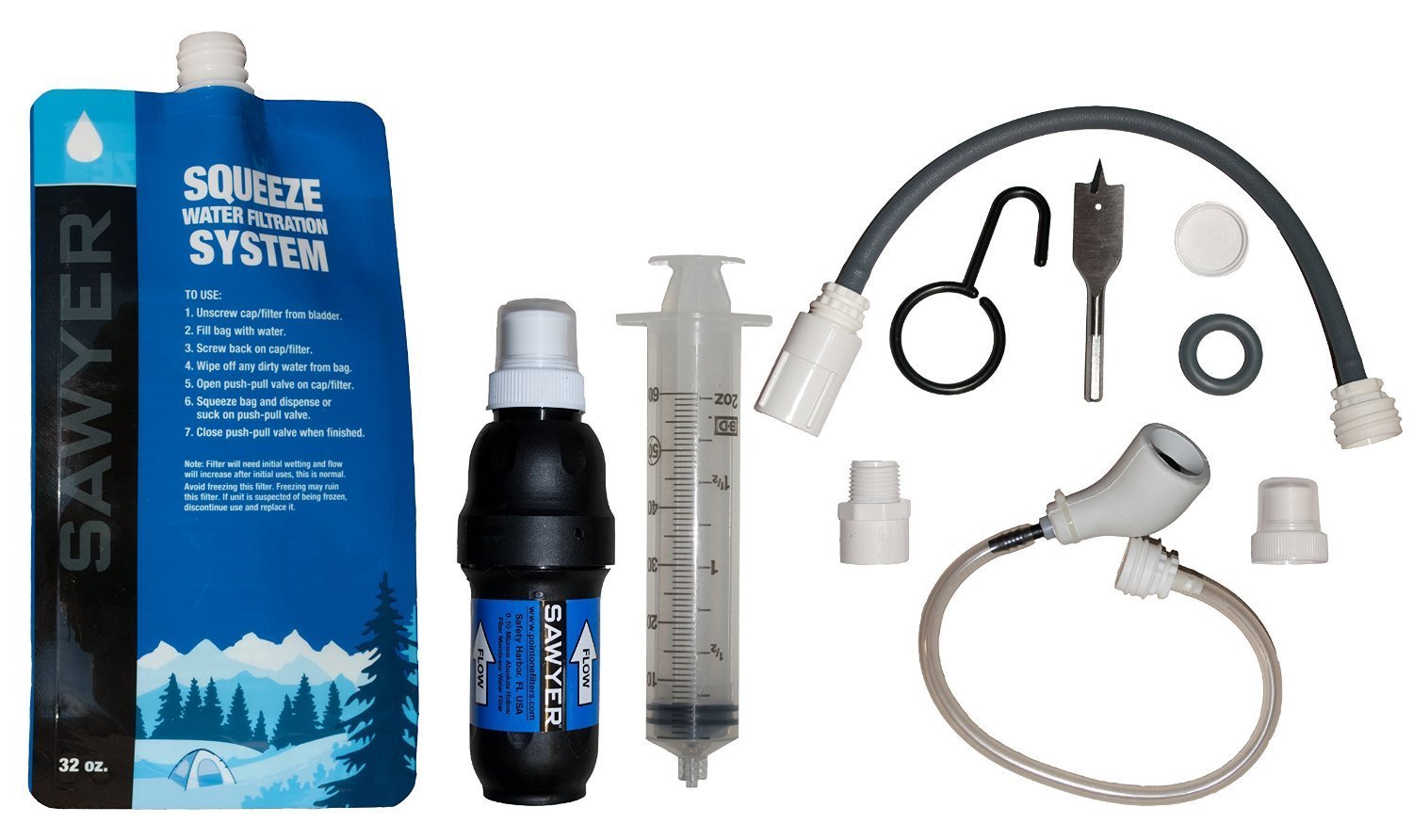
Why do you need food grade pails? Just think of the ways they can be used and not just for storing food. I expect to use several to carry water, both before and after filtering, and at least one will be set aside with the Sawyer Filter and spout adapter I wrote about here. I'm buying several more and encouraging my prepping group/friends to buy several and start setting aside dried goods in them.

I don't have my own garage now, so the 30 gallon metal garbage can I used for non-perishable gear was passed on to a friend and the smaller items will now be stored in these buckets. Even if I use several for bulky gear storage, they're still Food Grade Pails! The only downside is I haven't been able to see if any of the lids in stock (there are several) are Food Grade.

Sawyer SP 181
Here's my write-up of the steps involved to wake a pail ready to use as a base-camp water filter.

https://amzn.to/2HKinmo

 Some of the info on the Sawyer SP 181:

  • Made in the USA
  • Complete water filtration system designed for emergency preparedness, groups in the backcountry, and mission trips
  • Highest level of filtration on market -- removes greater than 99.99999% of all bacteria and 99.9999% of all protozoa
  • Bucket and faucet adapters provide high-volume clean, potable water from any fresh water source; easily field maintainable
  • Filter with built-in and removable push/pull cap; comes with one 32-ounce, BPA-free collapsible pouch for personal hydration
  • Backed by manufacturer's lifetime limited warranty (Independent Testing Laboratory Hydreion, LLC.; Microbiological Report S05-03)
I'm really happy with my various Sawyer filters and others have written about them here and here, with Chaplin Tim's post being a very thorough report on long-term use (and possibly abuse) of the filter system. Read up, compare and make a choice that fits your needs.


The Takeaway
  • 5 gallon food-grade pails can be found in the craziest places! I will keep looking for prepping gear wherever I go.


The Recap
  • Nothing was purchased this week, but these pails from Home Depot for $4.48 are a real bargain.
  • I still recommend Sawyer filters, with the SP181 as a good choice for a base camp $59.49 from Amazon with Prime.


Just a reminder: if you plan on buying anything through Amazon, please consider using our referral link. When you do, a portion of the sale comes back here to help keep this site running!

If you have comments, suggestions or corrections, please post them so we all can learn. And remember, Some Is Always Better Than None!

NOTE: All items tested were purchased by me. No products have been loaned in exchange for a favorable review. Any items sent to me for T&E will be listed as such. Suck it Feds.

Monday, June 11, 2018

Car Cooking

I originally had a completely different article in mind for today, but I had a small emergency on the way to work and school: I needed breakfast and I had no time to cook it before I went.

Since my commute is a good hour to hour and a half depending on traffic, I knew it would have plenty of time to cook, so I grabbed some week-old leftover garlic bread and fixings, threw it in a foil package, and away I went. By the time I got to school, it was cooked, and it tasted excellent.

Here's the important part: I cooked it in my car, specifically on the exhaust manifold.

(For those of you who are thinking of The Roadkill Cookbook, and thought it was a joke, you obviously don’t know enough Cajuns and or Rednecks.)

Two methods of cooking food in your car are popular: The “on the go” method of putting foil-wrapped food on your engine manifold, and the “stationary” method of using your car as an oven and baking with it.

Foil on Manifold
The foil wrap method is fairly simple: Take your food, wrap it in heavy-duty non-stick aluminum foil, and place it on your car's engine manifold.


The food should be completely enclosed and not dripping anything from the package (if that happens, it tends to generate a burning smell), and it works best if the food selected still tastes good even if it's a little under- or over-cooked -- it can be very hard to determine the exact cooking time with an engine, and it takes some effort and practice to get it just right.

When you put the package on the manifold, make sure that it will not slide around or catch in any moving parts! I have never had an issue with this, but I've been told that it makes an unreasonable mess. Thankfully, I haven't heard of anyone causing actual damage to their car from having potatoes fall out in the engine compartment.

I have found that food cooked this way works best if it is cut into small pieces, has some kind of oil mixed into it, and is inside a package that can be laid across the manifold, giving the food maximum contact with it. I've also discovered that this method works best with food that isn't frozen when the trip starts, mainly because that generates a lot of liquid and you don't want your package to leave (see above).

For a short trip like to and from work I prefer to cook things that just need heating, whereas road trips are opportunities for better-cooked meals. Some of my personal favorites are sandwiches with melted cheese, hot dogs, baked steak (or cheese steak), and MREs in foil packets.

Baking
For those of you who live in a hot climate, you will be familiar with how hot your car gets in the summer -- it basically becomes one big solar oven, which is how this method cooks food. This method does not work well in most climates during the winter. In the summer, however, even in the far northern US, you can bake things in your car.

This method works wonderfully to heat food that does not have to be baked precisely; it is very difficult to set your car to 350 degrees F for exactly 2 hours. In my experience, a cookie sheet with parchment paper on it works best. I leave the product that I am baking on my dashboard and make sure to park facing the sun. Once again, it takes some practice to get this exactly right.

My personal favorite with this method is to bake cookies, but I've also made made soup, cake, and baked potatoes. That last one is difficult, but after a day of hiking in Arizona they were great.


I am sure that with some experimentation you can find out what works for you. There are a lot of very tasty foods that you can cook with these methods, and it is surprising how many foods can be cooked in the field this way,  even in “field expedient conditions”.

Have some fun. Experiment. Don't lick the wires, but you can lick your fingers afterwards. 

The Fine Print


This work is licensed under a Creative Commons Attribution- Noncommercial- No Derivative Works 3.0 License.

Creative Commons License


Erin Palette is a participant in the Amazon Services LLC Associates Program, an affiliate advertising program designed to provide a means for sites to earn advertising fees by advertising and linking to amazon.com.