Tuesday, March 12, 2019

Chemical Specialty PPE

I’ve discussed Personal Protective Equipment (PPE) a couple of times in the past, and for good reason: it's the last line of defense against injury when doing work. In addition to basic PPE, there are specialty protective items that are used to address dangers related to particular tasks.

One fairly common work hazard involves chemical exposure. Part of my work this week has involved repairing the power feed to some pumps in a sewer manhole. In addition, many of my hobbies involve volatile chemicals. Additionally, a lot of prepper tasks can leave you exposed to the same kinds of risks, so having the correct protective equipment on hand will help keep you safe and healthy.

Inhaled Particles and Fumes
https://amzn.to/2TEIuGs
When dealing with dust and particulate matter in the air, a basic dust mask works wonderfully so long as it meets the National Institute for Occupational Safety and Health (NIOSH) N95 standard. I also feel like the small extra charge for the exhalation valve is money well spent, because it keeps my face cooler and my glasses from fogging. This mask, however, does nothing to protect you from the gases in the air you breathe.


https://amzn.to/2TAN5t8
For fumes and harmful vapors, a chemical cartridge mask is what you need. Similar in principle to the classic “gas mask,” these masks use replaceable cartridge filters to remove harmful chemicals as you breathe. Each type of cartridge is only useful with specific chemicals, however, so make sure you’re using the right ones and changing them as recommended by the manufacturer. Each mask will come with complete instructions for the use and care of the product.

Cartridge masks are available in both half- and full-face configurations. My personal mask is a half-face, because it is cooler, works better with my prescription eyewear, and I don’t often deal with environments so hazardous that I need sealed full-face protection. However, if you feel you need this protection, it is available.

One other major concern arises with respiratory protection: facial hair. As anyone who has been trained in its use can tell you, facial hair is largely incompatible with respiratory masks. It makes getting a good seal between the mask and your face virtually impossible, which renders the mask itself almost useless. I have come to accept as a fact of life that I have to use my mask for anything, my beautiful ginger beard will get a heavy trim. It's a sad but necessary requirement to protect my lungs.

Facial Protection
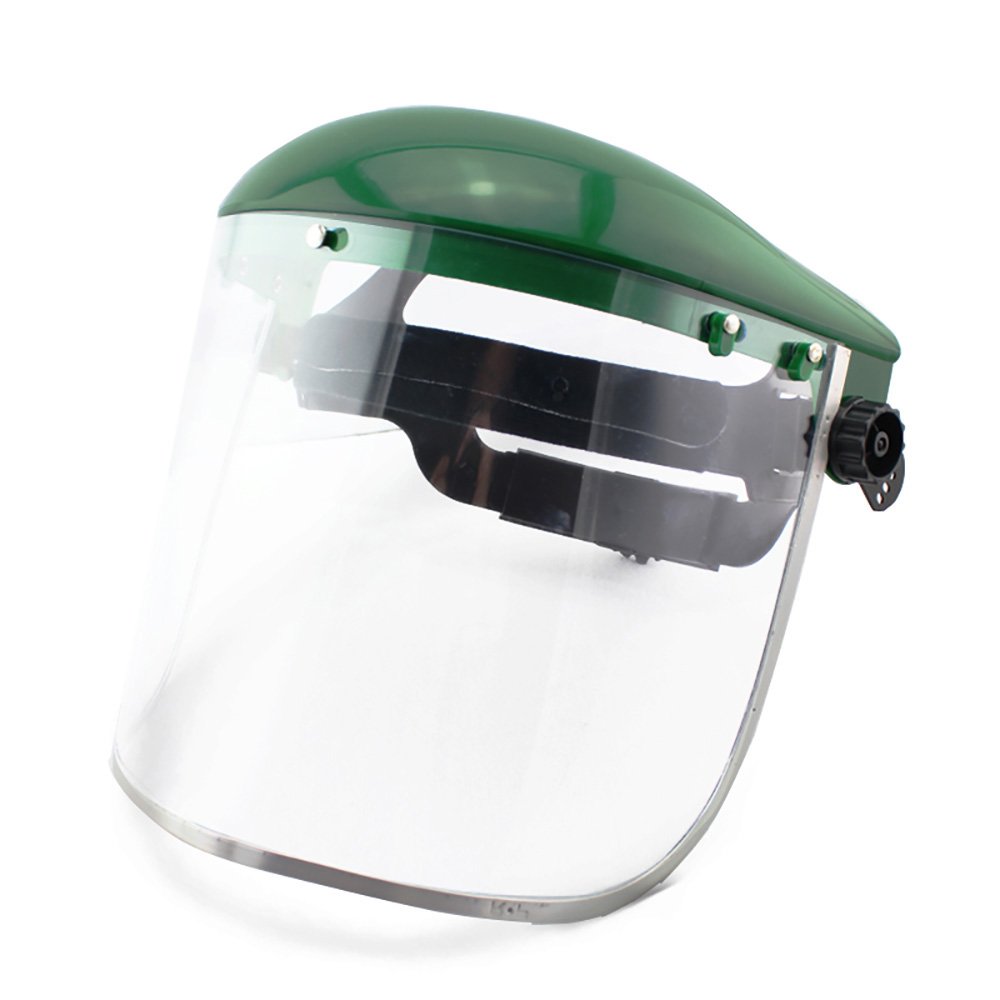
https://amzn.to/2EUGj79
That same beard may get referred to as “face armor,” but it's worse than useless if caustic or otherwise harmful chemicals get splashed into my face, as the beard can hold the chemical against my skin or even ignite. Safety glasses protect the eyes in the event of a splash, but there’s a whole lot of face that is still exposed and can be grievously harmed. A face shield will keep sparks, splashes, and hot spatter away from you and keep your face away from harm.


Hands
https://amzn.to/2NZfHWW
Your hands are always vulnerable to harm, since they’re usually in direct contact with the hazards you’re addressing. Gloves are a necessary protective item, but when you’re dealing with chemicals, a cloth or leather glove can be at least as harmful as helpful, because it can trap dangerous and damaging materials and hold them against your skin. Gloves are also very difficult to take off in a hurry, so this prolonged contact can dramatically increase the damage suffered. Chemical-resistant gloves don't absorb dangerous substances or allow them through to contact the skin. They're also thicker than nitrile or latex gloves, meaning they last longer and are far less easily damaged or compromised.

Coveralls
Your clothes are also vulnerable to the same weakness as normal gloves. Chemicals can soak into your clothing, destroying it and harming you. When you’re working with very hazardous materials, or in an environment where spills and splashes are most likely, a disposable coverall suit with a hood gives a nearly complete body covering. Combined with the rest of the PPE I’ve discussed here and elsewhere, this outfit will protect you from almost any chemical exposure a prepper will encounter.

The kinds of exposures it won’t help with are the kind requiring very expensive, very specialized gear and training [e.g. MOPP gear, or Mission Oriented Protective Posture gear, usually designed for chemical, biological, radiological or nuclear weapons], and are situations into which one shouldn’t enter unless it is your job or your duty to do so and you have the gear and training available to properly handle them.


Chemical exposures can be very dangerous. The kinds of protective gear needed to deal with them are inexpensive and readily available. There is no reason to be unprepared.

Lokidude

Monday, March 11, 2019

Emergency Heat: "New" Old Kerosene Heaters


The good: Kerosene and its heaters are cheap to buy, unlike propane canisters.

The bad: Unlike propane, kereosene isn't available everywhere.

The ugly: Kerosene goes bad, and while burning it stinks like diesel.

Again, if you don't have a combination carbon monoxide/smoke detector, get one.


Saturday, March 9, 2019

Iron and Vitamin Supplements for your BOB

Not actually Erin.
& is used with permission.
I am some degree of anemic. I base this upon my observed experiences over several years (mentioned here and here on my personal blog) where the introduction of 25-50 mg of iron via a supplement is enough to combat feelings of lethargy and brain fog.

I'm going to stop you right there. I can already hear the comments being typed in:
  1. You don't need supplements, just cook everything in a cast iron pan!
  2. Be careful, you don't want to overdose on iron!
  3. Are you sure it isn't [X]? You should get that checked / use this other supplement instead. 
Yes, I've heard all this before. Here are my answers:
  1. I'm really skeptical about the amount of iron that will leach into my food through cast iron cooking, and even if it did work, I'm not going to eat exclusively from cast iron for the rest of my life. 
  2. You're right, iron poisoning is nasty stuff. However, iron overdose only begins at 20 mg iron per kg of ingester (me), and a lethal dose is 60 mg/kg. So if I weigh 60 kg, that means I can safely ingest 1200mg of iron before it has any adverse effect on me. That's twenty-four times my daily dose, so even if I eat a big steak (6 mg iron in a 250g [8 ounce] steak), I'm nowhere near the danger zone. 
  3. Yes, I'm sure. I've been like this since 2012, but here's a more recent example: I briefly ran out of iron this week and was unable to take it for two days. The first day I was all right, but on the second I crashed like a rock into a pond. I had no energy and no desire to do anything except stay in bed. Then more iron arrived, I took it, and I immediately perked up. 
So based on all this, it is vital that I have iron supplements in my various Bug Out and Get Home Bags. I'm going to need energy in a disaster scenario, and that's not the time to find out if I can get the proper nutrition to carry me through.

https://amzn.to/2EZER4Y


I require a dose higher than most supplements provide (typically between 10 and 15 mg), so this is what I take on a daily basis. At $11 for 90 capsules, Vitamin Shoppe Comfort Iron is a very economical way for me to keep my energy on an even keel.


https://amzn.to/2XVdfW2


However, for my BOB and GHB I have this. It's slightly more expensive, but it's chewable and it also contains 100 mg of Vitamin C, which is also a good thing to have in an emergency as it boosts your body's immune system and prevents diseases like scurvy. 


Even if you don't have anemia, it's a good idea to have some form of multivitamin in your Bug Out and Get Home Bags. I recommend Centrum multivitamins; not only do they have a good spread of ingredients, but they come tailored for the specific chemistries of men, women, and adults 50+. If you have children in your family, don't forget to pack vitamins for them, too.

Thursday, March 7, 2019

CD3WD

I was wandering through a prepper-themed social media site the other day, and I saw someone asking for a source of e-books to store on a laptop in the event of TEOTWAWKI (“The End Of The World As We Know It”). 

Years ago, I followed a project designed to accumulate information for use in third-world countries — mainly basic agricultural, science, and construction information — so I started digging. It was called CD3WD, short for “Compact Disk of 3rd World Data,” and the project ended up with slightly more than could be fit onto a single CD.

I did mention that this was several years ago, right? CDs were a viable way to store information and could be read by any computer available at the time, but they have since been rendered obsolete by USB drives which hold far more data. A data CD could hold about 700 MB (0.7 GB for the kids who never had to deal with anything less than a GB), and the common CD-R has a shelf-life of a few decades depending on the type of dye used in its manufacturing. They were cheap and easy to make, so they were popular for a while. Modern computers may not even come with a CD/DVD drive installed any more; my wife’s new laptop didn’t.

The CD3WD project collapsed years ago and their servers were shut down, so its collection of data has been unavailable in the interim... until I managed to find a mirror site that is still up. I was digging around for general knowledge that should be saved for a rainy day, and lo and behold, there was my old friend listed, along with 27 other sources of free information. Some on the list were familiar (such as Google library and Project Gutenberg), but there are several that are going to require more investigation. It's time to dig out a couple of thumb drives and external hard drives, folks, because there’s a mountain of free information available.

The source I found is called the Autarky Library. It’s a European site, but it and most of its resources are in English. It does, however, require signing up and creating an account to download the information. Autarky would likely be written Autarchy in English, and it is the political concept of self-reliance bordering on anarchy. I know we don’t do politics here, so I won’t go into the pros and cons of the site or its philosophy, but the collection of information was just too big and too useful not to pass it on to the rest of you. If it could be useful in building or rebuilding a society, you’ll find some information about it in one of the sources listed.

Formats vary by source, with PDF being the most used, but the common e-book formats of MOBI (Kindle) and EPUB (Nook/other)] are options for a few. The types of information found in this library are amazing — everything from recipe books to machine tool operation, books written in the 1700s and books written in the 1960s, scholarly texts and Peace Corp manuals.

I just wish I had found this mountain of information a few months ago; it would have given me something productive to do over the winter. With spring approaching, my research time will be curtailed, but the time I’ll have available for getting out and actually testing and doing things will increase. It’s been a long winter, and I’m ready for spring.

Wednesday, March 6, 2019

Prudent Prepping: EDC First Aid Kit, Part The Latest

The dust has settled and the First 72 Hours have passed. Follow along as I build a long term plan via Prudent Prepping.

After wearing the kit I discussed in the post two weeks ago for almost three weeks now, I have done what Jonathan Sullivan mentioned in his Home Hardening blog (to which I linked that week): I stepped up to a larger phone holder, the Maxpedition PLP iPhone 6s Plus Pouch

Jonathan Sullivan mentions the benefits of stepping up from the PHP to the PLP:

“In retrospect, I probably should have gone with the PLP — it’s half an inch larger in every direction[sic] — but the PHP works just fine, and is low profile, both literally and figuratively. Also, this should fit fairly easily in most cargo pockets, if you don’t like belt carry.”

https://amzn.to/2EQRD5K
I wore the PHP and it fit well, but I had a very hard time getting everything I wanted to carry into it, such as a compression bandage to go along with the Adventure Medical Kits Advanced Clotting Sponge.

From the Amazon Maxpedition page:
  • The overall size is 4 (L) x 1 (W) x 7.5 (H) inches. Custom Positive Grip zipper pulls make opening the pouch faster and easier;
  • The phone pouch is sized to fit the iPhone 6s Plus;
  • Lightly padded, felt loop-lined case.
We'll come back to the felt loop-lined case in a bit.

Current Kit Items
The basic items previously listed:

What’s New
With the new, slightly larger PLP case, I’m now carrying an actual bandage to hold down my clotting sponge!

https://amzn.to/2XExWp0

From the Amazon listing for the H&H Mini Compression Bandage:
  • A fast, effective tool for many types of trauma and injury
  • Flat folded to create a small tight package
  • Less than a half of an inch thick!
    This bandage is designed to cover a wound by itself or to hold down another pad, such as a clotting sponge.

    From the H & H Medical webpage:
    “Designed to be our smallest and thinnest trauma compression bandage, the H&H Mini Compression Bandage provides the same emergency trauma capabilities as our Thin H bandage in a smaller, more versatile package. Manufactured with a 4”x6” ABD pad, it’s vacuum sealed and flat folded to be small enough to fit in a shirt vest or pant pocket. With our 4-foot proprietary elastic strap (stretched), the Mini Compression Bandage is strong enough to provide compression to wounds on any location.
    “Perfect for use in all situations, especially on children and elderly with thin limbs, the Mini Compression Bandage provides a fast, effective tool for many kinds of traumas and injuries (particularly those involving arterial bleeding in extremities). The H&H Mini Compression Bandage comes in a sterile, vacuum-sealed 5 mil barrier bag, flat folded to create a small tight package that’s less than an inch thick!”
    I wanted to have something other than duct tape in my kit to hold down a dressing or pad, and the Maxpedition PHP just didn’t have sufficient room to hold everything I really needed to carry.

    I gave away a PLP purchased previously (wasteful, I know) and kept the PHP... but I did nothing with it. I don’t plan to make the same mistake and not use the equipment I have on hand to carry first aid supplies. The PHP will be moved into a side pocket of my salesman bag, still loaded with everything from before, along with a compression bandage held on the outside via rubber band!

    How Does Everything Fit?
    Actually, it fits reasonably well. The clotting sponge and compression bandage are packaged in extremely stiff material: heavy gauge vinyl for the bandage, and thick mylar/foil for the sponge. Part of the problem in fitting everything into the old case, let alone the new one, was that packaging didn’t allow for folding items into as compact a shape as I’d like.

    Now, about the ‘felt loop-lined case’ I mentioned in the initial description: with the hook-and-loop closure straps on the tourniquet, folding everything so it would slide into the pouch without adhering to the case was ‘interesting’ in the Chinese-curse definition of the word. If you didn’t care that the straps stuck to the sides of the case as you inserted them, there would be no problem. However, there would be a problem when trying to remove the tourniquet in a hurry, since those hooks on the strap really bond with the interior of the case. I needed two hands to get the tourniquet out of the case, and that doesn’t sound like a good idea in an emergency. I spent extra time folding and refolding the strap to get the hooks on the inside of the packet, so everything would slide into and out of the case without a snag. The case with everything in it is now slightly longer, wider, thicker, and weighs fractionally more than before, but I don’t think it will matter. I’m going to give this version a week or two trial before deciding if I’ll continue with a belt-carry trauma kit.

    The Takeaway
    • Sometimes smaller isn’t better. 
    • An actual bandage, if it will fit, is a better choice than duct tape.

    The Recap

    Caveat
    As I have stated before,
    I AM NOT A DOCTOR, NURSE, OR EMT. THIS IS NOT MEDICAL ADVICE. SEEK TRAINING IF YOU DON’T ALREADY HAVE IT.
    Be safe and be prepared.

    * * *

    Just a reminder: if you plan on buying anything through Amazon, please consider using our referral link. When you do, a portion of the sale comes back here to help keep this site running!
    If you have comments, suggestions or corrections, please post them so we all can learn. And remember, Some Is Always Better Than None!

    NOTE: All items tested were purchased by me. No products have been loaned in exchange for a favorable review. Any items sent to me for T&E will be listed as such. Suck it Feds.

    Tuesday, March 5, 2019

    UST Fire Kit Upgrades

    I mentioned in my unboxing video of the UST Fire Kit that I was going to capitalize on all the extra space in that box by adding some of my favorite fire-building bits, much of it is being cloned from my original fire bag. While I love my fire bag and everything in it, it's a whole lot of overkill. I'll keep it around in its current form for teaching and showing off, but I'm going to cherry pick from it for the waterproof box.

    While I've lit probably hundreds of fires with a ferro rod and striker, and even a couple with actual flint and steel, the utility of an actual standing flame cannot be denied. The go-to for this purpose is, and will always be, the cheap, basic disposable cigarette lighter. For the sake of saving space I'm using the most compact model my local gas station offers.

    In addition to the lighter, I'm putting in 15' of jute twine. While the kit comes with a pretty good tinder, the twine is still great for stringing a firebow, lashing small items, and dealing with all sorts of other unexpected issues.

    I'm also adding a few things that are absent from my current bag, the first being a small knife. While it won't do anything for batoning or breaking down firewood, a small blade makes a great backup striker for your ferro rod. It's also vital for making fuzz sticks, splitting twigs into small tinder, peeling bark, and innumerable other fire-making tasks. The specific blade I'm using is a Kershaw Cinder; it's about the size of a fifty cent piece when closed, making it one of the smallest locking blade knives on the market. Despite its minute nature, the lock is solid and strong, and it offers just enough hand grip to do effective work.

    I'm also adding a tube of lip balm. Most modern balms have a wax or petroleum base and will burn very aggressively. If you need a bit more burn time on your tinder, a bit of this balm will give it to you. This is very handy if your kindling is difficult to start, and it can make the difference between fire and frustration.

    As I use up the included tinder, I plan to replace it with cotton makeup remover pads, which are my absolute favorite tinder.

    Keeping this fire kit a bit minimalist gives me space to carry tinder and materials I gather through the day. It also allows me to add things in the future, as any plan you have should be constantly evolving and changing to keep up with circumstances.

    Gear tuned to your skills and needs is the best gear.

    Lokidude

    Friday, March 1, 2019

    Emergency Heat: Propane


    How do you heat your home if the power goes out? You can use a propane canister like I demonstrate in this video.

    If you use one, be sure to have a carbon monoxide/smoke detector combo. If you don't, you can get one from Amazon for around $30.


    Bonus Video: Repurposing used olive oil for chicken feed!


    The Fine Print


    This work is licensed under a Creative Commons Attribution- Noncommercial- No Derivative Works 3.0 License.

    Creative Commons License


    Erin Palette is a participant in the Amazon Services LLC Associates Program, an affiliate advertising program designed to provide a means for sites to earn advertising fees by advertising and linking to amazon.com.