Sunday, October 20, 2019

The Importance of Faith

Not actually Erin.
& is used with permission.
Don't worry, this isn't going to be a lecture on religion. I'm the last person to tell you what you should believe. I just want to make two points about faith. 

First, I feel it's important that people believe in something. What that something might be is up to that individual to decide, as is how they practice that belief. The world can be a dreary, dreadful place at times, and during a disaster it can seem a lot darker. In a survival scenario it's practically necessary to believe in something that gives you hope and raises your spirits, because a positive mental attitude and a reason for living are the most important resources a survivor can have. 

I've struggled with depression most of my life, and even though I've never lacked food, water, shelter, clothing -- all the things needed for survival -- there were a few times where I strongly considered suicide because I had lost hope. If it's possible to contemplate suicide while having everything necessary for life, then being in a survival situation where those things are lacking only increases that chance for despair. You may die without water after three days, but three hours without hope can be just as deadly. 

Believe in something that uplifts you and rewards that faith. 

Second, don't be afraid to put faith in people. I don't mean all people, of course; there are plenty of human beings out there who don't deserve your faith, and a smaller (yet viler) percentage of them who will actively take advantage of you. No, what I mean is that you need to have people in your life whom you trust, and in whom you can put your faith. 

The more I learn about prepping, the more I am convinced that none of us can ever be self-sufficient by ourselves; there's simply too much for one person to do. Humans are social creatures by necessity; we lack the strength, speed, and natural weapons of most predators to survive alone. More than tool use, I believe that it's our ability to communicate and form tribes which makes humanity a successful species.

Find your tribe, cultivate them, and put your faith in them. 


Thank you for listening. I sincerely hope you have something you can believe in and people in whom your faith is secure. 

Thursday, October 17, 2019

Drinking Container Safety: Common Materials

Erin mentioned some potential hazards from drinking out of plastic containers (BPA) and aluminum, and asked me to add to the list of do's and don'ts for choosing what to drink from. During my research I gathered more information than most people can absorb in one article, so I'm going to split the metals off into a separate post and cover the other common materials today. There may be a third article for uncommon materials if I dig up even more data.

Plastics
There are more kinds of plastic on the market than I care to list. Most plastics are petroleum-based, and the few that aren't are chemically similar to the petroleum-based plastics. Some plastics are made with or treated with BPA (Bisphenol A) or phthalates, both of which are endocrine disruptors (they mimic hormones produced by your body's endocrine or ductless glands). BPA is bad news and has received a lot of press over the last few years, so avoid it as best you can.

Plastics are formed by purifying and twisting basic hydrocarbons to create selected monomers. These monomers are then chemically or physically bonded together to form polymers (hence the use of the "poly-" in most names) with interesting properties.

Plastics are usually separated by the industry-standard recycling number stamped or cast into the plastic.

#1: PET (Polyethylene Terephthalate)
  • Clear and smooth, this is the plastic commonly used for single-use (disposable) soft drink bottles and peanut butter jars.  
  • Avoid prolonged heat, as that may cause harmful chemicals to leach out of the PET. 
  • Bacterial growth is more of a problem when reusing bottles that contained sugary drinks than any chemical hazards.

#2: HDPE (High-density Polyethylene)
  • Considered "Food grade" by the FDA, this is the safest choice. 
  • Milk and water jugs are normally made from HDPE, so it has a track record as a safe plastic to use with food and drink. 
  • Most 5-gallon buckets are made of HDPE. 
  • David's Nalgene bottle which he finally managed to break was made of HDPE.
  • PEX (cross-linked Polyethylene) water pipe is made of HDPE and is rated for hot and cold water.

#3: PVC (Polyvinyl Chloride)
  • The common water and sewer pipe plastic. When heated, PVC can release phthalates and other chemicals, which is why hot water piping requires the use of CPVC (Chlorinated PVC) pipe. CPVC is less likely to leach chemicals into the water inside it, so it is a safer choice.
  • PVC is also used in plastic films or sheets for things like shower curtains and cheap rain gear, but making it flexible requires the use of softening agents that can be harmful. Collecting water in a PVC poncho is less of a risk than trying to store water in a can lined with the poncho.

#4: LDPE (Low-density Polyethylene)
  • Typically used for films like bread wrappers, LDPE is normally a single-use plastic that is food safe. 
  • Thin films may be useful as a liner for a container, but will lack the strength to be of much use for storing or transporting water by themselves.

#5: PP (Polypropylene)
  • Available in a wide variety of types, PP is opaque or translucent and has a high melting point which makes it safe for microwaves and dishwashers.
  • One of the safer plastics available, you'll see it used in yogurt  and food containers. (In my opinion, yogurt isn't quite food, but it wants to be.)

#6: PS (Polystyrene)
  • Hard or foamed, PS is the common material found in plastic dinnerware and styrofoam cups. 
  • PS can release unpolymerized styrene, which is a slow poison that accumulates in a body's fat over time.
  • Handy as an insulator, but not a good choice for storing food or water.

#7: Mixed or Other
  • Literally mixed plastics of unknown origin. This one is a gamble, since you have no idea of what is in the mix.
  • If you see a "7" and the letters "PC" on a container, it means that it is made of Polycarbonate which is made using BPA. 
  • This is the "last resort" of plastics for food or water.

Naturals
Coconut shells, dried gourds, and folded leaves are all examples of natural cups.
  • If the material you've chosen comes from an edible part of a plant, it's safe to use as a cup as long as it hasn't started to rot.
  • Broad, smooth leaves will be safer than narrow, fuzzy ones because the "hairs" on leaves is where many plants keep their poisons. The fuzzy leaves also collect more dust and dirt that you'll have to clean out of your water before drinking it.
  • Leather can be used for short-term storage of liquids. The use of wine skins for several thousand years has proven that it's a safe choice.
  • Wood is usually a safe choice as there are few poisonous types of wood in the world, but avoid cedars, birches, and gum trees if you're making cups and bowls since they're all toxic. Some of the more exotic woods of the world are also toxic, but you're less likely to find them laying around.

Glass and Ceramics
  • While different materials, these are similar in structure and composition. Both are primarily made of silicon, a stable and abundant element.
  • Glass and glazed ceramics are smooth on the molecular level, leaving very little space for bacteria to grow. This also makes them easy to clean. 
  • Heavier than plastics and much more fragile, glass is a good option for stationary prepping (hunkering down or shelter in place) and long-term food storage like canned vegetables.
  • Unglazed and partially-fired ceramics are porous and will provide ample opportunity for nasty things to grow in your food and water. They are useful for transporting, but not for storing foods and water. 
  • Unglazed ceramics are a lot easier to make. Old-school crocks for making pickles and sauerkraut were often only glazed on the inside to save money in production while still being safe for food use.


Obviously,  if you have no other choices you'll use whatever you can find to hold water. This information is for when you have choices.

Wednesday, October 16, 2019

Prudent Prepping: Earthquake! Part the Latest

The dust has settled and the First 72 Hours have passed. Follow along as I build a long term plan via Prudent Prepping. 

Well, the post I wanted to make last week has been pushed back again. I wonder if the idea behind it should be shelved, since things are conspiring against turning it in...

Earthquake!
Yeah, we had a medium-size one last night, 4.5 on the Richter Scale; big enough to wake me up and shake up the dog, but not enough to break anything here. It was quite a surprise to our recently arrived from overseas house guest! They are used to typhoons, but the house shaking for no apparent reason was a novel experience for them, and there was a little squealing and shouting from one end of the house to the other, checking on everyone.

That by itself wasn't too bad, but the text messages coming in for the next hour wore me out. I was scheduled to start an hour early that morning so I really needed some sleep, but the check-ins were (and are) appreciated.

This past week has really been crazy at work. How crazy you ask? This crazy!

Prepping Without Knowing How
With PG&E's announcement of a preemptive power shutoff, flashlights and batteries sold out fast along with the normal stock of generators carried in local stores. Many people decided to place orders to guarantee having one in case the power actually went out in a larger area than was first outlined. From last Monday to this Wednesday morning, a local store ordered and sold 144 generators of several sizes. This morning, the store I was in sold out of generators again.

I believe the blackout, and now an earthquake, has really opened many peoples' minds to planning for a disaster. Thursday the 17th is the 30 year anniversary of the (almost Big One) Loma Prieta Earthquake, and on the U.S.G.S. website is an explanation of what happened -- and what will happen -- to this area in the future. I wrote about earthquake prepping and showed an animation in this post from last year that pretty accurately showed where things were shaking in last night's quake. Please read through the linked posts under "What To Do". My fellow bloggers show what, and also explain why, they do when planning for a disaster.

Blackout Update
P.G.&E has said that all but a few isolated areas will soon have power restored. Now that they have potentially prevented a fire similar to what So. CA. had this past weekend, the Governor is now demanding PG&E pay people affected by the blackouts $100 and businesses $250, while respected news outlets are questioning whether this situation is potentially the New Normal for California.

Here at Blue Collar Prepping we have a very strict 'No Politics' policy that is enforced for members and bloggers, so I am not blaming any party. What I am going to blame, however, is 50 years of forest mis-management (in my opinion) and short sighted business practices for contributing to the fires that have burned too many square miles, destroyed far too many structures, and killed so many people for far too long.

Be safe and be prepared.

Takeaway And Recap
  • Nothing was purchased for this week, but I'm being asked even more questions on where to start. I have to dig my prepping books out of the totes to see which might be a good beginner book.
* * *

Just a reminder: if you plan on buying anything through Amazon, please consider using our referral link. When you do, a portion of the sale comes back here to help keep this site running!

If you have comments, suggestions or corrections, please post them so we all can learn. And remember, Some Is Always Better Than None!

NOTE: All items tested were purchased by me. No products have been loaned in exchange for a favorable review. Any items sent to me for T&E will be listed as such. Suck it Feds.

Tuesday, October 15, 2019

Diagnostic Procedures

Diagnostic procedures are the methods involved in finding the root of a problem. You drill through a list of tests and potential issues, eliminating them until you find the problem. In my case, the problem is that my truck won't start. Lets get into my methods and see how I find problems.

Knowing what a piece of equipment needs in order to function properly is key to making a diagnosis. In my case, an engine needs 3 things to function: air, fuel, and spark (or compression, in a diesel). My engine will crank, but won't actually start. This means that I'm missing at least one of those critical elements.

Air is fairly straightforward. My filter is in decent shape, my turbo is functioning correctly, so air is getting into the engine.

Compression was my first thought. I didn't have any indicators of a catastrophic mechanical failure, so I look to my electrical system, with the idea that insufficient electrical current won't turn the engine with enough energy to get ignition. With 2 batteries, there may be enough power to turn the engine, but not with the force needed to actually ignite the fuel/air mix. Both batteries have 12.7 volts and test good on the machine at my local parts house. The alternator likewise tests good. Volts are present, so the next step is checking that they're actually getting to the parts that need them.

Using my electrical multimeter, I checked for continuity on all my fuses. I found one that was burned out, but it's unrelated to any of my engine components. (It is for lights on one of my trailer plugs.) I also tested the relays that control my engine functions. The easiest way to do this is to use another relay with the same part number. My fuel pump relay is the same as the relay for my air conditioning, and the relay for my daytime running lights. My ignition and starter relays are the same as the relay for my rear window defroster. Changing out these relays will tell you if a relay is malfunctioning. In my case, swapping relays did nothing.

This virtually eliminates anything in my electrical system as the point of failure. This leads us to fuel as a culprit. Chasing fuel leaks requires special knowledge and tools. If you're not equipped, this is the time when calling a mechanic can save you hours of time and headaches. If you have the tools and skills, I don't have to explain this part of the process to you.

The principle applies to any piece of equipment. The same idea of listing possible causes and eliminating them works for malfunctioning lights, plumbing issues, or any other problem you might face. Notice that I did the quick, easy, and free checks first. The more you can eliminate in short time and for zero cost, the better. It takes a bit of practice to brainstorm possible causes, so don't be afraid to call friends who have experience with whatever you're fixing. I still find myself making that call from time to time.

A bit of logic and some testing helps you find the root of your problems. This saves you time at a mechanic or sometimes that bill itself.

Lokidude

Monday, October 14, 2019

Minimalist EDC Pt 2: True Everyday Carry

The second installment of a series of minimalist planning, for those who have to carry everything with them everywhere they go.

This week: a true Everyday Carry for Everyone.


Godspeed to you all.

Friday, October 11, 2019

Water Pasteurization

Not actually Erin.
& is used with permission.
The standard method of making water safe is to boil it. However, bringing a substantial quantity of water can be time and fuel-consuming, one or both of which may be in short supply in a disaster scenario. You can save time and fuel by instead pasteurizing your water (yes, just like they do for milk) before drinking it.

The boiling point of water is 212° F or 100° C, but the pasteurization point of water is 149° F or 65° C. That's a tremendous amount of savings of both time and energy, and can be easily achieved through solar cooking techniques as well as the traditional "pot on the fire" method.

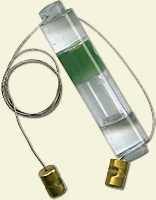
However, a significant drawback to pasteurization is that, unlike boiling,  there is no visual indicator for when water has reached that point. This is easily corrected with the purchase or manufacture of a Water Pasteurization Indicator, or WaPI.

https://amzn.to/322Vbea
The WaPI is as ingenious in principle as it is simple to use.
  • A blob of wax with a very specific melting point sits at the end of a capped, hollow plastic tube. A small length of wire or fishing line with weights on the end keep the tube from floating to the surface of the water and provides a convenient way to pull the tube out for inspection.
  • The tube is placed into the water you wish to pasteurize with the wax at the top. 
  • When the water is pasteurized, the wax reaches its melting point and flows to the bottom of the tube.
  • Remove the WaPI to allow the wax to cool before re-use. 
  • To re-use, simply move the WaPI along the line so that the wax is again at the top of the tube and drop it into a fresh, cold pot of water. 
At 1.5 inches long and 1/6th of an ounce in weight, it essentially takes up no space and weighs nothing, meaning that it can be added to any Bug Out or Get Home bag without drawback. There is literally no downside to having this in a bag, which is something I have been unable to say about anything else.

You can purchase a WaPI for $10 and free shipping from Amazon. 


NOTE: Pasteurization renders water safe to drink; it does not sterilize. If you need to sterilize something, such as bandages or medical instruments, you must bring the water to a boil.

Further, pasteurization does not protect against chemical contaminants. For that you need a filter or a distillation tool.

Thursday, October 10, 2019

Prepping for Winter

It's once again that time of year to switch from shorts and T-shirts to wool socks and flannel shirts. Fall is here, and that means winter is not far behind.

Here in fly-over country, the temperatures went from 90 to 55 like they saw a state trooper. Older building will switch from heat in the mornings to air conditioning in the afternoons, and they're predicting the first frost for this weekend. Most of today's post will concern those of us who live in colder regions, so the folks down south can read it for entertainment purposes.

Winter means that most of us have to rethink our daily preps and “change gears” in our thinking about the short-term preps. Staying warm moves up on the list of importance and insects become less of a problem. The BOB/GHB will grow in size as the extra layers of clothes are added. It's time to take stock and see where changes need to be made.

Shelter
  • Check your doors and windows, make sure they close and seal properly. Adding a doorsweep/draft stopper to outside doors is an easy project that will keep some of the cold air out of your house. Putting them on interior doors may be an option if you want to close off unused rooms and heat only the ones you're actually living in.
  • Heaters need to be checked. If you have a furnace, either have it checked or do it yourself. Change to filters to improve airflow and at least look at the gas lines/ wiring to make sure they are still in good shape.
  • If you use fuel to provide heat, it's time to make sure you have enough. Propane and fuel oil tank levels should be checked and wood piles need to be refilled and covered. Natural gas and electrical heat are at the mercy of your utility companies (see David's post from yesterday), so you should look at your backup heat sources.
  • Years ago I lived in an old house with water pipes that were so poorly placed that they would freeze when the temperatures dropped down to about 10° F. Frozen pipes means no water and possibly busted pipes, so I had to insulate the vulnerable ones and place heat tapes on most of them. This is the time of year to check the heat tapes and insulation to ensure that vermin haven't destroyed them.
  • It's also time to winterize the lawn mower and get out the snow shovels. I don't have enough sidewalk or driveway to warrant a snowblower, but if you have one it's time to get it serviced before everyone panics after the first snowfall. Shovels are simple tools, but they need to be kept clean and straight to work best. I use an aluminum grain shovel for snow and have to smooth out the nicks and dents every year.

Food
  • I have a fairly high metabolism, so I change my diet with the weather. It's time to switch to high-calorie foods and warm beverages to stay warm.
  • Fats and oils provide dense calories and store better than fresh vegetables, so my menus change with the seasons. As I get older, it takes my body a bit longer to adjust to changes in diet so I try to make the changes slowly.
  • Harvest season is in full swing, so there are plenty of locally-grown foods to stock up on. The orchards and farmers markets are open and prices are better than they'll be in a few months. If you can your own food, you're already in full production by now.
  • Cold weather and freezing temps means that I can't store water in my vehicles, so I switch to empty water bottles and a way to melt ice and snow.

Vehicles
  • Winterizing a vehicle is an annual chore. The most common issue I've run into over the years is weak batteries; once the temps drop below freezing it takes more power to start an engine, so a battery that worked fine all summer will pick the coldest day to die on you. Have your battery tested at an auto parts store and replace it before it leaves you stranded somewhere.
  • Modern technology has improved the coolant in most cars, but it still needs to be checked. Any auto parts store will sell you a hygrometer to check the density of your anti-freeze and most oil-change shops will check it for you as part of their service. Add or change your anti-freeze as needed; it's a lot cheaper than replacing a cracked engine.
  • Tires have also been improving over the years, but you still need to make sure you have enough tread left to give you traction in mud/snow/ice. Check your tires now, before you need that extra traction.
  • Those who live in mountainous regions or drive through them will know what tire chains are and how to use them. If you carry chains, it's time to pull them out and inspect them. Repair or replace worn chains, because having one fail while driving is a nerve-wracking experience that can do serious damage to your car.

Fall is busy for me. My day job is working with farmers, so I'm working long hours and don't get many days off between Labor Day and Thanksgiving. My preps are always a work in progress, so there are some that are closer to what I want to have than others. Keep improving what you have and try to get ready for what is coming -- that's the basics of prepping for me.

The Fine Print


This work is licensed under a Creative Commons Attribution- Noncommercial- No Derivative Works 3.0 License.

Creative Commons License


Erin Palette is a participant in the Amazon Services LLC Associates Program, an affiliate advertising program designed to provide a means for sites to earn advertising fees by advertising and linking to amazon.com.