Monday, September 13, 2021

Erin's New GHB, part 4: the Shelter Pocket

Not actually Erin.
& is used with permission.

So after a trilogy of posts about charcoal, let's return to talking about my new Get Home Bag and how I've probably overpacked it.

The Shelter Pocket is to the rear of the main pocket on my bag. Since it's to the rear I've tried to fill it with lightweight items, and it just so happens that most of those are items which are related to putting up a shelter. As I might need to do that rather quickly to get out of the wind and rain, I like that I can access them quickly and with a minimum of digging. 


Here's how everything looked before I unloaded it. I took this picture not just to show you how it looks, but also to help me remember how to re-pack it because things never go back the same way twice for me. 

I'm going to divide the contents into three sections, with Front as the section closest to the top of the picture and Rear closest to the bottom. 

Front

Top Row:
Why an inflatable vest instead of a fleece? Because I live in Florida and it's rarely cold here, and because a fleece will take up more space than the folded mylar vest, and because this is a Get Home Bag and if it's during the cold months I'll likely have a coat with me anyway. The aerovest is mainly to protect against hypothermia caused by getting wet. 

Bottom Row:
  • An inflatable pillow;
  • cheap aluminum stakes for the tent;
  • a spool with 100' of paracord;
  • zip ties, because those are handy for a variety of purposes, and these can be "unlocked" and reused;
  • better quality plastic tent stakes.
Why two sets of tent stakes? Because the aluminum ones are so small and so light that there's no reason not to carry them. They can be backup stakes, or quick placeholders that I use before I set up something more sturdy, or I can stake down other things, or maybe I'll get caught in a windstorm and really want to secure my shelter. 

Middle
You can't see these in the first picture, but they're in there: a waterproof 2' x 2' square with blaze orange on one side and camouflage on the other (I folded it over so you can see both sides) and a small UVPaqlite "jerky light" (so named because it's vacuum-sealed like a piece of jerky)


Rear
So technically the books are also in the middle, but I took a picture of them here, so I'll talk about them here. 


Background: a 2' by 2' piece of wax-permeated canvas. I can sit on it while using the blaze orange square to signal for help, or I can sit on one and use the other as a work area. Both are waterproof. 

Top Row:
  • A "Hideaway Tarpaulin", which is a poncho that can be converted into a tarp shelter (includes zippered bag for carrying);
  • Two lawn-size trash bags and two kitchen-size trash bags, good for a variety of purposes including impromptu weatherproofing & insulation
Bottom Row:

As you can see, this should be everything I need to quickly protect myself from the elements and set up a shelter. Since I live in central Florida, I need very little in terms of winter survival as it only dips below freezing for a few weeks each year at the most. 

Tune in next week for what I hope is the final part of this series. 

Friday, September 10, 2021

Defensive Driving

I received my first driver's license a long time ago. (No, we weren't taught how to drive on dinosaurs, but they were still in some of the older books.  David Blackard might remember them, though). The year after getting my license I worked a job that required all new employees to pass a “defensive driving” class taught by the State Patrol, and it was a four-hour class with lots of video and text presentations peppered with real-life examples from the personal experiences of the two trooper that gave the class. Most of what they taught hasn't changed, although “distracted driving” has been added as a hazard since cell phones have been invented in the time since then.

The definition of defensive driving varies a little bit depending upon the source of instruction, but it boils down to “driving to save lives and money despite the conditions around you and the actions of others”. Most of it is basic driver's education stuff, like:
  • Leave a 2 second gap between you and the car in front of you
  • Obey traffic laws and signs
  • Slowing down before a corner rather than hitting the brakes while turning
  • Manage your speed to match the road and weather conditions
  • Don't drive distracted, leave the cell phone on “hands-free” or ignore it while driving.

Some of the other points are a little more obscure and need some explanation.

Always leave yourself an “out”
Regardless of your speed or location, always have an option to get away from trouble. Bumper-to-bumper traffic is a good thing to avoid, since you're trapped between cars and if someone has an accident, you're stuck with it, and leave room to maneuver around the car ahead of you since you can't do much about the idiot behind you. I do this in parking lots and drive-throughs, always leaving a path out of the line instead of pulling up tight to the car in front of me. It may slow the line down a bit, but I've seen cars break down in a drive-through and everyone sat there until a tow truck could move the dead vehicle.

Driving down the road at the posted speed, keep looking around and noting where you can go if you have to leave your lane. Cars crossing the median, sudden break-downs ahead of you, and drivers going the wrong way down a highway are all things I've seen in the 40+ years I've been driving. Can I drive into the ditch safely, or is the median a better bet? Can I move over a lane or two at any time to get around debris on the road? Is the shoulder wide enough and in good enough shape to slow down on? Those are the kind of “outs” you should be looking for.

Know your surroundings
This should be second nature to a prepper, but some folks tend to zone out once they get behind the wheel. Nothing should surprise or scare you, so keep your head on a swivel and check all of your mirrors regularly. Watch for the speed-demons flying up behind you as well as the idiot towing a camper with a boat trailer behind that (I had to take a special test for towing doubles/triples, but CDL rules don't apply to cars). As long as you're obeying the rules, the sight of a police car shouldn't be a problem, but they have a tendency to make abrupt lane changes and U-turns to go after other drivers.

Terrain plays a part in this as well. Going up a decent hill means that the truckers may slow down, only to speed up as they go down the other side. Watch for the impatient smaller vehicles that will weave in and out of the trucks, only to get passed on the downhill side. Cool mornings or early evenings and valleys can create fog, which will limit your visibility, so be ready to slow down as needed.

What time do the bars close in your area? Around here it's between 0100 and 0200 hours. I live near the border between two states with differing laws, and there's often a rush of drunks at 0100 headed to the bars that don't close until 0200 for one last round, then a mass migration of drunks on the roads until about 0230 when they get home or locked up in the drunk tank of a local jail.

Expect the unexpected
I could tell lots of stories about the stupid things I've seen on the roads. What people will do while guiding a couple of tons of metal and plastic down the roads at high speeds boggles the mind, and the more unique things like tires bouncing across the median on an Interstate or a sheet of ice flying off the roof of a minivan into oncoming traffic on a two-lane highway can be (and were) lethal.

Pedestrians are some of the worst at pulling the unexpected on you. Kids darting into the street, idiots on cell phones walking into traffic, and jaywalkers popping out between parked cars to cross the street are all things you have to keep an eye out for.

Treat the other drivers on the road like they're all drunk
I've also heard is phrased as “treat them all like they want to kill you”, but the sentiment is the same: don't expect them to act the way you would, don't expect them to follow the laws or obey the signs, and don't expect logical thinking from any of them. Running red lights, refusal to use their turn signals, ignoring “Yield” or “Merge” signs, and the various incarnations of road rage all fall into this category. Treat them like they failed driver's ed. and don't know how to safely operate a vehicle, which when you see how some people get confused at four-way stops and those accursed roundabouts, is probably true. This means giving them plenty of space and letting them get away from you; if they're going to cause an accident, let it be somewhere that you're not.

Defensive driving courses are handy in some states for removing “points” from your driver's license and avoiding increased insurance payments. For preppers, anything that avoids unnecessary cost or delay is a good thing, so if you've been ticketed for your driving and can find a class, take one. 


Now that I look back on what I wrote, most of this advice is also applicable to interpersonal interactions on many levels outside of a car: maintain situation awareness, know where the exits are, avoid unnecessary confrontation, and don't assume competence. 

Thursday, September 9, 2021

Where To Start?

The dust has settled and the First 72 Hours have passed. Follow along as I build a long term plan via Prudent Prepping. 

Word is out around work that I write for a  prepping blog. Thankfully, only one person has asked the obvious and clichéd prepping question, and they were mildly happy to hear I didn't have a hidden hideout/bunker.

(If someone has recently hit the PowerBall, won the lottery or is otherwise able to afford and is interested in having a bunker, I actually know a guy that does them. Seriously.)

While most of us here at BCP have been asked the bunker/hideout/secret lair question, this was the first time someone has been happy I didn't have one. The more I think about it, the more I'm confused.

At the Beginning
An ancient Chinese proverb says "A journey of a thousand miles begins with a single step." I didn't save the link to a guy who once said "Some is the same as none" when prepping, and don't want to raise my blood pressure by looking now, but needless to say I disagree. There has to be a first step, a first purchase and yes, a first mistake when prepping. I find my mistakes are much better learning moments than are getting things right, whether they be right by accident or right on purpose.

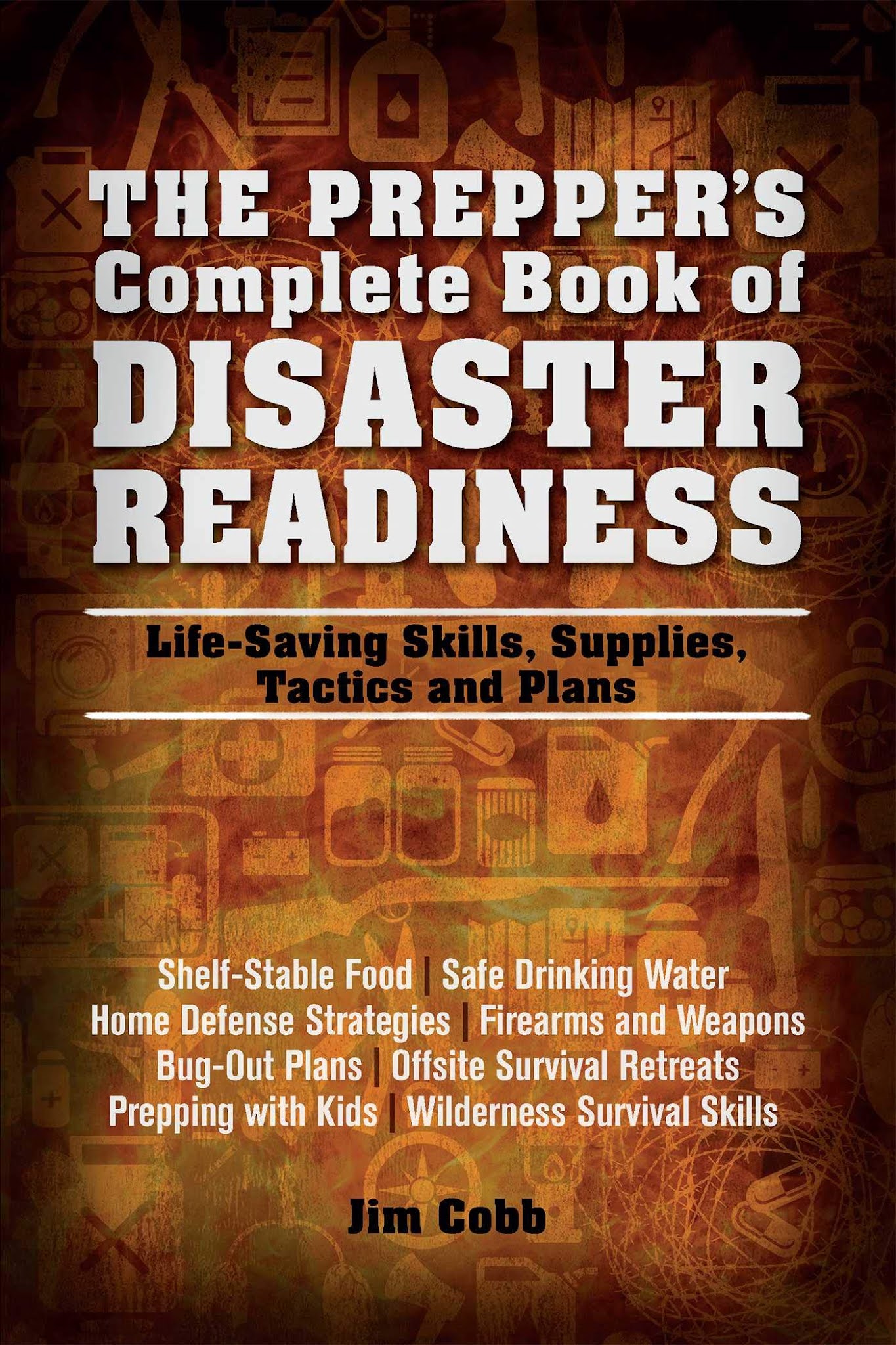
I admit to being a book collector and have bought many different prepping books, and here are three that I always have on hand to pass on to friends asking serious questions. A fellow by the name of Tony Nestor has written many different prepping books, and he wrote two of the three that I like to give out. 

1) Surviving A Disaster by Tony Nester

https://amzn.to/3zUK9bP
From the Amazon ad:
Could you evacuate from your home in 15 minutes with the pertinent survival gear necessary for overcoming a disaster?

The most effective means of surviving such an event is to have the essential gear and plans in place beforehand and this only comes from developing a mindset of self-reliance. In his third book in the Practical Survival Series, Tony Nester takes you through the scenarios, planning, and emergency kits for surviving natural and manmade disasters where you are forced to evacuate your home.

Surviving A Disaster covers methods that have worked for real-life survivors and delves into the practical skills that can be used for preparing your family and surviving on the run. You will learn how to formulate an escape plan for your specific region and what an evacuation entails along with a straightforward approach to assembling emergency kits for the home, office, and vehicle. There is also a special section on preparing children for a crisis and what their personal survival kits should contain. The strength of this book rests on field-tested strategies and pragmatic tips taken from actual first responders and survivors.
While the book is on the slim side at 58 pages, the information inside is worth it. The author lives in the Southwest, and so is familiar with wildfires similar to what we have here in California. The basic information is solid, even with the book being published 13 years ago. I've mentioned to my friend that when the time comes to start buying extra things to search out 'water filters', 'stoves' and 'first aid kits' as a start, since there have been amazing improvements in all three categories.

2)When the Grid Goes Down by Tony Nester

https://amzn.to/38WOBe8
From the Amazon ad:
Disasters come and go each year but it is through developing a self-reliant mindset, having essential survival gear and possessing a handful of critical skills, that you and your family will be able to prevail in an urban crisis.

Jammed with field-tested information from real-world applications, survival instructor Tony Nester covers how to prepare for both short-term survival ranging from 24-72 hours as well as long-term situations resulting from a grid-down emergency or pandemic.

When the Grid Goes Down will show you the 6 key areas to make your home and lifestyle more self-sufficient and the critical gear needed along the way. Topics Include: Creating a Self-Reliant Home, Water Storage and Purification Methods, Alternative Water Sources At Home, Creating a Water Map for Your Region, The 3 Essential Food Types to Stock Up On, Designing an Off-Grid Medical Kit, Home Security and Personal Defense Measures, Safeguarding the Exterior and Interior of Your Home, and Alternative Sanitation Methods.
Another slim volume at 78 pages but again, it has really nice information set out in easy to read and understand chunks. This was written in 2013, so I don't have as many small quibbles with the text. I especially like the chapters on Water, Food, First Aid, Home Security & Personal Defense, Heating, Cooling & Energy Needs and Hygiene & Sanitation. I've followed many of the suggestions in this book.


The last book I hand out is also the longest to read. It is fractionally more expensive, but it can make non-readers eyes start to glaze over due to the extra details... and pages. Not that it's too long; it's just not as easy to get through as the previous two.

https://amzn.to/3nxMypJ
From the Amazon ad:
Prepare. Survive. Thrive. Is your survival plan complete from A to Z? Are you truly 100 percent prepared? Because if you overlook one vital area, fail to stock one critical supply or underestimate one potential danger, your whole plan could come crashing down.

The Prepper’s Complete Book of Disaster Readiness guarantees you won’t miss a thing as you prepare for the most important moment in your life. This bible of prepping shows each and every life-saving step necessary to keep your family alive and well when the world around you is in chaos, including how to: Efficiently store water and acquire additional fresh water after a collapse; Build a shelf-stable food stock and supplement it by harvesting edible wild plants; Strengthen the security of your home as well as have a back-up bug-out plan; Treat illness and stay healthy when there are no doctors or hospitals; Build a safe and secure survival retreat that allows for long-term off-the-grid living.

While there is a small amount of overlapping information in all three books, this particularly covers preparing a house/apartment in a lot of detail: like 272 pages of details, including Note Pages. When I was sharing an actual house several years ago, I followed the home hardening tips as well as possible in the place we were renting. Things aren't quite as simple in a condo.

I particularly like the several appendices where the author lists his recommended books and has several checklists based on what has been written in the book. Due to the extra Suggested Reading, this could be a rabbit hole for some people, but as the author says, "I'm not sure which would be worse: not having a particular skill and having no means of researching it, or knowing damn well you have the information... somewhere... but can't find it."

Recap And Takeaway

  • I am going to purchase another set of these three books very soon, as the copies I have now are dogeared, page flagged, marked up and not attractive as a giveaway.
  • I will be going over the important information with the Purple Pack Lady when our schedules match up so that she understands why I have some of the "silly stuff" in my various bags.
  • Nothing was purchased this week.
* * *

Just a reminder: if you plan on buying anything through Amazon, please consider using our referral link. When you do, a portion of the sale comes back here to help keep this site running!

If you have comments, suggestions or corrections, please post them so we all can learn. And remember, Some Is Always Better Than None!

NOTE: All items tested were purchased by me. No products have been loaned in exchange for a favorable review. Any items sent to me for T&E will be listed as such. Suck it Feds.

Tuesday, September 7, 2021

Odor Removal

One of the constants goals of civilization seems to be making bad smells go away. Whether through soap, perfume, or deodorant, we regularly try to make things smell better. This can be a more significant issue with long term storage of fabrics; to this day I can close my eyes and vividly recall the childhood memory of canvas that had been in a box since the previous summer’s camping trip.

While there are a variety of products on the market that claim to remove or cover an odor, many of them don’t work as well as advertised, and their availability depends upon a working supply chain. However, there are still a number of things we can do with relatively simple ingredients to remove or cover smells we don’t want. The critical question is, are you trying to remove an odor or merely mask it with another scent?

Masking Odors
Masking is generally easier, though often temporary, and most essential oil-based sprays and scented candles can do that with varying amounts of success.

Scented Candles
Scented candles are another common method used to cover odors, but not just burning them. Placing a vanilla-scented candle in a tub or container for long term storage will infuse the contents with that scent, while absorbing some offensive smells. The same thing can be done with scented soaps or herbal sachets. In times past it was common to put pieces of cedar in with wool garments and blankets to help keep moths away, the cedar also infused the fabric with its pleasant fragrance.

Essential Oils
 My wife and I use a lavender-based spray when we stay at a hotel or friend’s house as a familiar and comforting scent. You can make your own essential oil spray fairly simply, using this recipe:

  • 2 cups distilled water
  • 2 tablespoons unflavored vodka or rubbing alcohol
  • 15-20 drops preferred essential oil
Mix the ingredients and put in a spray bottle. Increasing the alcohol to water ratio will make a spray that evaporates faster. 

Keep in mind, though, that citrus-based oils can degrade plastic over time, so if you are using that type of oil, consider a glass spray bottle.

When buying essential oils, make sure they’re the real deal. If all the different types are the same price, they probably aren’t all the same quality. Additionally, keep in mind that many essential oils are toxic to pets. From the Animal Medical Center of Deer Valley:
Essential oils harmful to cats
These include, but are not limited to:
  • Cinnamon
  • Citrus
  • Clove
  • Eucalyptus
  • Lavender
  • Oregano
  • Pennyroyal
  • Peppermint
  • Pine
  • Sweet birch
  • Tea Tree
  • Thyme
  • Wintergreen
  • Ylang Ylang
Essential oils harmful to dogs
These include, but are not limited to:
  • Anise
  • Cinnamon
  • Citrus
  • Clove
  • Garlic
  • Juniper
  • Pennyroyal
  • Peppermint
  • Pine
  • Sweet birch
  • Tea Tree
  • Thyme
  • Yarrow
  • Ylang Ylang
Symptoms of your pet having a reaction
The symptoms of a reaction to essential oils are virtually identical to those seen in animals that have suffered poisoning. These include:
  • Breathing problems
  • Difficulty walking
  • Drooling
  • Fatigue
  • Muscle tremors
  • Pawing at the face/mouth
  • Rash that develops on his skin
  • Redness or burns on their lips, tongue, skin or gums
  • Vomiting
  • Weakness / collapse
You may also be able to smell the essence of the essential oil on your pet's coat, skin or breath.
Removing Odors
True odor removal is difficult, time-consuming, and often expensive. Only you can decide whether or not the result is worth the effort. 

Skunk Musk
As anyone who’s ever had to deal with a skunked dog will relate, that’s not an easy smell to remove. There are many different home remedies, and the three most common are:

  • tomato juice (can be pricey)
  • hydrogen peroxide (also pricey and can damage fur)
  • vinegar (I spoke more about vinegar here)

The main benefit of tomato juice and vinegar is the acid helps break down skunk musk. As I had a darker colored dog the last time I dealt with this issue, I didn’t try hydrogen peroxide. In my experience,  tomato juice and vinegar were equally effective, but vinegar was noticeably less expensive and much less messy.

Cigarette Odor
Back when I was involved with WWII living history, I purchased an M1923 cartridge belt for my M1 Garand. The belt was in excellent condition, but it came from the home of a heavy smoker. I washed it several times and couldn’t get rid of the smell. What finally worked was packing it in baking soda and sealing it in a plastic tub for a week. After that, even when it got wet in the rain, there was almost no cigarette smell.

Mold and Mildew
Depending on the material, a 1:10 mixture of bleach to water works well at removing mold and mildew and their related smells. For more delicate fabrics spraying them with 91% or better rubbing alcohol, Everclear, or unflavored vodka (either straight or diluted with water) will destroy the odor causing organisms.

Clothing Odors
Finally, don’t forget about open air and sunlight. Hanging clothing outside on a dry sunny day can help remove odors considerably. However, for those with severe allergies, this is not recommended.


During a disaster, life will stink enough, and hopefully these suggestions will make that stink slightly less literal.

Monday, September 6, 2021

Activating Charcoal

Not actually Erin.
& is used with permission.
You've made charcoal. But how do you activate it Before we go into that, a few disclaimers:
  1. Store-bought activated charcoal will always be superior to home made. This is because you cannot control the environment and perform the procedure under rigorous conditions. 
  2. That said, this method will produce activated charcoal that is moderately effective for water filtration or poison treatment. This is for those "It's better to have this than to have nothing" situations. 

Ingredients
  • Charcoal
  • Mortar and pestle (or other grinding implement)
  • A glass* jar with a solid lid, such as a Mason jar
  • Steel or ceramic* mixing bowl
  • Calcium chloride, aka Pickle Crisp.
  • Water
  • Measuring cup
  • Heat-resistant gloves and eye protection
  • Mixing spoon
  • Coffee filters
  • Cheesecloth (a bedsheet will do in a pinch)
  • Cookie sheet
*You may use plastic if they are sturdy enough. What's important is that you not use aluminum containers, as that metal is reactive with heat and you don't want it leaching out of the container, into the water, and then into your activated charcoal. 


Instructions
  1. Make or acquire charcoal. If bought at the store, make sure that it is pure hardwood charcoal and not soaked in lighter fluid or other additive chemicals. 
  2. Powder the charcoal. This is messy business, so wear your grungy clothes. Grind the charcoal as finely as you can, because  this process is not 100% effective and you need the smallest pieces of charcoal you can get. Place the powdered charcoal into steel mixing bowl and set aside. 
  3. Make a 25% solution (by weight) of calcium chloride. Weigh 3 parts of water and mix in 1 part calcium chloride. For example, you can dissolve 100 grams of calcium chloride in 300 grams (same as 300 ml) of water, or 3.5 ounces of calcium chloride in 1.3 cups of water. Seal jar lid tightly, then shake to mix. 
  4. The jar will heat up. This is normal. Wear gloves to protect your hands, and goggles to protect your eyes in case of a spill! (Calcium chloride is non-toxic, but no one wants hot salt water in their eyes.) Occasionally unseal the jar to release internal pressure, then reseal. 
  5. Make a paste. Slowly pour the calcium chloride solution onto the powdered charcoal and mix until a spreadable paste has formed. 
  6. Allow to dry for 24 hours. Cover if possible.  
  7. Spread the paste on the cheesecloth.  Use materials with the tightest weave possible. It's important that you use nothing which has scented detergent, bleach, or other substances on it, as the charcoal will adsorb that and you will lose efficiency.
  8. Place cheesecloth over bowl and rinse with clean water. Use the same amount of water as you did in step 3. The cleaner the water, the better. Ideally it ought to be carbon-filtered, distilled, or reverse-osmosis filtered. Do not use chlorinated city water!
  9. Pour caught water through a coffee filter to recover bits of charcoal you'd otherwise lose. The finer your carbon, the finer your filter must be when you rinse it, and this will enable you to catch as much as you can. If you have a large enough filter, you can simply use it instead of the cheesecloth to combine this step with the rinsing. 
  10. Bake at 250° F for 30 minutes. Place the coffee filter on the cookie sheet alongside. Let cool, then break apart. Store in an airtight and waterproof container. 
Your activated charcoal is now ready for use!

Friday, September 3, 2021

Witness Marks

I asked a question on MeWe the other day and received a response that mentioned witness marks. To be honest, this topic is something that I learned as a child, had reinforced in the Army, and now I do without thinking about it.

Witness marks are any kind of marking on two or more assembled parts that show their alignment. Used to show that the parts haven't moved, or how those parts were properly assembled, witness marks are a good way to save time and ensure that things stay together.

  • A line scratched at the junction of two metal pieces is one common form. Using a scratch awl or pin punch to mark a nut/bolt or a joint between metal parts that aren't supposed to move will show you if those parts need to be snugged up. This is also handy when disassembling something intricate or precise, as it shows you where things have to go when you put it back together. I've also seen groups of dots lightly punched into sheet metal parts to mark which edges go together on panels that have been removed for maintenance.
  • Using a permanent marker to draw a line on pipe joints to indicate proper alignment. When working with plumbing, especially in older houses, there are a lot of obstacles to route around. “Dry fitting” your pieces of pipe in place before soldering or gluing the joints saves frustration and time. Putting witness marks on those joints when they're in the right place makes final assembly much easier.
  • A dab of nail polish or lacquer on a bolt/nut to show any motion in the nut from vibration or tampering. Working on missile components in the Army, we used a very rugged form of lacquer (named Glyptal) to seal and mark important bolts after assembly. It wasn't used as a form of Lock-Tite to prevent movement; rather, it was there as a security seal to warn that the assembly had been tampered with. Safety wire was used if we needed to make sure a nut stayed where we wanted it, but that's almost a lost art today.
  • Larger assemblies often have the fasteners marked after they've been torqued. This is a quick visual check to make sure nothing got missed. Torqueing the 32 bolts that hold a 6' tall tire onto a piece of farm equipment can be a challenge, so we use a paint pen to mark each bolt as it is torqued in the proper pattern. It's also an easy way to check each morning to make sure none of them shook loose as the machine bounced through the fields the day before.
  • Prefabricating small structures for final assembly elsewhere is a common prepper project. It may be an ice fishing hut, deer blind, or even something as mundane as a tent, and using witness marks on the parts makes things go together faster in the field. Older-style tents with metal pole frames can be a challenge the first couple of times you set them up or if it has been a while since you tried it. We color-code the metal pipe joints with different numbers of stripes to make sure they all get put together the same way every time. Colored electrical tape works and is easier to use on thin round pipe than paint, but that can add thickness to the pipe and make it harder to slide through loops and channels in the tent fabric.

Some of my examples may seem a little OCD, but when you're an hour away from the nearest hardware store or repair shop, you don't want to have things come apart on you. Security, safety, and peace of mind are all part of being a prepper, and using simple things like witness marks can help in all three.

Thursday, September 2, 2021

How To Keep Cooking Without Power

The dust has settled and the First 72 Hours have passed. Follow along as I build a long term plan via Prudent Prepping.

A friend asked me for ideas on how to cook in the off chance we have a really long power outage. The follow-up question on how to keep the lights on was a bit more difficult, and I dodged it for reasons I will explain later in this article. 
 
Getting Hot
Stealth Gas Grill in a Condo

"How will I cook if the power is off?" is an easy answer for most people people here in California, as barbecue grills are everywhere. You'll even find them in apartments and condo communities where they aren't allowed! The grills that are most often outright banned are charcoal, but some areas do prohibit all grills. Even so, grills are still in use.

Many homes here are equipped with gas stoves which might be used without power (your gas stove may need electricity to work the valves or generate a spark, which might be a problem), but only so long as there is adequate ventilation when the stove is used! Since there is no electricity to operate exhaust fans, operating anything that burns any fuel indoors should not to be done! I recommend cooking outdoors only, no matter what your cooking source happens to be. 


Another option is one which many people grew up using: The classic Coleman stove! From the Amazon ad:
https://amzn.to/2WHH6VI

  • One 7,500 BTU burner and one 6,500 BTU burner
  • Runs on Coleman Fuel or unleaded gas
  • Boil a quart of water in four minutes
  • 2 Burner, 14,000 BTU Cooking Power
  • Limited Lifetime
There are many different sizes and shapes of Coleman stoves, so this may not be exactly what you own or remember, but it is a good representation of the type. Obviously you need fuel to run this stove, so I'm hoping there is some already stored for emergency use, and per the ad copy this will use either Coleman fuel or the same unleaded gas you use in your car. Chaplain Tim discussed how to retrieve gas in a serious emergency; read all of his post before thinking about, much less trying, his suggestions.

As another word of warning, don't use two cycle gas/oil mixtures in your stove! Certain types of motors don't have valves, and to lubricate them motor oil was mixed in with the gas, which is known as two cycle. If you store gasoline, be sure to label the cans correctly!

A variation of this stove uses the same propane as in your gas barbecue, either in smaller canisters or with an adapter for your full size tank. There are too many models to list, so check your exact stove model number for proper fit. 

Backpacking Stoves
There are many different types of these as well, but there is one in particular that all of us seem to recommend: The Solo Stove!

  • GEAR OF THE YEAR WINNER
  • PATENTED DESIGN - LESS SMOKE. The patented design features a unique double wall that creates ultra-clean gasification and a secondary combustion. This allows fuel to burn more completely and with less smoke.
  • FUEL IS FREE.
  • COMPACT SPACE SAVING DESIGN. The Solo Stove Titan is designed to nest inside the companion Solo Stove Pot 1800 (sold separately) leaving you with more room in your backpack.
  • LIGHTWEIGHT & FAST BOIL TIME. Boils water in 4-6 mins (34 fl oz. water). 5.1" Diameter, 5.6"/7.9” tall (packed/assembled). Weighs only 16.5 oz. Made of premium stainless steel and nichrome wire. Nylon stuff sack included.
I believe all of us here have at least one Solo stove. I am a late convert to this wonderful piece of equipment, but now I own two. One is in my gear and one is being kept for the Purple Pack Lady, as soon as she is convinced it is useful.

What About Electrical Appliances?
There are ways to safely run electric appliances, but first: I am not an Electrician or a licensed contractor, so I will not be giving advice on how to power up your house!

If you care to read posts from our other bloggers on how to do this, I suggest starting with this post by Lokidude, who is a licensed electrician and who speaks from experience. After that, please use the 'Search' box in the upper left corner of the blog and enter, 'Generator' to see everything else.

Recap And Takeaway 
  • Plan ahead for your cooking needs, either with a spare propane tank or the proper fuel for your stove.
  • Remember, No Burning Of Any Type In Enclosed Spaces! There are too many deaths every year from improper use of grills.
  • Nothing was purchased this week but as we get closer to Christmas, keep your eyes open for sales! That's how I scored my nifty Solo Combo kit!
* * *

Just a reminder: if you plan on buying anything through Amazon, please consider using our referral link. When you do, a portion of the sale comes back here to help keep this site running!

If you have comments, suggestions or corrections, please post them so we all can learn. And remember, Some Is Always Better Than None!

NOTE: All items tested were purchased by me. No products have been loaned in exchange for a favorable review. Any items sent to me for T&E will be listed as such. Suck it Feds.

The Fine Print


This work is licensed under a Creative Commons Attribution- Noncommercial- No Derivative Works 3.0 License.

Creative Commons License


Erin Palette is a participant in the Amazon Services LLC Associates Program, an affiliate advertising program designed to provide a means for sites to earn advertising fees by advertising and linking to amazon.com.