Wednesday, July 8, 2015

Prudent Prepping: Key Points

The dust has settled and the First 72 Hours have passed. Now we concentrate on what to do in, and how to plan for, the long term via Prudent Prepping.

Prepping is important for emergency planning, but should not be ignored when facing every day 'disasters'. Like I just did.

I lost my truck key.

Yup, I did. I don't have a long dangley key chain with a bunch of other stuff attached. No neck lanyard printed with a company or sports team logo and ID card. Just what I call a 'guy keyring': A remote fob, two house keys (for different houses), my truck key and a key for a vehicle I don't have any longer. The keys were on a split ring, the thing that has to be pryed apart to wind a key around and around, after breaking a fingernail* to get the gap big enough to allow the first key to start its journey to safety.

*(There's actually an easier way to do that. -- Erin)

My key looks like this now, and I think I know exactly what caused my problem: the black plastic loop at the top of the key is just that.

There isn't any metal there, and after twisting and turning against the hard metal of the split ring, it cracked and then broke.

Lucky for me, I was home when the key decided to break. I park in the same spot, walk the same path and put my keys in the same pocket. Every time. This routine is what saved me an expensive service call and a lost day.

Why do I say that? The answer is very simple.


I don't have a spare key.

(Oh, I own a spare key. It's someplace, likely in all my stuff that hasn't been unpacked. I think. Either that, or it's at the-house-I-don't-have-any-more, which is as good as lost. I also didn't have a spare key hidden on my truck.)

The next morning I go out to my truck, pop the lock, roll the keys in my hand to the truck key-- and nothing. Since I don't keep my keys in a bowl on my desk, hanging on a hook or placed where someone could get access and remove one (as a joke), I knew it was accidentally lost. I go look in the dirty clothes pile for the shorts I wore that day. 

Nothing. 

I take everything out of the basket. 

Nothing. 

I go out to my truck to see if it might have fallen off inside.

Nothing.

I look in the catch-all dresser drawer for my spare key.

Panic time.

At this point, I'm stressing out. The roomies did not see a key on the floor and it wasn't in a pocket, so I'm hoping it fell off someplace safe. It more than likely didn't fall onto the street, since there are lots of walkers in my neighborhood and the truck wasn't missing. This leaves the 50 feet of walkway and landscaping I walk past to get to my door.

After 45 minutes of poking around the weeds and bushes I find it in a pile of leaves, under a plant, half-way to my front door. It must have fallen off while I was taking the keys out of my pocket to unlock the door. I'm only an hour late to exercising so the day isn't a total loss.
All of us should have a disaster plan with papers, contact info and our preps ready to go in an emergency. I do (at least for the big stuff) but it was this little thing that could have prevented me from acting quickly when speed is important.

Recap
Have a spare key, whether at home or on your vehicle.

The Takeaway
It's an old saying, but "two is one and one is none" really is true. Believe me.

Purchases 
  • Two (all metal) keys, flexible key loop and hide-a-key box. Ace Hardware, $15.47 

One final, unrelated point: When you use the Amazon links in our articles to purchase those items, a small percentage of the price goes to help pay for this blog, without raising your cost one penny. Please consider this option when buying your gear.

Thanks.

As always, if you have comments, suggestions or corrections, please post them so we all can learn. And remember, Some Is Always Better Than None!

NOTE: All items tested were purchased by me. No products have been loaned in exchange for a favorable review. Any items sent to me for T&E will be listed as such. Suck it Feds.

Tuesday, July 7, 2015

Heat Illness Awareness

It's hot out there, y'all. Across the country and around the world, record high temperatures have been recently recorded. Firehand posted a great recipe for a roll-your-own hydration beverage without the sugar of commercial products, which I'm looking forward to testing. While prevention is always best, even the best of us sometimes makes mistakes in the heat. That's when it's critical that you can recognize and treat the various stages of heat illnesses.

Heat Stress/Heat Cramps
Characterized by flushed, moist or clammy skin and painful cramps in the extremities, this is the beginning stage of heat illness. If you can catch heat illness at this point, treatment is simple and fairly easy:
  • Move the victim to a cool, shady area where they can rest.
  • Remove any excess clothing, modesty permitting. 
  • Put cool, wet rags on exposed skin, especially wrists, inside elbows, and the back of the neck/head.
  • Get the person drinking a sports or electrolyte drink.
  • Stretch and massage out any cramps (if you like the person a lot, you can massage them; otherwise, have them do it themselves). 

Heat Exhaustion
The next illness in this progression, and far more serious, is heat exhaustion. The previous muscle cramps continue, accompanied by pale, moist or clammy skin, and frequently a fever. The patient may also exhibit vomiting, diarrhea, nausea, fatigue, weakness, and headache. Rapid treatment is critical at this point to keep the victim from getting far worse.
  • Move the victim to a cool, shady place and have them rest.
  • Remove any excess clothing, down to the underwear. Health is more important than modesty at this point. 
  • Put cool, wet rags on exposed skin, especially wrists, inside elbows, and the back of the neck/head.
  • Get the person drinking a sports or electrolyte drink.
  • If the person does not respond to this treatment, call 911 or your local emergency number and summon EMS. 

Heat Stroke
Heat stroke is a life-threatening condition requiring immediate and rapid professional treatment. Symptoms include all of the same as heat exhaustion, with the addition of a rapid heart rate, confusion, lethargy, stupor, agitation, and possibly seizures and coma. The skin is also dry and warm.
  • Immediately call 911 (or your local emergency number) and summon EMS.
  • Move the victim to a cool, shady place and have them rest.
  • Remove any excess clothing, and drench exposed skin with cool water. Again, health is more important than modesty. 
  • Place ice packs on the person's groin and armpit areas.
  • If the person is alert and able, have them drink cool fluids.
Be aware of yourself, as well as those around you, and be on the lookout for heat illnesses as the thermometer climbs.

Lokidude

Monday, July 6, 2015

Mix-it Yourself Electrolyte Supplement

This started with me finding out a short time ago that a problem I'd thought was a pulled muscle wasn't:
Me: Doc, before I leave, can I ask about something else?
Doc: Sure.
Me: (story of pulled muscles in legs not getting better), any suggestions?
Doc, after checking legs: You're dehydrated.
Me: What?
Yeah, I only thought I was drinking enough. He said to drink a lot more, get some Gatorade or something for electrolytes, and that'll take care of that. So I did, and it did. Which led to me wondering 'Just how much sugar is in that stuff?' and being shocked by the answer. Not just Gatorade, but everything I found in the stores; some of the 'sports drinks' have more sugar per bottle than a can of coke. So I started looking around for information.

(Note: Asking "What's the best electrolyte supplement?" is damn near as bad as "Glock or 1911?" on a gun board. Or "What's the best oil for my bike?" on a motorcycle forum.)

The story has a happy end, though. I was at a local spice shop (it has branches in most states, and they ship; good place, good prices) and the owner -- also a biker -- mentioned how hot and dry he gets riding in this weather (95° to 105° and humidity of 30-40% just sucks the water out of you), and I mentioned trying to find a supplement not full of sugar.

"Oh, we have our own recipe, you want it?"  Well, hell! Yes I do.

Sports Splasher
  • 2 quarts water
  • 6 tablespoons honey powder (you can use honey, but honey powder is a bit easier to mix)
  • 2 teaspoons Himalayan pink sea salt 
  • 2/3 cup lemon juice (if you prefer another citrus juice, you can use it instead)
  • 1/2 teaspoon orange extract  (for flavor; without it, the taste is fairly blah)
The amounts of salt and juice can be adjusted for taste or need. The nice thing about the sea salt is it has minerals not found in standard table salt.


I made a quart (well, it's a liter bottle) at a time.  Here's what I started with:
  • 2 tablespoons honey
  • 1 teaspoon salt (I do have the Himalayan)
  • 3 tablespoons concentrated lemon juice (equals one lemon, easier than squeezing)
  • No orange extract, so I shook it all up thoroughly and tried it.  Taste already mentioned, though not nearly as bad as stuff son was issued in the Army*.

Results
Note: I'm not a doctor. I don't blog as one, or even pretend. These are my results so far from using this, only a weeks trial, nothing more. If you try this and grow a forked tongue or something, don't yell at me.

Lately, it's been normal-level hot but above-normal humid here (central Oklahoma), so doing most anything outside produces lots of sweat. My first bottle lasted a couple of days of mowing, walking, yard work, the usual. And, since my legs were working normally again, some workout stuff.

The next batch I mixed up kept the same amounts, but I added a little almond extract I discovered in the cabinet (Yes, I know. "Almond?" Well, it is an experiment). That's been used through the last couple of days, including a couple of gulps before and after the walk/workout, and other stuff.

It works. No further cramps, headaches, or the other stuff. It doesn't cost much to mix up, and if it's too salty or whatever, you can adjust it to suit. The almond extract made a large and good difference in taste; I'm going to find some orange. The gentleman did say that you could use orange juice instead of lemon both for the ingredients and for the taste (I'd add more for the taste option), so there's that, too.

I'm going to keep using this stuff. Especially on days like yesterday when it felt like a horror movie scene set in a bayou and I half-expected Swamp Thing to come sliding out of the tomatoes.


*That stuff was in packets: "If you get crampy, headachy, mix one of these in a one-liter bottle or canteen, shake it up, and drink it." The stuff tasted so bad we'd chug the bottle to get it over with... but it worked.

Sunday, July 5, 2015

Gun Blog Variety Podcast #46

It's time for Episode 46!
  • Adam is back from his terrifying eye surgery. Well, it would terrify most of you. 
  • Erin Palette tells us how to stay hydrated in the summer heat.
  • Nicki Kenyon discusses the Greek default.
  • Special Guest Bob Owens of Bearing Arms gives some "Tips for Terrorists."
  • Barron B (Who is currently in Facebook Jail because they don't believe him that Barron is his real name) talks about that viral "OMG THERE'S AN ANTENNA ON MY CELL PHONE BATTERY!" video. 
  • And Weer'd talks about how Bloomberg, sensing victory over Uber, has started gunning for room sharing website Airbnb.
Thanks for downloading, listening, and subscribing.
Listen to the podcast here.
Show notes may be found here
Special thanks to our sponsor, Law of Self Defense. Use discount code "Variety" at checkout for 10% off books, hats, and legal self defense seminars.

And if you like the show, tell a friend!

Friday, July 3, 2015

Blue Collar Prepping Recommends...

& is used with permission.
I have been asked by several people if I would make a post where I list basic survival equipment and prepping supplies that have been endorsed by our authors. Since many of these these links lead to Amazon Affiliate pages and therefore indirectly help support this blog, I am more than happy to oblige.

As more recommendations are made, I will give this section its own page in the header, so it can be found easily.

For a Ready-Made Bug-Out Bag, BCP Unanimously Recommends:
Michael Z. Williamson's Bail-Out Bag. A comprehensive review of it begins here.


Erin Recommends:

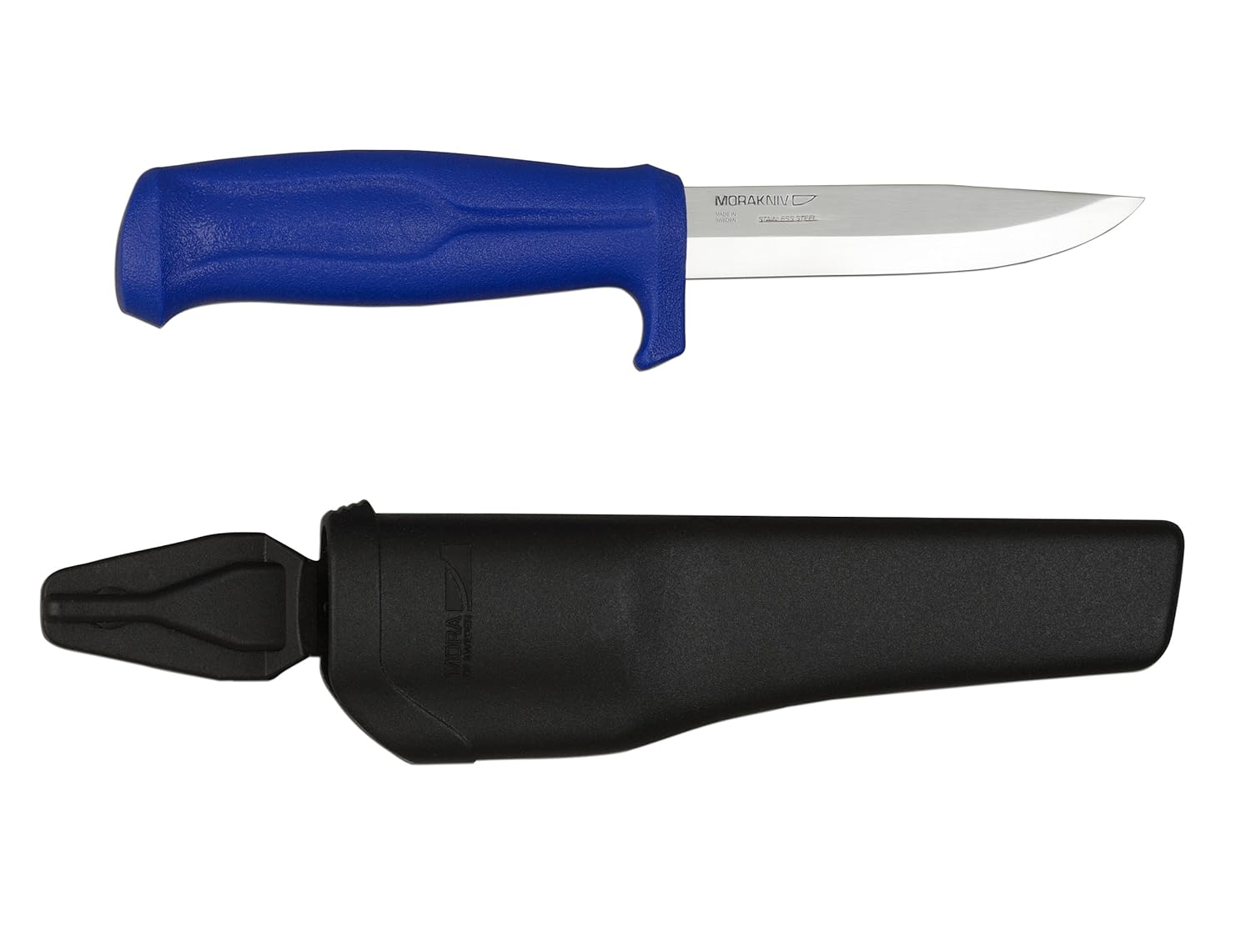
Mora Knife. Every prepper needs a good fixed-blade knife, and Moras are some of the best kept secrets of the knife world -- very sharp, durable, high in quality and ridiculously inexpensive. The carbon steel version holds a sharper edge, but is more prone to rusting, so I recommend the stainless steel version for new preppers or for folks who just want to throw a knife into their bags and not worry about it.

Cold Steel Kukri Machete. It's part machete, it's part cleaver, it's part hatchet. I have used mine to cut down small trees. I've used and abused this blade for six years and it's still going strong, as it's made of incredibly tough steel. It's also very affordable ($20-25). Regardless of which version you get -- regular, Magnum, or Royal -- you will not be disappointed.

EZE-LAP pocket diamond sharpener. If you carry a knife you'll need a way to sharpen it, and this little gadget is both effective and convenient. I've been carrying one in my EDC kit for years.

Speedy Sharp. For when a file just can't fix a really damaged knife, or you need to put a working edge on a seriously blunt piece of metal. Read my review of it here.

Nalgene Tritan Wide Mouth BPA-Free Water Bottle. It holds a quart of water (almost a liter) and is practically unbreakable. (I'm sure dedicated destructoids could find a way.)

GSI Outdoors Glacier Stainless Bottle Cup. It  fits over the bottom of the above Nalgene bottle for maximum space savings.

Water Pasteurization IndicatorYou don't even have to boil water; just pasteurize it instead. Save time and fuel!

Rothco ParacordBasically the duct tape of camping, not only is it very strong rope (the 550 stands for being able to support 550 pounds), you can take out the inner strands and use them for things like dental floss, fishing lines, etc. Replace your shoelaces with paracord and you have a free, weightless prep.

Spool Tool. A handy way to store that paracord, along with other useful tools like a lighter holder and an integrated cutting tool. Read my review here.

Adventure Medical Kits Heatsheets Survival Blanket. It isn't exactly comfortable, but it's light enough to carry anywhere and it'll keep you warm and dry in a pinch. I suggest getting the two-person version, as it's always better to have more blanket for one person than try to fit two under a single-size.

Rothco Shemagh. I talked about this in the second Gun Blog Variety podcast. Get one in military colors and avoid red, red & white, black & white, and if you're in gang country, blue.

Military Surplus Swiss Poncho. Actually, this is properly a rain cape and not a poncho; the difference is that a cape is a fitted garment while a poncho is essentially a rectangle folded in half with a hole cut in the middle for your head. I like this item for three reasons:
  1. Countries in wet Western Europe know how to make proper rain gear that keeps you dry.
  2. You can fasten the snaps around your legs if you want to ride a bicycle (or a horse).
  3. It's large enough to cover a military rucksack and still keep you dry.
Emergency Sleeping Bag. Similar to the mylar rescue blanket, only enclosed so that you don't lose heat to the cold, hard ground. Pair this with the poncho above and you'll make it through any cold and wet situation that doesn't involve snow.

Doan's Magnesium Fire Starter. Make sure it's true magnesium from a reputable source like Doan's, and not a conglomeration of cheap pot metal.

Coughlans 36 Hour Survival Candle. A stable source of flame is damn handy, and this will also give you light to see if it's getting dark. Comes with a book of matches.

4x Magnification Fresnel Lens. While you can start a fire with it, there are easier ways. Instead, just keep this credit card-sized magnifying lens in your pocket/wallet/purse and use it to, well, magnify things. Good for minor first-aid tasks like removing splinters and the like.

Starflash Signal Mirror. Reflective like glass but made of plastic, it's scratch-resistant, aimable, unbreakable (they claim) and it floats. Pair it with...

UST Jetscream Whistle and you have an unbeatable combination for signaling with sound and light.

Eton FRX2 Hand Turbine AM/FM Weather Radio with Smartphone Charger is a flashlight, a radio, and a way to charge electronic devices. Pair it with the Power Practical Fast Charge 3 in 1 Cable and you ought to be able to charge most anything in the field. Read my review of both here and here.

Halo Pocket Power Charger. A lipstick-sized battery that holds a charge for a very long time. Comes with a variety of adapters. Read my review of an older model here.

WaterBOB (Bathtub Oblong Bladder). A single-use water storage and dispenser unit that turns a bathtub into an emergency water source and keeps that water safe from contamination. See my review here.

Solo Stove & Pot and/or Folding Firebox. Both are excellent camp stoves with features that the other lacks. Read my review of them here.


Lokidude Recommends:

Instafire fire starting fuel. Catches a spark easily and can serve as tinder or kindling in a pinch. Read his review here.

CRKT Eat'n Tool XL.
 The ultimate spork. Read his review here

UCO Micro Candle Lantern. A way to turn tea candles into useful camping equipment. Review here

Sparkie Fire Starter. This will get a fire going easily, even use it one-handed. Review here

Esbit Folding StovePut your cup on this stove and you can boil water, then pour the purified water into your bottle. Review here.

Outdoor Element Kodiak Bracelet. Firestarter, tinder and fishing line, all inside a paracord bracelet. Review here.

Gerber MP400 Compact Sport multi-tool. The Gerber version of a Leatherman. Review here.


David Recommends:
Butane Camp Stove. His review stove says "Jinyu" but it appears to be sold under a variety of names, all of which are made in China.

Sawyer Mini Water Filter. Weighs 2 ounces, fits in the palm of your hand, and can filter up to 100,000 gallons of water with proper maintenance. Its big brother can filter up to 1 million gallons. Review here.


Light My Fire Ferro Rod with Whistle. Two important rescue elements in one easy to use package. Review here.

Goal Zero Guide 10 Plus. An excellent solar charger that just happens to be rather expensive. Review here.

Power Pot. Generate electricity via thermocouple while boiling water at the same time. Works on various camp stoves or on hot coals. Review here.


Firehand Recommends:
KT Sports Tape. Some people have called it a placebo, but placebos have been proven to help reduce pain. Either way, it helps with muscle and joint pain. Read the product review here

Cree Ultrafire 7W LED FlashlightIt's 300 Lumens, has an adjustable focus, runs on a single AA battery and costs around $4. What's not to love? Read his review here


Chaplain Tim Recommends:
Nebo Twyst LED Flashlight. It's a flashlight, a work light and a lantern, and it has many useful features. Read his review here

Evelyn Recommends:
Prepping For Women. A book that focuses on the specific health and sanitation needs of female preppers. Read her review here


Thursday, July 2, 2015

Unlearning

What do you need to unlearn?
There are lots of resources out there to learn new skills, but have you ever thought about what you may need to unlearn? The accumulation of habits and “standard” ways of doing things comes with age; the older you get, the more likely you are to get stuck in a rut because you have had more chances to do the same thing repeatedly. I don't mean Obsessive-Compulsive Disorder; that's a serious mental condition that requires more help than I am able to offer. I'm talking about the little things that we all do without thinking, every day.

When TSHTF, the old ways of doing things may not work as well as before or at all. A simple example is brushing your teeth. Most people will:
  1. Go into the bathroom, 
  2. Turn on the light(s), 
  3. Get out their brush and toothpaste, 
  4. Turn on the water in the sink 
  5. While the water is running, wet the toothbrush 
  6. Leaving the water running, put toothpaste on the brush the length of the bristles 
  7. Brush their teeth, spitting into the sink as needed, with their mouth open 
  8. Rinse the brush under the running water 
  9. Rinse their teeth from a glass of water (or cupped hands) 
  10. Turn off the water 
  11. Turn off the light(s) 
  12. Leave the bathroom
    Now imagine that a flood, hurricane, or earthquake has disrupted the utilities:
    1. You walk into the bathroom and flip the light switch - nothing happens. 
    2. You turn on the water and nothing comes out of the tap. 
    Your day has just started and one of your minor rituals has been disrupted. For some of us this can be a major disruption; for others it's just a minor set-back. Either way, you'll have to unlearn a habit and learn a new way to brush your teeth.

    This actually happened to me about 20 years ago. 
    I was working for a company doing flood damage repair and we were following the receding flood waters, replacing water-logged back-up batteries and chargers on communications gear. We checked into a motel that had reopened its second floor rooms (the first floor was being gutted and rebuilt after being under water for two weeks), and we were handed a gallon jug of drinking water along with our room keys. The municipal water plant was back up and running, but their water had not been certified as safe to drink yet. The gallon jug of water was for washing our hands and faces as well as brushing our teeth. I had to teach my partner how the Army taught me to brush my teeth in the field, using next to no water. He had to unlearn something he'd been doing for over 30 years, and it only took him two days.

    Here's the Army method (uses about 4 ounces of water):
    1. Place a very small bead of toothpaste, about the size of a pea, on your dry toothbrush.
    2. Take a half-mouthful of water from your canteen and hold it in your mouth.
    3. Slip the dry toothbrush into your mouth without spilling any water.
    4. Scrub your teeth with your lips together.
    5. Spit out the toothpaste when done.
    6. Rinse your mouth with another half-mouthful of water and spit it out. 
    7. Rinse your toothbrush with a few dribbles of water.

    Now think about all of the things you take for granted. 
    • How much of your life comes out of a wall outlet? If the power goes out, a great majority of the things in your house will become giant paperweights. Flipping light switches as you enter a dark room takes time to unlearn.
    • Have you thought about how to get around if the gas stations aren't pumping gas? Distances that are trivial in a car can take hours on foot. Do you know alternate routes in case your normal paths are damaged or disrupted?
    • Most of us know that food doesn't magically appear in the grocery stores. Have you figured out how to get by without fully-stocked shelves just down the street? Besides the problems with resupplying, not having the ability to pop into the store for that one thing you forgot may mean you'll have to modify recipes or at least eat things that taste different than you're used to.
    • Are there people that you depend on (spouse, parent, etc.) for everyday chores? What are you going to do if they're not able to get to you? Think about alternate ways of getting important things done and be prepared to ignore the unimportant things.
    • Are there people who depend on you for everyday chores? Have you discussed the possibility that you may not be able to take care of all of their needs, or at least considered how to accept that you aren't going to be there for everything?
    • What are you going to do to entertain little ones if the TV and internet are offline? The great one-eyed babysitter (TV) may need to be replaced with a radio, some books, or a pad of paper and some crayons. This can also apply to elders under your care, as they're likely to be more cranky than children and less easily mollified. 


    This list could go on for pages, but I think you get the idea. Just like your supplies, you should do an inventory of your habits and have a way to replace them.

    Wednesday, July 1, 2015

    Prudent Prepping: Gear Additions

    The dust has settled and the First 72 Hours have passed. Now we concentrate on what to do in, and how to plan for, the long term via Prudent Prepping.


    Carrying on from last week's Buffet Post*, these are items to be added to both my gear and to my friends' "baby steps EDC supplies":


    Sea To Summit Ultra Sil Stuff Sack
    This replaces the stuff sack for my ancient North Face sleeping bag that I just pulled the drawstring off.

    From their website::
    • Made of 30D Diamond Siliconized Cordura® 
    • The fabric is impregnated with silicone to make it waterproof to a hydrostatic head of 2000mm 
    • Fabric has a slippery finish for easy packing 
    • Reinforced pull handle on bottom 
    • Uses the smallest possible cord and cord lock for top closure 
    • Bar tack reinforced in all stress points 
    • All seams are double stitched for extra strength 
    • Note: seams are not tape-sealed; therefore this product is not waterproof - only water resistant 
    Sea To Summit has every size you might need from 2.5L up to 20L, plus waterproof dry bags in many different sizes and shapes. I have purchased several items made by this company and have been happy with every one.

    Adventure Medical Kits Sol Survival Blanket, Two Person, 3.2 OunceI bought two of these, one to go into my new backpack and the other to go into my friend's Car Kit/ Get Home Kit. It does not get cold enough to really need this all year, but it's handy as a 1st Aid shock wrap or as a signal device.

    From SOL:
    • Knowledge is Survival: Survival instructions printed directly on the blanket for easy reference when you need it most.
    • Legendary Durability: Resists tearing and will not shred like Mylar blankets. 
    • Shelter from the Elements: Heatsheets® material is waterproof and windproof. 
    • Stay Warm: Reflects 90% of radiated body heat. 
    • More than Just a Blanket: A true ultra-light multifunction backcountry tool that can also be used as a ground cloth, gear cover, first aid blanket, and more. 

    Leatherman Wingman Multi-Tool
    Some prefer a different style or brand of multitool, but I prefer the Leatherman, (Any further discussion on the topic veers into territory similar to "which brand or caliber of firearm is best"). One thing I really like is the scissors and the spring loaded jaws. Okay, two things.

    From Leatherman:
    The Leatherman Wingman is just that: your go-to tool for projects around the house, on the job, or at the campsite. A great, lightweight, pocket-sized, stainless steel tool; the Wingman features an outside-accessible, one-hand opening blade and newly-designed spring-action jaws. With plenty of handy tools, and backed by a team of designers, assemblers, and manufacturing crew from Portland, Oregon, this is one amazing value. Covered by the Leatherman 25-year warranty.

    This is going into my backpack.

    The Takeaway
    Small items that have multiple uses make the most sense for my needs.

    Recap
    • Sea To Summit Stuff Sack: $14.50, Amazon 
    • SOL Survival Blanket: $6.65, Amazon 
    • Leatherman Wingman: $33.70, Amazon 

    *I'm shocked no one commented on Erin's Teaser to last weeks' post. Shocked, I say.

    As always, if you have comments, suggestions or corrections, please post them so we all can learn. And remember, Some Is Always Better Than None!

    NOTE: All items tested were purchased by me. No products have been loaned in exchange for a favorable review. Any items sent to me for T&E will be listed as such. Suck it Feds.

    The Fine Print


    This work is licensed under a Creative Commons Attribution- Noncommercial- No Derivative Works 3.0 License.

    Creative Commons License


    Erin Palette is a participant in the Amazon Services LLC Associates Program, an affiliate advertising program designed to provide a means for sites to earn advertising fees by advertising and linking to amazon.com.