Showing posts sorted by relevance for query Erin's New GHB. Sort by date Show all posts

Tuesday, November 16, 2021

Erin's New GHB, part 8: Miscellaneous Tools

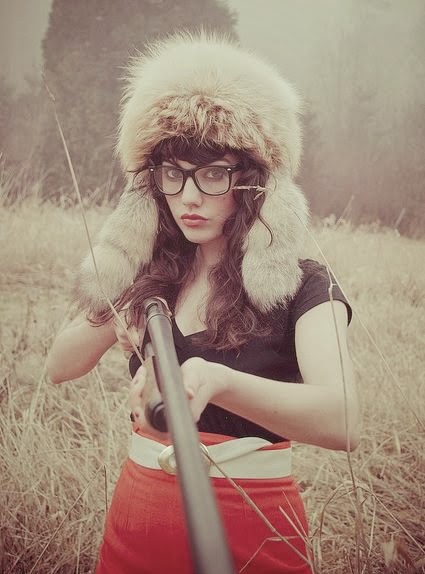
Not actually Erin.
& is used with permission.

Barring something unexpected, this is the last post in my New GHB series. I hope you found this "bag dump" helpful; I know for a fact that it certainly helped me. 

The following items are pieces of gear which are useful but don't specifically warrant their own category, so I place them in various nooks & crannies of my bag in order to keep the other pieces from rattling around and to make the best use of bag space. However, please don't think this means they're any less valuable than gear with a dedicated spot!

Spare Glasses
If you need glasses to see, then you must keep a spare in your bugout and get home bags. Several years ago I wrote a post on how to buy inexpensive spare glasses, but if you can't afford that, a simple if less effective solution is to put your old glasses into your bags every time you get a new prescription. 

Regardless of how you get your glasses, do not forget to put them in a rigid protective case! The very last thing you need in an emergency is to discover that your backup glasses are bent or broken because other items in the pack crushed them. 

Otis Tactical Cleaning System
If your bugout or get home plans include a firearm, you need a cleaning kit. I don't mean to suggest that you'll need to field strip your gun after you've shot it; rather, I'm talking about "I just dropped my gun into mud/sand and now the action is jammed" kind of cleaning, and the Otis Tactical Cleaning System is perfect for that. 

https://amzn.to/3FodQ7m
Not only is it small (about the size of my fist) and affordable ($36), but it will clean an impressive variety of firearms:
  • .22/.223/5.56mm
  • .270
  • .30/.308/30-06/30-30
  • .38/.357/9mm
  • .45
  • 12 ga
About the only thing I would add to it would be a small nylon brush (even a travel toothbrush would do) to help in cleaning. 

Sawyer Syringe
Not only is this needed to backflush your Sawyer water filter to extend its lifespan, but it's also a great way to irrigate wounds in the field. See this post for more information, and be sure to keep the syringe clean by storing it in a durable, cleanable container like a ziploc bag. 

EZE-Lap & Speedy Sharp 
If you carry a knife you'll need a way to sharpen it, these little gadgets are both effective and convenient. The EZE-Lap is a diamond hone that will touch up any dull edge, and the Speedy Sharp is a carbide tool that will not only put working edge on a seriously blunt piece of metal, but it also does an amazing job of generating sparks from a ferro rod. 

Books: Collins Gem Knots and the SAS Survival Guide
These are full-color pocket size books that contain a wealth of information. I keep them in a dry bag to protect them from moisture. 
https://amzn.to/3CpXnOd


I recommend both, but if you can only have one, get the SAS book ($11). 


Thank you for letting me show you my GHB. If I make any more changes, I will let you know!

Tuesday, October 19, 2021

Erin's New GHB, part 7: New Additions plus Food

Not actually Erin.
& is used with permission.
The main reason I do "bag dump" posts like these isn't to show you how to assemble a Bug Out or Get Home Bag, or even to show off all the cool stuff I have. No, it's because in the process of laying everything out, photographing it, and then explaining my reasoning behind it, I'm able to notice previously missed holes in my preps or flaws in my reasoning. 

For example, by laying out the contents of my medical pouch, I realized that I didn't have any effective way to splint an injured arm or leg. Sure, I could probably craft one out of sticks, but the premise behind my GHB is that I may have to walk home for several days, and if I have a broken arm or a sprained ankle I'd rather have gear that is quality and, let's be frank, more comfortable that something improvised with sticks. 

To that end, I bought some SAM Splints for my GHB so I wouldn't have to rob my BOB, and now I have both a 24" SAM and a 36" SAM in my medical supplies. I also added some titanium bandage shears, both to cut clothing, splints, etc for first aid and also just as a general cutting tool. 

https://amzn.to/3n6uHnP

I also acquired a CRKT Eat'N Tool XL for my Snack Pouch because I also added a pouch of Bumble Bee Salmon. I love this stuff, but it's difficult to eat with my bare hands. I typically use a long-handled iced tea spoon when at home, but I thought the added utility of the XL would be welcome. 

(Yes, I'm aware that pouched fish spoils easily, so if I plan to keep my GHB in my car during the warmer months I'll take the salmon out.)

https://amzn.to/3vFpnMd


Speaking of food, the reason I've been stalling on entries for this series is because during the course of the layout I realized that while I had snacks, soups and teas, what I was missing was bulk calories for energy. I had to try different kinds of survival foods in different pack configurations before I found something that worked. It required a drastic rearrangement of gear, but I made it work. 

I wanted something that was compact, as light as possible, would last for a long time, and would provide a decent amount of calories. I ended up buying two of these SOS Emergency Food Rations

https://amzn.to/3FWkx1L

Chaplain Tim reviewed these rations in 2017, and he gave them his top rating. I agree with his assessments and am largely happy to have these in my pack... although the weight (1.6 lbs each) is more than I'd like, it pales in comparison to the 6.6 lbs of water I'm also hauling. 


I bought two for the simple reason that each brick has 3600 Calories, and the average person needs roughly 2000 Calories each day. Each brick is supposed to be a three-day supply, but that works out to 1200 per day; this is fine for sitting in a life raft waiting for rescue, but not enough to get home after a disaster. However, two bricks is 72000, which works out to 2400 Calories over three days. Between that, my snacks, and my supplemental foods, it ought to be enough either to get me home or get me to a place where I can restock. 

I'm going to take some test walks with this setup once the temperature cools off a bit. If I can haul this without a problem, I'll see if I can fit two more bricks into my bag and carry it. If so, then I'll have seven days of meals, and that will make me a very happy prepper. 

Finally, I decided to add a multivitamin to my rations. Bulk calories are important, but just as important is proper nutrition and vitamin supplements can help with that. I bought a bottle of Vitamin Shoppe-brand VThrive Bioactive Multivitamin that was appropriate for my age group and placed a week's worth in my GHB. 


Next week ought to be the final post in this series, where I show you the miscellaneous stuff I have inside along with the configuration changes I've made. 

Monday, August 9, 2021

Erin's New GHB, part 1: the Bag Itself

Not actually Erin.
As& is used with permission.

January 2020, aka "in the Before Time", I decided that my current Get Home Bag wasn't what I wanted and that I should get a new one. It's taken me a long time to get to a point where I'm mostly happy with what I have, and so I'll share it with you. 

My old GHB, detailed in this post from 2014, was a SwissGear SA9259 Backpack that has since been repurposed into the bag I grab for late-night trips to the Emergency Room with my parents. I still really like it, as you can tell by the fact I continue to use it, but it just didn't have what I wanted in a GHB. In fact, I made a list of my requirements:
  • Affordable
  • Durable (i.e. good reviews)
  • Comfortable to wear
  • MOLLE loops for modularity
  • More than 30 Liters of storage
  • Belt and sternum strap
  • Backpack-style wide zipper opening (as opposed to a rucksack-style top-load method)
  • Did not interfere with carrying a concealed pistol
As with most things in life, I never got 100% of what I wanted. However, I got pretty close and was able to modify the rest into more or less what I wanted. 

https://amzn.to/3AuyeBc

The pack itself is a 50L "assault style" backpack with removable MOLLE-strap pouches that give an additional 10L of storage to it. It has a 4.5 star rating and close to 5,000 reviews. I bought it for $35. 

It's better than okay but less than great. It does what I want it to do, and it's durable enough to withstand being banged around in a vehicle and hauled around the neighborhood, but I haven't yet tested it in field conditions. In other words, while I expect it to last for its intended purpose of getting me home after a period of 5-7 days, I wouldn't expect it to last for weeks or months of hard living like I do my Bug Out Bag. 

The biggest problems were how the bag attached to me:
https://amzn.to/3fJpFKT

  • The pack's belt was practically worthless in that while it did secure the bag to my waist, it in no way bore any of the pack's weight so I acquired a battle belt and attached it to the pack. 
https://armynavyoutdoors.com/usmc-padded-tactical-sub-belt-surplus/

  • Since the battle belt also had MOLLE loops, I was able to attach to it a universal holster and magazine carrier. They aren't ideal, but this was the only way I could find to have a weight-bearing belt that didn't interfere with a carried pistol. 
https://amzn.to/3s3Q1wg

https://amzn.to/3s3Q1wg

  • The shoulder straps were as thin as the belt, so I added shoulder strap pads to increase comfort. 

https://amzn.to/3Am9Xxg


 This is how it looks now. As a point of interest, it interfaces well with my chest rig


I wish I could say that I love it, but I still have problems with the way the shoulder straps attach. If I attach them to the sides of the pack the way it originally went, then it pinches me along the side below the armpit. However, if I attach them to the battle belt, then the belt cinches upwards rather than cinching the pack downwards. Any suggestions on how I can fix this are greatly appreciated. 


Next week I'll detail what I've mounted to the outside, and why. 

Tuesday, November 9, 2021

Erin's New GHB, part 7.5: Food Hauling

Not actually Erin.
& is used with permission.

Hi, and welcome back.

I apologize for the absence; the past month has been really hard on me and I needed to pull away from most interaction to get my head and my soul in order. I'm going to ease back into blogging with a short, easy update post. 

I mentioned previously that I'd bought two bricks of SOS Emergency Food Rations and that I was going to take a test hike with them, and that if I was able to carry them easily then I'd get two more because that would give me seven days of calories. 

Well, the good news is that I was easily able to hike with the two bricks. 

The bad news is that four bricks are just too heavy, and I aborted that hike a quarter mile into it. 

However, all is not lost: I reconfigured the contents of my chest rig and was able to fit a ration brick in there, and I can hike with that configuration quite easily. This gives me (3600*3 = 10800/2000 = 5.4) nearly five and a half days of rations at 2,000 calories each, plus whatever supplemental calories I have in energy bars, soups, etc. I'm quite happy with this arrangement. 

I know it looks like I might be able to fit another ration
brick on top of the first, but it won't fit. The bricks are 
taller than they are wide by half an inch. 

Next week ought to be the final post in my GHB series. 

Monday, August 16, 2021

Erin's New GHB, part 3: Food & Water Pouches

Not actually Erin.
& is used with permission.

 No, not pouches of food and water, but quick access pouches for food and water. You'll see the difference in a moment.

Water Pouch
The water pouch is on the right side of my pack. (Why the right side? I dunno. It seemed the place to put it. But if I change my mind, the beauty of MOLLE is that I can swap them easily.) You can also see my Cold Steel Kukri Machete which I've used and abused for over a decade now and which I highly recommend.


Since my GHB has a hydration bladder, I don't need to carry external water. Instead, this pouch has the gear I need to filter and refill my hydration bladder via the drinking tube. See the post Hydration Tube Inline Hijinks for more details on how that works. 


I have them in separate bags to prevent cross-contamination. That it helps keep water droplets from getting everywhere is an added bonus. 

The item in the top left is a Sillcock Key, used to turn on external water spigots without handles. 

Food Pouch


To be fair, this is more of a "snack pouch" than a location for actual meals; if I'm sitting down to eat a proper meal, I'll be there for a while and won't mind going through my bag. This is mainly a source of snack items to keep me going that I can munch while taking a 5 minute break. 

The small dark sticks to the left are straws of honey. 

You can see the the theme here: "I need energy." With the exception of the 6 Hour Sleep and the activated charcoal, these are designed to keep me going when I'm sleepy, fatigued, or fighting the mid-afternoon nap monster. The Sleep is there partly for logic (they're from the same company, in the same size bottles) and partly because I just don't have room for them elsewhere. 

The activated charcoal is there also because I don't have a better place for it. My thinking is "If I need to take it, it's because I ate or drank something I shouldn't have," and I'll need to get to it quickly. Where else to put it, then, than in the quick access eat and drink area?

I'll post more about the benefits of activated charcoal next post. 

Tuesday, September 28, 2021

Erin's New GHB, part 6: Sleeping Gear

Not actually Erin.
& is used with permission.

So now I have a fire going to keep me warm, boil water, and cook my food. What's next? I think it's time for sleep.  See you next week!
Yeah, about that? Whoops. There's some stuff I forgot to mention. 

First of all, where is my water coming from? That would be a hydration bladder attached to the back of the pack. This particular one is a Camelbak of unknown volume (I want to say 2 or 2.5 L), but it's looking a bit old and so I've ordered a 3L bladder to replace it. Below that are my sleeping arrangements, which I'll detail soon. 

In case you're wondering what the white board behind the bladder might be, it's a stiffener board from Ammo Can Man to give this pack some internal rigidity, and behind it is a foam pad to aid in comfort. You can buy both of them as a set for $15.50 on Amazon, and if you have a soft pack like mine I highly recommend you get both of them to improve your backpacking experience. 


On to the sleeping arrangements. In the above picture you can see how they're stowed; the below picture is a more "exploded view" with the waterproofing bags removed so you can get a better view of what's going on. 


Top Row:
  • Klymit Cush. I reviewed this product elsewhere on this blog; it's an excellent "I just need a bit more padding right here" kind of cushion. 
  • SOL Escape Bivvy. Remember that I live in Florida, where it's usually 72° or higher most of the year; I don't need a substantial sleeping bag at all. Between this and the mylar tent I'm in, I ought to be quite warm. 
    • I don't recall paying $60 for this; I think it was closer to $25-30. I think the higher price is because this item may be discontinued. I chose this one specifically because of its durability:
https://amzn.to/3zQY0zd

  • Trekology inflatable pillow. I'm a side-sleeper, and so I have very specific requirements about how thick my pillow should be. I'm very pleased with this one; not only is it comfortable, but the flocking feels good against my face. 
    • But Erin, don't you have another travel pillow elsewhere? 
    • Yes, I do, because I'm one of those weirdos who needs a pillow between their knees to be comfortable at night. That one isn't as nice, and so goes there instead of against my face. 
Bottom Row:
  • Klymit V Sheet. The largest of all my sleep items, this one looks like a luxury -- and it kind of it, don't get me wrong -- but it serves an important purpose. Remember that I said I'm in Florida, and most of the time I'm going to be at 70° or more; using this sheet turns my Klymit Static V mattress into something that feels like an actual bed, meaning that I can use the bivvy sack as a blanket in hotter weather. Plus, it has a pocket to keep my pillow from sliding all over the place, and that's worth it by itself. 
  • Vacuum-sealed undewear. 2 pairs of cotton socks, 2 sets of cotton underwear, 1 set thermal underwear for the rare occasions it gets cold (or in case I'm further north). 
  • Klymit Static V mattress. By far the most expensive item in this section, and by the far the one most worth the price. A good night's sleep is essential for survival, and this mattress is both incredibly comfortable (even when side-sleeping) and incredible small (it packs down to about the size of a soda can. If you don't have one of these, buy one; if you can't afford it, wait for Black Friday or Cyber Monday and look for bargains. 

I think we have only 1-2 more posts to go of this GHB pocket dump, but I'm not going to pigeonhole myself. See you next week!

Friday, August 13, 2021

Erin's New GHB, part 2: Quick Access

Not actually Erin.
& is used with permission.

Last week, I mentioned that the main reason I went with this pack as my new Get Home Bag was because of its modularity. This is very important to me because if there's something I need in a hurry, I don't want to have to dig through my pack looking for it. This post is all about that quick access. 

The bag that I bought has a separate and detachable "waist pack". I made this my Quick Access pack for things which I would want to access while at a rest. (For things which I would want to access while on the march, see my Chest Rig).

Bag also available for separate purchase at 
https://amzn.to/3yS6IgY

There are 4 pockets to the bag: Left, right, front, and center. 

The Front Pocket is where I keep my first aid kit (trauma supplies are in my chest rig). I want to get to them quickly with a minimal amount of fuss, so they are in the most easily accessed pocket. 

The kit is a 250-piece from "Be Smart Get Prepared", and no I'm not making that up. It fits snugly inside a dry bag and that perfectly fills the front pocket. 

Check out the Amazon listing for details on what it contains; the short version is that it's a nicely stocked booboo kit with an emphasis on outdoor injuries, so it also contains things like insect repellent, sting relief ointment, and so forth.   

As you can see I've also added some Steri-Strips to the kit. 


The Right Pocket is a combination of comfort items that I want to be able to access quickly (like pain medication) and spillover first aid items that didn't fit in the front pouch. 
  • Top Row: Ace bandage, triangular bandage, medical tape, container of safety pins, 8 Breathe-Right Strips.
  • Middle Row: QlearQuil; pillbox containing Aleve, Advil, Tylenol, Meperidine, Benadryl & DayQuil; Jet-Alert caffeine pills; Pepto-Bismol.  
  • Bottom Row: Medi-Lyte electrolyte pills (I plan to get more), Loperamide Hydrochloride (anti-diarrheal), and Zantac.


The Left Pocket is for footcare. I have a pair of wool socks in a ziploc bag, an Adventure Medical blister relief kit, a travel size container of Gold Bond Powder, and a tube of Terbinafine Hydrochloride 1% to treat athlete's foot.


The Center Pocket is mainly for things I will use at night.


The entire bag is secured snugly to the back of the pack, as I expect it will bounce a lot and I don't want to lose it. In addition to two MOLLE straps in the back, there are two other MOLLE straps hooked through the attachment loops for the belt/shoulder strap (the belt is also visible in the picture, acting as a compression strap for the backpack), and the pack's "ice axe loops" are used to secure it on the bottom with two sets of Nite-Ize Figure 9 Carabiners


In my next post I'll discuss the two side pouches, which are for food and water. 

Monday, September 13, 2021

Erin's New GHB, part 4: the Shelter Pocket

Not actually Erin.
& is used with permission.

So after a trilogy of posts about charcoal, let's return to talking about my new Get Home Bag and how I've probably overpacked it.

The Shelter Pocket is to the rear of the main pocket on my bag. Since it's to the rear I've tried to fill it with lightweight items, and it just so happens that most of those are items which are related to putting up a shelter. As I might need to do that rather quickly to get out of the wind and rain, I like that I can access them quickly and with a minimum of digging. 


Here's how everything looked before I unloaded it. I took this picture not just to show you how it looks, but also to help me remember how to re-pack it because things never go back the same way twice for me. 

I'm going to divide the contents into three sections, with Front as the section closest to the top of the picture and Rear closest to the bottom. 

Front

Top Row:
Why an inflatable vest instead of a fleece? Because I live in Florida and it's rarely cold here, and because a fleece will take up more space than the folded mylar vest, and because this is a Get Home Bag and if it's during the cold months I'll likely have a coat with me anyway. The aerovest is mainly to protect against hypothermia caused by getting wet. 

Bottom Row:
  • An inflatable pillow;
  • cheap aluminum stakes for the tent;
  • a spool with 100' of paracord;
  • zip ties, because those are handy for a variety of purposes, and these can be "unlocked" and reused;
  • better quality plastic tent stakes.
Why two sets of tent stakes? Because the aluminum ones are so small and so light that there's no reason not to carry them. They can be backup stakes, or quick placeholders that I use before I set up something more sturdy, or I can stake down other things, or maybe I'll get caught in a windstorm and really want to secure my shelter. 

Middle
You can't see these in the first picture, but they're in there: a waterproof 2' x 2' square with blaze orange on one side and camouflage on the other (I folded it over so you can see both sides) and a small UVPaqlite "jerky light" (so named because it's vacuum-sealed like a piece of jerky)


Rear
So technically the books are also in the middle, but I took a picture of them here, so I'll talk about them here. 


Background: a 2' by 2' piece of wax-permeated canvas. I can sit on it while using the blaze orange square to signal for help, or I can sit on one and use the other as a work area. Both are waterproof. 

Top Row:
  • A "Hideaway Tarpaulin", which is a poncho that can be converted into a tarp shelter (includes zippered bag for carrying);
  • Two lawn-size trash bags and two kitchen-size trash bags, good for a variety of purposes including impromptu weatherproofing & insulation
Bottom Row:

As you can see, this should be everything I need to quickly protect myself from the elements and set up a shelter. Since I live in central Florida, I need very little in terms of winter survival as it only dips below freezing for a few weeks each year at the most. 

Tune in next week for what I hope is the final part of this series. 

Tuesday, September 21, 2021

Erin's New GHB, part 5: First Out of the Main

Not actually Erin.
& is used with permission.

Since other, smaller pockets have been more than enough to take up an entire blog post, I knew I wouldn't be able to fit the entire Main Pocket into a single article. Instead I'm going to break it down into sections, starting with the first things I'll grab once my shelter is up. 

You may recall that in my post about the Quick Access Pouch I explained that it was also available separately. Guess how I know this?

https://amzn.to/3yS6IgY

Yes, I liked it so much that I bought another one, and I used it to keep a lot of small items together. So let's see what I have in that pouch or next to it:


Yes, that picture is blurry. I didn't realize it at the time, and at this point I've already put everything away, so you're just going to have to deal with it. 

Top Row, Left to Right:
  • Eton FRX2 Hand Turbine AM/FM Weather Radio with Smartphone Charger. I've talked about previous versions of this item in older posts, and I continue to love it because it's a flashlight/radio/battery bank that can be charged with a hand crank or an integral solar panel. 
  • Earbud headphones, because the Eton has a headset jack. 
  • Cable with a USB "in" port on one end and multiple jacks on the other hand, so I can charge a variety of things. 
  • An old iPhone charging cube, because the Eton also charges from a wall socket and that's the smallest charging device I could find. 
  • Halo pocket power charger, because why not have a lightweight power bank?
  • They're all sitting on a dry bag. 
  • Steel cup with a lid. More on that below. 
  • Knot cards for the Knotbone and Figure 9 Carabiner, as well as a "How to tie important knots" card because sometimes I forget how to tie hitches if I haven't practiced. 
  • Coughlan's survival candle, because candles are a slow and efficient open flame. If you can only light one thing with a match... light a candle. 
  • Wire survival saw. I know it's a gimmick, but I got it for free and it weighs basically nothing and takes up little space. If nothing else it'll be good for processing kindling. 
Let's take a closer look at the steel cup. 


Inside the cup is a vacuum-sealed collection of foods, mostly soups and powdered drinks. It's been so long since I sealed it that I can't recall what's inside. I believe the item which says "Anabolic Laboratories" is some kind of energy sports drink. 

There's also a lid, a foldable spork, a P-51 style can opener with bottle opener cutouts, and... Knotbones. Yes, I know it doesn't make a lot of sense; I put them in there because it's a small space and could find them more easily. easily. Look, what's important is that I know where things are, okay?

As for what a Knotbone is: it's been discontinued so I can't link to it, but the best way to describe it is "A plastic tool that gives you various ways of quickly attaching two or more paracord ropes to each other." I think it's neat. 


Bottom Row, Left to Right:
  • Signal mirror and whistle with float. Obligatory. 
  • Pocket bellows, aka "a hollowed out collapsible antenna without an end cap." Useful for a variety of purposes: blowing a fire, improvised snorkel, drinking straw. 
  • Firebox Nano Deluxe. More on that below. 
  • Plasma lighter with flip-up lid. I don't recall where I bought it. 
  • Bic lighter. Also obligatory. 
  • Roll of duct tape. 
  • Variety of fire fuels, including 3 Wetfire cubes, 2 Esbit fuel cubes, a length of waxed jute, and a guitar pick (it'll burn as easily as a corn chip). 

I'm a big fan of the original Firebox, and the Firebox Nano brings that same level of performance into a pocket-sized package. It burns biofuel (sticks, wood shavings, pine cones, etc) easily and comes with a plate for efficient use of fuel tabs. 

The X-Case holds it in its folded configurations, and also serves as a base to catch ash and steady the stove. 

The carbon felt can be used as a windscreen, ash catcher, or hot pad. 

You can buy the entire kit (except for the fuel plate, sold separately) for $50 with free shipping from Amazon and I cannot recommend it highly enough. 


Here's a video of the entire setup in action:


So now I have a fire going to keep me warm, boil water, and cook my food. What's next? I think it's time for sleep.  See you next week!

Tuesday, February 11, 2014

The CSK, or Car Survival Kit (part 1)

In a conversation last week after Erin's post about her Get Home Bag, I was asked if I had something similar.  The answer:  "Not really.  Kind of."  Erin asked to see it, so I figured I'd share with everybody.

My environs are a bit different from the rest of the crew here, with the exception somewhat of the good Chaplain.  Whereas the others spend their days in a concrete wilderness*, I'm as likely to be out of cell signal as I am to be on pavement. Walking home is a bit less of an option, and in many situations, staying with your vehicle is a better plan.  (Note to self: expand on this some other time.)

With that in mind, let's break down my gear.

This is the main guts of it.  The most important stuff is in one bag, so I can grab it and go, if I have to leave the truck.


The little orange pocket you see?  This is what it holds.  Two ponchos, two mylar space blankets, a pair of chemical hand warmer packs, a whistle (with an LED light, a passable compass, a thermometer, and a signalling mirror) and a fire bar.


The contents of the main pocket, clockwise, from upper left: A Seychelle water filtration bottle and spare filter, an emergency tent, six 1200 calorie food bars, a Sterno stove and fuel can, a bag of sports drink mixes (electrolytes, baby!), a pair of cut-resistant gloves, utensils, a dynamo-powered flashlight and radio, dust masks, an LED headlamp and battery, glow sticks, and SPF 50 sunblock, because Uncle Loki tans like a lobster.


The water bottle and filter.  Claims to be good for 200 gallons per filter, using a 2 micron carbon and iodine filter combination. Should keep most water I'll find in the sticks from killing me.


My first aid kit (and the knife I forgot to include in the big picture).


Included in the first aid kit:
  • Tape
  • Small medical scissors
  • Tweezers
  • Small lockback folding knife
  • 2 rolls of 4" gauze
  • Antacids
  • Ibuprofin
  • 5 3x3 gauze pads
  • Baby wipes
  • a 5x7 dressing
  • dental floss
  • various small band-aids
  • 5 hemostatic gauze pads
  • matches
  • antiseptic wipes
  • alcohol prep pads 
Somewhere in the past couple years, my triangle bandages have ended up "not in this bag."  I need to add some more.  I tend to keep them around in lieu of fancy new-fangled tourniquet kits. They're somewhere between cheap and free, and I was taught old-school, when they were all we had.  While the CAT and SOF-T are excellent pieces of gear, I have a tendency to fall back on what I know.  In addition, triangles are great for general bandaging, splinting, slings, and a whole host of other roles.

The whole bag rolls in at about 9 pounds, plus I have a box of freeze-dried food in the truck that puts on another 3-ish.

This comes in SUBSTANTIALLY lighter than Erin's GHB.  There's a reason for that.  This is the grab-and-go part of my kit.  You'll notice, with the exception of the knife, there are virtually no tools in this bag.  There are no weapons in this bag, except the knife. I'm not carrying toiletries, or much by way of firemaking gear.

There's a reason for that.  Those things are carried either in my tactical manbag (Call it Zone 1.5, in Erin's Zones) or in my truck itself, be it in the cab or in the toolbox.  Next week, I'll break open the toolbox, and show you the far less portable parts of a Car Survival Kit.

Lokidude


* Erin adds:  Hey now!  I live in a rural suburb, thank you very much!  I have miles of woods in my back yard. My wilderness is only partly concrete. :P

The Fine Print


This work is licensed under a Creative Commons Attribution- Noncommercial- No Derivative Works 3.0 License.

Creative Commons License


Erin Palette is a participant in the Amazon Services LLC Associates Program, an affiliate advertising program designed to provide a means for sites to earn advertising fees by advertising and linking to amazon.com.