Showing posts sorted by relevance for query lokidude training. Sort by date Show all posts

Tuesday, April 15, 2014

First Aid: Training

Since folks have asked, lets take a break from the gear parts of first aid, and talk for a minute about where to learn how to use all the gear you've acquired. There are two nationally available training resources I can recommend without reservation.

The first is the American Red Cross.  They set the curriculum that most other trainers teach to. I've personally taken a number of their courses, and they teach a variety of good information.

The second is National Safety Council.  They taught my most recent first aid course. The curriculum was solid, well-presented, and easy to understand. They also have online options available if conflicts prevent classroom training.

There are other options as well. Local volunteer emergency groups (locally, we call them Community Emergency Response Teams) often host training for free or reduced fees. They're also a valuable resource and affiliation in general for preppers. Your local city hall or fire department can provide information about such groups in your area.

Many employers also offer first aid and CPR training, frequently on the company's dime. Your employers Human Resources or Safety department can tell you about any programs your company has. Any time you can get someone else to pay for training, it's an opportunity you should at least consider.

If anyone has any other good nationwide training resources, please share them in the comments.

Lokidude

Tuesday, May 6, 2014

You revert to the level of your training

It is a long-held maxim among the capable that in a moment of true need, you do not rise to the occasion, but instead that you revert to the level of your training. This past week, that point was very uncomfortably driven home.

We were preparing for a shooting event, 20 miles into the boonies, when one of the staffers collapsed. He was about 200 yards from the rest of us, at the bottom of a large hill.

It took less than a minute to get to him, but it was the longest minute I can remember. On scene were a former Ski Patroller, a Marine, and myself. Looking back on the event, our training shows through - the marine was immediately on the radio calling for help, I sent my wife for the first aid kit as I headed down the hill, and the ski patroller went immediately into securing and treating the patient.

As we assessed our patient, it was startling to me the things that I remembered, and the things which, in hindsight, I realized I had forgotten.

We were exceptionally lucky in this instance:  Help was reasonably close; our patient regained consciousness on the hill and was unhurt and readily recovered;  the hospital found nothing wrong with him and he was at dinner that night with us.

Morals of the story:

Get training. I know I need more training, likely an advanced first aid class or a wilderness first responder class.

Evaluate your gear. My first aid kit was woefully ill-equipped for this particular incident. I will of course detail the changes as they happen. Any incident, however, presents a chance for reflection and evaluation.

Practice, practice, practice. The things that I remembered and that immediately came back to me were skills that were drilled extensively in school. Know your gear, know how it works, and drill your skills until they're instinctive.


Lokidude

Tuesday, May 27, 2014

First Aid Kit Upgrades

I promised after the Boomershoot excitement that I was going to upgrade my first aid kit and share the upgrades with you.  Here, at last, are the additions:

1.  Something to write with, and something to write on.  Both permanent markers and ball point pens are useful here, as well as a small notepad.  The ball points are for the notepad and the sharpies are great for writing on your bandaging tape, noting useful information such as the time that a set of vital signs was taken as well as those vital signs themselves.  Stick to fine-point markers, as they're far easier to read.  Perforated or spiral-bound pads are great, as you can just remove the page and hand off any of your notes when professional help arrives, giving them a record and an advantage in their treatment.

2. A blood-pressure monitor.  I went a bit old school and just pulled out my stethoscope and cuff, but that's because I have them in the house, and because I have the training and experience to use them.  They're a bit big and bulky for my EDC kit that I carry in my backpack, but they're going in a larger kit, reminiscent of the "jump kit" I used to keep on hand when I had my EMT certification.  Depending on how and where you pack your kit, the same may apply to you.  The ability to give the responding medical crew a running blood pressure on our Boomershoot patient would have been very nice, and something I felt pretty clumsy lacking.  In addition, regular checks of your own blood pressure are never a bad thing, and the model I linked has the ability to track 30 readings, so you can see how you're trending.

3.  Specific Wilderness/Remote First Aid training.  I've already talked up the Red Cross for training before, and had the BSA wilderness first aid training that they base their curriculum on, but that was nearly 15 years ago so I'm far beyond due for a refresher, which I'll be taking this summer.  They also offer their pocket guide as a PDF at the site linked, for free.  Free is good, so get that guide.

Seeing as I come from a family of diabetics, a glucometer might not be amiss in my big kit, but that will take a fair bit of research and consultation before I can make any kind of recommendation.

I'm certain there will be another round of updates and evolutions, as any good kit should grow and change with circumstances and experience.  As it happens, I'll certainly share it here.

Lokidude

Tuesday, April 8, 2014

First Aid Kit Phase 2: $50

Last week, we covered the initial phase of first aid kit building.

This week, we'll build on that foundation, expanding to a $50 level.  The $50 kit adds quite a bit of versatility and functionality over the previous kit.

Starting where we left off, let's add our two nice-to's, the first aid scissors and the rolled gauze.  (I changed the gauze to a more economical brand, but they're both quality product and perform the same function.)  This brings our total up to $33.81.

Triangular Bandage:  I'm old-school.  I love triangular bandages.  They're versatile and stupid cheap, and have virtually limitless uses.  $1.84

SAM Splint:  Light, inexpensive, and very easy to use.  They work rather well for splinting injured extremities.  Combined with a triangular bandage, there's not many injuries that cannot be supported and immobilized. $6.23.

Eye Wash solution:  Excellent for flushing debris from eyes (honestly one of the more painful and frightening "injuries" I've had).  By buying the big bottle, you also have a handy pint of sterile solution for flushing wounds before bandaging.  $7.05

We'll stop there for today.  That puts our total at 48.93.  Take that extra $1.07 and buy the allergy reliever of your choice as this kit's nice-to.  Much like ibuprofen, I reach for the benadryl knockoff in my kit on a weekly basis.

One of the commenters last week mentioned getting training.  By all means, do!  I've tried to limit the supplies in these kits to things that don't require specialized training, but having training allows other uses for these, and the skills to use some more advanced gear.

Please, comment and critique!

Lokidude

Thursday, April 9, 2020

Guns and Safety

We've been writing this blog for a little over six years, so we've covered a lot of information that that you may not know about. There is a handy search box at the top of the page, but some things need to be emphasized so I'm going to re-hash an article from 4 years ago.

Americans are buying firearms and ammunition at panic levels. In the last report I saw, from March of 2020, there were more FBI background checks performed than at any time since the Brady Bill went through Congress. We're buying firearms at a rate that even the worst gun control scares didn't match; Black Friday and the lead up to Christmas have always been high sales times, but we blew through the record of 3.3 million checks done in December 2015 by 10% in March 2020. These numbers don't even account for the 23 states (as of this writing) that conduct a background check prior to issuing a purchase or carry permit that exempts holders from further background checks. I happen to live in one of those states, so my carry permit serves as proof that I can be allowed to purchase a firearm and no NICS check is required. Private sales are also not yet included in these numbers.

From anecdotal evidence, a lot of these gun purchases are by people new to guns. First-time buyers, many of whom have little or no experience with firearms, need instruction and help to be able to properly use and maintain their new tools. The first thing every gun owner or user (I've trained several youngsters that are not old enough to legally own a firearm) needs to learn are the 4 rules of gun safety:
  1. All Firearms are always loaded.
  2. Never let the muzzle of a firearm point at something you don't want to destroy.
  3. Keep your finger off of the trigger until you're ready to shoot.
  4. Know your target and what is behind it.
Lokidude covered these in the post I linked in the first paragraph, so go read that if there's some part that doesn't make sense.

If you are new to firearms and want an experienced shooter to explain the 4 Rules in person, or perhaps take you to a range and give you some hands-on assistance with getting to know your new tool, there are resources available:
  • Our own Erin has founded a non-profit organization to match new gun owners with willing teachers, regardless of sexual preference. Operation Blazing Sword was started to bridge the gap between the LGBTQ community and the gun community after the Pulse nightclub attack, and has grown to include everyone that requests help. We want you to be safe, regardless of your skin color, religion, sexual preference, or income level. Many of the volunteer instructors will help with more than just teaching the basics, but it varies by the instructor and their budget.
  • I'm not a huge fan of the NRA for political reasons, but they do have the longest track record of teaching people how to use firearms safely. They offer several levels of training through their certified instructors all over the USA, for a reasonable price. 
  • With the fairly recent expansion of concealed carry rights in many states, classes on basic firearms safety have popped up as a cottage industry all over the country. Check your local gun shops and gun shows, and you'll find fliers and business cards for small companies offering the training required for specific carry permits. Even is you don't want a permit to carry I strongly suggest that you get some form of training if you choose to own a gun.

We've covered several other gun-related topics (type “gun” in the search box) over the years, but the safety of new owners has become more relevant recently. If you're one of the new owners, welcome to the club and please feel free to ask questions. All of the writers here are gun owners; many of us have decades of experience and we're here to help.

Tuesday, January 27, 2015

Prepping for Unemployment

When the question of "What do you prep for?" is posed to me, one of my top responses is always "Unemployment". I work in construction, so layoffs and work slowdowns are a very real part of my life. This was driven home last week, when I found myself suddenly unemployed.

So, how exactly does a person or family prep for a job loss or layoff? Most of this is just basic financial strategy, but sadly many folks, especially younger folks, aren't taught this except at the school of hard knocks. If you can learn these lessons and put them in place when times are good, they'll already be working for you when things get bad.


1) Build Savings: A bit of money in the bank does several things for you when you find yourself faced with a job loss, or any other financial crisis. Primarily, it numbs quite a bit of the fear of crisis by giving you some time to sort matters out and solve the problem. It can also smooth over smaller bumps in the road, keeping them from becoming a crisis. Knowing that you have a bit of savings and time can also help you stay calm while job hunting, hopefully helping you to interview well.

You don't have to develop massive savings overnight; just dedicate a portion of your monthly budget to savings, whatever you can afford. Obviously, the more you can budget to savings, the faster your savings will accumulate. It also helps to have a savings goal in place, but what that goal is will depend on your needs and circumstances.

2) Budget: Having all the neat prepper toys is nice. If they put you in the poor house, however, they're no good to you. Set a budget each month, accounting for all your regular bills, as well as setting money aside for savings, prepper supplies, and any other goals you have. List all your income and all your bills, and then find a place and a purpose for any extra dollars of income you have left.

3) Cut Debt: Cutting debt reduces how much you have to pay out each month, which is a big plus when you're un- or under-employed. A lower outlay also frees up more money in the monthly budget for savings or other needs. Spend less on credit and pay a few dollars extra on your credit accounts each month, if you can.

4) Network: Make and maintain contacts with people in your industry. This is particularly important in a small or narrow field; someone is always hiring, and multiple people keeping an ear to the ground are far more likely to find openings than a single person. In particular, they may be aware of soft openings, where a job isn't openly posted and actively hiring, but a boss would be interested in finding room for the right talent.

Join professional organizations in your field, and be active within them. In addition, keep any training, licensing, and certifications up to date.
5) If you do find yourself unemployed, make job hunting your full-time job. Contact your state workforce services office. Most of them have websites with all of their listings, as well as providing job and interview training courses. Let the folks in your network know you're looking. If you're in school, check with your advisers. Just like with any other job, the harder you work at it, the more successful you'll be.

As for me, don't worry.  I fell back on my network, called an old boss, and didn't miss a day of work.  The rest of the framework kept me calm and collected, and allowed me to form a plan, make the necessary phone calls, and be working the next morning.


Lokidude

Tuesday, October 27, 2015

Bugging In: Skills Roundup

The last things to discuss about bugging in are skills: those you have, and thoseyou learn. Skills are the one prep that can't be taken from you by disaster, economic hardship, or any other environmental concern. Some are free to learn; even more can be learned very inexpensively, and all of them are an investment in your survival and well-being.

Gardening
Raising your own food is a useful skill even in the best of times. The specifics of what you grow and how will depend on your location and space available; your local nursery, greenhouse, or farm store can provide valuable insight. Even if you're limited on space, square foot gardening techniques will allow you to make the most of the space you do have. If you plant using heirloom seeds, you can use seeds from each year's crop to plant for the next season.

First Aid
In a situation that requires you to hunker down for an extended time, help may be a long time coming. I've mentioned the need for basic medical training before: when you're effectively cut off from help, you are the help. Avail yourself of any first aid training you can get and and make sure your family does the same. And remember Murphy's Law -- if only one person has medical skills, they'll be the one who gets injured.

Handyman/DIY Skills
We've talked about having basic tools around. If you're planning on hunkering down, you need to expand your knowledge of how to use those tools.

For basic home maintenance and repairs, your local hardware store will very likely conduct classes once or twice a month, often for free. They'll cover common home repairs, seasonal maintenance, and other vital things to keep your home running smoothly.

For automotive and equipment repairs, start by reading the owners manual. Haynes and other companies also produce an extensive line of vehicle-specific books, with step-by-step instructions and a wealth of illustrations and pictures. Courses are frequently available at your local trade school or community college, sometimes for a very nominal fee. Practice maintaining your gear yourself in good times, so that you're comfortable running the wrench when you don't have options.


There are many other skills to learn that will make bugging in easier, more comfortable, and more successful. They cannot all possibly be covered in one list, so please comment with other skills that folks should learn, and where they can be learned.


Lokidude

Tuesday, March 25, 2014

First Aid Kits: Considerations

First aid kits are a necessity of life. It is a simple, indisputable truth. In this series, we'll detail the whats and whys of first aid kits at many levels.

Off the shelf first aid kits are... problematic. Either they're so simple and bare-bones to be useless for much more than cuts and scrapes, or they border on a field surgical kit. There's a massive gulf in between, and that gulf is where some of the best first aid kits fall, but to get there you pretty much have to build your own.

So what considerations and decision criteria do you apply when you build a kit?

Budget: With first aid supplies, the sky is the limit. You can easily spend the cost of a decent used car on a first aid kit. In this series I'll detail kit builds as low as $25, on up to ~$150. Past that, you should know gear well enough that I'm not telling you anything new.

Space: How are you carrying and storing your kit? A kit meant to fit in your pocket is a far different build than a kit for your car or house.

Intended use: What general purpose are you gearing for? Are you building a kit for a work gang on a construction site? Do you spend a lot of time camping and hiking? Are you alone a lot, with the need to treat yourself?

Level of training: How much medical background and skill do you have? You should know how to use every piece of gear you carry, and I don't advocate carrying gear you don't know how to use. As an example, I have zero training in sutures, and very minimal and passing instruction on deflating chests, so carrying kits for that (commonly found in those nigh-surgical kits) is wasted space, weight, and money for me.

Personal needs: If you or a loved one has a medical condition with specific needs, by all means, you have to plan for that.

The answers to these questions will direct how you build and store your kit. As we proceed, please make suggestions or offer substitutions, as I guarantee none of us have seen every gizmo and new first aid toy out there. If you have any questions, please comment or email.


Lokidude

Tuesday, March 12, 2019

Chemical Specialty PPE

I’ve discussed Personal Protective Equipment (PPE) a couple of times in the past, and for good reason: it's the last line of defense against injury when doing work. In addition to basic PPE, there are specialty protective items that are used to address dangers related to particular tasks.

One fairly common work hazard involves chemical exposure. Part of my work this week has involved repairing the power feed to some pumps in a sewer manhole. In addition, many of my hobbies involve volatile chemicals. Additionally, a lot of prepper tasks can leave you exposed to the same kinds of risks, so having the correct protective equipment on hand will help keep you safe and healthy.

Inhaled Particles and Fumes
https://amzn.to/2TEIuGs
When dealing with dust and particulate matter in the air, a basic dust mask works wonderfully so long as it meets the National Institute for Occupational Safety and Health (NIOSH) N95 standard. I also feel like the small extra charge for the exhalation valve is money well spent, because it keeps my face cooler and my glasses from fogging. This mask, however, does nothing to protect you from the gases in the air you breathe.


https://amzn.to/2TAN5t8
For fumes and harmful vapors, a chemical cartridge mask is what you need. Similar in principle to the classic “gas mask,” these masks use replaceable cartridge filters to remove harmful chemicals as you breathe. Each type of cartridge is only useful with specific chemicals, however, so make sure you’re using the right ones and changing them as recommended by the manufacturer. Each mask will come with complete instructions for the use and care of the product.

Cartridge masks are available in both half- and full-face configurations. My personal mask is a half-face, because it is cooler, works better with my prescription eyewear, and I don’t often deal with environments so hazardous that I need sealed full-face protection. However, if you feel you need this protection, it is available.

One other major concern arises with respiratory protection: facial hair. As anyone who has been trained in its use can tell you, facial hair is largely incompatible with respiratory masks. It makes getting a good seal between the mask and your face virtually impossible, which renders the mask itself almost useless. I have come to accept as a fact of life that I have to use my mask for anything, my beautiful ginger beard will get a heavy trim. It's a sad but necessary requirement to protect my lungs.

Facial Protection
https://amzn.to/2EUGj79
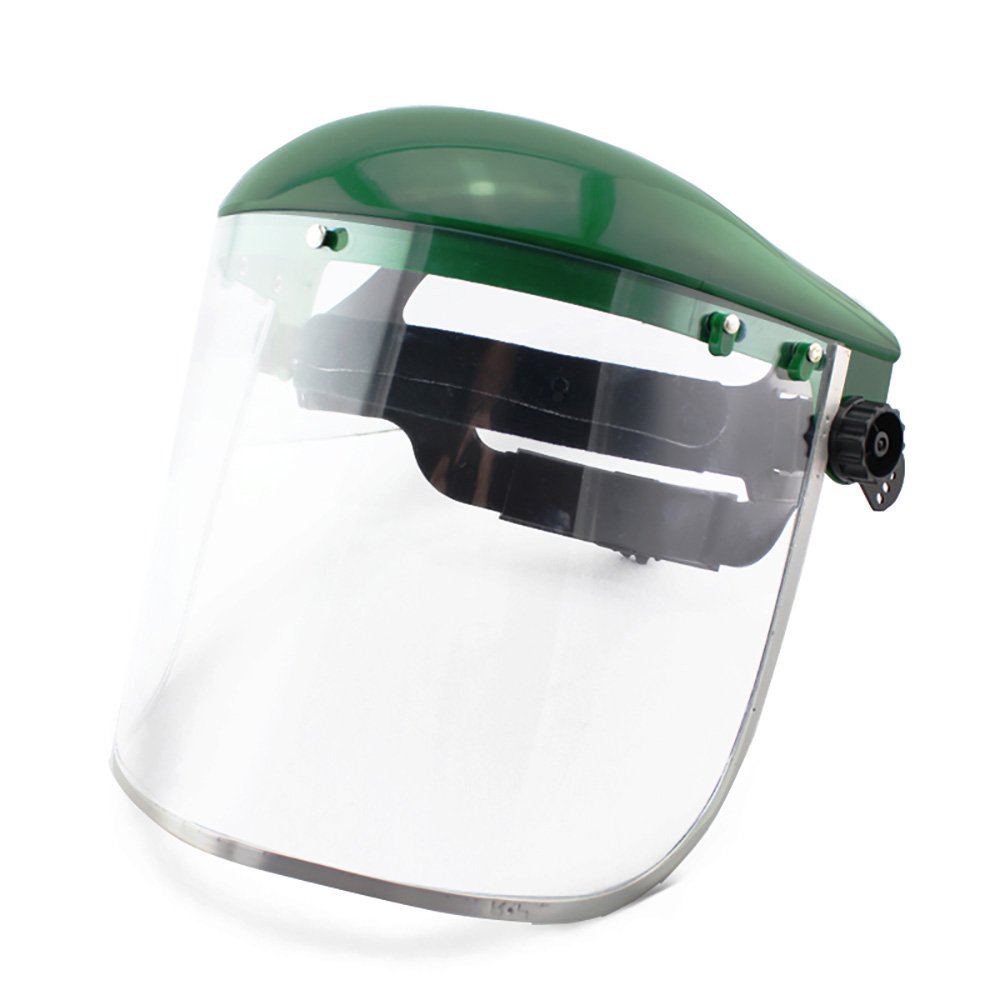
That same beard may get referred to as “face armor,” but it's worse than useless if caustic or otherwise harmful chemicals get splashed into my face, as the beard can hold the chemical against my skin or even ignite. Safety glasses protect the eyes in the event of a splash, but there’s a whole lot of face that is still exposed and can be grievously harmed. A face shield will keep sparks, splashes, and hot spatter away from you and keep your face away from harm.


Hands
https://amzn.to/2NZfHWW
Your hands are always vulnerable to harm, since they’re usually in direct contact with the hazards you’re addressing. Gloves are a necessary protective item, but when you’re dealing with chemicals, a cloth or leather glove can be at least as harmful as helpful, because it can trap dangerous and damaging materials and hold them against your skin. Gloves are also very difficult to take off in a hurry, so this prolonged contact can dramatically increase the damage suffered. Chemical-resistant gloves don't absorb dangerous substances or allow them through to contact the skin. They're also thicker than nitrile or latex gloves, meaning they last longer and are far less easily damaged or compromised.

Coveralls
Your clothes are also vulnerable to the same weakness as normal gloves. Chemicals can soak into your clothing, destroying it and harming you. When you’re working with very hazardous materials, or in an environment where spills and splashes are most likely, a disposable coverall suit with a hood gives a nearly complete body covering. Combined with the rest of the PPE I’ve discussed here and elsewhere, this outfit will protect you from almost any chemical exposure a prepper will encounter.

The kinds of exposures it won’t help with are the kind requiring very expensive, very specialized gear and training [e.g. MOPP gear, or Mission Oriented Protective Posture gear, usually designed for chemical, biological, radiological or nuclear weapons], and are situations into which one shouldn’t enter unless it is your job or your duty to do so and you have the gear and training available to properly handle them.


Chemical exposures can be very dangerous. The kinds of protective gear needed to deal with them are inexpensive and readily available. There is no reason to be unprepared.

Lokidude

Thursday, June 5, 2014

Your Library


I feel that one of the most most important things that you can have in your bag of tricks is a well-stocked reference library. Most of my personal reference library is packed away in boxes or I would add pictures of shelves full of books old and new, as well as the binders full of CDs and DVDs that I have accumulated over the years. Maybe once I get my house with a separate room designated as a library I'll be able to get them all out at one time.

The choice between paper and digital can be difficult, as they both have pros and cons. I'm old, so I prefer turning pages to swiping an often greasy or dirty finger across a screen, although YouTube and the Internet have made it a lot easier to look up information on odd subjects.

Paper


Pros:

  • No batteries or cords to get lost
  • Harder to alter or "hack"
  • Can be paid for in cash in many places
  • Untraceable, as long as you don't buy them online 
  • Degrades slower over time
  • No hardware needed to to get to the information

Cons:

  • Requires an external source of light to read
  • Heavier than digital copies
  • Bulkier than digital, takes up a lot of room
  • Easily damaged by water

Digital


Pros:

  • Easier to copy and share
  • Small size allows for huge amounts of data storage
  • Easier to search and scan
  • Easier to find "out of print" books
  • Cheaper

 Cons:

  • Prone to electronic disruption (EMP, static discharge, etc.)
  • Easier to lose
  • Decays rapidly over time
  • Prone to hardware obsolescence

A well-rounded reference library should cover a variety of subjects in as much depth as you can find and afford. If you're a long-term prepper (survivalist has a bad connotation for some reason) you'll want to have copies that cover everything from the basics to advanced information on the subjects that you want to preserve. I know that I'm not going to be around forever, so some of my preps are set aside for the next generation or two to learn from. I also realize that I can't do everything that needs done, so having references that I can share allows me the option of growing the capabilities of my tribe. Having a few school teachers in my "network" helps, but they are limited to the resources that they have available.

Subjects and examples

Basics like knot-tying and simple bushcraft should include copies of the old Boy/Cub/Girl Scout manuals. The newer ones don't teach as much of the outdoor skills as they used to.
There are other books that specialize in things like knots- these are my favorites.

The Arts of the Sailor, by Hervy Gerrett Smith.
Written for sailboat sailors, it covers a lot of knots and has a good section on sail repair and decorative rope work.
The Book of Outdoor Knots, by Peter Owen. A simple book with detailed pictures giving step-by-step instructions for the basic knots you'll find useful in the outdoors.


School subjects like math and chemistry could be very important to pass on. Here is one of the books off of my shelf for an example. Any used bookstore can provide text books at a reasonable price, and Half-Price Books is usually a bit cheaper than Amazon, but with a smaller selection.

Reading, writing, math, spelling, art - any of the subjects pumped into our heads when we were children will need to be taught. Make sure you cover as wide a range as you can afford - you never know who might need the basics and who is ready for advanced studies.
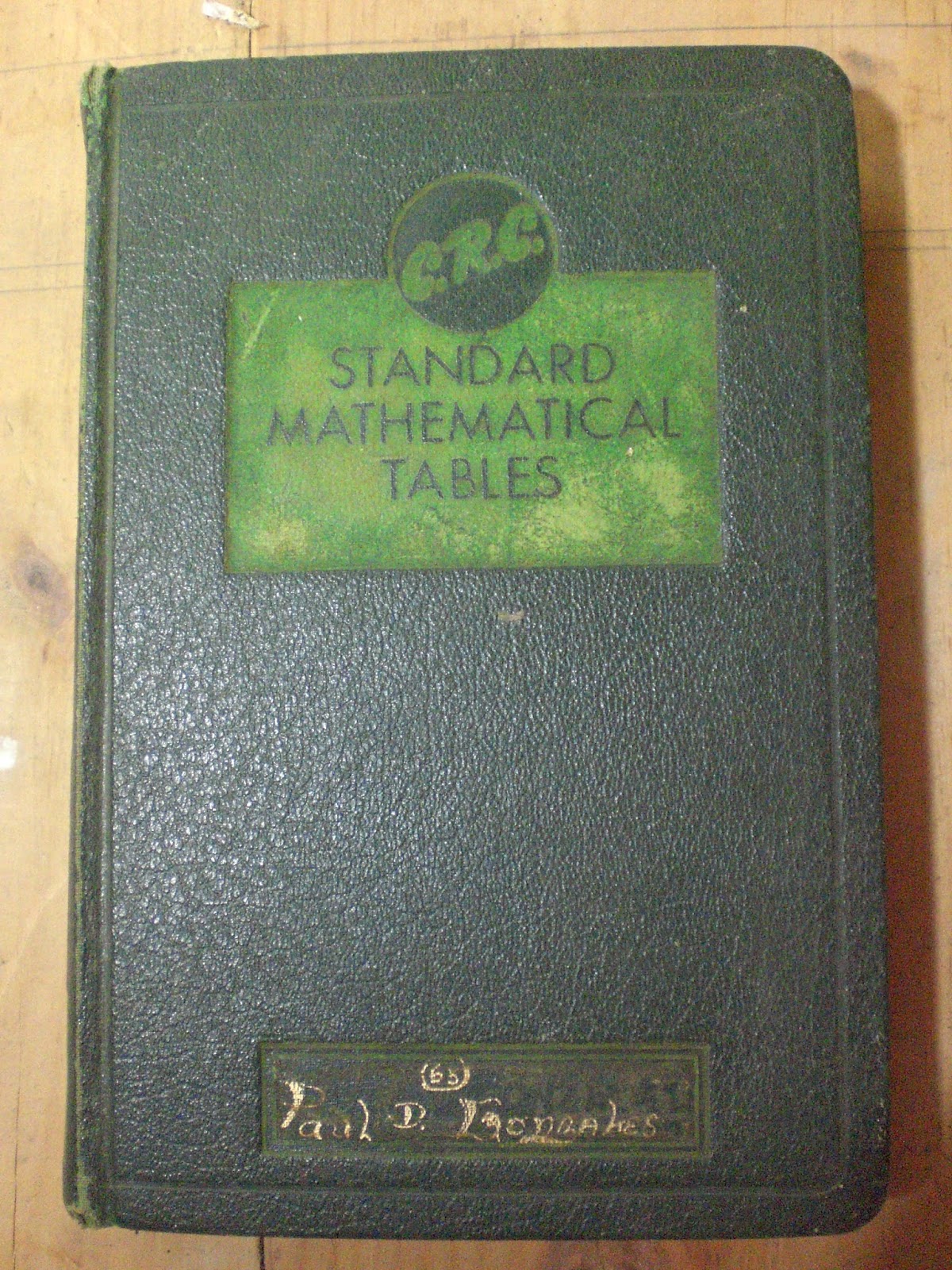

I'm a fan of the ways things used to be done, so I collect old books that cover subjects that interest me. Good luck finding copies of these exact books, but you may find something similar.

Anything put out by CRC (Chemical Rubber Company) is a good reference to have. Their Handbook of Chemistry and Physics (THE reference book for Chemistry labs) is rather expensive -  I've seen them new at over $200 - but the information inside doesn't change much over a few decades, and used copies can be found for as little as $3.


 This one was written in 1892. It's a handbook full of formulas used by pharmacists before the invention of the FDA. Deciphering some of the terms used took a while, since they don't use the same names for many chemicals and compounds that we use now.


Medical training is essential to surviving any major crisis. Having medical training and supplies gives you a valuable service that can be bartered for the things you don't have or know how to do for yourself. The 2013 edition may be found here.


I actually found this one on eBay. It's a med school text book put out by the manufacturer of sutures. Very informative. 2007 edition here.


To follow Lokidude's post about vehicle maintenance, I strongly suggest that you get a manual like this for any vehicle or large piece of equipment that you may have. Knowing that something can be fixed is the first step in getting it fixed, even if you can't do the work yourself.

Chilton and Haynes are the most common and will get you through the most common repairs. Find a factory manual if you need further detailed information, but be prepared to pay dearly for it.


Weapons maintenance is the same, get as much information as you can on the weapons you own or may expect to find after a disaster. The NRA has published "The NRA Book of Small Arms" for decades, and the various volumes contain more information than most of us will ever need. Bob Brownell (Brownells) put out a series of "Gunsmith Kinks" book that are even more detailed - basically a collection of hints and tips gunsmiths sent in over about a 60 year span to one of the largest gunsmith supply houses in America.

I also have a collection of books to assist me in my shop. The Machinist's Handbook is a small, dense bible to have when working with mills and lathes. I have several books on the construction of barns and sheds, just in case I need to put up storage for extra goods, equipment, or people. Foundry work, blacksmithing, tool making, distilling alcohol, passive solar heating, and a host of other odd fields of study all have a place in my library because I'm not sure what I may need to learn or teach in the future.


If you have the time, money, and space then you should have at least a few books set aside for the bad times. Reference books will help you get through, but don't forget to include other books to read just for the pleasure of reading them. Keeping some picture books around is a good way to occupy the time of little kids, and even the older children should be taught to read (and write) better than what I've seen graduating over the last few years.

Thursday, March 8, 2018

Rabbit Fever

Rabbits are one of my favorite game animals to hunt. They're tasty and plentiful, the season is long, and the license is cheap. They're so very easy to raise that many people keep them as domestic livestock, especially in suburban areas.

While rabbits are in fact a wonderful source of lean protein, there are a couple issues to be aware of before you incorporate them into your diet.

Rabbit Fever
Tularemia, or "rabbit fever", is a bacterial infection that wild rabbits are particularly susceptible and can readily transmit to humans. (It can also be transmitted by ticks, biting flies, and other vectors.)

Tularemia presents with a very high fever, as well as ulcers or lesions. While it can be treated with antibiotics, it can also be life-threatening. The disease is not carried nor transmitted by domestic rabbits, so livestock animals are safe.

There are a few steps you can take to prevent tularemia infection:
  • Wear long pants and long sleeves in the woods. 
  • Wear latex or nitrile gloves while field dressing rabbits (or any other game animal, for that matter). 
  • My best advice for rabbit hunters is to wait until after the first hard freeze of the season. A couple days of freezing temperatures will kill sick animals, as well as the bacteria itself.

Rabbit Starvation
The other concern with adding rabbit to your diet is protein poisoning, also known as "rabbit starvation." I mentioned earlier that rabbit was a lean protein; in fact, it's so lean that you can actually suffer starvation symptoms while gorged on it.

Rabbit has roughly 8% fat, as opposed to beef at better than 30%. Any large quantity of rabbit in your diet has to be supplemented by some kind of fat, either in the cooking (oil or butter, for example) or in the rest of the meal (nuts, avocado, and other fatty foods). The danger is so real that the US Army Arctic training unit recommends eating nothing instead of rabbit if rabbit is the sole food available.


With these concerns in mind, rabbit is a wonderful meat. If you have the space and the inclination, they're awesome livestock. They breed prolifically and at a young age, so they're fairly easy to build a stock of. If you have access to wilderness, you likely have rabbits that can be hunted, and they're a wonderful introduction to hunting and a great way to hone your skills.

Lokidude

Tuesday, July 29, 2014

Outdoor Element Kodiak Bracelet

It seems that everyone is making a paracord bracelet these days, and with good reason: 550 cord is incredibly handy, and being able to have 8-10 feet of it in a compact package is even more so.  In such a saturated market, a product has to have something special to make it stand out.  Outdoor Element has done just that with their series of bracelets.

I ran into the owner at a gun show about six months ago, where he was demonstrating his newest product, the Kodiak model.  After playing with it in his booth for a few minutes, I laid down cash and picked one up.


http://www.shop.outdoorelement.com/The-KODIAK-AK1.htm
The Kodiak, like all other paracord bracelets, contains 8-10' of 550 cord in a variety of colors (length determined by the size of the wearer's wrist).  However, that's where the similarities with other bracelets end.  The Kodiak (and all other Outdoor Elements bands) has a fish hook tucked into the weave (covered with a protective plastic).  The Kodiak also contains a ferrocerium rod and striker in the buckle, and two strands of braided fishing line and a strand of jute tinder, in addition to the standard 7 cord strands.

Close up of the various strands in the material.

So, how good is it really?  Well, we've already discussed that I'm hard on gear.  This band has spent the past six or so months on my wrist or my backpack, and shows almost no signs of wear.  It's had gasoline, old oil, and engine sludge on it, and shows no deterioration.

My personal Kodiak after months of wear.
The fish hook looks identical to the standard hooks in my fishing gear, and the line seems tough and durable.

The striker and ferro bar work rather well, especially once you get the stroke figured out.  (Practice with all your gear.  You sink to the level of your training, experience, and practice, rather than rising to the occasion.)  Jute happens to be one of my favorite tinders, and this jute catches just as well as any other.

This does lead to the one weakness of the band, though:  It's not waterproof.  I had some concern about whether the jute would light when wet, so I took a spare piece of the cord material that I got from Outdoor Element and set up a test.
  • I sealed up both ends, exactly as they do in the actual product.  
  • I then dunked it in water for a three count (as if I'd dropped something in a body of water and then retrieved it). 
  • I pulled the jute immediately afterward, but was unable to get it to light with a match.  
I wish there was a way to correct this, but I don't see one, given the nature of the materials.  The moral of this story: don't depend on a single fire-starting material.


Overall, I give the Kodiak 4 stars out of 5.  It's an innovative idea, I like it, and will continue to wear mine, but I really wish there was a solution to the tinder problem.

Outdoor Element also makes other models of bracelets if the Kodiak isn't up to your needs.

Lokidude

(FTC Disclaimer: As I said above, I shelled out my own shekels for this.)

Tuesday, May 21, 2019

Urgencies and Emergencies

I made a reference to updating my first aid kit last week, with the idea to make it more functional for "urgencies" instead of just emergencies. Learning the difference between the two will help you tune your preps better.

Emergencies seem pretty obvious, but actual definitions help. An emergency is a situation that has a high likelihood of ending in death or severe, permanent injuries. Things like severe bleeding, broken limbs, and stopped breathing are all definitely emergencies, but so are arcing power lines, chemical leaks, many traffic accidents, and countless other things. Emergencies require immediate, decisive action, and usually professional help to properly resolve.

In medical emergencies, the best an average individual can do is stabilize the patient and keep them going until professional help arrives to transport them to a hospital. This intervention can mean the difference between life and death or serious and permanent harm. These kinds of situations are why first aid kits should have tourniquets, CPR masks, and other lifesaving equipment, and why first responder training is critical. In addition, know your local emergency response phone numbers, and the addresses of places you frequent. If you don't know the actual address, learn to give the best possible description of your location, using cross streets and proper business names if possible.

Urgencies, on the other hand, are things that can generally be handled on scene. They tend to require little, if any, follow up care. Left untreated they can definitely become emergencies, but if they are addressed immediately there is little lasting harm. My burn from a few weeks back was definitely an urgent situation, and so are the plethora of moderate cuts people get every day. Left untreated, small cuts and burns can lead to infection in addition to being painful and generally ruining your day. With better living through chemistry, there's no reason to needlessly deal with that.


With that in mind, the two immediate upgrades to my first aid kit are burn cream and more adhesive bandages. I know my first aid kit is going to look like my mom's purse in some ways, but that's not a bad thing; she had two rambunctious boys and she got pretty good at patching us up. In fact, a mom's purse makes a pretty decent starting point for the urgent bits of a first aid kit, since mothers deal with urgent medical situations at a more frequent rate than the rest of the population. When I got burned, the first person I sought out was a friend of mine with her kids in attendance. I figured if anybody had something to help, a mom with teens and tweens would, and I was right. Don't look to dads for inspiration here; if the ones you encounter are anything like my dad, they're great with major issues, but minor stuff was patched up MacGyver style, usually involving a shop rag and tape. It got the job done, but it wasn't the cleanest patch job, both aesthetically and from a standpoint of proper treatment.

Learn to deal with the little things as well as the big things, and it will make situations pass more smoothly.

Lokidude

Tuesday, September 20, 2016

Cuts and Closures

Cuts and scrapes are a part of life, as any mother of boys can tell you (just ask my mom; she treated plenty of  them, between my brother and me). However, there are multiple types of cuts, and they all need to be treated a bit differently.

This isn't a comprehensive breakdown by any means, as that can occupy entire chapters of medical textbooks. Instead, it's more of a crash course, if you'll pardon the unintentional pun. So, without further ado, lets close some cuts.

(Author's note: The pictures for this article are hidden behind links, for the benefit of those with softer stomachs. They are quite graphic. Be advised.)

Abrasions
Abrasions are one of the most common types of cuts, and are caused by rough materials rubbing the skin away. Colloquially called "road rash," abrasions can be caused by tools, falls, recreational accidents, or any other incident where moving skin hits a stationary surface (or vice versa).

These wounds look ugly, but usually don't bleed much and are fairly shallow. They do need particular attention when being cleaned, however, as debris often ends up in the wound.

Some abrasions can be quite severe, though. If large areas of skin are removed, or the wound bleeds heavily, professional medical attention is required. In addition, due to the amount of skin removed, abrasions need to be kept clean to prevent infections and speed healing.

Bandaging abrasions is usually quite simple, requiring only adhesive bandages or gauze pads. 
  1. Rinse the wound with clean water
  2. Dry it gently
  3. Apply the needed bandage. 
Lacerations
A laceration is what most people think of when they think of a cutting injury, and occur when a sharp object breaks the skin. They may bleed very little, or they may bleed heavily, depending on the depth of the wound and the location. Lacerations that bleed heavily, or won't stop bleeding with direct pressure, should be seen by a doctor. In addition, a wound deep enough or wide enough that you can see into it needs professional attention, typically sutures. Some folks are bold enough to do that at home, but I lack formal training in the subject, and so would rather leave that job to the professionals.

Bandaging a minor laceration is so basic that most folks do it without thinking.
  1. Flush the wound with clean water
  2. Dry it
  3. Apply an adhesive bandage, or something larger if needed. 
  4. Antiseptic ointment can also be used, if desired.
Temporary bandaging can also be used while transporting to, or waiting for, professional medical treatment. Wounds too large to bandage at home often benefit from a compression bandage until better treatment can be applied.

Punctures
Puncture wounds are deep, narrow, and generally difficult for a layman to treat. If possible, do not remove whatever caused the puncture, as it often helps "plug the hole" and removing it can make things dramatically worse.
  1. Bandage any areas that are bleeding
  2. Immobilize or otherwise support the object to keep it from moving
  3. Summon professional help.

Illustration: Laceration vs Puncture

Avulsions
Avulsions are ugly, nasty wounds. The definition of an avulsion is when something is "torn away" from its natural place. These injuries are often caused in a manner similar to abrasions, but they are far more severe. In short, if things are only partially attached, it's an avulsion. 

Much like a puncture, there isn't anything that can be done in the field beyond keeping the patient still and calm, controlling bleeding, and calling the professionals.

Blood makes folks understandably upset. With a bit of forethought and awareness, you can help calm that storm and lead the way to the E.R. and, hopefully, a shorter recuperation period.

Lokidude

Thursday, July 6, 2017

Teaching and Learning

A lot of what we write about here is done as a form of education. We're trying to show you what has worked for us (or others) in order to give you a reference point or starting point for your own response to a crisis. We do some product reviews and report our honest feelings about the results of our testing. We recount personal and historical events as a demonstration of what could and/or did go right and/or wrong. We're here to teach, and I assume you're here to learn.

I'll be the first to admit that I don't know everything. I'm a generalist with a good understanding of a wide variety of things, but detailed knowledge of only a few. None of us here are “experts”; we've never claimed to be and likely never will. We're playing the role of “teachers”. I use the term “playing” because none of us are actual educators by trade, nor do we have the baggage that comes with a typical student/teacher relationship. We won't talk down to you and we're open to comments and (polite) criticism. If we're ever wrong about something, show us the error and we'll correct it. We have experience in certain fields, mostly job-related, that we want to share because we realize that no one person can do everything. We've all enjoyed camping, shooting, and other outdoor activities so we all have some common experiences, but we're all a bit different:
  • Erin is our editrix, mainly because she started this blog and she has the best grasp of grammar and composition. She also has the dubious pleasure of cleaning up some of the word salads that the other writers can produce.
  • Firehand is a good metal-smith and has experience gained through years of practice that most of us don't have the time to duplicate. No reason to re-invent the wheel if you can learn about it from someone who has already done it.
  • David is well versed in “starting over” due to his life experiences.  He's also a good generalist with regards to life skills. 
  • Lokidude has been prepping in one way or another his entire life, it's just part of him now. He has more "outdoors" skills than most of the rest of us.
  • The Discerning Shootist is fairly new here, but his levels of expertise is certain fields will become evident as time goes on. 
  • My training is in the sciences and math, with a healthy dose of growing up working on farms (the two are not mutually exclusive - I use more math, biology, chemistry, and physics every day than most people would think). 
  • Once in a while we get guest authors  who have specialist knowledge that they would like to pass along, and we're always open to new guest articles (without guaranteeing that they will be used).

You, as a reader, are playing the role of student. You're here to learn something new or maybe a new way to do something. Take notes, interact with the teachers, ask questions, maybe join our Facebook group and meet others like yourself.
  • I say "take notes" because most of the emergencies that we are all trying to prepare for are going to involve a lack of internet. Having notes on paper or stored on a local device ensures that you will be able to access the information even if you can't pull up the website.
  • Interact with us. We like getting comments because it's one of the few ways we have of knowing that anyone is reading our stuff. The admins have access to some analytical tools, but they're not a convenient way of getting feedback. We're human and like to be acknowledged once in a while.
  • If any of us are unclear on something, please ask for clarification. We're not going to belittle anyone who has an honest question (conspiracy theories don't count) and someone will try to answer your question. Different people learn in different ways, so we're flexible in how we present information.
  • The FB group has rules, but they're not draconian. The rules are actually a lot like the ones we have imposed upon ourselves here at the blog. No politics, little to no advertising (the few ads we have along the right side of the page don't pay much), no spam, and no promoting other sites are the main rules. We do our best to weed out the 'bots and spammers before allowing them into the group, the few who make it through the vetting process get booted quickly. Having a half-dozen moderators that check the page several times a day means we can stomp on the spammers efficiently. Some of us enjoy that part of the job (a few enjoy it a bit too much).

Basically, our goal at this blog is to give you more than a helping of free ice cream. We want to share knowledge with you, knowing that doing so is often a two-way street. We'll keep doing our best to provide our readers a fresh, non-political, maybe even unique, article every weekday while hoping to learn a few things ourselves.

Tuesday, September 22, 2015

Bugging In: Setting It Up

On the BCP Facebook group (what, you're not a member?), the question of how to "bug in" came up. While "bugging out" is the sexy answer to so much of prepping, it really isn't as easy as folks make it out to be. As with so many things in life, the less-sexy option is often the better one. Some of the reasons for this were covered in a guest post, but there are others as well.

While bugging in leaves you in a known location, with less flexibility and mobility than bugging out might, it counters with many advantages:
  1. Supply weight is of minimal concern, as you're carrying nothing. You have all your gear with you and you know where it is. 
  2. It is more practical for the elderly or physically infirm.
  3. It is also less disruptive for children by keeping them in a known environment. 
  4. Speaking of that known environment, adults in your group also benefit from home field advantage, with knowledge of local resources, access and egress routes, and people who have needed skill sets.
We've covered short-term "hunkering down" in the past, and that is a good place to start. However, the tone of the question that started all of this leans toward an extended bug-in, so we'll follow the lead in that direction.

The first consideration for bugging in is "How long do I expect emergency conditions to last?" The follow-on to that is "What type of emergency conditions do I expect?" Natural disasters, social unrest, and infrastructure failure all present different challenges to address, and these dictate the amount and types of supplies needed. Short-term conditions require minimal special supplies; extended disasters call for storing special gear, in quantity.

The considerations for extended bug-in can be broken into a few major subgroups.

Gear and Supplies
What are you going to eat, drink, and otherwise consume to stay alive and healthy? What are you going to use to maintain your shelter and equipment?

Security
You've got all these supplies. How are you going to protect them, your shelter, and your people from those who would take them from you and do them harm?

Power
Electricity is vital to the way we live. Short-term generation is easy; long-term generation is far less so. There are ways to do it, and you'll have to determine which ways best meet your needs.

Skills
We've discussed building skills throughout the history of BCP. Take stock of your weak areas, and get some training.


In upcoming articles, I'll address each of these categories in detail. In the meantime, ponder the questions posed above and set some parameters to work within. These make a foundation to build your plan upon, and give you direction in what can be a very large undertaking.

Lokidude

Tuesday, October 10, 2017

Alternative Flotation Devices

Back when Hurricane Harvey was flooding Texas, I promised Erin an article on "alternative flotation devices," or in my native redneck vernacular, "Stuff what floats." While traditional boats are the best option for getting out of a flooded area, plenty of other common items float well enough to provide aid.

Note that I said "getting out of a flooded area." Do not go back into flood zones without proper equipment and training! Do not cross flood waters if any safe alternative exists! Water is powerful and deceptive, and will sweep you away before you can react to it.

If you've decided that you need to get out, but lack a proper boat, take a look around; you're bound to find something that will keep your head above water. Here are a few ideas to get you started.

Air Mattresses
If it's inflatable and designed to support the human body, it'll work. Floating pool loungers are designed for water, but in a pinch even a camping air bed will do. The larger the mattress, the more stable it is in the water and the more people it will support.

Coolers
The common cooler made by Igloo, Coleman, and a dozen other companies is cheap, universally common, and will float like a cork. (Some might require duct tape to keep the lid closed. You do have duct tape handy, don't you?) Look for the ones with a plastic shell and foam fill. As a side benefit, they're fairly water tight, and therefore can keep important items dry and safe.

Wood Furniture
If you've got a large wooden table or solid (not hollow core) door, turn it flat against the water and it will float nicely with the added benefit of being fairly stable. Taller furniture like dressers and armories will also float, but will be far less stable. Tables and doors can also carry some cargo, but don't expect it to stay dry.

Jeans
Yes, I mean Levi Strauss-style denim leg covers. Pants legs in good repair will hold enough air to keep a person afloat while they escape a flood. It's a trick I learned as a young Boy Scout, and we were crazy enough to test it fairly extensively. This video is a great demonstration of the process.


Plenty of things in this world float. If you have to get yourself out of a bad spot, look around and see what will bouy you up.

Lokidude

Tuesday, August 26, 2014

UST Sparkie Review

Hopefully by now you've heard about our guest writing contest. Second prize in that contest happens to be my favorite firestarter, the Sparkie by Universal Survival Technologies. Since we're giving one away as a prize, I figure I ought to show you what you might win for your writing.


The Sparkie is a one-handed firestarter, the little brother of the mighty Blastmatch. It's not much larger than a disposable lighter, at about the same weight.  (UST lists it at under an ounce, which feels pretty accurate.) The real genius of the design is that, unlike most ferro rods or flint and steel, the Sparkie takes minimal training to become proficient with.

Operation is wonderfully simple. Push the marked area to release the spring-loaded rod, then hold pressure on that same area while driving the body of the Sparkie vertically down into your tinder. With my favorite tinder (jute twine, dryer lint, and dry grass), I normally have fire within three strokes. It's also completely functional when wet or cold, which is when you need fire the most.


It really is that fast and easy.  Even Erin, who claims to be poor at making fire*, could readily get flame with this.  Mine goes with me in my EDC backpack. I recommend them to everyone, and I'll be adding another to my backpacking gear when I reassemble it for next season.

Lokidude


* Hey! I never said that!  I said I suck at keeping a fire lit. There's a difference, you know! -- Erin


FCC:  I bought it with my own cash.  I love it because it's awesome.  Nobody paid me to say nice things, they just made good gear at a good price.  Buzz off.

Wednesday, June 7, 2017

Prudent Prepping: Passing The Torch

The dust has settled and the First 72 Hours have passed. Follow along as I build a long term plan via Prudent Prepping.

In my last few posts, I've talked about visiting my son and his wife in their home for the first time. I bought him an 80% lower that we finished together, and then we had some fun just talking and hanging out.

While I was there, we talked about safety and disasters they face in their area. Tornadoes are rare, but not unknown, and ice storms, snow and high winds are what usually cause problems. My son camps and goes 4-wheeling with an off-road club, so they have some supplies, but nowhere enough for a prolonged power outage or other disaster.

I suggested starting simple.

Starting Out
While I did mention looking at "Some Guy's" posts on 72 Hour planning, I suggested starting at the beginning and reading everyone's posts and the different perspectives to prepping people have.

Lokidude and Chaplin Tim cover vehicle preps (too many to link) along with many other preps; Erin brings the Gun Blog Variety Podcast while wearing the Jill-of-All-Trades, Editrix and Chief Cat Herder hat; Evelyn Hively, OkieRio, Firehand and The Discerning Shootist bring even more and different sets of skills to the group.

That being said, I wanted the first thing for my son to build is a Get Home Bag for each vehicle. These posts are where I want him to start, and adapt his gear to his situation.
There are some core items in everyone's bags.

Must Haves
  • Food: Whether stuck at work or on the road home, something quick and easy to fix is best. Personal taste and budget will influence what is bought. 
  • Water: Bottled and or some way to purify water, like a Sawyer Mini Filter or similar. 
  • Fire: Useful for heating your food, staying warm or signalling your location.
  • Pot/Pan and Stove: A way to heat food and hold it above the fire. 
  • Weather Protection: This varies by location and season. This can be a permanent addition to a bag like a poncho, or as simple as an emergency 'space blanket'. 
  • First Aid Kit: This can be as simple, or as elaborate, as your training allows. 
All of the listed points have each of us choosing slightly different products to fill their needs, with no one doing it 'wrong', just a bunch of personal 'right' ways to do it.

Home Preps
As I said, my son camps and has some food in his house, but not enough to be secure if power is out or the roads are blocked for too long. He is on the way to building a good base.

Must Haves
  • Food: 72 hours worth (minimum) for each person. 
  • Water: 72 hours worth, and a way to filter more if needed. 
  • Pet Carriers: The two cats may need to be confined if there is damage to the house.
  • Emergency Repairs: This is a good start on basic supplies. 
  • Tent: An extra shelter if the house is too damaged to occupy.

He owns a 4-wheel drive truck and is a skilled driver in difficult situations, so I don't worry about him in bad weather. His wife is also experienced with bad weather driving.

Reading the links will give him info that will guide him in doing what is right for his situation.

I am very proud of the decisions he has made and how he is living his life.

The Takeaway
  • Plan for your local disaster, be flexible in what you do, and be open to teaching. 
  • Start small, start easy, and build from your foundation of knowledge. 

The Recap
  • Nothing was purchased this week or replaced in my stores.

If you plan on buying anything through Amazon, please consider using our referral link. When you do, a portion of the sale comes back here to help keep this site running!
If you have comments, suggestions or corrections, please post them so we all can learn. And remember, Some Is Always Better Than None!

NOTE: All items tested were purchased by me. No products have been loaned in exchange for a favorable review. Any items sent to me for T&E will be listed as such. Suck it Feds.

The Fine Print


This work is licensed under a Creative Commons Attribution- Noncommercial- No Derivative Works 3.0 License.

Creative Commons License


Erin Palette is a participant in the Amazon Services LLC Associates Program, an affiliate advertising program designed to provide a means for sites to earn advertising fees by advertising and linking to amazon.com.